Table of Contents >> Show >> Hide
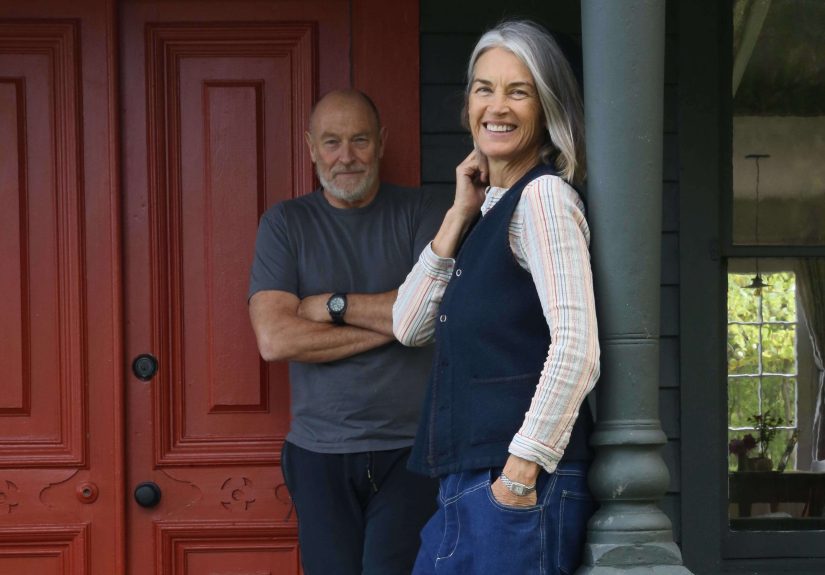
If some couples collect stamps, Amanda Pays and Corbin Bernsen appear to collect houses, sawdust, and very strong opinions about where a sink should go. Over the years, the actor-designer duo has become famous in design circles for creating homes that feel soulful rather than showroom-stiff. Their kitchens, especially, have a way of looking beautifully settled in, as if they have always belonged to the house and have never once shouted for attention. That is harder than it sounds. Plenty of kitchens are expensive. Far fewer are charming.
The six country kitchens associated with Amanda Pays and Corbin Bernsen reveal why their work keeps resonating with renovators, old-house dreamers, and anyone who has ever fallen for a farmhouse sink and then pretended it was a practical choice. These spaces are not carbon copies of one another. Some lean rustic, some feel English, some flirt with French farmhouse simplicity, and some are downright scrappy in the best possible way. What ties them together is a consistent design philosophy: respect the bones, improve the flow, save where you can, splurge where it counts, and let the kitchen become the social center of the home.
In other words, these are country kitchens with brains. And yes, with a little swagger.
Why These Country Kitchens Stand Out
A country kitchen is often misunderstood. People hear the phrase and imagine roosters on every surface, a distressed sign yelling “EAT,” and enough gingham to start a small curtain factory. But the best country kitchens are not costume dramas. They are warm, practical, layered, and deeply livable. They welcome imperfections. They make room for gathering. They mix old and new without becoming precious about either.
That is exactly where Pays and Bernsen shine. Their kitchens tend to share a few repeat moves: reclaimed wood, unfitted furniture-style elements, open or semi-open storage, farmhouse sinks, affordable cabinets upgraded with paint or hardware, and details that suggest the room evolved over time instead of arriving in one dramatic truck delivery. They also understand something many renovations forget: country style is less about a formula and more about emotional temperature. A country kitchen should feel like people linger there on purpose.
The Design DNA of Amanda Pays and Corbin Bernsen
The couple’s strength comes from their divide-and-conquer approach. Bernsen has long taken on hands-on building work and carpentry-minded problem solving, while Pays shapes the visual rhythm of the rooms through finishes, color palettes, hardware, storage choices, and decorative restraint. The result is a collaboration that avoids two common renovation mistakes. First, the spaces do not feel overdesigned. Second, they do not feel underthought.
Across their projects, they are especially good at opening rooms to improve movement. They like kitchens that connect naturally to dining areas and family life. That matters because the country kitchen, at its best, is not merely a cooking zone. It is command central, coffee station, homework desk, snack headquarters, conversation pit, and occasionally emotional support room.
They also work with a saver-splurger mindset that makes their designs feel achievable. One project may use bargain flea-market finds and salvage-yard wood, while another quietly upgrades the faucet or introduces custom cabinetry where it matters most. That balance is a big part of the appeal. These kitchens feel aspirational without drifting into fantasy.
The 6 Country Kitchens, One by One
1. Scrap Wood and Stainless Steel in Los Angeles
The first kitchen in the set is perhaps the clearest example of their talent for making thrift look intentional. In their Studio City kitchen, old barn wood, vintage pulls, scaffolding boards, and flea-market tables were transformed into cabinetry, shelving, and an island with serious character. A stainless steel top kept the space from becoming too nostalgic, which was a smart move. Without that cooler industrial note, the room could have tipped into “rustic theater.” Instead, it landed in that sweet spot between workshop practicality and family-home warmth.
This kitchen matters because it proves country style does not have to mean soft-focus prettiness. The rough materials give it backbone. The mixed sources give it soul. And the budget-conscious ingenuity gives it the sort of credibility design lovers secretly adore. Anyone can order charm. It is much harder to build it out of salvage and confidence.
2. Plaster-Finished Open Storage in the South of France
If the Los Angeles kitchen feels resourceful and urban-rustic, the South of France kitchen feels pared down and sun-baked. Here, Pays and Bernsen created a more restrained country kitchen anchored by cast concrete counters, a double farmhouse sink, plaster-finished elements, and simple open storage. It is a reminder that country style does not have to be crowded. In fact, one of the most sophisticated things a kitchen can do is leave a little visual breathing room.
This version leans into European farmhouse discipline. The palette is quiet. The forms are simple. The room gets its beauty from texture instead of fuss. Wooden crates, pale walls, practical shelving, and understated surfaces do the heavy lifting. It is the kind of kitchen that whispers rather than performs, which is probably why it feels so elegant.
For readers chasing that French country kitchen mood, this space offers a useful lesson: skip the fake patina and focus on honest materials. Texture ages better than gimmicks.
3. Ikea Customized in Hudson Valley, House Flip #1
Now we get to one of the smartest design moves in the entire lineup: starting with Ikea and refusing to leave it looking like Ikea. In their first Hudson Valley house flip, the couple used Ikea cabinets with grooved fronts, then elevated them through paint, styling, and a collected mix of supporting pieces. The island marble was found inexpensively, the knobs were simple, and the room gained personality through finish choices rather than overcomplicated architecture.
This is country-kitchen strategy at its most useful. The heart of the idea is not “buy expensive things.” It is “make ordinary things feel rooted.” The painted cabinetry, the lived-in table, and the practical layout all help the kitchen avoid the flatness that budget remodels often suffer from. It feels approachable, but not generic.
That is an important distinction. A generic kitchen gets the job done. A memorable kitchen gets the job done and makes you want to stand there longer with a mug you do not need.
4. English-Style Order in Hudson Valley, House Flip #2
The second Hudson Valley kitchen pulls in a strong English influence, and frankly, it looks like it knows where the good bread is. Its custom cabinetry, dark painted finish, and ventilated produce-and-bread drawers introduce a sense of practical order that feels deeply rooted in traditional country-house thinking. This is not country style as decoration. This is country style as domestic intelligence.
One reason the space works so well is that it embraces utility without sacrificing romance. The drawer details are functional, but they also tell a story. The cabinetry feels crafted rather than merely installed. The darker color gives the room substance, while the supporting materials keep it from feeling too heavy. There is real confidence in a kitchen that does not need to be bright white to feel inviting.
Among the six, this might be the most disciplined kitchen. It is orderly without being sterile, classic without being stiff, and specific without becoming quirky for the sake of being quirky. That balance is rare.
5. The Barn Red Kitchen at Barnswood
At Barnswood, the couple’s Hudson Valley estate project, the main kitchen turns up the volume through red cabinetry that echoes the exterior color of the property. This is a bold move, and it works because the rest of the room supports it with country-house credibility. The farmhouse sink, the custom cabinetry, and the reclaimed, time-minded materials stop the red from feeling trendy. Instead, it feels agricultural, grounded, and delightfully confident.
This kitchen also showcases one of Pays’s clearest signatures: repeating a favorite functional detail from project to project. In her case, that means the apron-front ceramic farmhouse sink. It appears not as a cliché, but as a useful constant. Design people sometimes talk as though originality means never repeating yourself. Real designers know better. A signature becomes valuable when it consistently improves how a room works.
The open connection to dining and the use of leftover wood for overhead shelving add another layer of their philosophy: beauty should come from use, not waste. That attitude gives the room integrity.
6. The Barn Kitchen Companion Space
The sixth kitchen is the barn kitchen created in the multipurpose outbuilding on the same property. This secondary space could easily have been treated as an afterthought. Instead, it was given its own identity with barn wood and a straightforward, hardworking character. That decision says a lot about Pays and Bernsen’s instincts. They do not just design the main room for photographs; they think about how a property lives as a whole.
A secondary kitchen like this is especially appealing in today’s design landscape, where flexible spaces matter more than ever. Guest quarters, studio spaces, home offices, party barns, and multigenerational living arrangements all benefit from a small kitchen that feels intentional. The barn kitchen does exactly that. It is simple, useful, and full of material honesty.
What All Six Kitchens Have in Common
Look across the full set and a pattern emerges. These country kitchens are never sterile. They are never too sleek to touch. They rely on natural materials, sensible layouts, and small moments of imperfection that make the rooms feel human. You see wood with grain, paint with depth, shelves that earn their keep, islands that gather people, and furnishings that do not look as though they were selected by an algorithm having a very serious day.
You also see a refusal to confuse luxury with excess. The spaces may include an upgraded faucet, a beautiful stone slab, or custom cabinetry, but they rarely chase polish for its own sake. They chase atmosphere. They chase usability. They chase that elusive feeling that the room has stories in it already.
That is why these country kitchens are so instructive for homeowners. You do not need a movie-star budget to borrow the logic behind them. You need a sharp eye, a willingness to mix sources, and the discipline to leave room for life to show up.
How to Bring This Look Into Your Own Kitchen
If you love the Amanda Pays and Corbin Bernsen approach, start by thinking less about matching and more about layering. Use one or two strong natural materials, then build around them. Paint can do a lot of heavy lifting. So can hardware. So can a table that looks as though it has survived a few holidays and several opinions.
Open shelving works best when it is selective, not chaotic. A farmhouse sink earns its popularity when the rest of the room supports it with equally honest choices. Reclaimed wood is powerful when used with restraint. And perhaps most important of all, make the kitchen connect to the way you really live. Country style is forgiving, but it still needs purpose.
If your kitchen is small, borrow the Studio City lesson: combine rough texture with practical surfaces. If you want European calm, borrow the South of France lesson: simplify. If you are remodeling on a budget, borrow the Ikea lesson: customize instead of apologizing. If you love traditional order, borrow the English lesson: make storage specific. If you want bold character, borrow Barnswood’s red-cabinet courage. And if you have a side space that deserves attention, borrow the barn kitchen lesson: utility can still be beautiful.
Experience the Appeal: What These Kitchens Feel Like in Real Life
What makes these six country kitchens so compelling is not only how they photograph, but how they seem to function emotionally. You can imagine the little rituals immediately. Morning light hits a painted cabinet. Someone reaches for a heavy mug from an open shelf. Bread goes into a drawer that actually makes sense. A pot simmers while another person leans on the island pretending not to snack. It all feels active, but calm.
That lived-in quality is a major part of the experience. In many high-end kitchens, you feel slightly nervous, as though one wrong splash of tomato sauce could trigger a design intervention. In these spaces, the opposite happens. They invite use. Wood can take a little wear. Painted finishes get better with age. Open shelves encourage everyday objects to participate in the room instead of hiding in cabinets like guilty secrets.
There is also a psychological ease to country kitchens done this way. Because the materials are tactile and the rooms are not overpolished, they lower the pressure. Guests relax. Family members linger. Cooking feels less like a performance and more like a rhythm. You do not have to style the room every five minutes to make it look good. It already knows what it is.
That is especially true in spaces like the English-inspired kitchen, where storage is thoughtful enough to remove daily friction. Good design is often invisible at first because it shows up as ease. Produce has a place. Bread has a place. The sink is where it should be. The island is not just decorative; it works. These are the details that change how a kitchen feels at 7:15 on a Tuesday, which is when design stops being theory and starts being life.
The more romantic kitchens in the group, like the South of France version or the Barnswood red kitchen, create a different kind of experience. They make ordinary routines feel richer. Pouring coffee at a plaster-finished counter or chopping vegetables under reclaimed beams does not magically turn anyone into a countryside poet, but it does make the room feel grounded and memorable. Everyday repetition becomes part of the pleasure.
Even the budget-friendly moves contribute to that sense of experience. Salvage wood, flea-market tables, painted Ikea fronts, and simple knobs all carry a kind of looseness that expensive custom work sometimes lacks. They suggest a home assembled with wit rather than ego. That can be felt immediately. A kitchen like this does not lecture you about taste. It quietly demonstrates it.
And perhaps that is the real magic of these six country kitchens by Amanda Pays and Corbin Bernsen. They feel personal without becoming messy, stylish without becoming brittle, and practical without ever becoming dull. They are proof that the best kitchens are not built only for resale value or visual applause. They are built for coffee, conversations, second helpings, rainy afternoons, holiday chaos, and the thousand unremarkable moments that make a home feel deeply, unmistakably alive.
Conclusion
The six country kitchens by Amanda Pays and Corbin Bernsen offer more than celebrity-home curiosity. They provide a usable blueprint for timeless kitchen design: mix reclaimed and new materials, improve flow, let function guide beauty, and create rooms that feel collected rather than manufactured. From the salvage-savvy Los Angeles kitchen to the stripped-back French farmhouse, from customized Ikea to English cabinetry discipline, and from the bold Barnswood red kitchen to its humble barn companion, each space proves that country style can be clever, elegant, and wonderfully unpretentious. In a design world that often swings between cold minimalism and overdecorated nostalgia, these kitchens strike the balance people actually want to live with.