Table of Contents >> Show >> Hide
Some pictures make you smile. Some make you hungry. And some make you stare at your screen and whisper, “Absolutely not.” That last category belongs to giant things. Not just regular big things, either. We are talking about the kind of enormous objects that make your brain hit the brakes: a cruise ship towering over a dock, a statue that looks like it could step off its pedestal, a whale surfacing next to a tiny boat, or a dam wall so huge it seems less like engineering and more like a challenge issued by the planet itself.
That intense discomfort has a name people often use online: megalophobia, or the fear of very large objects. For some people, it is a genuine anxiety trigger. For others, it is more of a deliciously spooky fascinationthe emotional equivalent of riding a roller coaster while shouting that roller coasters are a terrible idea. Either way, giant-object photos have become internet catnip because they compress scale into a single frame. They remind us, very rudely, that humans are not always the main character.
This article explores why gigantic things hit so hard, why certain images feel especially unsettling, and which kinds of giant subjects tend to send people with megalophobia straight into Nope City. Then, because the internet loves a list and giant things clearly did not get the memo about personal space, we will walk through 50 kinds of colossal sights that can make even calm viewers feel tiny, weird, and emotionally underqualified.
Why Giant Things Feel So Unsettling
The fear response around enormous objects is not just about size. It is about scale, perspective, vulnerability, and the feeling that something is too large to fit neatly inside your mental filing cabinet. Your brain likes proportions it can understand. A sedan next to another sedan? Fine. A person next to a school bus? Still manageable. A diver next to a whale, or a tourist standing under a statue’s sandal the size of a studio apartment? That is when the mind starts fumbling papers and dropping its coffee.
Gigantic things feel eerie because they disrupt your sense of control. Huge ships look like floating apartment blocks that somehow learned how to move. Massive buildings turn people into punctuation marks. Giant sculptures can feel especially creepy because they mix human form with impossible scale, which creates a weird “this should not exist, yet here it is” sensation. Nature does it too. Towering trees, deep cave chambers, ice walls, and oversized sea creatures all trigger the same primal realization: you are small, and the universe has not been subtle about it.
Photos intensify that feeling in a special way. A good image freezes the one angle that best communicates imbalance. A tiny ladder against a giant industrial tank. A maintenance worker standing on a turbine blade. A boat shadowed by a ship hull that looks like a steel cliff. These shots make size feel immediate, intimate, and slightly rude. The object is not just big. It is too big, and the photo knows it.
Why Megalophobia Content Is So Popular Online
There is a reason giant-object galleries spread so quickly online. They create an instant emotional reaction. You do not need backstory, context, or an art degree. You just see the image and go, “Nope.” That response is universal enough to be funny, but personal enough to feel real. Viral collections often thrive on exactly that combination: awe mixed with discomfort, fascination mixed with the urge to close the tab and go look at pictures of muffins instead.
They also tap into something older than social media. Humans have always been captivated by oversized thingsmountains, monuments, giant animals, cathedrals, redwoods, ships, and machines large enough to look mythological. We admire them because they suggest power, ambition, and mystery. We fear them because they can make us feel breakable. Giant things sit right on that line between wonder and dread, and the internet, being the internet, turned that feeling into a genre.
50 Gigantic Things That Feel Like Instant “Nopes”
Ocean and Underwater Giants
- Cruise ships at dock level. From far away, they look glamorous. From underneath, they look like someone parked a moving city in the water and forgot to warn your nervous system.
- Container ships. Stacked with colorful boxes and built like floating industrial fortresses, they make regular boats look like bath toys with paperwork.
- Submarines surfacing. A dark metal shape rising out of the water has all the warmth and charm of a secret boss battle.
- Oil platforms. Half machine, half artificial island, these structures feel like proof that human beings will absolutely build nightmare furniture in the sea.
- Blue whales near divers. Majestic? Yes. Deeply humbling? Also yes. The comparison makes people remember their exact place in the food-chain-adjacent emotional hierarchy.
- Whale sharks. They are gentle, but your instincts do not care. Your instincts saw “bus-sized fish” and already left the building.
- Massive ship propellers. Out of water, they look less like engineering and more like something designed for a titan’s ceiling fan.
- Sunken wrecks. Giant rusting hulls beneath the surface feel haunted even when no ghosts have officially clocked in.
- Underwater statues. Human-shaped, oversized, and submerged? That is three layers of nope in one convenient package.
- Icebergs beside boats. The visible part is huge. The invisible part is larger. Congratulations: anxiety now has geometry.
Machines That Look Too Big To Be Real
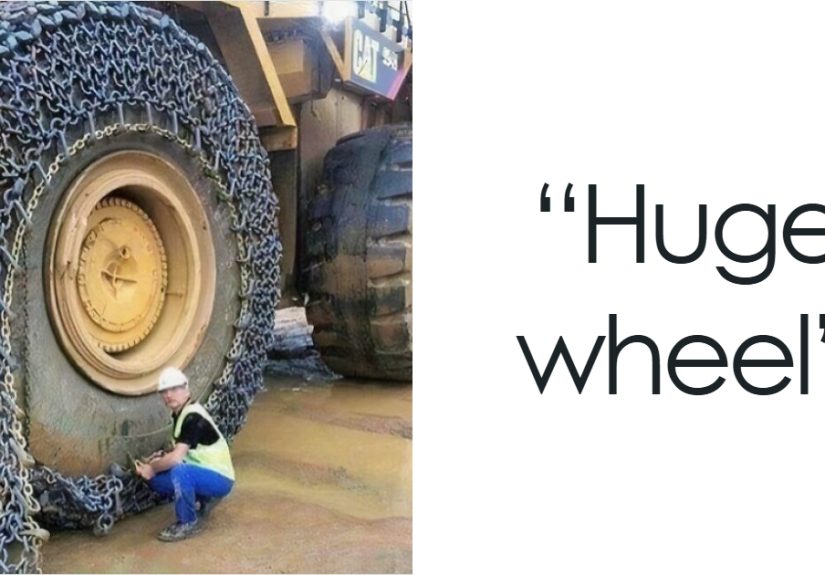
- Mining trucks. Their tires alone can make a grown adult reconsider every assumption they have ever had about rubber.
- Bucket-wheel excavators. These machines look like someone crossed a power plant with a prehistoric beast and gave it an appetite for dirt.
- Wind turbine blades on the ground. Detached from the tower, they suddenly look less graceful and more like giant white bones from the future.
- Rocket components. They are built for space, which somehow makes them even scarier on Earth, where you can stand next to them and feel like a receipt.
- Airplane engines up close. One of these can look like a polished metal cave with opinions.
- Dam turbines. Hidden inside giant infrastructure, they have the exact energy of “Please do not touch anything, ever.”
- Industrial gears. Oversized machinery parts are unsettling because they hint at a larger unseen system that is somehow even bigger.
- Ship anchors. On land, these things stop looking decorative and start looking like medieval weapons for sea gods.
- Satellite dishes. A huge dish pointed into the sky can feel oddly spooky, like it knows secrets and is not sharing.
- Telescope arrays. Giant scientific instruments are amazing, but they also look like they might detect your insecurity from orbit.
Buildings and Structures That Erase Your Ego
- Skyscrapers from street level. Looking straight up turns architecture into vertigo with windows.
- Dams. A giant wall holding back an unfriendly amount of water is impressive right up until your imagination gets involved.
- Bridges seen from below. The beams, the shadows, the impossible spansuddenly your casual afternoon walk feels like a scene from a disaster movie.
- Stadium interiors. Empty stadiums are especially eerie because all that scale remains, but the people are gone.
- Cooling towers. Even when inactive, they look like giant concrete warnings.
- Abandoned factories. Huge, hollow, and echoing, these places feel like cathedrals built for machinery instead of saints.
- Massive tunnels. A tunnel wide enough for trains or giant vehicles can feel less like infrastructure and more like the mouth of the Earth.
- Dry docks. When the water is gone, the sheer size of the space becomes weirdly theatrical and a little cursed.
- Hangars. Enormous indoor volume does something strange to the mind. It is the architectural version of hearing an echo in your own confidence.
- Space centers and assembly buildings. These structures exist because rockets are large, which means the building has to outdo the rocket. Naturally, your sense of proportion loses.
Statues, Sculptures, and Human-Shaped Nightmares
- Giant seated statues. Something about a calm, oversized face makes the whole scene feel one blink away from becoming a legend.
- Colossal standing monuments. They dominate the skyline in a way that makes nearby humans look like accidental details.
- Oversized hands and faces. A giant hand emerging from the ground or a face carved into stone is exactly the kind of thing your brain files under “concerning.”
- Abandoned statue parks. One giant statue is dramatic. A field of them is a full psychological side quest.
- Under-construction sculptures. Scaffolding around a colossal figure makes it look like people are trying to domesticate a giant and failing politely.
- Ancient carved figures. Age adds mystery, and mystery adds unease. The larger the figure, the more your imagination starts freelancing.
- Religious monuments. These are meant to inspire awe, and they absolutely dobut awe and mild panic sometimes carpool.
- Giant animal sculptures. A normal eagle statue is patriotic. A gigantic eagle statue feels like it might claim territory.
- Figures emerging from water. Whoever approved this aesthetic clearly never consulted people with megalophobia.
- Broken or weathered colossi. A giant statue with missing features somehow becomes even more unnerving, because now it looks ancient and unpredictable.
Natural Giants That Make Humans Look Like Typing Errors
- Redwood trees. They are beautiful, but standing at the base of one can make your soul quietly adjust its volume.
- Giant cave chambers. Massive underground spaces feel wrong in a very specific way, like the world secretly has extra rooms.
- Cliff walls. Vertical rock faces create the unsettling sense that the planet itself has decided to stand up.
- Glaciers and ice walls. Their silence, bulk, and cold visual scale make them feel almost unreal.
- Huge waves frozen in photos. A giant wave has motion built into the image, which makes the scale feel even more threatening.
- Volcanic craters. Looking into one is like staring at geology in a bad mood.
- Sequoia root systems and fallen trunks. Once horizontal, giant trees stop looking elegant and start looking prehistoric.
- Giant squids and deep-sea creatures. Even photographs or models are enough to make people question the ocean’s management choices.
- Massive desert dunes. A truly huge dune can look like a landscape-scale creature that decided to nap.
- Planetary images and cosmic structures. Sometimes the biggest nope is not on Earth at all. Space wins this contest by cheating with infinity.
What These Photos Reveal About Fear, Awe, and Scale
The weird magic of giant-object photography is that it can produce opposite feelings at the same time. You may be fascinated by the engineering of a ship, the beauty of a whale, or the grandeur of a canyon, while also wanting to retreat into a perfectly normal-sized room with a nice lamp and zero surprises. That tension is what makes these images memorable. They do not just show size. They show what size does to the human mind.
For people who strongly relate to megalophobia, these images can feel genuinely distressing. For others, they trigger a milder version of the same sensation: a prickly, stomach-drop awareness of scale. In both cases, the response says something important about how humans interpret the world. We are constantly measuring our environment against our bodies, our movement, and our expectations. When something is so large that it breaks those expectations, the result can feel thrilling, humbling, eerie, or all three at once.
Extra: What The Experience Can Feel Like In Real Life
Imagine walking toward a harbor on a perfectly normal day. You are thinking about coffee, your phone battery, maybe lunch. Then you round a corner and there it is: a cruise ship docked beside the terminal. From a distance, it looked big. Up close, it looks impossible. The hull rises so high that your eyes cannot take it in all at once. The windows stack upward like a moving apartment tower. The gangways look tiny compared to the body of the ship, and suddenly your whole sense of scale feels wrong, like the world has been resized while you were not paying attention.
That is the kind of moment people describe when they talk about megalophobia-like reactions. It is not always a dramatic panic. Sometimes it is a deep, instinctive recoil. Your chest tightens a little. You feel the urge to step back. You might laugh, because the feeling seems irrational, but your body is not interested in your logic. It has already decided that the giant object in front of you is an issue.
The same thing can happen in nature. Standing at the base of a redwood can be beautiful and unsettling in equal measure. A photograph cannot fully prepare you for the way a giant tree seems to keep going and going until it disappears into light. You feel grounded by it, but also slightly erased by it. In a cave, the reaction can be even stranger. A massive chamber underground does not just feel large; it feels like a hidden world that is not supposed to fit beneath your everyday life. Sound changes. Distance changes. Even your own footsteps feel too small for the room.
Then there is the water factor, which deserves its own award for making everything creepier. A blue whale surfacing near a boat, a submarine breaking through the waterline, or the shadow of something huge moving below the surface can trigger a very specific kind of dread. Water already hides scale badly. Add a gigantic object and the brain fills in the blanks with the emotional maturity of a horror movie director.
Interestingly, many people do not want to avoid these experiences entirely. They want to look, but from a safe distance. They want the shiver without the danger, the awe without the proximity. That is why giant-object photos are so compelling. They let people flirt with the feeling. You can stare at a dam, a colossal statue, or a whale the size of a mobile apartment complex while remaining firmly on your couch, where the only truly threatening object is the laundry pile in the corner.
In that sense, these images are not just about fear. They are about perspective. They remind us that the world contains things far larger than our routines, our screens, and our daily concerns. Sometimes that reminder feels inspiring. Sometimes it feels like your soul accidentally made eye contact with scale itself. And sometimes it just makes you say the most honest sentence on the internet: “Nope. Absolutely not.”
Conclusion
Gigantic things fascinate us because they expose a simple truth: humans love wonder, but we prefer it at a manageable size. The moment an object becomes too vast, too deep, too tall, too heavy, or too impossible-looking, admiration starts sharing space with dread. That is the emotional sweet spot behind the internet’s obsession with giant-object galleries. Whether the image shows a whale, a ship, a statue, a tunnel, or a tree, the reaction is often the sameequal parts awe, disbelief, and a strong desire to respectfully leave.
So if photos of enormous objects make your palms sweat, your stomach dip, or your brain quietly whisper “hard pass,” you are far from alone. Giant things have been humbling humans for a very long time. The internet just gave that feeling a name, a gallery, and approximately one million comments that all translate to the same beautiful sentiment: that is incredible, and I hate it.