Table of Contents >> Show >> Hide
- The “Oops” Hall of Fame: 40 Tattoos That Didn’t Get a Second Draft
- A) Spellcheck Disasters (a.k.a. “My Body Is Not Your Rough Draft”)
- B) Translation Traps (Because Languages Have Feelings Too)
- C) Placement Problems (Your Body Moves. Tattoos Don’t Always Love That.)
- D) Design Logic Fails (When the Drawing Didn’t Meet Reality)
- E) Trend Traps (The 2016 You Had Notes. The 2026 You Has Regrets.)
- F) Practicality Problems (Your Tattoo Has to Live in the Real World)
- Why These Tattoo Fails Happen (Spoiler: Humans Are Optimistic)
- How to Think It Through Before You Ink It
- If You Already Have One… What Now?
- Real-Life “Wish I’d Thought of That” Experiences (Extra )
- Conclusion
Tattoos are more mainstream than everroughly a third of U.S. adults have at least one. That’s great news for self-expression… and
absolutely terrible news for anyone who thinks “spellcheck is for cowards” or believes Google Translate is basically a licensed linguist.
Because while tattoos can be meaningful art, they can also become permanent proof that you once made a decision while hungry, emotional,
or standing too close to a friend who says “Do it!” as a hobby.
This isn’t an anti-tattoo rant. It’s a friendly tour through the classic ways tattoos go sidewaysmisspellings, bad placements, trendy
choices that age like milk, and designs that made perfect sense until you rotated your arm or got a job interview. If you’re planning
new ink, take notes. If you already have one you regret… congratulations: you’re not alone, and you’ve got options.
The “Oops” Hall of Fame: 40 Tattoos That Didn’t Get a Second Draft
A) Spellcheck Disasters (a.k.a. “My Body Is Not Your Rough Draft”)
- The inspirational quote with one missing letter. Nothing inspires confidence like “Beleve in yourself.”
- The “forever” tattoo that says “forver.” Irony is a stylejust not usually the one you requested.
- A child’s name spelled wrong. A sweet tribute becomes a lifetime subscription to awkward family jokes.
- “Strength” written as “Strenght.” The tattoo is still strongyour spelling, however, took a knee.
- Roman numerals that don’t add up. Your “anniversary” is now a math problem you can’t erase with a calculator.
- A Bible verse citation that points to… the wrong verse. You meant comfort; you got confusion.
- A “No regrets” tattoo with a typo. This is the Super Bowl of tattoo comedy, and it plays on repeat.
- Text in fancy script that becomes unreadable. Elegant today, indistinguishable spaghetti in five years.
B) Translation Traps (Because Languages Have Feelings Too)
- Foreign characters chosen for the “vibe,” not the meaning. You wanted “peace,” you got “microwave settings.”
- Grammar-free Latin. It looks ancient and wise… and also like a fortune cookie wrote it in a hurry.
- Misspelled Japanese/Korean/Chinese characters. One wrong stroke can turn “love” into “parking.”
- A word that’s correct… but wildly outdated or slangy. Congrats on tattooing the equivalent of “yeet” in another language.
- Religious or cultural phrases used casually. Some words deserve context, not just aesthetics.
- Translated song lyrics that lose the point. Poetry doesn’t always survive the journey.
C) Placement Problems (Your Body Moves. Tattoos Don’t Always Love That.)
- Upside-down text on the forearm. It reads perfectly… if you’re the one doing push-ups.
- A rib tattoo chosen for “subtlety.” Subtle until you breathe, laugh, sit, or exist.
- Finger tattoos with tiny details. Hands fade fast; tiny lines don’t stand a chance.
- Foot tattoos that vanish like socks in a dryer. Friction and time are undefeated.
- A chest piece that warps with posture. Stand tall: majestic. Slouch: confused cartoon.
- Inner lip tattoos. It’s “funny” until you remember you have to re-do it… constantly.
- A neck tattoo before you know your career path. Some industries still have opinions, and they’re not shy.
- A face tattoo chosen on a whim. It’s bold. It’s permanent. It’s also a lot to explain at the DMV.
D) Design Logic Fails (When the Drawing Didn’t Meet Reality)
- A portrait that doesn’t look like the person. You wanted Grandma. You got “a woman who may have met Grandma once.”
- A pet portrait that resembles a different species. Your dog is now… vaguely a llama?
- A hyper-detailed micro tattoo. Incredible for three weeks. Then it becomes a tiny blur with confidence issues.
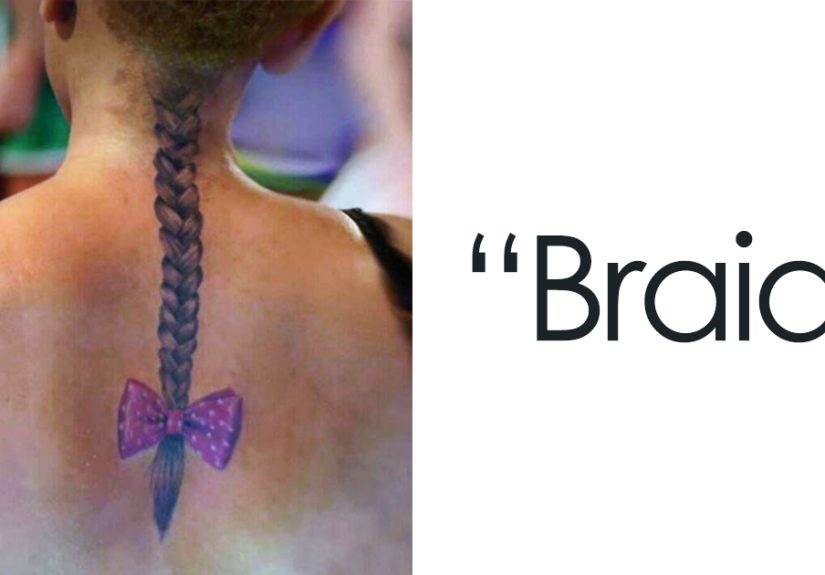
- Geometric lines done by an artist who isn’t into geometry. Symmetry is optionalapparently.
- A mandala on a body part that stretches. Perfect circle today; tomorrow, it’s “oval-ish.”
- “Matching” tattoos that don’t actually match. It’s giving “we ordered from different menus.”
- A watercolor tattoo with no solid structure. Gorgeous at firstthen it softens into a pastel mystery.
- Blackout without planning. Dramatic? Yes. Fixing it later? A whole other adventure.
E) Trend Traps (The 2016 You Had Notes. The 2026 You Has Regrets.)
- A meme tattoo. Funny today. In ten years it’s an archaeological artifact of your algorithm.
- A celebrity “moment” tattoo. Fame changes fast. Your skin is not a subscription service.
- A brand logo. Companies rebrand. Your arm doesn’t get the update.
- A relationship tattoo done too early. “Forever” is a long time when it’s been three months.
- Coordinates you never double-checked. Romantic until you realize you tattooed a highway exit.
- A political slogan. Opinions evolve; ink is loyal to the past version of you.
F) Practicality Problems (Your Tattoo Has to Live in the Real World)
- A QR code tattoo. It works until it blurs, the link dies, or you age like a normal human.
- A barcode tattoo. Cashiers don’t laugh as much as you think they will.
- White-ink-only designs. Subtle can become “Is that a scar?” depending on skin tone and healing.
- A tiny text tattoo in a high-friction spot. The message fades, but the regret stays crisp.
Why These Tattoo Fails Happen (Spoiler: Humans Are Optimistic)
Impulse beats planning
Many tattoo regrets start with a simple lie we tell ourselves: “I’ll think about it later.” But tattoos are a long-term relationship
with an idea. If you wouldn’t marry the concept after one date, maybe don’t engrave it on your calf after one scroll.
Consultations get skipped
A solid artist will talk placement, size, readability, and how the design will age on your specific skin. Rushing that conversation is
how you end up with a design that looks great on a flat screen but turns into a funhouse mirror on a moving body.
Skin is a living canvas
Your skin stretches, heals, reacts, and changes over time. Certain areas fade faster. Sun exposure matters. Aftercare matters. And yes,
even when everything is done “right,” your body can still react to ink or the process. Tattoos are artplus biology.
How to Think It Through Before You Ink It
Do the “Mirror Test” and the “Future You Test”
- Mirror Test: Can it be read or understood from the angle most people will see it?
- Future You Test: Will this idea still make sense if your life changesjob, relationships, beliefs, style?
- Context Test: Will you be okay explaining it to a curious child, a grandma, or a stranger in a grocery line?
Text tattoos need a process (yes, like a legal document)
- Type it. Proof it. Have two other people proof it (one of them should be the friend who corrects restaurant menus).
- If it’s in another language, pay a fluent speaker or a qualified translatornot your buddy who “took Spanish.”
- Choose readability over “pretty-but-chaotic” fonts, especially for small pieces.
Placement is half the tattoo
Hands, fingers, and feet can fade faster because of friction, sun, and constant use. Tiny details in high-motion areas (knuckles, wrists,
inner lip) often soften quickly. If you want crisp lines and longevity, talk placement with an experienced artist who will be honest with
youeven if honesty costs them the sale.
Safety isn’t boring; it’s how you avoid a medical side-quest
Tattooing breaks the skin barrier, which means infection risk is real if hygiene is sloppy or products are contaminated. Choose reputable,
licensed studios, ask about sterilization, and follow aftercare. If you notice worsening redness, swelling, pain, pus, fever, or a rash that
keeps expanding, don’t tough-guy ittalk to a clinician. Your immune system shouldn’t have to “walk it off.”
If You Already Have One… What Now?
Option 1: A touch-up or rework
Some “bad tattoos” aren’t doomed; they’re just unfinished. Sharper lines, better contrast, and smart shading can turn a wobbly design into
something you actually like. This is especially true for faded tattoos or pieces that healed unevenly.
Option 2: A cover-up that’s designed (not improvised)
Cover-ups work best when you plan for them. The new design often needs to be larger, darker, and structured to hide what’s underneath.
A good cover-up artist isn’t just hiding inkthey’re composing a solution.
Option 3: Laser tattoo removal (the “uninstall” button, with fine print)
Laser removal can significantly fade unwanted ink, but it usually takes multiple sessions, and results vary by color, depth, age of the tattoo,
and your skin. Side effects like temporary irritation can happen, and some methods carry scarring risk. Translation: removal is possible, but it’s
not a simple eraser. Talk to a board-certified dermatologist or a qualified medical provider if you’re considering it.
Real-Life “Wish I’d Thought of That” Experiences (Extra )
People who regret a tattoo rarely regret the idea of tattoos. More often, they regret the moment they treated permanence like a weekend
purchase. One of the most common patterns is the “vacation tattoo” story: someone gets inked while traveling, excited to bottle the feeling
of freedom. The design is cute, the shop looks clean enough, and the artist is available immediatelybecause availability feels like destiny.
Weeks later, after the novelty wears off, the person starts noticing the little things: the line that wobbles when the skin relaxes, the
tiny typo in the quote, the symbol that looked “mystical” until they learned it has a completely different meaning in the culture it came from.
Another frequent experience is the “small but detailed” trap. Someone sees a crisp, microscopic design on social mediaperfect on camera,
under studio lighting, on a fresh tattoo. They ask for the same thing on a finger or wrist. The tattoo looks fantastic for a short time,
and then real life shows up: handwashing, sun exposure, friction from sleeves, and normal skin turnover. The fine lines blur. The tiny letters
merge into each other. The tattoo doesn’t become “ugly,” exactlyit becomes vague. And vagueness is rough when the entire point was the detail.
That’s when people learn a hard lesson: tattoos aren’t printed; they heal. Skin is not paper, and your body doesn’t come with a “high resolution”
setting.
Placement regret can sneak up in a quieter way. A person might love a design and still wish they’d put it somewhere else. A forearm tattoo that
felt empowering in a personal phase becomes something they constantly manage at work. Not because they’re ashamed, but because they’re tired of
being asked about it. A neck tattoo may feel like a bold statementuntil they realize they’re making that statement to everyone, all the time,
including strangers who think a tattoo is an invitation to share unsolicited opinions. The experience isn’t always negative; it’s just more
social than expected. And social fatigue is real.
The most unexpectedly emotional experiences tend to revolve around memorial tattoos and relationship tattoos. Memorial tattoos can be beautiful,
but when someone rushes the design during grief, they may later feel disconnected from what they chose. They don’t regret the person they honored;
they regret that they didn’t slow down and collaborate with an artist to create something that truly fits. Relationship tattoos are similar: the
regret isn’t always about the breakup. It can be about realizing they built a permanent symbol around a temporary chapter, before the story had
time to reveal what it really was.
And then there’s the “fix-it era,” which can be surprisingly empowering. People often report feeling relief the moment they decide to rework,
cover, or remove an unwanted tattoo. The tattoo stops being a daily annoyance and becomes a project with a plan. A thoughtful cover-up can turn
regret into a design you’re proud of. Even laser fadingwhile slower and more expensive than many expectcan feel like progress. The most common
takeaway from these experiences is simple: good tattoos aren’t just chosen. They’re designed, placed, and cared for with the same seriousness
you’d give anything that has to live with you for years.
Conclusion
A “bad tattoo” usually isn’t a moral failureit’s a planning failure. The good news? Most of the classic mistakes are avoidable with a little
patience: verify spelling, respect language and culture, pick placement with longevity in mind, and choose an artist who will tell you “no”
when your idea needs work. And if you already have a tattoo you didn’t think through, you’re not stuck. Between touch-ups, cover-ups, and
modern removal options, your past decision doesn’t have to be your permanent headline.