Table of Contents >> Show >> Hide
- Why the Last Sentence Matters
- 1. End by Returning to the Main Idea With Fresh Insight
- 2. End by Answering the “So What?” Question
- 3. End by Circling Back to the Beginning
- 4. End With a Thoughtful Call to Action or Future Implication
- Common Mistakes to Avoid in the Last Sentence
- How to Revise Your Final Sentence
- Quick Formula for Writing the Last Sentence
- Examples of Strong Last Sentences for Different Papers
- Experience-Based Advice: What Writing Final Sentences Teaches You
- Conclusion
The last sentence of a paper is tiny, but it has a suspicious amount of power. It is the academic equivalent of closing a door, landing a plane, or walking away from an argument with the perfect comeback instead of remembering it three hours later in the shower. A strong final sentence gives your paper closure, reinforces your main idea, and leaves your reader thinking, “Yes, that was worth my time.” A weak one, unfortunately, can make even a solid paper feel like it tripped over its own shoelaces at the finish line.
Many students treat the final sentence like a formal goodbye: “In conclusion, this is important.” That sentence is not a crime, but it is also not exactly fireworks. The best last sentence in a paper does more than announce that the paper is over. It shows the reader why the argument matters, connects back to the paper’s central purpose, and creates a sense of completion without sounding like a robot reading from a dusty textbook.
This guide explains 4 ways to write the last sentence in a paper, with clear strategies, examples, and practical revision tips. Whether you are writing a literary analysis, research paper, argumentative essay, reflection paper, or college assignment that has been haunting your backpack like a tiny ghost, these methods will help you end with confidence.
Why the Last Sentence Matters
The final sentence is the reader’s last contact with your thinking. Your introduction invites readers into the paper, your body paragraphs prove your point, and your conclusion helps them understand what to take away. The last sentence is the final signal: it tells readers where your argument has arrived.
A good ending does three jobs. First, it creates closure. The reader should feel that the paper has reached a natural stopping point, not simply run out of steam. Second, it reinforces the main idea without lazily copying the thesis. Third, it gives the paper a broader sense of purpose. In other words, it answers the quiet question every reader has: “So what?”
That does not mean the final sentence needs to be dramatic, poetic, or carved into marble. In fact, trying too hard can make the ending sound fake. The goal is not to win an Oscar for Best Academic Exit. The goal is to write a sentence that feels honest, focused, and connected to everything that came before it.
1. End by Returning to the Main Idea With Fresh Insight
The most reliable way to write the last sentence in a paper is to return to your thesis, but with a twist. Do not copy and paste your thesis statement into the final line. That is like reheating yesterday’s fries: technically food, emotionally disappointing. Instead, restate your central idea in a way that reflects the evidence, analysis, and discussion your paper has developed.
How This Method Works
Start by identifying the core claim of your paper. Ask yourself: What did I prove, explain, or reveal? Then ask a second question: What can the reader understand now that they could not fully understand at the beginning? Your last sentence should express that completed understanding.
For example, imagine your paper argues that public libraries remain essential in the digital age because they provide access to technology, community resources, and safe learning spaces. A weak final sentence might be:
In conclusion, libraries are still important today.
That sentence is clear, but it is flat. It sounds like it has already put on pajamas. A stronger final sentence might be:
As long as communities need knowledge, connection, and opportunity, the public library will remain far more than a building full of books.
This version returns to the main idea but expands it. It reminds readers that libraries matter because they serve human needs, not just because they store information.
When to Use This Ending
This approach works especially well for argumentative essays, literary analysis papers, history papers, and research essays. It is useful when your paper has one clear thesis and you want the reader to leave with a sharpened version of that claim.
To make this method stronger, avoid repeating the exact words from your introduction. Use related language, but add movement. Think of the final sentence as the thesis after it has gone to the gym: stronger, leaner, and less likely to mumble.
2. End by Answering the “So What?” Question
Every paper needs to answer the “so what?” question. Why should the reader care? Why does your argument matter beyond the assignment? What is at stake? A powerful final sentence often works because it shifts from summary to significance.
How This Method Works
To use this strategy, look at the topic of your paper and ask what larger issue it connects to. Does your argument reveal something about society, education, technology, justice, human behavior, art, science, or history? Your final sentence can point toward that larger meaning.
For example, suppose your paper analyzes how a novel portrays loneliness in modern life. A weak final sentence might be:
This shows that loneliness is a major theme in the novel.
That sentence tells the reader what the paper discussed, but not why it matters. A stronger final sentence might be:
By showing loneliness as something people can experience even in crowded rooms, the novel reminds readers that connection requires more than proximity.
This ending explains the meaning of the analysis. It does not simply say, “Here is the theme.” It says, “Here is what this theme helps us understand.” That is the difference between a conclusion that parks the car and a conclusion that actually arrives somewhere.
Questions That Help You Find the “So What?”
If you are stuck, try completing one of these sentences:
- This matters because…
- Readers should care about this because…
- This argument changes how we understand…
- The larger lesson is…
- This topic still matters today because…
You do not have to use those exact words in your final sentence. They are thinking tools. Once you know the answer, you can rewrite it in a smoother, more polished way.
3. End by Circling Back to the Beginning
Another effective way to write the last sentence in a paper is to return to something from the introduction. This might be an image, question, phrase, quote, scenario, or contrast you introduced at the beginning. When done well, this creates a satisfying full-circle effect. It makes the paper feel carefully designed rather than assembled at midnight with snacks and panic.
How This Method Works
Look back at your introduction. Did you begin with a story, problem, surprising fact, or vivid image? If so, your final sentence can revisit that opening idea with new meaning. The key is transformation. The reader should see the opening differently because of the argument you have made.
For example, imagine a paper begins with a description of a student staring at a blank college application essay. The paper then argues that personal writing is not about sounding perfect but about showing reflection and growth. A weak final sentence might be:
Personal essays are important for college applications.
A stronger circular ending might be:
By the time the blank page becomes an honest story, the student has written more than an applicationthey have written a clearer version of themselves.
This ending returns to the image of the blank page but gives it emotional and intellectual closure. It feels complete because it connects the beginning and the ending like two bookends holding the argument in place.
When This Ending Works Best
This approach works beautifully for personal essays, reflective writing, narrative essays, literary analysis, and persuasive essays with a strong opening hook. It is especially useful when your introduction sets up a problem that your paper gradually resolves.
However, be careful not to force the connection. If your introduction starts with a generic sentence such as “Throughout history, people have communicated,” you may not want to circle back to it. Some doors are better left unopened.
4. End With a Thoughtful Call to Action or Future Implication
Sometimes the best last sentence points forward. This does not mean shouting at the reader to “change the world immediately!” unless your paper truly calls for that level of urgency. A thoughtful call to action or future implication shows what could happen next if people take your argument seriously.
How This Method Works
Ask what your argument suggests for the future. Should readers think differently, behave differently, research further, question an assumption, or recognize a consequence? Your final sentence can gently push the reader toward that next step.
For example, suppose your paper argues that schools should teach digital literacy more directly because students need to evaluate online information. A weak final sentence might be:
Therefore, schools should teach digital literacy.
A stronger ending might be:
If schools want students to navigate the internet responsibly, digital literacy must become a basic skill rather than an optional lesson squeezed in after testing season.
This sentence points toward action while staying specific. It avoids vague motivational fog and gives the reader a clear takeaway.
How to Keep It Academic
A call to action should match the tone of the paper. In a formal research paper, avoid sounding like a campaign poster unless the assignment invites persuasive language. Instead of writing, “Everyone must act now before it is too late,” try something more measured: “Future policy discussions should treat access to digital tools as a central educational concern.”
The strongest future-looking endings are realistic. They do not claim that one paper has solved civilization. Your essay may be excellent, but it probably has not single-handedly repaired the planet before lunch. Keep the final sentence confident, not inflated.
Common Mistakes to Avoid in the Last Sentence
Do Not Introduce a Brand-New Argument
The last sentence is not the place to suddenly reveal a major new idea. If your paper has spent five pages discussing renewable energy, do not end by announcing that artificial intelligence is also important. That may be true, but your reader will feel like someone changed the channel during the final scene.
Do Not Apologize for the Paper
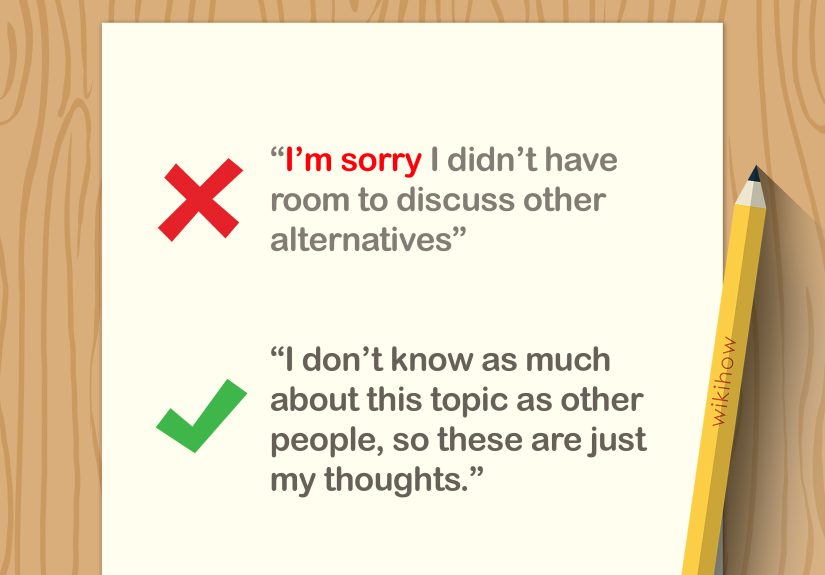
Avoid endings such as “This paper may not cover everything, but…” or “Although this essay is short…” Academic writing should be honest about limits when appropriate, but the final sentence should not sound embarrassed to exist. End with purpose.
Do Not Use Empty Phrases
Phrases like “in conclusion,” “to sum up,” and “all in all” are not automatically wrong, but they are often unnecessary in the final sentence. Your reader can usually tell the paper is ending because, well, there are no more pages. Instead of announcing the conclusion, create one.
Do Not Overdo the Drama
Some students try to end every paper with a thunderclap. But not every topic needs a sentence that sounds like it belongs on a movie poster. If your paper is about cafeteria lunch schedules, ending with “Thus, the fate of humanity rests on the lunch bell” may raise questions, including whether you need a snack.
How to Revise Your Final Sentence
Writing a strong final sentence usually takes revision. First drafts often end too broadly, too suddenly, or too repetitively. Once your paper is complete, reread your introduction, thesis, and conclusion together. Ask whether the final sentence reflects the argument you actually made, not the argument you planned before the evidence complicated things.
Then test the sentence by asking three questions:
- Does this sentence connect to my thesis?
- Does it show why the topic matters?
- Does it sound final without sounding fake?
If the answer to any of these is no, revise. Cut vague words. Replace general claims with specific meaning. Make sure the sentence grows naturally from the paragraph before it. The final sentence should feel like the last step on a staircase, not a surprise trapdoor.
Quick Formula for Writing the Last Sentence
If you are under pressure, use this simple formula:
Because [main insight], [topic] matters not only for [paper’s subject] but also for [larger significance].
Here is an example for a paper about climate communication:
Because effective climate communication turns data into public understanding, it matters not only for science but also for the everyday choices communities make about their future.
You should not use the formula mechanically, but it can help you move from summary to significance. Once you have the basic idea, polish the wording until it sounds natural.
Examples of Strong Last Sentences for Different Papers
Argumentative Paper
Topic: Schools should start later in the morning.
When schools respect the connection between sleep and learning, they give students a better chance to arrive not just on time, but ready to think.
Literary Analysis
Topic: Symbolism in a novel.
Through the recurring image of the broken clock, the novel suggests that memory does not preserve the past perfectly; it keeps time in its own strange and stubborn way.
Research Paper
Topic: Food deserts and public health.
Addressing food deserts, then, is not simply a matter of adding grocery stores; it is a matter of treating healthy food access as part of public infrastructure.
Personal Reflection
Topic: Learning from failure.
I did not leave that experience with the result I wanted, but I left with a better understanding of the person I needed to become.
Experience-Based Advice: What Writing Final Sentences Teaches You
One of the most useful lessons about writing the last sentence in a paper is that the ending often reveals whether the whole paper is truly focused. Many writers discover this the awkward way. They reach the conclusion, prepare to write a grand final sentence, and suddenly realize they are not completely sure what the paper has been arguing. This is not a disaster. It is the paper politely tapping you on the shoulder and saying, “We need to talk.”
In practice, final sentences are easier to write when the thesis is specific. If the thesis is vague, the ending becomes vague too. For example, if a thesis says, “Technology affects students in many ways,” the final sentence will probably wander around looking for a destination. But if the thesis says, “Classroom technology improves learning only when teachers use it to support active thinking rather than passive screen time,” the ending has a clear path. It can return to active thinking, teacher purpose, and meaningful learning.
Another experience many students share is the temptation to make the final sentence sound “fancy.” This usually leads to sentences filled with oversized words, abstract nouns, and emotional fog. A final sentence does not need to wear a tuxedo. It needs to be clear. In fact, the best endings are often simple but sharp. They use familiar words in a precise way. They sound like the writer finally understands what they mean.
It also helps to draft several possible endings. Write one sentence that restates the main idea. Write another that answers “so what?” Write a third that circles back to the introduction. Write a fourth that points toward the future. Then compare them. Usually, one will feel more natural than the others. Sometimes the best final sentence is a combination of two approaches, such as returning to the opening image while also showing the broader significance.
Reading the last paragraph aloud is another surprisingly effective trick. If the final sentence sounds abrupt, you will hear it. If it sounds inflated, you will definitely hear it. If it sounds like something no human has ever said outside a committee meeting, congratulations, you have found the sentence that needs revision. The ear catches problems the eye politely ignores.
Finally, writing strong final sentences teaches patience. Endings rarely appear fully polished on the first try. They usually begin as plain statements and become stronger through trimming, focusing, and rethinking. A good last sentence is not just decoration at the end of a paper. It is the final proof that the writer has understood the point of the journey. And when it works, the reader does not just stop readingthey stop with a sense that the paper has landed exactly where it needed to land.
Conclusion
Learning how to write the last sentence in a paper is really learning how to respect the reader’s final impression. The last sentence should not merely wave goodbye. It should complete the thought, strengthen the thesis, and leave behind a clear sense of meaning. Whether you return to the main idea, answer the “so what?” question, circle back to the introduction, or point toward a future implication, your goal is the same: make the ending feel earned.
The final sentence may be small, but it carries the weight of the whole paper’s journey. Write it carefully, revise it honestly, and let it leave the reader with the one thing every good paper deserves: a reason to remember it.