Table of Contents >> Show >> Hide
- Why Use a Napkin Ring in the First Place?
- Before You Start: A Few Napkin-Folding Ground Rules
- 4 Ways to Fold a Napkin for a Napkin Ring
- How to Choose the Right Fold for the Occasion
- Common Mistakes to Avoid
- Easy Styling Ideas That Make Napkin Rings Look Even Better
- Real-Life Experiences: What These Napkin Folds Actually Feel Like on a Real Table
- Final Thoughts
If your table setting feels a little too “I tried” and not quite “I host with effortless grace,” a napkin ring can save the day. It is the tiny accessory that makes a dinner table look polished, thoughtful, and just fancy enough to make people wonder whether you secretly own matching dessert forks. Better yet, you do not need advanced origami skills or the patience of a museum curator to make it work.
Learning how to fold a napkin for a napkin ring is one of the easiest ways to elevate a casual meal, holiday table, brunch spread, wedding shower, or weekday dinner that deserves more than paper towels and good intentions. The trick is not making the fold more complicated. The trick is choosing the right shape for the vibe you want. Some folds look crisp and traditional. Others feel relaxed and romantic. A few are so easy they almost feel like cheating, which, in hosting, is usually called “being efficient.”
In this guide, you will learn four stylish and practical ways to fold a napkin for a napkin ring, plus smart tips on choosing napkins, avoiding common mistakes, and matching your fold to the occasion. Whether you are styling a holiday feast, a spring brunch, or a dinner party with exactly one candle and a lot of ambition, these napkin-folding ideas can make your table look more pulled together in minutes.
Why Use a Napkin Ring in the First Place?
A napkin ring does two jobs at once: it keeps the napkin in place and acts like jewelry for the table. That means even a simple fold can look intentional and elegant. If you are setting the table in a rush, a napkin ring is also your best friend. It lets you create height, texture, and shape without spending ten minutes engineering a fold that collapses the second someone breathes near it.
Napkin rings also help you shift the mood of the table. A sleek metal ring makes a place setting feel tailored and modern. A wooden or woven ring feels relaxed and organic. Add a ribbon, herb sprig, or name tag, and suddenly your napkin is doing double duty as decor and place card. Not bad for a square of fabric.
Before You Start: A Few Napkin-Folding Ground Rules
Before diving into the folds, get the basics right. Use cloth napkins whenever possible if you want the folds to hold their shape. Cotton and linen usually work best because they have enough body to crease well but still look soft on the table. If the napkins are wrinkled straight out of the drawer, give them a quick press. A lightly ironed napkin behaves much better than one that looks like it just lost a wrestling match with your linen closet.
Size matters too. Standard dinner napkins are usually the easiest to fold for a ring because they give you enough fabric to create volume without swallowing the entire place setting. If your napkin is very thin, go for softer styles like a center pinch or roll. If it is thicker or lightly starched, it can handle a fan fold or a more sculpted triangle.
One more tip: test one napkin before folding all twelve. This is not pessimism. This is wisdom.
4 Ways to Fold a Napkin for a Napkin Ring
1. The Classic Center Pinch
Best for: everyday dinners, holiday meals, rustic tables, and anyone who wants maximum style with minimum effort.
If there were a little black dress of napkin folds, this would be it. The classic center pinch is elegant, effortless, and nearly impossible to mess up. It works with almost any napkin fabric and any style of ring, from polished brass to woven rattan.
- Lay the napkin flat on a clean surface.
- Smooth out major wrinkles with your hands.
- Pinch the very center of the napkin and lift it upward so the corners drape down naturally.
- With your other hand, hold the napkin ring open and slide it up from the dangling ends toward the center.
- Stop when the ring sits slightly below the midpoint.
- Fluff the top and bottom so the fabric looks soft and full rather than squished.
This fold creates a relaxed, gathered shape that looks lovely on top of a dinner plate or tucked just above the forks. It is especially effective with linen napkins because the natural texture makes the gathering look rich rather than stiff. For a casual Thanksgiving table, try this fold with a wooden ring and a small rosemary sprig. For a wedding shower, swap the herb for a silk ribbon or a tiny name card.
Why it works: The ring does the heavy lifting, while the napkin’s natural drape adds volume and movement. Translation: it looks chic without requiring a tutorial marathon.
2. The Triangle Sweep
Best for: formal dinners, classic table settings, and occasions when you want the napkin to look neat but not fussy.
The triangle sweep starts with a familiar fold and then uses the napkin ring to sharpen the overall shape. It gives you a clean silhouette with a little fan-like spread at the top, making it perfect for more traditional entertaining.
- Lay the napkin flat in a square shape.
- Fold it diagonally to form a triangle.
- Press the folded edge lightly so the triangle stays crisp.
- Starting at the long folded side, fold upward once or twice to narrow the shape, depending on how wide your ring is.
- Thread the narrower end through the napkin ring.
- Pull gently until the ring rests about one-third of the way from the bottom.
- Arrange the top portion so the two corners flare slightly like wings.
This fold is especially nice when your napkin ring is decorative and deserves attention. The tidy lower half keeps the table setting controlled, while the open upper section gives the place setting some shape. On a holiday table, the triangle sweep pairs beautifully with metallic rings, white napkins, and evergreen accents. At a dinner party, it works well with darker napkins in navy, charcoal, or burgundy.
Why it works: The triangle fold creates built-in structure, so the napkin looks intentional and balanced. It is polished without crossing into “I made everyone wait while I folded these” territory.
3. The Slim Roll
Best for: modern table settings, brunches, buffet tables, and minimalist decor.
The slim roll is clean, sleek, and wonderfully practical. If your style leans simple and tailored, this is your move. It also works beautifully when your napkin rings are bold or ornate, because the fold itself stays understated.
- Lay the napkin flat as a square.
- Fold it in half to make a rectangle.
- Smooth the fabric to keep the edges aligned.
- Starting at one short end, roll the napkin tightly but not so tightly that it looks rigid.
- Slide the rolled napkin through the ring.
- Center it so both ends extend evenly, or offset it slightly for a more casual look.
This fold is ideal if you want a modern tablescape with straight lines and a less romantic, more edited look. It also behaves well on buffet tables because the napkin stays compact and easy to grab. If you are setting a brunch table with striped napkins and matte black rings, the slim roll looks current and effortless. If you are doing an outdoor summer dinner, try soft cotton napkins in sage or sand with simple bamboo rings for a breezy feel.
Why it works: The rolled shape highlights both the napkin and the ring, giving the table a tidy, designer-ish look. It is proof that simple does not have to mean boring.
4. The Fan Fold
Best for: celebrations, holiday entertaining, showers, and any table that needs a little drama in a good way.
When you want your napkin to look festive and slightly theatrical, go with the fan fold. This style creates vertical interest and makes every place setting feel more special. It looks impressive, but the technique is surprisingly manageable.
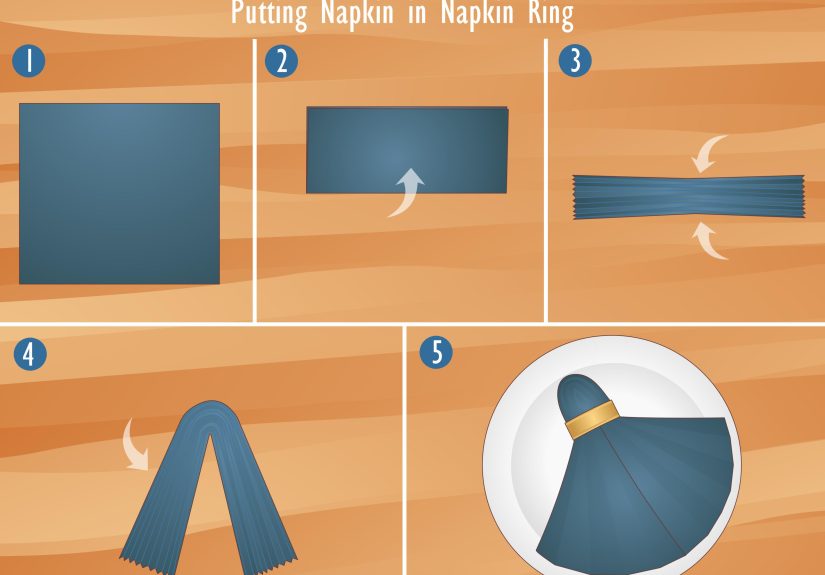
- Lay the napkin flat.
- Starting at one side, fold the napkin back and forth in even accordion pleats, about 1 to 1.5 inches wide.
- Once the whole napkin is pleated, pinch it at the center or slightly below the center.
- Slide the napkin ring around the pinched section.
- Spread one end outward to create the fan shape.
- Leave the other end gathered below the ring, or fluff it for extra fullness.
The fan fold looks especially good with crisp cotton napkins that can hold a crease. Place it upright on a plate for the biggest impact, or lay it on its side if you want something a little softer. This fold shines at holiday dinners, bridal events, and milestone celebrations where the table itself is part of the experience. A gold ring with a white fan fold looks timeless. A patterned napkin with a plain ring feels playful and energetic.
Why it works: The pleats create shape and dimension, and the ring keeps the fan from collapsing into a sad accordion pancake. That is the technical term. Probably.
How to Choose the Right Fold for the Occasion
The best napkin fold for a napkin ring depends on more than your patience level. Think about the event, your decor, and how formal the meal feels. For a casual family dinner, the center pinch is ideal because it looks warm and welcoming. For a polished dinner party, the triangle sweep gives structure without feeling stiff. For modern or minimalist tables, the slim roll keeps everything streamlined. For holidays and special occasions, the fan fold adds a celebratory flourish that makes the table feel complete.
You should also think about what is happening on the plate. If the plate design is elaborate, a smaller or narrower fold may work better so it does not cover everything up. If the place setting is simple, a fuller fold can add the visual interest you need.
Common Mistakes to Avoid
The biggest napkin-folding mistake is choosing a fold that fights the fabric. A limp, silky napkin will not hold a fan fold very well, and a bulky napkin may resist a slim roll. Work with the material you have instead of trying to force it into a shape it hates.
Another common issue is using a ring that is too tight. If you have to wrestle the napkin through the ring like you are stuffing a sleeping bag into a travel pouch, the result will not look elegant. Choose a ring with enough room to let the fabric breathe.
Finally, avoid overdecorating. If your napkin has a bold print, use a simple ring and a simple fold. If your ring is ornate, keep the fold cleaner. Table styling is like seasoning food: enough brings everything to life, too much makes everyone nervous.
Easy Styling Ideas That Make Napkin Rings Look Even Better
Once your napkin is folded, a few small details can make the whole setting feel more layered and personal. Slip a handwritten name tag under the ring for a dinner party. Tuck in a rosemary sprig for a winter meal. Add a dried orange slice for a holiday brunch. Use velvet ribbon for a formal event or raffia for a summer outdoor table. These are tiny touches, but they create that “wow, this is lovely” reaction guests remember.
You can also repeat the material of the napkin ring elsewhere on the table for a more cohesive look. Wooden rings pair beautifully with wood chargers or woven placemats. Gold rings feel right at home with brass candlesticks. Woven rings look especially good with linen runners and ceramic plates. In other words, let your napkin ring join the conversation instead of shouting over everyone else.
Real-Life Experiences: What These Napkin Folds Actually Feel Like on a Real Table
There is a big difference between a napkin fold that looks pretty in a tutorial and one that survives an actual meal with actual humans. That is why the four folds above work so well in real life. They do not just photograph nicely. They behave themselves. And honestly, that is all most hosts are asking for.
The first time many people try to dress up a table, they go straight for something wildly complicated. Maybe it looks like a swan. Maybe it resembles a lotus flower. Maybe it requires twelve precise creases and a spiritual commitment to symmetry. Then the guests arrive, one napkin flops over, another unfolds halfway, and suddenly the host is pretending they always meant for the table to look “relaxed.” This is where napkin rings become the hero of the story. They make simple folds look intentional and let you focus on the dinner, not the geometry.
On casual family tables, the classic center pinch tends to win hearts because it feels soft and welcoming. It says, “Yes, this is special,” without suggesting anyone should sit up straighter than usual. It is especially forgiving when the napkins are not perfectly pressed, which is good news for busy people and bad news for perfectionists who were hoping to judge everyone else. The gathered shape also makes the place setting feel more generous, almost like the napkin is part of the centerpiece rather than just a utility item.
The triangle sweep tends to shine at holiday meals and more traditional dinners because it gives the table a cleaner structure. It looks especially nice when there is already a lot happening visually, such as patterned china, candles, serving dishes, or place cards. The fold keeps the table from feeling chaotic. It gives the eye a place to rest. Hosts often discover that this style is one of the easiest ways to make a mixed collection of plates and glassware feel more coordinated.
The slim roll is a favorite for modern homes and buffet setups because it stays compact. It does not sprawl across the plate or cover your salad fork like a dramatic cape. It is practical, tidy, and easy to stack if you are setting a sideboard. The funny thing is that the simpler the fold, the more expensive the table can look. Clean lines have a way of making everything feel considered.
Then there is the fan fold, which brings pure celebration energy. This one is for the host who wants the table to have a little sparkle before the food even arrives. It is wonderful for showers, birthdays, and holiday meals because it creates height and movement. Guests notice it right away. Children love it. Adults act cool about it, but they notice too.
The biggest real-life lesson is this: napkin folding is not about impressing people with difficulty. It is about making the table feel cared for. A well-folded napkin in a ring tells guests that someone thought about the experience of sitting down together. And that is what good hosting always comes back to. Not perfection. Not performance. Just thoughtful details that make people feel welcome.
Final Thoughts
If you want a quick way to make your table look more polished, learning how to fold a napkin for a napkin ring is well worth it. You do not need a dozen techniques. You need a few reliable ones that match different moods and occasions. The classic center pinch is easy and graceful. The triangle sweep is crisp and traditional. The slim roll is sleek and modern. The fan fold brings the party.
Once you know these four napkin-folding ideas, you can mix and match them with different rings, fabrics, and table styles all year long. And that is the beauty of it: one small detail can change the entire feel of the table. Not bad for a napkin.