Table of Contents >> Show >> Hide
- Before You Fall in Love: 5 Quick Decisions That Make Cabinets “Work”
- The Main Event: 38 Kitchen Cabinet Ideas
- 1) Classic white Shaker for “it always looks clean” energy
- 2) Slim Shaker for a lighter, more contemporary frame
- 3) Inset doors for tailored, furniture-grade polish
- 4) Beaded inset for cottage charm without going full theme park
- 5) Raised-panel doors for traditional, formal homes
- 6) Craftsman/Mission-inspired doors for honest, sturdy style
- 7) Flat-panel (slab) doors for modern minimalism
- 8) High-gloss lacquer for ultra-modern “gallery kitchen” drama
- 9) Handleless fronts (integrated pulls) for a seamless look
- 10) Warm white oak for natural, airy sophistication
- 11) Walnut cabinets for midcentury richness
- 12) Painted lowers + light uppers for an easy two-tone win
- 13) Navy lowers with white uppers for classic contrast
- 14) Deep green cabinets for cozy, nature-forward style
- 15) Matte black cabinets for modern, architectural impact
- 16) Greige or “mushroom” neutrals for soft, versatile warmth
- 17) Buttery yellow on a pantry wall or island for cheerful retro flair
- 18) Powder blue for coastal or vintage-inspired kitchens
- 19) A contrasting island color to create a focal point
- 20) Stained island + painted perimeter for “designer layering”
- 21) Glass-front uppers to lighten heavy cabinetry
- 22) Reeded (ribbed) glass for texture without clutter
- 23) Replace a few uppers with open shelvingstrategically
- 24) Add an appliance garage to hide countertop clutter
- 25) Go to the ceiling with stacked uppers for maximum storage
- 26) Create a “hutch” moment with furniture-style uppers
- 27) Add legs to an island for a furniture feel
- 28) Fluted or reeded wood fronts for subtle statement texture
- 29) Beadboard panels for farmhouse warmth
- 30) Scalloped trim for playful cottagecore flair
- 31) Wire-mesh cabinet inserts for vintage pantry vibes
- 32) Industrial edge with metal accents and simple slab doors
- 33) Color-drench your cabinetry for a bold, cohesive look
- 34) Put the “fun color” inside the cabinets
- 35) Make hardware the hero (oversized pulls, mixed metals)
- 36) Upgrade hinges and choose full overlay for a cleaner face
- 37) Go big on interior organization: pull-outs, dividers, and “no more lid avalanches”
- 38) Refresh instead of replace: paint, reface, or swap doors
- of Real-World “Cabinet Life” Experiences (What People Learn After the Pinterest Phase)
- Conclusion
Kitchen cabinets are basically your kitchen’s outfit. They’re the first thing people notice, they set the vibe, andlike a questionable pair of skinny jeansyou’ll regret the wrong choice every single day. The good news? There isn’t one “best” cabinet look. There’s the best look for your home, your habits, and your tolerance for wiping fingerprints off glossy doors at 10 p.m.
Below are 38 cabinet ideas spanning everything from classic Shaker to sleek slab fronts, cozy cottage to modern minimal. You’ll also get practical guidance on door styles, finishes, hardware, and storage upgradesbecause pretty cabinets that don’t function are just expensive wooden confidence issues.
Before You Fall in Love: 5 Quick Decisions That Make Cabinets “Work”
1) Pick a door style that matches your home’s architecture
Door style is the biggest style signal. Shaker leans timeless; raised-panel reads traditional; slab/flat-panel feels modern. When in doubt, choose a simple door and let hardware, lighting, and color do the flirting.
2) Choose your overlay (how the doors sit on the cabinet)
Full overlay doors cover more of the frame for a cleaner, modern look. Inset doors sit flush in the frame for a tailored, furniture-like feel (and usually cost more). Partial overlay lands somewhere in between.
3) Decide whether you’re team paint, stain, or “both”
Painted cabinets give you color flexibility. Stained wood shows grain and adds warmth. Mixing the twopainted perimeter cabinets with a stained islandis a designer favorite because it adds depth without chaos.
4) Don’t treat hardware like an afterthought
Hardware is the cabinet’s jewelry. It can modernize Shaker doors, soften slab fronts, or give basic cabinets a custom look. Bonus: swapping hardware is a “small change, big payoff” move.
5) Design storage from the inside out
The best cabinet upgrade is the one you feel daily: pull-out trash, spice drawers, tray dividers, corner solutions, and pantry pull-outs. Beautiful exteriors are greatuntil you’re playing Jenga with pots and lids.
The Main Event: 38 Kitchen Cabinet Ideas
1) Classic white Shaker for “it always looks clean” energy
White Shaker cabinets are the universal translator of kitchen design: they work in traditional, modern farmhouse, coastal, and transitional spaces. Pair with simple pulls for timeless, or bold hardware to modernize.
2) Slim Shaker for a lighter, more contemporary frame
Want Shaker’s structure without the chunky rails? Choose a narrower frame profile. It reads crisp and current, especially with minimal hardware and clean quartz countertops.
3) Inset doors for tailored, furniture-grade polish
Inset cabinetry sits flush within the frame, delivering that custom, “this kitchen came with the houseand a trust fund” look. It’s great for classic and transitional styles where details matter.
4) Beaded inset for cottage charm without going full theme park
Add a subtle bead detail around inset doors for texture and softness. It’s perfect for cottage, vintage-inspired, and warm traditional kitchensespecially with creamy paint colors.
5) Raised-panel doors for traditional, formal homes
Raised-panel cabinets bring dimension and shadow lines. Keep them feeling fresh with updated paint, streamlined crown molding, and hardware that isn’t aggressively ornate.
6) Craftsman/Mission-inspired doors for honest, sturdy style
Think clean lines, solid proportions, and a bit of heritage. This style pairs beautifully with natural wood tones, handcrafted tile, and warm metals like aged brass.
7) Flat-panel (slab) doors for modern minimalism
Flat fronts create a sleek, uninterrupted look that loves contemporary spaces. Choose matte finishes for a softer, warmer modern vibeor gloss if you enjoy living with a microfiber cloth.
8) High-gloss lacquer for ultra-modern “gallery kitchen” drama
Glossy cabinets bounce light around, which can help smaller kitchens feel bigger. Use them strategicallylike on uppers or an islandso the shine feels intentional, not overwhelming.
9) Handleless fronts (integrated pulls) for a seamless look
Integrated pulls and edge profiles keep the cabinetry visually quietgreat for contemporary, European-inspired, and minimalist kitchens. Pair with a statement stone backsplash for contrast.
10) Warm white oak for natural, airy sophistication
Light oak cabinetry is a modern classic: warm, organic, and versatile. It works with Scandinavian, Japandi, and transitional interiorsand it hides everyday scuffs better than pure white.
11) Walnut cabinets for midcentury richness
Walnut’s depth and grain instantly read midcentury modern. Keep the lines clean, add simple hardware, and consider a slim-profile hood or open shelving to keep the look light.
12) Painted lowers + light uppers for an easy two-tone win
Two-tone cabinets add personality without making the room feel busy. A darker color on the base cabinets grounds the space, while lighter uppers keep the kitchen open and bright.
13) Navy lowers with white uppers for classic contrast
Navy is bold but still “grown-up.” Pair navy base cabinets with white uppers and warm metals for a look that feels timeless, not trendy-for-Thursday.
14) Deep green cabinets for cozy, nature-forward style
Dark green reads sophisticated and groundedespecially with brass hardware and warm wood accents. It’s a strong choice for traditional homes that still want modern mood.
15) Matte black cabinets for modern, architectural impact
Black cabinetry can feel stunningly sleek. Balance it with good lighting, reflective surfaces, and warm elements like wood stools or a lighter backsplash so the room doesn’t feel like a stylish cave.
16) Greige or “mushroom” neutrals for soft, versatile warmth
If white feels too stark and gray feels too cold, warm neutrals are the happy middle. They play nicely with both cool stone and warm wood, making them a flexible long-term pick.
17) Buttery yellow on a pantry wall or island for cheerful retro flair
Yellow cabinets can be surprisingly sophisticated when the tone is soft and warm. Use it as an accent (like a tall pantry run or island) paired with calm neutrals to keep it tasteful.
18) Powder blue for coastal or vintage-inspired kitchens
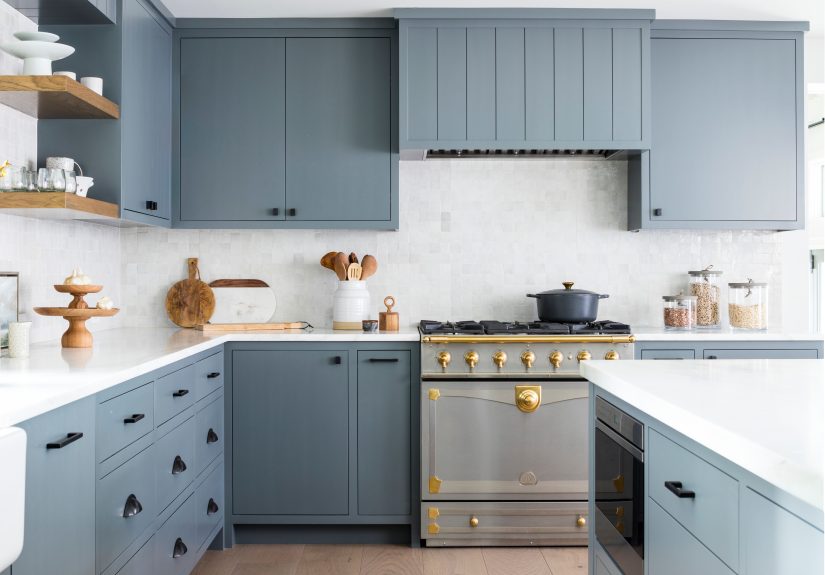
Soft blues bring an airy, relaxed feel. Pair with white counters, light wood floors, and simple hardware. It’s an easy way to get color without going full neon.
19) A contrasting island color to create a focal point
Keep perimeter cabinets neutral, then choose a standout island colordeep blue, green, charcoal, or stained wood. It defines the heart of the kitchen without making everything shout at once.
20) Stained island + painted perimeter for “designer layering”
This mix adds depth and makes the kitchen feel collected over time. It also visually anchors the island, which is handy if your layout is open to the living space.
21) Glass-front uppers to lighten heavy cabinetry
Glass-front cabinets break up a solid wall of doors and make the room feel more open. Pro tip: keep what’s inside visually tidy (or choose seeded glass to blur the chaos).
22) Reeded (ribbed) glass for texture without clutter
Reeded glass gives you that “custom detail” vibe while disguising mismatched mugs and that one plate you only use on holidays. It’s especially good for transitional and modern kitchens.
23) Replace a few uppers with open shelvingstrategically
Open shelves can make a kitchen feel bigger and more casual. The trick is to do a small dose (like around a window or coffee station), not a full “my dusting schedule is ambitious” makeover.
24) Add an appliance garage to hide countertop clutter
Coffee machines, toasters, and mixers are useful… and visually loud. An appliance garage (or a tall cabinet with outlets) keeps counters clean while still keeping daily tools accessible.
25) Go to the ceiling with stacked uppers for maximum storage
Ceiling-height cabinetry looks built-in and prevents the dreaded dust shelf above cabinets. Use the top portion for rarely used items, and consider glass doors up high for a lighter look.
26) Create a “hutch” moment with furniture-style uppers
A built-in hutch areaoften with glass fronts or open shelvesadds charm and breaks up uniform cabinetry. It works especially well in farmhouse, traditional, and transitional kitchens.
27) Add legs to an island for a furniture feel
Island legs soften a boxy layout and add a traditional or cottage vibe. Pair with classic hardware and a warm countertop material for a welcoming, lived-in look.
28) Fluted or reeded wood fronts for subtle statement texture
Vertical grooves add depth and shadow without requiring bold color. Use fluting on an island or a pantry wall to get an architectural detail that still feels refined.
29) Beadboard panels for farmhouse warmth
Beadboard reads cozy and casual, especially on islands or ends of cabinet runs. Pair with simple Shaker doors so the textures don’t compete for attention.
30) Scalloped trim for playful cottagecore flair
A little scallop detail (on toe-kicks, valances, or open shelf brackets) adds personality. Keep it controlled and consistentone repeated detail looks intentional; twelve looks like a craft store exploded.
31) Wire-mesh cabinet inserts for vintage pantry vibes
Wire mesh (or metal grille) inserts add texture and old-world charmgreat for traditional, French country, and eclectic kitchens. It also provides a softer reveal than clear glass.
32) Industrial edge with metal accents and simple slab doors
For loft-style or industrial kitchens, go for clean doors, darker finishes, and metal momentslike black pulls or stainless panels. Balance with warm wood to keep it inviting.
33) Color-drench your cabinetry for a bold, cohesive look
Paint cabinets, trim, and even walls in the same color family for a saturated, designer effect. This works especially well in smaller kitchens where a single color reduces visual breaks.
34) Put the “fun color” inside the cabinets
Keep the outside classic, then paint cabinet interiors a surprise shadesoft green, navy, or a warm clay tone. It’s a playful detail that feels custom every time you open a door.
35) Make hardware the hero (oversized pulls, mixed metals)
Larger pulls can modernize traditional doors and improve function. Mixed metals can work toojust limit it to two finishes and repeat them consistently so it looks curated, not accidental.
36) Upgrade hinges and choose full overlay for a cleaner face
Full overlay doors and concealed hinges create a streamlined look that suits modern and transitional kitchens. This is a great choice if you want cabinets to feel “built-in” rather than obviously modular.
37) Go big on interior organization: pull-outs, dividers, and “no more lid avalanches”
Add roll-out trays, vertical dividers for baking sheets, spice pull-outs near the cooktop, and a dedicated trash pull-out. It’s the kind of upgrade you’ll thank yourself for daily.
38) Refresh instead of replace: paint, reface, or swap doors
If cabinet boxes are solid, consider repainting, refacing, or replacing doors and hardware. This can deliver a major style change with less demo, less time, and fewer “why is my kitchen a construction zone?” moments.
of Real-World “Cabinet Life” Experiences (What People Learn After the Pinterest Phase)
After the design boards are saved and the sample doors are admired like tiny pieces of art, real life shows up usually carrying a sticky-handed toddler, a splattering skillet, or a dog who believes cabinet toe-kicks are a personal invitation. That’s why the most successful cabinet choices aren’t just pretty; they’re aligned with how people actually live.
One common lesson: finish matters more than you think. Matte and satin paints tend to forgive fingerprints and micro-scratches better than high-gloss. Gloss can look stunning in a magazine-ready kitchen, but in many homes it becomes a full-time job for your cleaning spray. On the flip side, heavily textured wood grains hide wear beautifullyso if you love a warm oak or walnut look, you may get both style and sanity.
Another classic “wish I knew” moment is open shelving reality. People love the airy look, and it truly can lighten a kitchen. But the shelves also become a stageand everything on them becomes part of the set. If you’re the type who wants to grab any mug, any plate, any cereal bowl without thinking, open shelves can feel like living inside a boutique display. A balanced approach tends to win: open shelving in one zone (coffee station, bar area, or around a window), closed cabinets elsewhere.
Color choices also come with surprises. Dark lowers look sharp and hide scuffs, but they can show dust or crumbs under certain lighting. Bright white cabinets feel fresh, but they can highlight dings near knobs and pulls. Warm neutralscreamy whites, soft taupes, mushroom tonesoften hit the sweet spot: they look intentional, photograph well, and don’t tattletale every single smudge. And if you’re craving bold color, many homeowners find that committing to it on an island, pantry run, or even inside cabinet interiors scratches the itch without risking “I loved it for a month” regret.
Storage is where real-life kitchens either shine or quietly drive people nuts. Pull-out trash is one of those “how did I live without this?” upgrades. Vertical tray dividers save baking sheets from becoming a loud metal avalanche. Spice pull-outs near the cooktop make weeknight cooking smoother. And if there’s one universal truth, it’s that corner cabinets will find a way to waste space unless you plan for itlazy Susans, corner pull-outs, or smart drawers can turn a black hole into useful storage.
Finally, hardware is the unsung hero. People often choose it last, then realize it’s what they touch most. A pull that looks delicate can feel annoying in daily use; an oversized pull can feel luxurious and effortless. The best “experience-based” advice is simple: try samples in your hand, imagine using them with wet hands, and pick the option that feels goodnot just the one that looks cute in a close-up photo.
Conclusion
The best kitchen cabinet idea is the one that matches your design style and your daily rhythm. Start with the door style that suits your home, choose a finish that can handle real life, and invest in storage upgrades that make cooking and cleanup easier. Then have fun with color, texture, and hardwarebecause cabinets are functional, but they can still have personality (unlike that beige appliance you regret from 2011).