Table of Contents >> Show >> Hide
- Quick Snapshot: What Makes a Korat a Korat?
- Way #1: Check the Silver-Tipped Blue Coat (a.k.a. The “Halo” Effect)
- Way #2: Spot the Heart-Shaped Head and the Surprisingly Solid Body
- Way #3: Read the EyesThen Verify the Story
- Common Look-Alikes: Korat vs Russian Blue vs Chartreux
- Extra Tips for a Confident Korat Identification
- Final Thoughts
- Experiences Related to Identifying a Korat Cat (Realistic Scenarios You Might Recognize)
The Korat cat is the kind of feline that makes people stop mid-sentence and say, “Wait… what is that cat?” (Usually while leaning in like they’re inspecting a priceless gemstone.) Korats are rare, gorgeous, andhere’s the tricky partoften mistaken for other “blue” (gray) cat breeds.
If you’re trying to identify a Korat cat, you don’t need a monocle or a lab coat. You need three reliable checkpoints: the coat, the head/body shape, and the eyesplus a little common sense about paperwork and provenance. Let’s break it down in a way that’s accurate, practical, and only mildly dramatic.
Quick Snapshot: What Makes a Korat a Korat?
Korats are a natural breed originally from Thailand, famous for a silver-tipped blue coat, a heart-shaped head, and large, luminous eyes that often mature into a striking green. They’re typically small-to-medium in size but surprisingly solidlike a furry paperweight with opinions.
Important reality check: many cats can be gray with greenish eyes. A “looks-like” cat can be adorable and wonderful without being a pedigree Korat. Think of this guide as your best shot at an informed IDwithout turning your living room into a cat episode of CSI.
Way #1: Check the Silver-Tipped Blue Coat (a.k.a. The “Halo” Effect)
The Korat’s coat is the first big clueand it’s more specific than “gray cat.” A true Korat coat is blue (cat-fancy speak for a diluted black) with silver tipping that can create a shimmering, frosty looksometimes described as a soft “halo” or glow.
What to look for in real life
- Color: Blue-gray overall, but not flat or dulllook for a gentle sheen, especially under natural light.
- Silver tips: The ends of the hairs catch the light. The cat can look like it was lightly dusted with fairy glitter (the tasteful kind).
- Pattern: Adults should appear solidno obvious stripes, patches, or white markings. (Kittens may show faint “ghost” markings that fade with age.)
- Texture: The coat is typically short, fine, and close-lying. Many descriptions emphasize it as a single coat rather than a plush double coat.
A simple “home test” (no clipboards required)
Stand near a window or go outside in shaded daylight. Slowly move your cat (or encourage them to move) so the coat catches the light. On a Korat, you’re looking for a soft shimmer rather than a matte, uniform gray. Think “polished pewter,” not “dryer lint chic.”
How this helps you avoid the classic mix-ups
Korats are frequently confused with other blue breeds. The coat can help:
- Russian Blue: often has a denser, plush double coat and a more elegant, slender vibe.
- Chartreux: tends to have a thicker, woollier coat with an undercoatmore “teddy bear” texture than “sleek satin.”
Way #2: Spot the Heart-Shaped Head and the Surprisingly Solid Body
If the coat is the Korat’s first calling card, the head shape is the signature on the back. A Korat is famous for a heart-shaped head when viewed from the front. Yes, reallya heart. Not a vague “sort of heart-ish if you squint,” but a recognizable shape created by the brow and cheek contours.
How to see the “heart” without overthinking it
- Look at your cat straight-on (photos help). The top curves of the heart come from the brow area.
- The sides of the face taper gently down toward the muzzle, completing that heart outline.
- Large ears can accentuate the look, giving the face an alert, open expression.
If you take a photo head-on and your first thought is “Valentine’s Day, but make it feline,” you’re on the right track. If your first thought is “triangle” or “sharp wedge,” that leans away from Korat.
Body shape: compact, muscular, and heavier than expected
Korats are often described as small-to-medium but muscular and surprisingly heavy for their size. They’re not fragile-looking. They’re more “athletic little tank.”
- Build: semi-cobby/compact with a solid chest and good muscle tone.
- Legs: some descriptions note the front legs may be slightly shorter than the back legs.
- Overall silhouette: lots of smooth curves, not sharp angles.
Practical tip: if your cat feels like they’re made of pure determination when you try to pick them up, that sturdiness can support a Korat ID (though plenty of mixed-breed cats are also impressively “dense”).
Way #3: Read the EyesThen Verify the Story
Korat eyes are one of their most recognizable features: large, round, luminous, and often a vivid green in adulthood. But here’s the catch: eye color can take time to mature, and green eyes are not exclusive to Korats. So use eyes as a powerful clue, not the only proof.
Eye color and maturity: why age matters
Many Korats don’t reach their full, mature eye color until they’re older. Kittens can start with blue eyes and shift through amber/yellow tones before settling into greener shades later. Translation: a young cat might be “Korat-shaped” in every other way but still not have the final eye color yet.
What “Korat eyes” look like beyond color
- Size: large and attention-grabbingthese are “stare into your soul” eyes.
- Shape: rounded and expressive rather than narrow or almondy.
- Presence: bright, alert, almost spotlight-like in certain lighting.
Verify the story (because looks alone can fool you)
If you’re trying to confirm whether a cat is a true Koratespecially for breeding, showing, or a purchase visual traits are not enough. Here are grounded ways people verify:
- Registration/pedigree: reputable breeders can provide registry paperwork and lineage details.
- Ethical breeder practices: ask about health testing and parent history; Korats can have known inherited concerns that responsible breeders screen for.
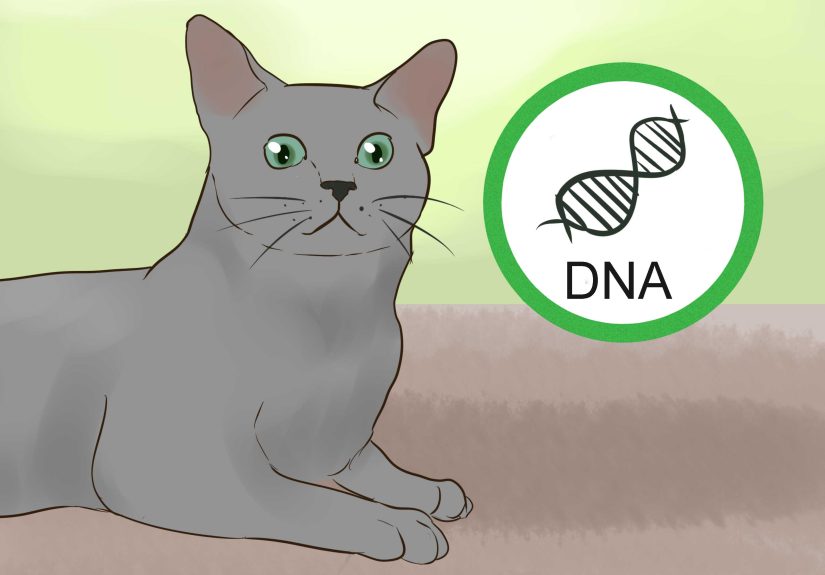
- DNA testing: some resources note that a cat DNA test can help evaluate breed ancestry. Treat it as a supporting toolnot an absolute verdictespecially for rare breeds.
In plain English: if someone is selling you a “pure Korat” with no paperwork, no health info, and a price tag that screams “trust me, bro,” proceed carefully.
Common Look-Alikes: Korat vs Russian Blue vs Chartreux
If you’re stuck between three blue beauties, this comparison helps you focus on the most reliable differences.
| Feature | Korat | Russian Blue | Chartreux |
|---|---|---|---|
| Head shape | Heart-shaped (front view) | More wedge-shaped | Rounded head; distinctive smile-like muzzle |
| Coat feel | Short, close-lying, typically described as single coat; silver tipping creates glow | Dense, plush double coat; silvery sheen | Dense, woolly coat with insulating undercoat |
| Eye color | Often vivid green in adults; can take time to mature (amber/greenish tones possible) | Commonly bright green | Gold to copper (green is typically considered a fault in show standards) |
| Build | Compact, muscular, “heavier than expected” | More slender and elegant | Sturdy, powerful body |
If your “mystery blue cat” has copper eyes, it’s probably not a Korat. If the head reads as a crisp wedge, it leans away from Korat. If the coat feels like plush velvet with serious undercoat density, you’re likely looking at a different blue breed.
Extra Tips for a Confident Korat Identification
Use a checklist, not a single trait
A solid Korat ID usually comes from multiple traits lining up at once: silver-tipped blue coat + heart-shaped head + large luminous eyes + compact muscular build. The more boxes checked, the more confidence you can have.
Be cautious with shelter IDs
Shelters and rescues do amazing work, but breed labeling is often an educated guess based on appearance. A “Korat mix” may simply mean “gray cat with striking eyes.” That doesn’t reduce the cat’s valuejust the certainty of the label.
If you’re buying, confirm before you commit
Because Korats are rare, they can attract inflated claims. For purchases, prioritize: transparent documentation, health screening, and breeders who happily answer detailed questions. A reputable seller won’t rush you or get weirdly defensive about basic verification.
Final Thoughts
Identifying a Korat cat is part observation, part comparison, and part detective work. Start with the coat’s silver-tipped shimmer, confirm the heart-shaped head and sturdy build, then use the eyes (and the paperwork) to strengthen your conclusion.
And if your cat turns out to be “not a Korat, but still unbelievably cool,” congratulationsyou still won. The best cat is the one who chooses your lap as their throne.
Experiences Related to Identifying a Korat Cat (Realistic Scenarios You Might Recognize)
People who go looking for a Korat often describe the experience as a mix of excitement and second-guessing. It usually starts innocently: you see a blue-gray cat with bright eyes, and your brain immediately whispers, “Is that a Korat?” Then you do what any reasonable modern human doesyou zoom in on photos until the pixels surrender.
One common scenario happens at a cat show or breeder meet-and-greet. You walk past row after row of beautiful cats, and then you spot the glow. Under the show lights, a Korat’s silver tipping can look like someone turned on a soft spotlight just for that coat. Newcomers often expect “gray,” but the Korat reads more like polished silver-bluesleek and luminous. The funny part is watching people try to be casual while clearly leaning in for a better look, like they’re admiring art in a museum. (Hands behind the back, respectful nod, internal screaming.)
Another relatable experience: meeting a “maybe Korat” through adoption or a friend-of-a-friend. The cat is gray, friendly, and has eyes that look green-ish in some lighting and amber-ish in others. This is where the Korat identification process gets real. People start checking the head shape in photos: straight-on shot, neutral expression, ears visible. If the face outlines into a heartbrow curves up top, gentle taper down the sides it feels like you’ve cracked a code. If it looks more wedge-like, you pivot to “maybe Russian Blue-ish,” and life continues.
The coat test tends to be the most satisfying in everyday life. In natural daylight, you may notice that some blue cats look flat gray, while others have that frosty sheen that shifts as they move. Korat fans sometimes describe the moment you finally see the “halo” as the cat equivalent of spotting a rare bird: you want to text someone immediately, but you also don’t want to move too fast and ruin the lighting.
Eye color is where patience comes in. Many owners of young Korat-like cats report a slow, almost comical evolution: blue kitten eyes become amber, then greenish, thenafter what feels like foreverbright green. During this phase, it’s normal to feel unsure. The practical move is to treat eye color as a “developing clue” rather than a deal-breaker for a younger cat.
Finally, if you’re identifying a Korat for serious reasons (like purchasing a pedigree cat), the most reassuring experience is often the boring part: paperwork and transparency. People consistently feel most confident when a breeder can show registration details, discuss lineage, explain health testing, and answer questions without turning it into a sales performance. It’s not as glamorous as the coat glowbut it’s the difference between “pretty sure” and “yes, this is genuinely a Korat.”