Table of Contents >> Show >> Hide
- First, What’s an IMEI (and Why Should You Care)?
- A Quick Safety Note (Because the Internet Is the Internet)
- Method 1: Check the Physical Phone (SIM Tray/Back/Battery Label) or the Original Box
- Method 2: Use Your Online Account (Apple/Google/Samsung/Carrier) From Another Device
- Method 3: Use the Dial Code *#06# (Often Works From the Emergency Dialer)
- If None of the Three Methods Work, Here’s What to Do Next
- IMEI Best Practices (So Future You Doesn’t Hate Present You)
- FAQ: Quick Answers to Common IMEI Questions
- Real-World Experiences: of “I Wish I’d Known This Earlier”
- Conclusion
Locked out of your phone and suddenly everyone and their cousin is asking for your IMEI?
(Carrier support. Insurance claim. Trade-in. Police report. That one friend who “just needs it for something real quick.”)
The good news: you usually don’t have to unlock your phone to find it.
The better news: you can do it without playing amateur hacker or performing a dramatic device disassembly on your kitchen table.
This guide pulls together practical steps from official manufacturer and carrier support resources, plus reputable consumer tech help,
then rewrites it into one clean, no-stress plan. You’ll get three simple ways to find an IMEI on a locked iPhone or Android phone,
with device-specific notes (like dual SIM and eSIM), and a few “learn-from-my-mistakes” experiences at the end.
First, What’s an IMEI (and Why Should You Care)?
IMEI stands for International Mobile Equipment Identitya unique identifier for your phone’s cellular hardware.
Most phones use a 15-digit IMEI. If you have dual SIM or eSIM + physical SIM, you may see IMEI 1 and IMEI 2.
Some older networks/devices also use terms like MEID or ESNrelated identifiers, different label.
Common reasons you might need an IMEI number:
- Carrier unlock requests or network compatibility checks
- Insurance claims or warranty paperwork
- Trade-in and resale listings (so buyers can verify the exact model)
- Lost/stolen reporting (carriers may block a device using its identifier)
- Device management at work or school
A Quick Safety Note (Because the Internet Is the Internet)
Your IMEI is not a password, but it is sensitive. Share it only with trusted parties (your carrier, insurer, reputable buyer platform),
and be suspicious of random messages asking for it “to verify something.” If you’re trying to recover an IMEI for a phone you own,
the methods below are safe, standard, and don’t require bypassing your lock screen.
Method 1: Check the Physical Phone (SIM Tray/Back/Battery Label) or the Original Box
This is the “no login, no fuss” option. If your phone’s IMEI is printed on hardware or packaging, you can get it even if the phone is locked,
offline, or sulking in a drawer like it pays rent.
Where to look on the phone
-
iPhone with a SIM tray: Many iPhones have the IMEI etched on the SIM tray.
Pop the tray out with a SIM tool (or a paperclip if you’re living dangerously) and look closely under bright light. -
Android phones with a removable back/battery: Some models print the IMEI on a sticker under the battery
or inside the back cover. - Older devices: A few older phones print identifiers on the back casing.
Where to look if your phone is eSIM-only (no SIM tray)
Some phonesespecially certain U.S. iPhone modelsmay not have a SIM tray at all. In those cases, the packaging and your online accounts
(Method 2) become your best friends.
Where to look on the original box (or receipt)
- Retail box label: Look for a barcode label with “IMEI” (and possibly IMEI2, EID, ICCID).
- Carrier paperwork/contract: Sometimes the device ID/IMEI is printed on activation documents.
- Receipt or order details: Many retailers store purchase history that can help you retrieve device identifiers.
Pro tip: Use your phone camera (another phone, not the locked one) and zoom in. IMEI text can be tinylike it was printed for ants with excellent eyesight.
Best for: People who still have the box, can access the SIM tray, or have a phone with a visible label.
Not ideal for: Phones with no external IMEI markings and missing packaging (don’t panicMethod 2 is built for you).
Method 2: Use Your Online Account (Apple/Google/Samsung/Carrier) From Another Device
If your phone is locked but you can sign into the account that owns it, you can often find the IMEI from a web dashboard or an app.
This method is especially clutch if your phone is eSIM-only, your SIM tray is missing (it happens), or your packaging is long gone.
Option A: Apple ID / Apple device list (iPhone)
If your iPhone is tied to your Apple ID, you can check your list of devices from another trusted device or a browser session.
Depending on the device and what Apple has on record, you may see identifiers like the serial numberand often IMEI/MEID for iPhones.
- On another Apple device, open your Apple ID device list (in account settings).
- Select the iPhone you’re trying to identify.
- Look for device details (serial number and, in many cases, IMEI/MEID).
Real-world use case: You’re filing an insurance claim while your iPhone is stuck on the “try again in 1 hour” screen.
Your Apple account can still help you pull the info you need.
Option B: Google Find My Device / Find Hub (Android)
Many Android phones that were signed in with your Google account can display device detailsincluding the IMEIthrough Google’s device-finding services.
You don’t need the phone unlocked in your hand; you need access to the Google account connected to it.
- Sign into the Google account associated with the locked phone.
- Open the device-finding page/app and select the correct phone.
- Open the device info/settings panel where identifiers are listed.
Option C: Samsung account tools (Samsung Galaxy)
Samsung provides account-based ways to view device information, and Samsung’s own apps (like Samsung Members) can show identifiers
tied to your signed-in device profileuseful if your Galaxy phone is locked and you need the IMEI quickly.
- On another device, sign into the same Samsung account your phone uses.
- Check Samsung’s device/app support areas that list registered devices and their details.
- Locate IMEI/serial details for the matching device entry.
Option D: Your carrier account (Verizon, AT&T, T-Mobile, and others)
If your locked phone is currently (or recently) active on your cellular line, your carrier portal often displays your device ID/IMEI in the account dashboard.
This can be one of the fastest options if you’re the account owner.
Typical places to look:
- My Devices or Device Details
- Line management screens (select the line, then view device info)
- Bring Your Own Device or compatibility pages (sometimes they show saved device IDs)
Best for: Phones tied to an account you can still access (even if the phone itself is locked).
Bonus: Carrier dashboards are also handy for quickly confirming which phone is on which linebecause family plans are basically group projects with monthly invoices.
Method 3: Use the Dial Code *#06# (Often Works From the Emergency Dialer)
This is the classic method: dial *#06# and your IMEI pops up.
On many phones, you can access the dialer from the lock screen via Emergency Call and try the code there.
It’s not guaranteed on every model or every security configuration, but it’s quick enough that it’s worth attempting.
How to try it on a locked phone
- Wake the phone to the lock screen.
- Tap Emergency or Emergency Call (wording varies).
- Enter *#06#.
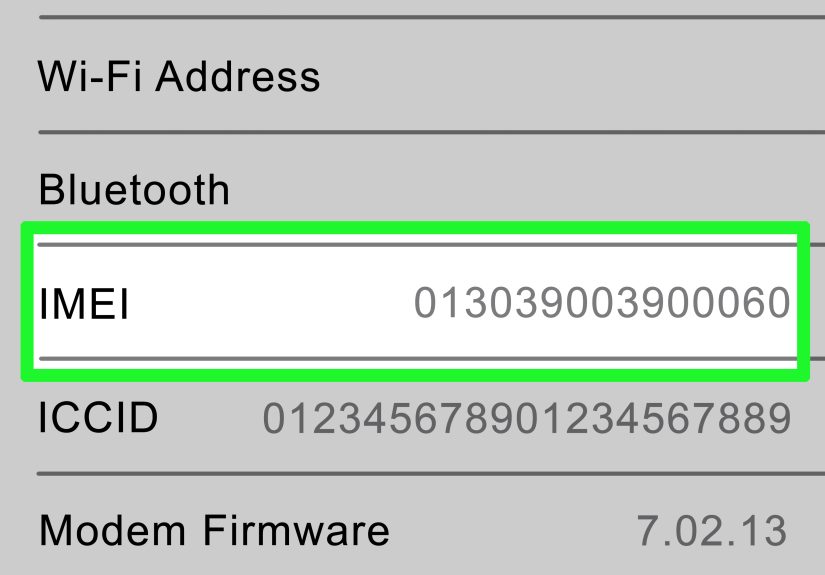
- If it works, the IMEI will display on screen (you may see IMEI 1 and IMEI 2).
- Take a photo or write it down carefully. One wrong digit = one pointless customer support chat.
What you might see (and why it’s normal)
- Two IMEIs: Dual SIM/eSIM devices can show IMEI (SIM slot 1) and IMEI (SIM slot 2).
- EID: Often displayed on eSIM-capable phones; this is not the IMEI, but it’s another carrier-relevant identifier.
- MEID/ESN: Sometimes appears on certain devices or networks alongside IMEI.
If *#06# doesn’t work: Don’t force it, don’t factory reset out of frustration, and definitely don’t start downloading sketchy “unlock tools.”
Use Method 1 (box/label) or Method 2 (account dashboard) instead.
If None of the Three Methods Work, Here’s What to Do Next
Sometimes the phone is too locked down, too damaged, or too “mystery device from the back of the junk drawer” to cooperate.
In that case, the goal is to find documentation that ties the device to you.
Smart fallback options
- Check your purchase record: Retailers may provide receipt copies or order history that lists device identifiers.
- Review your insurance paperwork: Phone insurance claims often record the IMEI at enrollment.
- Contact your carrier support: If the phone was used on your line, the carrier may have the IMEI on file for that line/device.
- Manufacturer support (with proof): If you can prove ownership, support teams can sometimes help identify the device.
One thing not to do: Don’t take apart a sealed phone to hunt for internal labels unless you truly know what you’re doing.
That’s a great way to turn “locked phone problem” into “locked phone problem + broken phone problem.”
IMEI Best Practices (So Future You Doesn’t Hate Present You)
- Save it now: Write your IMEI in a password manager note or a secure document.
- Keep the box label: A quick photo of the box sticker can save you later.
- Don’t post it publicly: Avoid listing a full IMEI in public resale posts. Share it only when necessary, and ideally in private messages.
- Watch for scams: “Send me your IMEI so I can check something” can be legitimateor a red flag, depending on who’s asking and why.
FAQ: Quick Answers to Common IMEI Questions
Is the IMEI the same as a serial number?
Nope. The serial number is manufacturer-specific, and the IMEI is the cellular equipment identifier.
You may need either one depending on the situation (warranty vs. carrier support, for example).
Why does my phone show IMEI 1 and IMEI 2?
Dual SIM or eSIM-capable phones often have multiple IMEIs. It’s normal. If you’re working with a carrier,
confirm which IMEI corresponds to the active SIM/eSIM line.
Can an IMEI be changed?
On normal consumer devices, it’s intended to be a stable identifier. If you’re seeing mismatches, you’re more likely dealing with
a dual-IMEI situation, a typo, or a device/box mix-up than a “mystical changing IMEI.”
If my phone is lost or stolen, should I give the IMEI to someone?
Share it with your carrier and insurance provider as needed, and use official channels for reporting.
Be cautious about sending it to random individuals or unofficial “recovery services.”
Real-World Experiences: of “I Wish I’d Known This Earlier”
The IMEI feels like one of those numbers you’ll definitely remember foreverright up until the exact moment you need it.
Here are a few common experiences (and lessons) people run into when trying to get an IMEI number on a locked phone.
Think of it as the “field guide” section, minus the khaki shorts.
1) The “New Phone Box? I Threw That Out Immediately” Moment
Someone buys a shiny new phone, unboxes it like it’s a game show prize, and tosses the packaging to “declutter.”
Months later, they’re locked out after too many passcode attempts and need the IMEI for a carrier unlock or trade-in.
The box label would’ve solved it in 12 seconds. Without it, they end up digging through account portals and old emails like an archaeologist of their own life.
Lesson: take one quick photo of the box sticker and save it somewhere safe. Future you will send present you a thank-you card.
2) The Dual SIM Surprise
A buyer lists their phone online and shares “the IMEI” from a screenshotexcept the phone shows IMEI 1 and IMEI 2, and they grabbed the wrong one.
Then the carrier compatibility check fails, the buyer panics, and everybody assumes the phone is cursed.
Lesson: if your phone supports eSIM or dual SIM, expect multiple IMEIs. When you’re working with a carrier or buyer,
ask which IMEI they need (usually the one tied to the active line).
3) The “Emergency Dialer Trick Didn’t Work” Frustration
People love the *#06# trick because it feels like a secret handshake. But some phones won’t show IMEI from the emergency dialer,
especially under stricter lock configurations. The mistake is thinking it’s the only methodthen spiraling into bad decisions
like downloading shady apps or trying random “unlock” videos.
Lesson: if *#06# doesn’t work on a locked phone, switch to the grown-up methods:
check the SIM tray/box (Method 1) or use your Apple/Google/carrier account (Method 2).
4) The “I Swear This Is My Phone” Customer Support Call
When a phone is locked and you don’t have the box, support teams may ask for proof of purchase or account verification.
That’s not them being difficultit’s them preventing fraud.
The smoothest calls happen when the owner can say: “It’s on my line, here’s the account, here’s the purchase date,” and then the carrier dashboard confirms the IMEI.
Lesson: keep at least one reliable breadcrumborder email, carrier receipt, or a saved note with your IMEI.
5) The “After This, I’m Doing the Smart Thing” Resolution
The best outcome of an IMEI scramble is building a tiny system so it never happens again:
a photo of the box label, a secure note with IMEI 1/IMEI 2, and a reminder that sharing IMEI publicly is a bad idea.
Lesson: one minute of preparation beats two hours of panic typing.
Conclusion
If your phone is locked, you still have straightforward ways to find the IMEI without unlocking anything:
(1) check the SIM tray/label or original box, (2) use your Apple/Google/Samsung or carrier account from another device,
and (3) try *#06# from the emergency dialer when supported.
Pick the method that matches what you have access to, write the number down carefully, and store it securely so this becomes a one-time adventure.