Table of Contents >> Show >> Hide
- Before You Start: The 60-Second “Don’t Make It Worse” Checklist
- Quick Cheat Sheet: Pick the Right Method
- Method 1: Cold Water + Dish Soap (Best for Fresh Acrylic Paint)
- Method 2: Rubbing Alcohol + Detergent (Best for Dried Acrylic Paint)
- Method 3: Oxygen Bleach Soak (Best for “Ghost Stains” and Set-In Color)
- Extra Tips That Make a Big Difference
- FAQs: Because Paint Has No Respect for Your Schedule
- Conclusion
Acrylic paint is basically the glitter of the art world: bright, stubborn, and it shows up where it absolutely does not belong.
One second you’re “just doing a quick touch-up,” and the next second your jeans look like they auditioned for a modern art exhibit.
The good news? You can often get acrylic paint out of jeanseven if it’s drywithout sacrificing your favorite denim to the laundry gods.
Below are three easy, denim-friendly methods pulled from what cleaning pros, laundry brands, and home-care guides consistently recommend:
act fast, lift the excess, choose the right solvent, and avoid heat until the stain is gone. We’ll keep it practical, specific, and just
humorous enough to make stain removal feel slightly less like a personal attack.
Before You Start: The 60-Second “Don’t Make It Worse” Checklist
- Don’t rub fresh paint. Rubbing pushes acrylic deeper into the denim fibers.
- Don’t toss it in the dryer (or blast it with a hair dryer). Heat can set stains and make your jeans and the paint “best friends forever.”
- Scrape first if there’s a blob. A dull knife, spoon, or old card works.
- Work from the back when rinsing. Flushing from the underside helps push paint out, not in.
- Spot test anything stronger than detergent (especially alcohol or acetone) on an inside seam.
Quick Cheat Sheet: Pick the Right Method
- Paint is wet or tacky: Start with Method 1 (Cold Water + Dish Soap).
- Paint is dry: Go to Method 2 (Rubbing Alcohol + Detergent).
- Stain is faint but won’t budge: Use Method 3 (Oxygen Bleach Soak).
Method 1: Cold Water + Dish Soap (Best for Fresh Acrylic Paint)
Why this works
Acrylic paint is water-based when wet, so your goal is to lift and dilute it before it cures into a flexible plastic film.
Dish soap helps break up the binder and pigments, and denim can handle a little gentle scrubbing.
What you’ll need
- Cold running water
- Dish soap (a grease-cutting type is ideal)
- Clean cloth or paper towels
- Soft brush or old toothbrush (optional, but helpful)
Step-by-step
- Lift excess paint. If there’s a blob, gently scrape it off with a dull edge. Don’t grind it in.
- Rinse from the back. Hold the jeans so water runs through the fabric from underside to top of the stain.
- Soap it up. Apply a few drops of dish soap directly to the stain and work it in with your fingers.
- Blot, don’t smear. Use a clean cloth to blot and lift loosened paint. Switch to a fresh spot on the cloth often.
- Repeat and rinse. Acrylic can come out in layers. Keep alternating soap + gentle agitation + rinse.
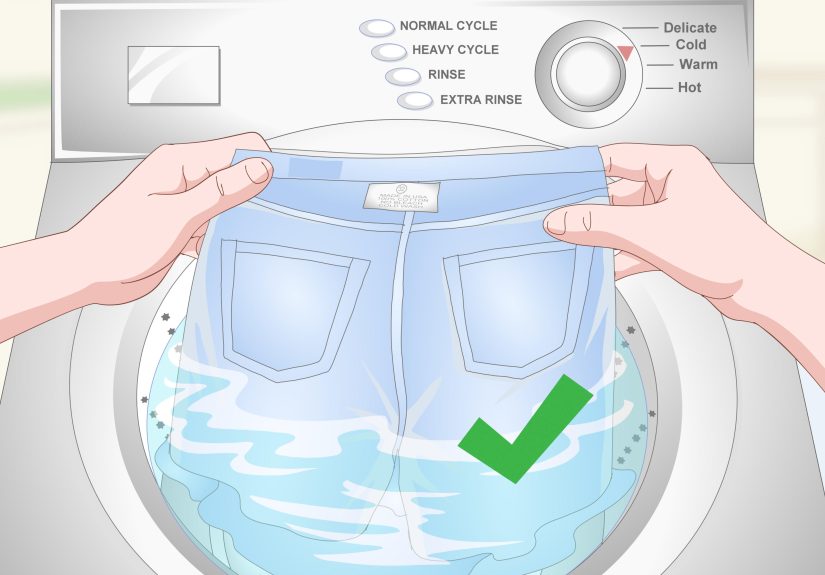
- Launder cold. Wash on cold with your usual detergent. Air dry and check the stain before any heat drying.
Common mistakes (aka “how stains become permanent roommates”)
- Warm/hot water too early: It can help certain stains, but with paint it may encourage setting depending on the formula.
- One-and-done washing: If you see any color left, don’t dry. Treat again.
Method 2: Rubbing Alcohol + Detergent (Best for Dried Acrylic Paint)
Why this works
Once acrylic dries, water alone usually can’t touch it because the paint forms a polymer film. Many stain guides recommend
isopropyl alcohol (or an alcohol-based product) to soften that film, then detergent to carry the loosened pigment away.
This is the go-to approach for dried acrylic paint on denim.
What you’ll need
- Isopropyl rubbing alcohol (70% can work; 91% often works faster)
- Laundry detergent (liquid is easiest)
- Old toothbrush or soft nylon brush
- Paper towels or a clean cloth
- Optional: baking soda (for a gentle “scrub paste”)
Step-by-step
- Scrape the crust. If paint is raised, gently flake off what you can. Think “buttering toast,” not “digging for treasure.”
- Pad the inside. Put paper towels behind the stain (inside the jeans) so you don’t transfer paint to the other side.
- Apply alcohol. Dampen the stain with rubbing alcohol. Let it sit for 3–5 minutes to soften the paint film.
- Blot from the outside in. Use a cloth to blot (not rub) so you lift pigment without spreading it.
- Brush gently. Use an old toothbrush to nudge softened paint out of the weave. Short strokes. Patience beats aggression.
- Detergent follow-up. Rub a small amount of liquid detergent into the area and let it sit 10–15 minutes.
- Rinse and repeat if needed. Stubborn stains often take 2–3 rounds.
- Wash and air dry. Launder according to the care label. Air dry first and inspect in daylight.
Optional “power paste” for stubborn spots
If the stain is hanging on like it pays rent, make a paste with equal parts baking soda, dish soap, and rubbing alcohol.
Apply, let sit 10–15 minutes, then gently brush and rinse. This combo is popular because it adds mild abrasion without going full sandpaper.
Safety + fabric notes
- Ventilation matters: Alcohol fumes are no one’s idea of aromatherapy.
- Color caution: Alcohol can fade some dyes. Spot test on an inside seam first, especially with dark indigo or black jeans.
- Stretch denim warning: If your jeans have elastane/spandex, keep scrubbing gentle and avoid soaking forever.
Method 3: Oxygen Bleach Soak (Best for “Ghost Stains” and Set-In Color)
Why this works
After you’ve removed the paint “body,” you may still see a shadowpigment trapped in the fibers. Many laundry guides recommend
an oxygen bleach soak (color-safe) to lift stubborn staining without the harshness of chlorine bleach.
It’s a solid choice for denim stain removal when you’re down to the last stubborn hint of color.
What you’ll need
- Oxygen bleach / color-safe bleach (powder or soak product)
- A bucket or sink
- Warm water (check care label; warm is often fine for denim, but don’t exceed what the label allows)
- Laundry detergent
- Soft brush (optional)
Step-by-step
- Mix the soak. Dissolve oxygen bleach in water according to the product directions (more is not always better).
- Submerge the stained area. Make sure the paint spot is fully underwater.
- Soak 1–6 hours. For tough stains, longer soaks help, but check every hour or two.
- Light brush assist. After soaking, gently brush the area to encourage pigment release.
- Wash as usual. Launder with detergent. Air dry and inspect before using heat.
When to consider a last-resort solvent
Some guides mention acetone (often found in nail polish remover) as a stronger option for paint. It can work, but it can also
fade dye, weaken some fibers, and make stretch denim sad. If you go this route:
spot test first, use small amounts, and rinse thoroughly. If the jeans are expensive or sentimental, a professional cleaner is the safer “adulting” move.
Extra Tips That Make a Big Difference
1) Treat the paint like paint (not like ketchup)
Paint isn’t just “colored liquid.” Acrylic contains binders that form a film. The winning strategy is usually:
scrape → soften (alcohol) → lift → detergent wash.
2) Always check before you dry
Dryers are amazing at exactly one thing: making stains harder to remove. Air dry first, inspect, then decide.
3) If the paint was mixed with fabric medium or heat-set
If someone intentionally made acrylic permanent on fabric (fabric medium + heat), removal can be extremely difficult.
You may still lighten it, but complete removal is less likely.
FAQs: Because Paint Has No Respect for Your Schedule
Does hand sanitizer remove acrylic paint from jeans?
Sometimes. If it’s alcohol-based (many are), it can soften dried acrylic similarly to rubbing alcohol. It’s not always as strong,
and some formulas contain moisturizers that leave residueso follow with detergent.
Will vinegar remove acrylic paint stains?
Vinegar is great for many household cleaning jobs, but dried acrylic typically needs something that can break down the polymer film,
like alcohol or an appropriate solvent. Vinegar alone usually isn’t the hero here.
Can I use hot water?
Use the care label as your boss. In general, start with cold for fresh paint, and use warm water later for soaking or washing
if the fabric allows. The main rule is: don’t use heat-drying until the stain is gone.
What if the stain is huge?
Work in sections. Big stains feel dramatic, but the steps don’t change. Scrape what you can, soften with alcohol, blot and brush gently,
then wash. You’re basically doing tiny, repeated rescues instead of one giant battle.
Conclusion
Getting acrylic paint out of jeans is mostly a game of timing and technique. If the paint is wet, cold water and dish soap can often save the day.
If it’s dry, rubbing alcohol plus detergent is your best “why did I wear my favorite jeans?” solution. And if you’re left with a stubborn
shadow stain, an oxygen bleach soak can help lift what’s hiding in the denim weave. Remember: no dryer until you’re sure the stain is gone.
Heat is the stain’s hype man.
Experience Section: Real-World Paint-on-Jeans Moments (and What Usually Works)
Here’s what tends to happen in real life (as reported across countless DIY questions, laundry forums, and very relatable “help” posts),
plus what usually works bestso you can skip straight to the method that matches your situation.
Scenario 1: “It just splattered. It’s not that bad.”
This is the classic lie we tell ourselves while the paint quietly dries into denim. If the splatter is fresh, Method 1 wins fast:
flip the jeans so you rinse from the back, then dish soap directly on the spot. The key is resisting the urge to rub it like you’re
scrubbing a frying pan. A gentle massage + blot usually pulls the pigment up without spreading it. People who get the best results here
tend to repeat the soap-and-rinse cycle a few times instead of doing one intense scrub. Think “multiple small victories,” not “one heroic battle.”
Scenario 2: “I noticed it after it dried. Cool cool cool.”
Dried acrylic is where Method 2 becomes your denim’s personal trainer: it loosens the paint film and helps it release.
A surprisingly common mistake is skipping the scrape step. Even a light scrape removes the stiff surface layer so alcohol can reach what’s underneath.
Another common win: padding the inside of the jeans with paper towels. That little trick prevents the softened paint from migrating through the fabric,
which is the laundry version of moving your problem from one room to another and calling it progress. After alcohol, detergent is the closerif you
stop at alcohol, you may lift paint but leave pigment behind.
Scenario 3: “I washed it… and then I dried it.”
First: you’re not alone. Second: it’s harder, but not always hopeless. At this point, you’re usually dealing with a stain that’s partly bonded.
Method 2 may still lighten it, but Method 3 becomes more important because oxygen bleach soaks can lift what detergent alone won’t.
The results vary: sometimes the stain fades to a faint shadow, sometimes it becomes “artistically distressed denim” (which, honestly, is a vibe).
The biggest difference-maker here is repeating the process. People often see improvement on round two, not round one. If you try once and quit,
the stain wins by default.
Scenario 4: “It’s on black jeans / dark indigo denim.”
Dark denim is the drama queen of stain removal: it shows paint clearly, and it can show fading if you’re too aggressive with alcohol.
The best approach is a small spot test and shorter alcohol contact time. Use blotting more than brushing. If you do need brushing, keep it gentle
and focused only on the stained threads. Many people have better luck doing two short alcohol sessions rather than one long soak.
Then wash cold and air drybecause dark denim plus high heat is how fading becomes permanent.
Scenario 5: “The paint blob is thick and crunchy.”
For thick deposits, patience is the secret weapon. Scrape off what you can in layers. If you try to yank it off in one go, you risk roughing up
the denim fibers, which can leave a lighter “worn” patch even if the paint comes out. After scraping, alcohol softens what’s embedded, and a soft brush
can coax it out of the weave. The win here is accepting that you’re peeling an onion: it’s a few passes, not one pass.
In short, the “best” method is the one that matches the paint stage (wet vs. dry) and respects the fabric (especially darker or stretchy jeans).
If you treat it like a processscrape, soften, lift, wash, inspectyou’ll usually save the jeans and your mood.