Table of Contents >> Show >> Hide
- Cabinet and Drawer Upgrades That Make Your Kitchen Feel Twice as Big
- 1) Deep drawers instead of lower cabinets
- 2) Roll-out shelves (pull-out trays) in base cabinets
- 3) Full-extension drawer slides
- 4) Drawer dividers that match what you actually own
- 5) A dedicated “spice strategy” (drawer, pull-out, or tiered rack)
- 6) A pull-out trash and recycling center
- 7) Vertical tray dividers
- 8) Corner cabinet solutions that don’t punish you for having corners
- 9) Toe-kick drawers (the “secret storage” flex)
- 10) A pull-out towel or paper towel slot
- 11) A dedicated cleaning-supply pull-out (especially near the sink)
- 12) Tall pantry cabinetry with interior drawers
- Zones That Organize Your Kitchen Like a Pro (Without the Clipboard)
- Islands, Carts, and Work Surfaces That Earn Their Keep
- Style Upgrades That Also Make the Kitchen More Functional
- Two “Extra Credit” Features People Love Once They Have Them
- How to Choose the Right Features Without Overspending
- Real-World Experiences and Lessons From Kitchen Upgrades (Extra 500+ Words)
- Conclusion
The kitchen is the one room in your house that has to be a lot of things at once: a restaurant (with no reservations), a science lab (why does this sauce need constant whisking?), a homework station, a snack bar, andif you’re like most peoplea place where random mail goes to “rest” for a few weeks.
The good news: you don’t need a celebrity-sized remodel to get a kitchen that feels calmer, looks sharper, and actually holds your stuff without playing Tetris every time you put away groceries. The secret is choosing features that do double duty: storage that’s easy to use and design details that make the room feel intentional.
Below are 25 kitchen upgrades that add storage and styleplus practical examples of how people use them in real life. Pick a few that fit your space, your budget, and your daily habits (yes, “daily habits” includes your 9 p.m. cereal era).
Cabinet and Drawer Upgrades That Make Your Kitchen Feel Twice as Big
1) Deep drawers instead of lower cabinets
Lower cabinets can turn into dark caves where lids disappear and pots stack like a leaning tower of cookware. Deep drawers bring everything out into the lightliterally. Use one for pots and pans, another for mixing bowls, and a third for food containers (aka the land of mismatched lids).
2) Roll-out shelves (pull-out trays) in base cabinets
Love your cabinets but hate crawling inside them? Roll-out shelves glide forward so you can grab the slow cooker without doing yoga next to the dishwasher. They’re perfect for heavy items: stand mixers, Dutch ovens, bulk pantry staples, and the rice cooker you swear you’ll use “more often.”
3) Full-extension drawer slides
If you’re upgrading drawers anyway, don’t settle for slides that stop halfway like they’re shy. Full-extension hardware lets drawers pull out nearly all the way so you can actually see what’s in the backespecially helpful for utensil drawers and pantry drawers.
4) Drawer dividers that match what you actually own
The best-looking kitchens aren’t magically clutter-free. They’re simply organized on purpose. Adjustable dividers let you create zones: cooking tools, baking tools, kid snack scissors (why do kids need scissors?), and your “good” measuring spoons that haven’t vanished into the void.
5) A dedicated “spice strategy” (drawer, pull-out, or tiered rack)
Spices are small, sneaky, and determined to multiply. A shallow drawer insert or angled tray lets you store jars label-up so you can find cumin without pulling out six bottles of cinnamon. Tight on drawer space? Add a slim pull-out spice cabinet beside the range.
6) A pull-out trash and recycling center
Nothing ruins a beautiful kitchen faster than a visible trash can… except maybe two visible trash cans. A pull-out cabinet keeps bins hidden but convenient. Bonus points for a setup that includes compostbecause you’re one banana peel away from being the kind of person who composts.
7) Vertical tray dividers
Store baking sheets, cutting boards, muffin tins, and serving platters upright instead of stacked. Vertical dividers can live in a narrow cabinet near the oven, or in a wide cabinet with separated slots. It’s the difference between calm access and a clangy metal avalanche.
8) Corner cabinet solutions that don’t punish you for having corners
Corner cabinets should not be portals to an alternate universe. Lazy Susans, swing-out trays, and “blind corner” pull-outs make corners usable. Choose based on what you store: bulky appliances need sturdy pull-outs; spices and condiments love rotating turntables.
9) Toe-kick drawers (the “secret storage” flex)
That recessed space under base cabinets can work harder. Toe-kick drawers are ideal for flat items like sheet pans, placemats, or the “fancy napkins” you use twice a year. They’re also wildly satisfyinglike your kitchen has a hidden level.
10) A pull-out towel or paper towel slot
Countertop paper towel holders are practical, but they also take up valuable space and visually clutter the room. A pull-out towel bar or built-in paper towel slot keeps cleanup within reach while keeping surfaces cleaner-looking.
11) A dedicated cleaning-supply pull-out (especially near the sink)
Under-sink storage gets chaotic fast. A simple pull-out caddy or shallow drawer system makes room for sprays, sponges, dishwasher tabs, and gloves without turning the cabinet into a leaning pile of “maybe this is still good.”
12) Tall pantry cabinetry with interior drawers
If you can’t do a walk-in pantry, tall pantry cabinets can feel just as powerfulespecially with interior pull-out drawers. They hold dry goods, snacks, small appliances, and those “backup” jars of pasta sauce you buy like you’re prepping for winter.
Zones That Organize Your Kitchen Like a Pro (Without the Clipboard)
13) A pantry that’s designed, not just present
Pantry storage isn’t about hoarding; it’s about visibility and accessibility. Adjustable shelves, clear bins, labeled zones, and containers that stack neatly turn the pantry into a system. Even a small pantry feels bigger when it has categories: breakfast, baking, weeknight meals, snacks, and “this looked fun at the store.”
14) An appliance garage to hide countertop clutter
Appliance garages are basically the kitchen equivalent of having a closet. They keep daily-use appliances (toaster, blender, coffee maker) accessible but out of sight. Style points: fewer items on the counter makes your backsplash, counters, and cabinetry look more high-endwithout buying anything new.
15) A coffee or beverage station
A beverage zone isn’t just trendyit’s traffic control. Set up a section with mugs, a coffee maker, sweeteners, and storage for beans or pods. Add a small drawer for spoons and filters, and if you’re going all-in, include a mini fridge for cream, seltzer, or those “special occasion” sodas that mysteriously vanish.
16) A “drop zone” that keeps papers from colonizing your counters
Kitchens attract paper: mail, school forms, receipts, takeout menus, and that one coupon you’ll definitely use someday. A slim drawer, cubbies, or a cabinet with charging space for devices creates a controlled landing strip so your counters can remain… counter-ish.
17) A built-in banquette or breakfast nook with storage under the seats
If your kitchen has space for a nook, a banquette is cozy, stylish, and sneaky-storage genius. Lift-up bench seats can hold table linens, small appliances, or the giant salad bowl you only use when guests come over and you suddenly remember you own vegetables.
Islands, Carts, and Work Surfaces That Earn Their Keep
18) A kitchen island designed for storage (not just posing)
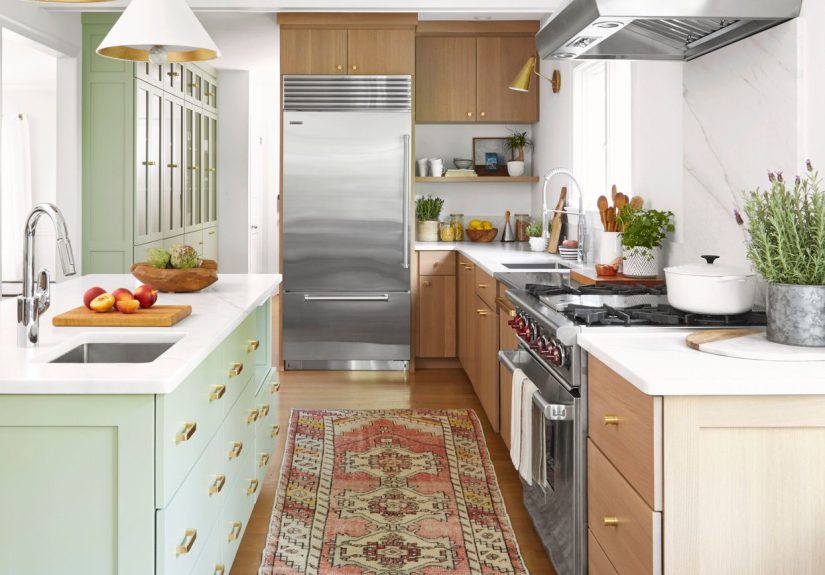
Islands should work as hard as they look. Add cabinets or drawers on at least one side, and consider a mix: drawers for utensils and prep tools, deeper cabinets for small appliances, and open shelves for cookbooks or pretty baskets. If you entertain, add seatingbut don’t sacrifice all storage for stools.
19) Island outlets (and ideally a charging drawer)
Outlets on an island make it easier to use mixers, blenders, and laptops without draping cords across the kitchen like a low-budget obstacle course. A charging drawer (with built-in power) keeps devices hidden while they juice up, which is both practical and visually calming.
20) A pull-out prep shelf or built-in cutting board
A pull-out shelf gives you extra landing space right where you need itnext to the sink for rinsed produce, near the stove for plating, or by the fridge for snack assembly. Built-in cutting boards can be handy, but choose materials that are easy to sanitize and maintain.
21) A rolling cart or movable island for flexible storage
Not every kitchen can fit a full island. A sturdy rolling cart adds storage and work surface, and you can move it where it’s useful: as a coffee station during the week, a serving station when friends come over, or a prep spot near the oven when you’re baking. Locking casters are the unsung heroes here.
Style Upgrades That Also Make the Kitchen More Functional
22) Under-cabinet lighting
This is the glow-up that instantly makes a kitchen feel more expensive. Under-cabinet lighting improves task visibility for chopping and cooking, reduces shadows on counters, and adds ambiance at night. LEDs are popular because they’re bright, efficient, and come in many formats (strip, puck, bar).
23) Layered lighting (pendants + ambient + task)
One overhead light trying to do everything is like one drawer trying to hold every utensildoomed. Add pendants over the island, under-cabinet lights for tasks, and softer ambient lighting (like dimmable fixtures or sconces) to make the kitchen feel warm and intentional.
24) Open shelving or glass-front cabinets for “display storage”
This feature adds style while keeping everyday items within reach. The trick: display what you actually use and like looking atmatching dishes, attractive glassware, a few cookbooks, maybe a plant that you won’t forget to water (ambitious, but we support it). Keep it curated so it looks intentional, not chaotic.
25) A backsplash choice that’s easy to clean and visually bold
Your backsplash is both armor and artwork. If you cook often, consider materials that wipe clean easily and don’t trap grime in endless grout lines. Style options include classic subway tile, larger-format tile, or a slab backsplash that matches the countertop for a seamless, modern look.
Two “Extra Credit” Features People Love Once They Have Them
Pot filler (because carrying water is a workout you didn’t sign up for)
A pot filler faucet mounted near the range makes it easier to fill large pots without hauling them from sink to stove. It’s not essential for everyone, but if you cook pasta, soups, or boil often, it can feel like a small luxury that improves everyday convenience.
A workstation sink with accessories
Workstation sinks come with accessories like cutting boards, drying racks, and colanders that slide over the basin. The benefit is more usable workspace without expanding your counters. It’s especially helpful in smaller kitchens where every inch matters.
How to Choose the Right Features Without Overspending
You don’t need all 25 features to have a great kitchen. Start with pain points: Is your problem that you can’t find anything? That counters are always crowded? That your pantry is chaos? Choose 3–5 upgrades that directly solve those issues first. Storage features deliver the biggest daily payoff when they reduce frictionmeaning less digging, less moving piles, and fewer “Where is the lid to this?” moments.
A smart rule: prioritize features you’ll use multiple times a day (drawers, lighting, trash pull-out) before features you’ll admire occasionally (specialty display nooks, ultra-custom finishes). The most stylish kitchens aren’t the ones with the most upgradesthey’re the ones where everything has a place and the room feels calm.
Real-World Experiences and Lessons From Kitchen Upgrades (Extra 500+ Words)
If you ask homeowners what they love most after upgrading a kitchen, the answer is rarely “the brand of cabinet.” It’s usually something more specific and delightfully practicallike “I can finally reach the blender without uninstalling half my pantry” or “My counters don’t look like a garage sale anymore.”
One of the most common experiences people describe is the surprise of how much daily convenience matters. A pull-out trash cabinet sounds boring on paper, but in real use it’s a constant win: you scrape plates, toss scraps, and keep movingwithout a bin sitting out in the open. The same goes for roll-out shelves. Nobody brags about their cabinet shelves at a party, but they will quietly thank them every time the stand mixer slides out smoothly instead of requiring a two-person lift-and-twist maneuver.
Another lesson people learn quickly: organization has to match behavior. It’s tempting to design a kitchen for the “ideal version” of yourselfthe one who labels every bin, bakes sourdough weekly, and keeps a spotless counter at all times. But the best kitchen systems fit what you actually do. If you drink coffee every morning, a coffee station isn’t “extra,” it’s a sanity saver. If your household is snack-heavy, pantry drawers and clear bins can prevent the daily avalanche of granola bars and crackers. And if you cook often, under-cabinet lighting changes the feel of the whole room because you stop working in your own shadow.
People also discover that style and storage aren’t oppositesthey can amplify each other. When small appliances move into an appliance garage, the counters look cleaner, and suddenly the backsplash and countertops become the stars. That’s “style” created by organization. Open shelving works the same way: it can look incredible when it’s used to display a restrained set of dishes and glassware. But it can also become visual clutter if it turns into a free-for-all. The experience most people report is that open shelving is best when it’s treated like a curated display, not an overflow closet.
A big practical takeaway: the island is where kitchens either shine or suffer. Many homeowners wish they had added more island storage instead of prioritizing only seating. A few well-placed drawers can replace an entire wall of “where should this go?” itemsutensils, mixing tools, lunch containers, towels, and even pet supplies. If the island includes outlets, it becomes a true workstation: you can plug in a mixer for baking, charge devices, or run a blender without hunting for a wall outlet across the room.
Finally, people often say the best upgrades are the ones that reduce decision fatigue. When everything has a logical homespices near the stove, prep tools near the main workspace, cleaning supplies near the sinkyou stop making hundreds of tiny choices. Cooking feels smoother. Cleanup feels faster. And the kitchen becomes a place you want to be in, not a room you avoid because it’s “too much.”
The real “experience-based” truth is simple: choose features that make your kitchen easier to use every day. Style follows function surprisingly well when the space is organized, well-lit, and designed around how your home actually moves.
Conclusion
The best kitchens don’t just look good in photosthey work in real life. If you want more storage and more style, focus on features that make items easier to reach, easier to put away, and easier to keep off the counters. Deep drawers, pull-outs, smart pantry systems, layered lighting, and a few intentional display moments can transform your kitchen without turning it into a never-ending construction saga.
Start small, pick upgrades that solve your biggest daily frustrations, and build from there. Your future selfholding a pot with one hand and looking for the oregano with the otherwill be extremely grateful.