Table of Contents >> Show >> Hide
- How Your Eyes Pull Off the Magic Trick of Vision
- The Tiny Structures Doing Massive Jobs
- The Quirky Things Your Eyes Do All Day
- Why Eye Health Deserves More Respect
- 16. Sudden flashes and a shower of new floaters can be a warning sign.
- 17. A dilated eye exam can reveal problems you may not feel yet.
- 18. Many major eye diseases are age-related, and they often develop quietly.
- 19. Children’s eyes change fast, so screenings matter.
- 20. Eye protection is far less dramatic than eye injury.
- What These Eye Facts Mean in Everyday Life
- Extra: Real-Life Experiences That Make Eye Facts Feel Personal
- Conclusion
Your eyes are doing Olympic-level teamwork every waking minute, and they do not even ask for applause. They help you read tiny text, dodge coffee tables in the dark, recognize faces in a crowd, and find the one typo in an email five seconds after you hit send. In other words, they are overachievers.
But the human eye is far more than a pair of biological cameras. It is a fast, precise, beautifully weird system that depends on the cornea, iris, lens, retina, optic nerve, tear film, eyelids, eye muscles, and brain all cooperating in real time. That is why learning a few eye facts is not just fun trivia. It also makes it easier to understand vision changes, protect your eye health, and appreciate why your eyes sometimes act dramatic for perfectly logical reasons.
Here are 20 fascinating facts about your eyes, explained in plain English with enough science to make things interesting and enough personality to keep this from sounding like a textbook in a lab coat.
How Your Eyes Pull Off the Magic Trick of Vision
1. Your cornea does a huge amount of the focusing work.
Most people assume the lens is the star of the show, but your cornea gets there first and does a lot of the heavy lifting. This clear, dome-shaped front surface bends incoming light before it travels deeper into the eye. Think of it as the opening act that is secretly carrying the concert. If the cornea is healthy and smooth, light enters more efficiently and vision is sharper.
2. Your pupil is not a black dot. It is an opening.
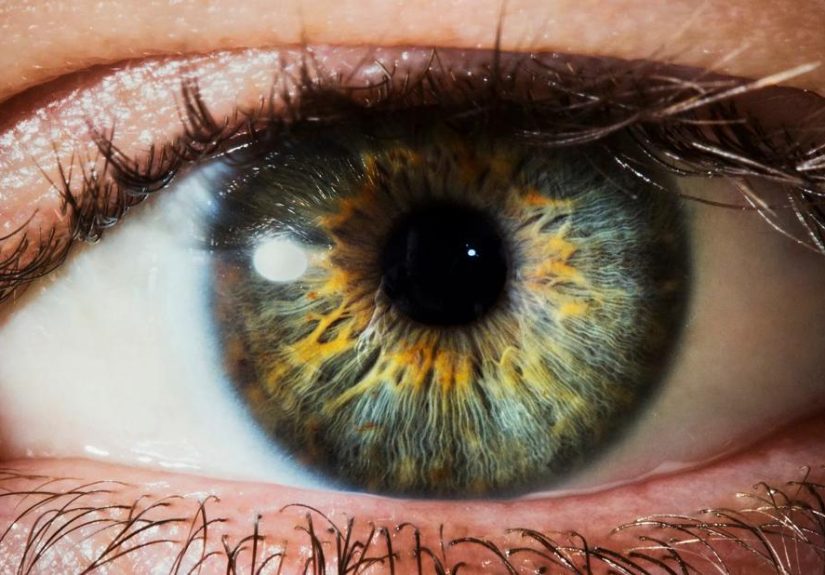
The pupil is the hole in the middle of the iris, not a solid structure. The iris, which gives your eye its color, adjusts the size of that opening to control how much light gets in. In bright sunlight, the pupil shrinks. In dim conditions, it widens. It is basically your eye’s built-in dimmer switch, except much faster and less likely to be misplaced.
3. Your lens changes shape so you can focus up close and far away.
After light passes through the pupil, the lens fine-tunes focus. It changes shape to help you read a text message, then glance up at a road sign, then look back down at your fries. This flexibility is called accommodation. As people age, the lens becomes less flexible, which is one reason reading menus in low light eventually starts to feel like an insult.
4. Your retina turns light into electrical signals.
The retina sits at the back of the eye and acts like highly specialized light-detecting tissue. It takes incoming light and converts it into electrical signals that travel through the optic nerve. Without the retina, seeing would be impossible. Your eye would receive light, but nothing meaningful would happen with it. That would be like owning a great camera with no memory card.
5. You do not really “see” with your eyes alone.
Your eyes gather visual information, but your brain is the place where that information becomes sight. The optic nerve carries messages from the retina to the brain, and the brain assembles them into the images you recognize. So yes, your eyes are amazing, but your brain is the editor, producer, and post-production team all at once.
The Tiny Structures Doing Massive Jobs
6. You have rods and cones, and they are not on equal staffing levels.
Your retina contains two main types of photoreceptors: rods and cones. Rods help you see in low light, while cones handle color vision and sharp detail. There are many more rods than cones, which helps explain why you can often detect movement or shape in dim light before you can make out color or fine detail. Night vision is not glamorous, but it is useful when you are trying not to trip over a shoe at 2 a.m.
7. Your macula is the reason you can read tiny print and recognize faces.
The macula is a small but mighty area near the center of the retina. It is responsible for detailed central vision, which is what you use for reading, driving, threading a needle, or spotting that one eyebrow hair that suddenly believes in personal growth. When the macula is affected by disease, central vision can become blurred or distorted even if side vision remains.
8. Everyone has a blind spot.
Yes, everyone. There is a natural blind spot where the optic nerve exits the retina because that area does not contain light-sensitive cells. You usually do not notice it in daily life because your visual system is excellent at smoothing over the missing information. Your eyes and brain are basically running quiet background corrections all day long.
9. Tears are essential for clear vision, not just emotional movie scenes.
Tears help lubricate the eye, protect the cornea, and wash away debris. The tear film on the eye’s surface helps keep vision comfortable and stable. When your tears are not produced in the right amount or quality, your eyes may burn, feel gritty, water excessively, or blur on and off. In one of biology’s stranger plot twists, dry eyes can actually make your eyes water more because irritation can trigger reflex tearing.
10. Blinking is a maintenance system.
Each blink spreads tears across the surface of the eye and helps clear away dust and tiny irritants. It also gives the ocular surface a quick refresh. In other words, blinking is not laziness. It is scheduled maintenance. Your corneal blink reflex is also a protective response, which is why your eyelids snap shut when something comes too close to your eye.
The Quirky Things Your Eyes Do All Day
11. Screens can change how often you blink.
When people focus on digital screens for long stretches, they often blink less or blink less completely. That can contribute to dry eye symptoms and eye strain. If your eyes feel tired after hours of scrolling, online studying, gaming, or pretending to work while actually reading restaurant reviews, reduced blinking may be part of the problem. The classic 20-20-20 rule can help: every 20 minutes, look about 20 feet away for 20 seconds.
12. Eye color is mostly about melanin.
Brown, hazel, green, blue, gray, and amber eyes are not created by different jars of magical paint. Eye color depends largely on melanin, the pigment in the iris, and how that pigment is distributed. In general, darker eyes have more melanin and lighter eyes have less. So blue eyes are not “blue ink” eyes. They are a beautiful light-scattering situation with less melanin involved.
13. Some people naturally have two different eye colors.
This is called heterochromia. Sometimes one iris is a different color from the other, and sometimes only part of one iris differs in color. It can be harmless and simply reflect differences in melanin. It is one of those features that looks like a fantasy novel detail but is very real. Human biology occasionally has a flair for aesthetics.
14. Your pupils can widen for reasons beyond darkness.
Pupils normally dilate in low light, but they can also widen because of certain medications, injury, or other neurologic or medical causes. Emotional reactions can play a role too. That is why pupils are interesting clues in medicine. They are tiny, but they can reveal a lot. If one pupil suddenly becomes much larger than the other, that is not the time to shrug and carry on.
15. Your eyes move with help from six extraocular muscles.
Each eye relies on extraocular muscles to move up, down, side to side, and in coordinated patterns. These muscles allow your eyes to track motion, switch focus, and aim together at the same target. When they are not coordinated properly, problems like double vision or eye misalignment can occur. It is a reminder that eye movement is not random. It is choreography.
Why Eye Health Deserves More Respect
16. Sudden flashes and a shower of new floaters can be a warning sign.
Some floaters are common, especially with age, and many are harmless. But a sudden increase in floaters, especially when paired with flashing lights or a curtain-like shadow in vision, can signal a retinal tear or another urgent eye problem. That is not a “let me see if it goes away next month” situation. Eyes are patient, but certain symptoms are not.
17. A dilated eye exam can reveal problems you may not feel yet.
During a dilated eye exam, drops widen the pupils so an eye care professional can see more of the inside of the eye. This helps detect common vision problems and eye diseases, sometimes before symptoms become obvious. It is one of the best examples of preventive care being less exciting than a crisis and infinitely more useful.
18. Many major eye diseases are age-related, and they often develop quietly.
In the United States, leading causes of blindness and low vision include age-related macular degeneration, cataract, diabetic retinopathy, and glaucoma. The frustrating part is that several eye diseases can progress with few early symptoms. That is why regular eye care matters even when your vision feels “pretty much fine.” Your eyes deserve better than a guess.
19. Children’s eyes change fast, so screenings matter.
Vision develops quickly in childhood, and some problems are easiest to treat when found early. Screenings can help identify children who need a full eye exam, even if they have not complained about vision trouble. Kids are not always great at reporting blurry vision because they may assume everyone sees the world the same way. To them, fuzzy letters might just be the font.
20. Eye protection is far less dramatic than eye injury.
Protective eyewear, sunglasses, breaks from extended visual tasks, hand hygiene, and prompt attention to symptoms all play a role in healthy vision. A scratched cornea, severe dryness, UV exposure, or preventable injury can turn “I’ll be fine” into “why is the light suddenly my enemy?” very quickly. Smart eye habits are boring in the best possible way: they work.
What These Eye Facts Mean in Everyday Life
All of these fascinating facts about your eyes point to one big truth: vision depends on a delicate system that works best when it is supported. That means giving your eyes rest during close work, blinking on purpose when screens steal your attention, wearing sunglasses outdoors, using protective eyewear for risky tasks, and getting professional care when something changes suddenly.
It also means respecting symptoms that seem minor but are persistent. Burning, stinging, gritty feelings, watery eyes, light sensitivity, headaches after screen use, or blurry vision that comes and goes are not always dramatic, but they can be meaningful. Sometimes the issue is as simple as dryness or eye strain. Sometimes it is the first clue that your eyes want more attention than they have been getting.
And perhaps the most delightful takeaway is this: your eyes are not passive windows. They are active, complex, living structures that focus, adjust, protect, clean, move, and communicate with your brain nonstop. They are working while you read this sentence. Frankly, they deserve a standing ovation and maybe a break from tiny screens.
Extra: Real-Life Experiences That Make Eye Facts Feel Personal
Most of us do not think much about our eyes until they do something strange, annoying, or wildly inconvenient. That is why eye facts become much more memorable when they show up in real life. For example, nearly everyone has walked from bright sunlight into a darker room and felt temporarily half-useless. That is your iris and pupil adjusting to the new light level. It feels like a minor betrayal, but really your eyes are just recalibrating.
Another common experience is staring at a laptop for hours and realizing your eyes feel dry, tired, or oddly hot, as if they have been quietly filing complaints. That screen-heavy fatigue often has less to do with your eyes “failing” and more to do with reduced blinking, extended close focus, and visual overload. The moment you look out a window, blink fully a few times, and let your focus stretch into the distance, your eyes often respond like someone finally opened a stuffy room.
Then there is the classic age-related surprise: one day a restaurant menu seems to shrink for no reason, and suddenly everyone is holding it farther away like they are inspecting a suspicious artifact. That is not vanity, denial, or bad lighting alone. It is often the lens becoming less flexible over time, which makes near focus harder than it used to be. The menu did not change. Biology simply updated the terms and conditions without sending a notification.
People also notice eye health in emotional ways. Maybe it is the parent who realizes a child is squinting at the classroom board. Maybe it is the driver who struggles more with glare at night. Maybe it is the office worker who keeps rubbing watery eyes and cannot figure out why they feel dry and wet at the same time. These moments matter because they connect the science of the eye to daily quality of life. Vision is not just about reading an eye chart. It is about comfort, confidence, mobility, independence, and how easily you move through your day.
Even tiny changes can be memorable. A random floater drifting across your vision can feel like a ghostly speck that absolutely refuses to mind its business. A twitching eyelid can make you wonder whether you need sleep, less caffeine, or a new identity. A sudden burst of tears while chopping onions reminds you that your eyes are both durable and deeply dramatic. These experiences may be common, but they are never boring.
That is what makes eye health such a compelling topic. It lives at the intersection of science and daily experience. Your eyes help you read, learn, laugh, work, drive, play sports, make art, text friends, and watch sunsets. They also send little signals when something is off. Paying attention to those signals is not overreacting. It is practical. When you understand how your eyes work, everyday experiences stop feeling random and start making sense.
Conclusion
Your eyes are among the most sophisticated organs in your body, and they do far more than simply “see.” They focus light, adjust to changing environments, protect themselves with tears and reflexes, move with extraordinary coordination, and work hand in hand with the brain to create the world you experience every day. The more you understand these fascinating facts about your eyes, the easier it becomes to protect them, recognize important symptoms, and appreciate just how much visual labor happens behind the scenes.
So the next time you blink, squint, tear up in the wind, or complain that a dim restaurant is committing crimes against readability, remember this: your eyes are not being difficult. They are doing an incredibly complex job. Treat them accordingly.