Table of Contents >> Show >> Hide
- Introduction: When Your Bathroom Has the Square Footage of a Shoebox
- 14 Small Bathroom Storage Ideas to Maximize Space
- 1. Use Over-the-Toilet Storage Without Making It Look Crowded
- 2. Install Floating Shelves on Empty Walls
- 3. Add Hooks Instead of Bulky Towel Bars
- 4. Maximize the Back of the Door
- 5. Use the Space Under the Sink Wisely
- 6. Choose a Mirror Cabinet or Recessed Medicine Cabinet
- 7. Bring in a Slim Rolling Cart
- 8. Add Drawer Dividers for Tiny Items
- 9. Try Corner Shelves in Awkward Spots
- 10. Use Baskets and Bins to Control Visual Clutter
- 11. Install a Shower Niche or Better Shower Caddy
- 12. Add a Narrow Freestanding Cabinet
- 13. Use Trays to Organize the Countertop
- 14. Declutter Before You Buy More Organizers
- Smart Design Tips That Make Small Bathroom Storage Look Better
- Common Small Bathroom Storage Mistakes to Avoid
- Extra Experience-Based Advice: What Actually Works in Real Small Bathrooms
- Conclusion: Small Bathroom, Big Storage Energy
Note: This article is written for web publishing in standard American English and synthesizes practical storage guidance from reputable U.S. home, organizing, safety, and design resources. Source links are intentionally not included in the body content.
Introduction: When Your Bathroom Has the Square Footage of a Shoebox
A small bathroom can be charming, efficient, and easy to clean. It can also feel like a tiny obstacle course where shampoo bottles, towels, cotton swabs, and mystery hotel soaps form their own civilization. The good news? You do not need a mansion-sized primary bath to enjoy a calm, functional, and stylish space. You just need smarter small bathroom storage ideas that make every inch earn its keep.
The best bathroom organization solutions are not always expensive or complicated. Often, the biggest improvements come from using vertical wall space, choosing dual-purpose furniture, adding hidden storage, and being honest about what actually belongs in the bathroom. A tiny room can feel much larger when the countertop is clear, the floor is open, and your daily essentials are easy to grab without knocking over six bottles of lotion in the process.
Below are 14 small bathroom storage ideas to maximize space, reduce clutter, and make your bathroom feel less like a storage closet with plumbing. Whether you have a compact apartment bathroom, a narrow powder room, a pedestal sink with no cabinet, or a shared family bathroom that sees more traffic than a coffee shop on Monday morning, these strategies can help you create order without sacrificing style.
14 Small Bathroom Storage Ideas to Maximize Space
1. Use Over-the-Toilet Storage Without Making It Look Crowded
The wall above the toilet is one of the most underused areas in a small bathroom. It is usually empty, vertical, and ready to help. Over-the-toilet storage can be as simple as two floating shelves or as substantial as a slim cabinet with doors. The key is choosing a design that fits the scale of the room.
For a minimalist bathroom, install narrow floating shelves and style them with rolled towels, a small basket, and one decorative item. For a busier family bathroom, consider a closed cabinet where extra toilet paper, cleaning wipes, and backup toiletries can disappear from view. Closed storage is especially useful when your bathroom already has a lot of visual activity, such as patterned tile, colorful towels, or open shelving elsewhere.
One smart rule: leave enough space above the toilet tank so the area does not feel boxed in. If the shelves are too deep or too low, the bathroom may feel cramped instead of clever. Think upward, not outward.
2. Install Floating Shelves on Empty Walls
Floating shelves are a classic small bathroom storage solution because they add function without taking up floor space. They work above the toilet, beside the mirror, near the bathtub, or on any blank wall that is not already doing something useful. In a tiny room, even a 16-inch shelf can become a home for skincare, hand towels, tissues, or a small plant that bravely accepts the humidity lifestyle.
To keep floating shelves from looking messy, group items by purpose. Place everyday products in matching jars or small bins, fold towels neatly, and avoid turning the shelf into a product parking lot. Open shelving works best when the items are either attractive, uniform, or contained. If every bottle is shouting in a different color and font, use baskets. Baskets are basically noise-canceling headphones for clutter.
3. Add Hooks Instead of Bulky Towel Bars
Towel bars look neat, but they are not always the best choice for small bathrooms. They require horizontal wall space, and they usually hold only one or two towels. Hooks, on the other hand, can fit behind a door, along a narrow wall, or beside the shower. They are perfect for towels, robes, shower caps, loofahs, and small toiletry bags.
A row of sturdy hooks can help a shared bathroom function better because each person gets a dedicated spot. For families, label hooks by name or use different finishes or colors. For a guest bathroom, a couple of elegant hooks can make the space feel thoughtful without crowding the walls.
Choose hooks that project far enough from the wall to let towels dry properly. Damp towels crammed together can lead to musty smells, which is the bathroom’s way of saying, “Please improve my airflow.”
4. Maximize the Back of the Door
The back of the bathroom door is prime storage real estate. It is hidden when the door is open, often unused, and large enough for serious organization. Try an over-the-door rack for towels, a hanging organizer for toiletries, or a slim caddy for hair tools and styling products.
This is especially helpful in rental bathrooms where drilling into tile or walls may not be allowed. Over-the-door storage gives you extra space without a permanent installation. Look for options with soft bumpers so the organizer does not scratch the door or rattle every time someone enters.
For a polished look, avoid overloading the door. A few neatly arranged towels or a fabric pocket organizer can look intentional. A door holding every product you have purchased since 2017 may look like a travel-size pharmacy exploded.
5. Use the Space Under the Sink Wisely
Under-sink storage can be tricky because pipes, drains, and awkward angles interrupt the space. Still, it is one of the most valuable storage zones in a small bathroom. Instead of tossing everything into the cabinet and hoping for the best, use stackable drawers, tiered shelves, clear bins, or a small Lazy Susan.
Group similar items together: hair products in one bin, cleaning supplies in another, extra soap and toothpaste in a third. Clear containers make it easy to see what you have, while labeled opaque bins create a cleaner look. If you store cleaning products under the sink, use child safety locks in homes with children and keep chemicals in their original containers.
If you have a pedestal sink with no cabinet, add a sink skirt or place a narrow basket underneath if the design allows. A fabric skirt can hide toilet paper, cleaning tools, or backup toiletries while adding softness to the room. It is storage and decor working together, which is the kind of teamwork we like to see.
6. Choose a Mirror Cabinet or Recessed Medicine Cabinet
A mirror that also stores things is a small bathroom hero. A mirrored medicine cabinet gives you hidden storage for dental care, razors, contact lenses, and other daily essentials while still performing its mirror duties. Recessed medicine cabinets are especially space-saving because they sit partly inside the wall rather than projecting far into the room.
However, not everything belongs in a bathroom medicine cabinet. Heat and moisture from showers can damage some medications, vitamins, and sensitive products. Keep actual medicines in a cool, dry place unless the label or pharmacist says otherwise. Use the bathroom cabinet for non-sensitive items such as floss, bandages, cotton rounds, tweezers, and grooming tools.
To make the cabinet more efficient, add small acrylic risers or magnetic strips inside the door for tweezers, nail clippers, or bobby pins. Small tools are experts at disappearing, so give them a tiny assigned home.
7. Bring in a Slim Rolling Cart
A slim rolling cart is one of the most flexible small bathroom storage ideas. It can slide beside the vanity, tuck next to the toilet, or move wherever you need it. Use it for towels, extra toilet paper, skincare, hair tools, or bath products.
The beauty of a rolling cart is that it does not require installation. It is great for renters, dorm bathrooms, and anyone who changes their mind every three weeks about where things should go. Choose a cart with raised edges so bottles do not fall off, and use small baskets or dividers on each tier to keep items organized.
If your bathroom is extremely narrow, measure carefully before buying. A cart that looks compact online may become a tiny traffic jam in real life.
8. Add Drawer Dividers for Tiny Items
Bathroom drawers often become clutter caves filled with lip balm, floss picks, hair ties, nail files, and that one eyeliner you keep “just in case.” Drawer dividers are an easy fix. They create boundaries so small items do not slide into chaos every time the drawer opens.
Use adjustable dividers for larger drawers and small trays for makeup, dental care, grooming tools, or first-aid items. The goal is not to make the drawer look like a museum exhibit. The goal is to find your tweezers before your eyebrows file a complaint.
For deeper drawers, stackable organizers can double the usable space. Keep daily items near the front and occasional items toward the back. If you have not used a product in a year, it probably does not deserve front-row seating.
9. Try Corner Shelves in Awkward Spots
Corners are often ignored, but in a small bathroom, corners can be surprisingly useful. Floating corner shelves can hold toilet paper, candles, folded washcloths, or small jars. In the shower, a corner caddy can keep shampoo bottles off the floor and reduce clutter around the tub ledge.
Corner shelves work best when they are shallow enough not to interrupt movement. In a tight space, rounded or curved shelves can feel softer and safer than sharp square edges. If you install corner storage near the toilet or sink, make sure it is not placed exactly where elbows, shoulders, or sleepy morning movements will collide with it.
For style, repeat materials already used in the room. Wood shelves can warm up a white bathroom, glass shelves can feel airy, and metal shelves can match faucets or hardware.
10. Use Baskets and Bins to Control Visual Clutter
Baskets and bins are not just pretty accessories. They are one of the simplest ways to make a small bathroom feel organized. Use them on shelves, under the sink, inside cabinets, or on top of a toilet tank. They are especially useful for grouping items that are necessary but not exactly decorative, such as backup shampoo, cleaning cloths, feminine care products, or extra rolls of toilet paper.
For open shelves, choose baskets with a consistent color or material. Woven baskets add warmth, wire baskets feel clean and modern, and clear bins make it easy to see supplies. In humid bathrooms, avoid storing damp towels in tightly woven baskets for long periods. Moisture needs airflow, not a cozy hiding place.
Labeling bins may sound overly serious, but it helps everyone in the household return things to the right place. Labels are not bossy; they are tiny organizational traffic signs.
11. Install a Shower Niche or Better Shower Caddy
Shower clutter can make a small bathroom look messy even when the rest of the room is tidy. Bottles lined up along the tub edge, razors on the floor, and soap sliding around like it is training for the Olympics are all signs you need better shower storage.
If you are remodeling, a built-in shower niche is one of the cleanest solutions. It keeps bottles recessed into the wall, freeing up ledges and corners. If you are not remodeling, choose a sturdy shower caddy that fits your setup. Options include tension-pole caddies, over-the-showerhead caddies, adhesive shelves, and corner units.
Keep only the products you use regularly in the shower. Backup bottles can live elsewhere. Your shower does not need to display your entire haircare journey.
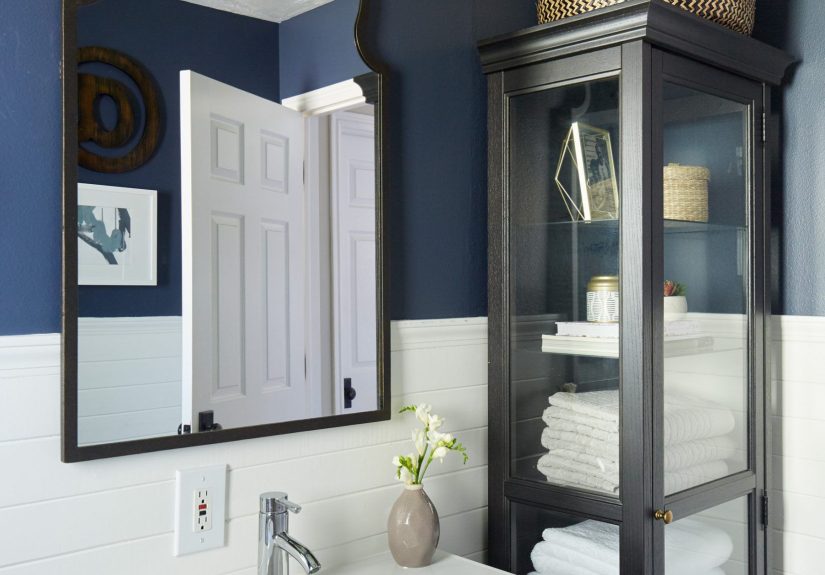
12. Add a Narrow Freestanding Cabinet
If your bathroom has even a sliver of unused floor space, a narrow freestanding cabinet can provide valuable storage. Look for tall, slim designs with adjustable shelves, drawers, or a combination of open and closed compartments. These cabinets work well for towels, toilet paper, cleaning products, and extra toiletries.
Vertical furniture is usually better than wide furniture in a small bathroom because it uses height instead of floor area. A cabinet that is 12 inches wide but tall can hold more than you might expect. Just be sure it is stable, especially if you have children or pets. Use anti-tip hardware when recommended.
Choose closed doors if you want a cleaner look. Choose open shelves if you prefer easy access and are willing to keep everything neat. Be honest with yourself. If your shelves usually become clutter confetti, doors are your friend.
13. Use Trays to Organize the Countertop
In a small bathroom, the countertop can quickly become the danger zone. A toothbrush, moisturizer, perfume, sunscreen, and hairbrush can make even a clean counter look crowded. A tray creates a clear boundary for daily essentials and makes the counter easier to wipe down.
Use one small tray for items you reach for every morning and night. Keep it limited to true daily-use products. Anything occasional should go in a drawer, cabinet, or bin. A tray also makes mismatched items look more intentional, like they were invited to a little bathroom party instead of wandering aimlessly across the sink.
For very tiny sinks, consider a wall-mounted toothbrush holder or magnetic cup system to free up surface space. The less you store directly on the counter, the larger the bathroom will feel.
14. Declutter Before You Buy More Organizers
This may be the least glamorous tip, but it is the most important. Before buying shelves, bins, carts, or cabinets, declutter. Small bathroom storage works best when you are storing the right amount of stuff. If your cabinets are packed with expired sunscreen, old makeup, empty bottles, dull razors, and hotel conditioner from a vacation you barely remember, no organizer can save you.
Start by removing everything from one area: a drawer, cabinet, shelf, or shower ledge. Toss expired, empty, damaged, or unused items. Donate unopened products you will not use if they are safe and acceptable to donate. Keep only what supports your real routine.
Once you know what you actually own, choose storage that fits those items. Organizing before decluttering is like buying a bigger suitcase for clothes you do not wear. It may solve the space problem temporarily, but the clutter will still be along for the trip.
Smart Design Tips That Make Small Bathroom Storage Look Better
Use Matching Containers for a Cleaner Look
Visual consistency matters in a small room. Matching containers, repeated finishes, and simple labels can make storage feel intentional rather than improvised. You do not need everything to match perfectly, but choosing a color palette helps. For example, white bins, natural baskets, and brushed nickel hooks can create a calm, coordinated look.
Keep the Floor as Open as Possible
The more floor you can see, the larger the bathroom feels. Wall-mounted shelves, hooks, recessed cabinets, and floating vanities all help preserve open floor space. If you need freestanding storage, choose pieces with legs or a slim footprint so the room does not feel heavy.
Think About Moisture and Ventilation
Bathrooms are humid by nature, so storage choices should account for moisture. Avoid packing towels too tightly in closed cabinets, wipe down wet bottles before storing them, and run the exhaust fan during and after showers. Good airflow helps prevent musty smells and protects stored items from excess dampness.
Separate Daily Items from Backup Supplies
A small bathroom functions better when daily items are easy to reach and backups are stored out of the way. Keep one toothpaste, one shampoo, and one lotion accessible. Store extras in a labeled bin under the sink, in a linen closet, or on a high shelf. This keeps the bathroom from turning into a warehouse with a toilet.
Common Small Bathroom Storage Mistakes to Avoid
Buying Organizers Without Measuring
Always measure before buying storage products. Check width, depth, height, door clearance, pipe placement, and wall space. A beautiful cabinet is not helpful if it blocks the bathroom door or prevents the vanity drawer from opening. Measuring is not exciting, but neither is returning a fully assembled shelf.
Using Too Much Open Storage
Open shelves can be beautiful, but too many of them can make a small bathroom look busy. Mix open and closed storage for balance. Display attractive items like towels and jars; hide less attractive items like cleaning supplies and bulk products.
Storing Everything in the Bathroom
Not every bathroom-related item must live in the bathroom. Extra linens, bulk toiletries, medications, and rarely used appliances may be better stored in a hallway closet, bedroom drawer, or utility area. The bathroom should support daily routines, not carry the entire household inventory.
Extra Experience-Based Advice: What Actually Works in Real Small Bathrooms
After dealing with small bathrooms in apartments, shared homes, guest spaces, and older houses with very optimistic storage planning, one lesson becomes clear: the best solution is rarely one giant organizer. It is usually a system of small, thoughtful changes. A hook here, a shelf there, a drawer divider that stops cotton swabs from staging a rebellionthese details add up.
One of the most effective changes is creating “zones.” Even in a tiny bathroom, zones make a difference. A morning zone might include toothbrushes, face wash, deodorant, and moisturizer. A shower zone holds only active bath products. A backup zone stores extra soap, toilet paper, toothpaste, and razors. A cleaning zone keeps sprays, brushes, and cloths contained. When every item belongs to a zone, the room becomes easier to maintain because you are no longer deciding where things go every day.
Another real-world tip is to avoid storing too many duplicates in the bathroom. Buying in bulk can save money, but a small bathroom is not always the right place to store the bulk purchase. Keep one backup of essentials nearby and move the rest to a closet or storage bin outside the bathroom. This is especially helpful for toilet paper, shampoo, body wash, and skincare. The bathroom feels instantly calmer when it is not stuffed with six months of supplies.
For households with multiple people, individual bins can prevent daily arguments. Give each person a small labeled basket or drawer section for personal products. This works for roommates, couples, families, and guests. It also prevents one person’s hair gel, serum, beard oil, and three mystery combs from taking over the entire vanity. Personal bins make cleanup faster because everything can be lifted, moved, or put away in seconds.
Countertop discipline is another game changer. In small bathrooms, clear counters create the illusion of more space. Try keeping only hand soap and maybe one tray on the counter. Everything else should be stored vertically, inside a drawer, behind a mirror, or in a cabinet. If you use several products every morning, place them in a small handled caddy and store the caddy under the sink. Pull it out when needed, then put it away. This method keeps routines efficient without leaving clutter behind.
Lighting also affects how storage feels. Dark corners and crowded shelves make a bathroom feel smaller. If possible, use bright, warm lighting and reflective surfaces to make the room feel open. A mirrored cabinet, glass jars, glossy tile, or light-colored shelves can visually expand the space. Storage should not only hold items; it should help the room breathe.
Finally, the best small bathroom storage system is one you can maintain on a tired Tuesday night. If an organizer requires perfect folding, precise stacking, and the patience of a museum curator, it may not survive real life. Choose simple systems: hooks instead of complicated towel displays, bins instead of loose piles, trays instead of scattered bottles, and closed storage for things that never look cute. A small bathroom does not need to be perfect. It needs to be practical, easy to reset, and pleasant enough that you do not sigh every time you open the door.
Conclusion: Small Bathroom, Big Storage Energy
Maximizing a small bathroom is not about squeezing in more stuff. It is about making better decisions with the space you have. Use vertical walls, hidden cabinets, hooks, baskets, drawer dividers, and smart under-sink systems to create a bathroom that feels organized instead of overloaded. Keep daily essentials accessible, move rarely used items elsewhere, and declutter before adding new storage.
With the right small bathroom storage ideas, even the tiniest bathroom can feel more spacious, stylish, and functional. No magic wand requiredalthough if you find one, store it in a labeled bin.