Table of Contents >> Show >> Hide
- What counts as a “language” when nobody talks?
- 1. American Sign Language (ASL)
- 2. Plains Indian Sign Language (Hand Talk)
- 3. ProTactile (A Touch-Based Language Movement)
- 4. Braille (The Language of Touch on the Page)
- 5. Morse Code (Dots, Dashes, and Pure Determination)
- 6. Semaphore (Talking With Flags Like a Human Lighthouse)
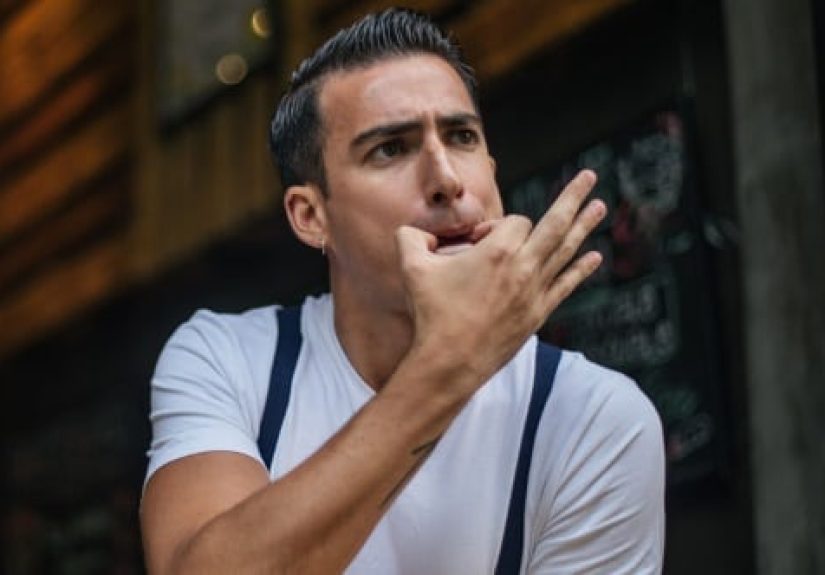
- 7. Silbo Gomero (Whistling Across Valleys)
- 8. Kuş Dili (Turkey’s “Bird Language”)
- 9. Mazatec Whistled Speech (Language in the Key of Wind)
- 10. Yoruba Talking Drums (When Rhythm Carries Meaning)
- Why languages without speaking matter right now
- Conclusion
- Extra: Real-World Experiences With Non-Speaking Languages
- SEO tags
If you think “language” means “sound coming out of a mouth,” your brain is about to get delightfully (and respectfully) corrected.
Humans are linguistic overachievers. When speaking isn’t possibleor isn’t practicalwe don’t just “make do.” We build full-blown,
high-bandwidth systems for meaning: with hands, faces, touch, whistles, flags, dots, dashes, and even drums. Some of these are
natural languages with their own grammar and communities. Others are codes that let people transmit language through a different medium.
Either way, they prove one big idea: language is about shared structure and understandingnot about volume.
Below are 10 extraordinary languages (and language-like systems) that don’t require speaking. You’ll see how they work, why they’re
culturally important, and what makes each one a minor miracle of human creativity. And yesthere’s a 500-word “what it feels like”
section at the end, because learning about nonverbal communication is fun… but living it is even more interesting.
What counts as a “language” when nobody talks?
Linguists usually reserve the word language for natural systems that grow inside communities (like American Sign Language or ProTactile).
These languages evolve, develop dialects, and support everything from jokes to poetry to arguments about who forgot to take out the trash.
Meanwhile, systems like Morse code or semaphore are encodings: they carry a spoken/written language through signals. They’re still
powerful, widely used, and structuredjust built differently. In this list, you’ll get both: natural non-speaking languages and the most
iconic “speech-free” signal systems humans rely on.
1. American Sign Language (ASL)
How it works
ASL is a complete, natural language expressed through hand movements, facial expressions, and body posture. The face isn’t “extra flair”
it carries grammar and tone, like punctuation and emphasis rolled into one. ASL also uses space like a whiteboard: signers can place people
or ideas in locations around them and refer back to those “points” later.
Why it’s extraordinary
ASL isn’t “English on the hands.” It has its own grammar and history, and it’s central to Deaf culture in the United States. It’s also
living proof that language doesn’t need sound to be complex. ASL can do everything spoken language cantell stories, teach physics,
flirt, debate, and deliver sarcasm so crisp you could slice a bagel with it.
2. Plains Indian Sign Language (Hand Talk)
How it works
Often called Hand Talk, Plains Indian Sign Language is an Indigenous sign language tradition historically used across many nations
in North America. It served as a shared visual language for trade, diplomacy, storytelling, and everyday communicationespecially across
communities with different spoken languages.
Why it’s extraordinary
Hand Talk shows how a sign language can function as a regional bridgelike a multilingual “common tongue,” but visual. It also carries deep
cultural knowledge and tradition. In a world that loves to pretend everything important was always spoken or written, Hand Talk reminds us
that visual languages have long been essential to life, governance, and community.
3. ProTactile (A Touch-Based Language Movement)
How it works
ProTactile communication is rooted in the DeafBlind community and emphasizes touch as a primary channel for language and shared information.
It’s not simply “sign language, but on the hands.” ProTactile includes tactile signals, haptics (touch-based feedback), and ways of managing
turn-taking, attention, and “who’s doing what” through contact and movement.
Why it’s extraordinary
ProTactile is remarkable because it expands what people think language can do. It’s not just about transferring words; it’s about building
connection and access to the environmentsocially and spatiallywhen vision and hearing aren’t reliable channels. It also highlights a big truth:
accessibility isn’t a “feature.” It’s a pathway to richer human interaction.
4. Braille (The Language of Touch on the Page)
How it works
Braille is a tactile writing system read by fingers. Characters are formed by patterns of raised dots in a cell, allowing readers to move
smoothly across a line of text. Braille exists in multiple languages and is used for everything from novels to math and music notation.
Why it’s extraordinary
Braille turns literacy into something you can literally feel. It’s quiet, portable, and powerfulan entire library that fits under your fingertips.
And it’s not just “access”it’s independence: labeling medication, reading privately, studying, working, and navigating the world without needing
someone else to translate.
5. Morse Code (Dots, Dashes, and Pure Determination)
How it works
Morse code encodes letters and numbers into short and long signalscommonly called dots and dashes. Those signals can be sent by sound,
light, taps, radio pulses, or even blinking. The genius is that Morse doesn’t care about the medium; it cares about timing.
Why it’s extraordinary
Morse is the ultimate “language without speaking” because it can travel through almost anything: a flashlight, a ship’s signal lamp, or a radio
transmission. It has saved lives, powered long-distance communication, and still shows up in aviation and military contexts. It’s also the perfect
reminder that humans will invent a way to communicate even when the world gives them only two options: signal… or silence.
6. Semaphore (Talking With Flags Like a Human Lighthouse)
How it works
Semaphore uses the position of handheld flags (or paddles) to represent letters. A signaler forms different angles with their arms, creating a visual
alphabet that can be read at a distance. It’s been used in maritime and naval settings where voice communication is impracticalor where silence matters.
Why it’s extraordinary
Semaphore is both elegant and delightfully dramatic. It’s like spelling with geometry. And in environments like ships at sea, where wind, noise,
and distance can ruin speech, semaphore keeps communication clear. It’s also a great example of how “silent” languages can be highly visible:
no whispering requiredjust good posture and a commitment to being understood.
7. Silbo Gomero (Whistling Across Valleys)
How it works
Silbo Gomero is a whistled form of communication associated with La Gomera in the Canary Islands. It maps spoken language patterns into whistle
tones that can carry long distancesespecially useful across rugged terrain where walking a message over would take forever.
Why it’s extraordinary
Silbo is extraordinary because it preserves language in a form that’s almost pure signal: pitch and timing doing the heavy lifting. It’s also a
cultural treasure with active preservation efforts, showing that “non-speaking” languages deserve the same respect as any spoken tradition.
8. Kuş Dili (Turkey’s “Bird Language”)
How it works
Kuş dili (“bird language”) is a whistled form of Turkish used in mountainous regions where messages need to travel across deep valleys. Rather than
shouting words, speakers whistle patterns that represent syllables and phrases, enabling surprisingly complex conversations over distance.
Why it’s extraordinary
It’s the rare communication system that sounds like nature but functions like language. Kuş dili also shows how communities adapt to geography:
when the landscape is basically a giant echo chamber, whistling becomes the most practical “no-speaking” option. Modern tech has reduced everyday
dependence on it, which makes cultural preservation even more important.
9. Mazatec Whistled Speech (Language in the Key of Wind)
How it works
In parts of Oaxaca, Mexico, Mazatec communities have used whistled speech to transmit messages over distance. Because Mazatec languages are tonal,
pitch carries meaningmaking whistling a surprisingly effective way to represent words and phrases when spoken voice can’t travel far enough.
Why it’s extraordinary
Whistled Mazatec highlights the brain’s flexibility: people can “hear” language structure even when the sound is stripped down to tone and rhythm.
It also underscores something that’s easy to miss in English: tone can be linguistic content, not just emotion. In whistled tonal languages, pitch
isn’t decorationit’s vocabulary.
10. Yoruba Talking Drums (When Rhythm Carries Meaning)
How it works
Yoruba talking drum traditionsoften associated with pressure drums like the dùndúnuse pitch changes and rhythmic patterns to mimic aspects of speech.
In tonal languages like Yoruba, meaning depends heavily on pitch, and skilled drummers can imitate phrase contours to communicate proverbs, praise names,
announcements, and more.
Why it’s extraordinary
Talking drums aren’t just musicthey’re message, memory, and community identity. They show that “language” can ride on rhythm and pitch without any
vocal cords involved. And unlike a text message, a drum message arrives with presence: you don’t believe it because it’s typed; you believe it because
it’s echoing through the village like a heartbeat with an agenda.
Why languages without speaking matter right now
Nonverbal languages aren’t niche curiosities. They’re essential for accessibility, cultural continuity, emergency communication, and everyday connection.
They also challenge lazy assumptionslike the idea that speech is the “default” and everything else is a backup plan. For millions of people, signed and
tactile languages are primary languages. For many communities, whistled speech and drum communication are living heritage. And for anyone, learning even
the basics of non-speaking communication can make the world more navigable, kinder, and honestly more interesting.
Conclusion
The next time someone says “language is what you say,” you can smile and think: Sure, and swimming is what you do with your arms… but also your legs,
your lungs, and your will to survive. Human language is bigger than speech. It’s hands shaping ideas in the air, fingers reading dots in the dark,
whistles skipping over mountains, flags cutting through ocean wind, and drums carrying meaning on rhythm. Speaking is one way to be understood. It’s not
the only wayand it’s definitely not the most imaginative.
Extra: Real-World Experiences With Non-Speaking Languages
Reading about non-speaking languages is one thing. Experiencing themlearning, using, relying on themchanges how you think about communication.
Here are a few real-world-style snapshots (based on common reports from learners, community members, and documented practice) that show what these
languages feel like in action.
1) The first time you “hear” ASL with your eyes
Beginners often describe an early ASL moment where everything suddenly clicks: you realize you’re not decoding “hand gestures,” you’re perceiving
language. People’s eyebrows rise to mark a question. A pause lands like punctuation. A storyteller shifts their body slightly andwithout saying a word
becomes a different character. It can feel like watching subtitles disappear because you no longer need them. You’re not translating; you’re understanding.
And once that happens, it’s hard to unsee how much spoken conversation relies on the face anyway. ASL just makes that truth unavoidable (and, honestly,
a bit more entertaining).
2) Touch communication and the feeling of shared attention
In tactile communicationespecially in DeafBlind contextspeople often talk about how attention becomes something you can feel. Instead of shouting
someone’s name or waving in their line of sight, you establish contact. Turn-taking becomes physical, cooperative, and clear. Imagine a conversation where
interruptions are harder, not because they’re rude, but because the structure itself encourages mutual awareness. Many describe it as “high trust” language:
you’re not just exchanging information; you’re coordinating presence, space, and meaning in the same channel.
3) Braille as privacy, not just access
People sometimes assume Braille is only about reading books. But everyday experiences matter: labeling spices, distinguishing medication bottles, reading
notes without anyone else listening in (yes, silence can still be crowded), or studying independently. Braille can feel like the difference between “being
helped” and “being in charge.” And for learners, there’s a tactile satisfaction that’s hard to describe until you feel itlike your fingertips have gained
a new kind of vision that works perfectly in the dark.
4) Morse and semaphore: when the environment is the message
With Morse code and semaphore, people often describe a heightened awareness of timing and space. In Morse, you start noticing rhythm everywherelike your
brain turns into a metronome with opinions. In semaphore, posture matters because clarity matters. The wind matters. The sun angle matters. These systems
make communication feel physical and environmental: you aren’t just sending language; you’re negotiating distance, weather, noise, and visibility. It’s a
reminder that talking is easy only because modern life hides the hard parts.
5) Whistled speech and drum language: community amplified
Whistled languages and talking drums often come with a powerful social feeling: messages are public in a way that texts aren’t. A whistle across a valley
or a drum pattern in the distance can signal, “This is for you,” but it also tells everyone else, “We’re connected.” People describe learning these systems
as learning a placeits geography, its social rhythms, its history. You don’t just memorize signals; you learn when it’s appropriate to use them, who uses
them best, and how meaning changes with context. And when you hear a practiced whistler or drummer, the experience can be jaw-dropping: it’s not noise,
it’s language riding on air or skin or wood, proving again that humans will always find a way to be understood.