Table of Contents >> Show >> Hide
- 1) The Tetons Rise Fast, Hard, and Almost Without Foothills
- 2) These Mountains Are Geologically Young, but Their Rocks Are Ancient
- 3) Glaciers Built Much of the Parkand Some Are Still Hanging On
- 4) The Snake River Is the Park’s Moving Spine
- 5) Wildlife Here Is Spectacular Because the Ecosystem Is Still Connected
- 6) Human History Here Runs Back at Least 11,000 Years
- 7) The Park You Visit Today Was Built Through Decades of Expansion and Conservation
- 8) Grand Teton Is a Climbing Legend, Not Just a Scenic Backdrop
- 9) The Night Sky Is a Resource HereAnd It’s Actively Managed
- 10) Access Is Unusually Easy for a Wild PlaceWhich Means Planning Matters
- Conclusion: Why These Elevated Facts Change How You Visit
- Extended Field Experience (500+ Words): What “10 Elevated Facts” Feels Like on the Ground
Some national parks ease you in with rolling hills, polite viewpoints, and maybe a nice brochure map that whispers, “Take your time.” Grand Teton National Park does the opposite. It rises abruptly from the valley floor like it has somewhere important to be, throws a jagged skyline at you, and then casually surrounds that drama with alpine lakes, wild rivers, and wildlife that make your camera battery cry for mercy.
If you’ve ever searched for Grand Teton National Park facts, you’ve likely found the basics: big mountains, beautiful lakes, great hiking. True, yesbut that’s like describing a symphony as “some notes.” This guide dives deeper with ten elevated facts that explain why this park is geologically fascinating, ecologically critical, historically layered, and emotionally unforgettable. You’ll get practical context, science-backed details, and real-world examples to help you plan smarter and appreciate more while exploring the Teton Range and Jackson Hole.
Lace up your boots, charge your camera, and maybe stretch your neck nowyou’ll be looking up a lot.
1) The Tetons Rise Fast, Hard, and Almost Without Foothills
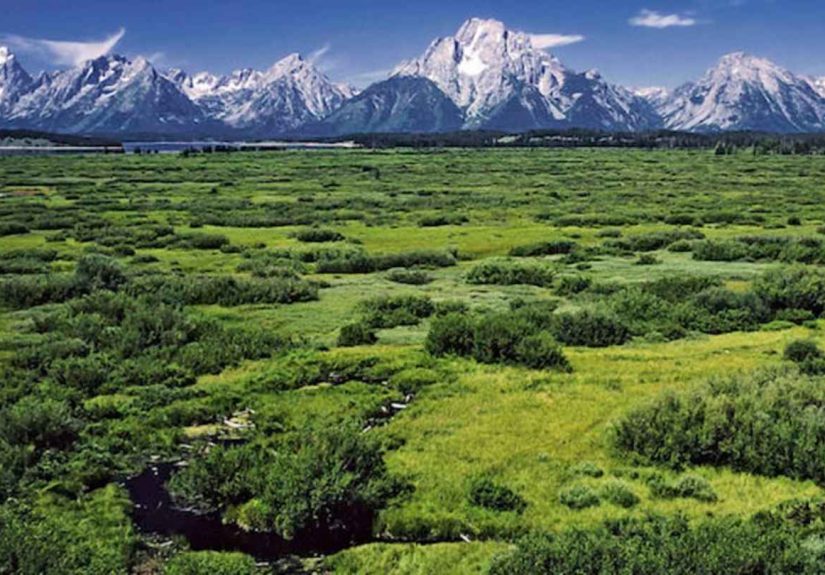
Many mountain ranges build suspense with long foothills. The Tetons skip the prelude. The range forms a fault-block mountain front roughly 40 miles long and 7–9 miles wide, with dramatic relief above Jackson Hole. Translation: these peaks don’t gradually appearthey erupt into view.
This sharp rise creates one of the most photogenic mountain profiles in North America. It’s why first-time visitors often stop at the first turnout and immediately reconsider their life choices around “just one quick photo.” The tallest peak, Grand Teton, tops out at 13,775 feet, anchoring a skyline that feels almost theatrical.
Why it matters for visitors
That dramatic topography affects everything: weather shifts, trail difficulty, and how quickly light changes in the valley. It’s also why sunrise and sunset are absurdly beautiful hereangles of light carve every ridge and canyon in high definition.
2) These Mountains Are Geologically Young, but Their Rocks Are Ancient
Grand Teton is a geologic paradox in the best way. The mountain-building fault system is geologically young and still active, yet the exposed rocks include some of the oldest in the national park systemancient crust dating back billions of years.
Think of it as a new building made with very old stone. Tectonic movement lifted the Teton block while Jackson Hole dropped, creating the park’s extreme relief and leaving an open-air textbook of Earth history on display. You’re not just seeing mountainsyou’re seeing time stacked in stone.
Why it matters for visitors
If you enjoy geology, this park rewards curiosity. Even casual hikers can spot the relationship between bedrock, glacial carving, and modern landforms. It makes every viewpoint more than scenicit’s explanatory.
3) Glaciers Built Much of the Parkand Some Are Still Hanging On
Grand Teton’s iconic U-shaped valleys, cirques, and moraines are the signatures of ice. The park protects multiple glacially formed lakes along the range front and over 100 alpine/backcountry lakes. Even today, active glaciers remain in the high country.
But this is where beauty and urgency meet: modern summer melt is outpacing winter accumulation in many places. In plain English, the glaciers are shrinking. That shift influences downstream hydrology, alpine habitats, and the long-term character of the landscape.
Why it matters for visitors
Lakes like Jenny, Leigh, and Jackson aren’t just prettythey are glacial stories in liquid form. Understanding that makes paddling, boating, or simply standing at shore feel less like “nice scenery” and more like front-row access to climate-era change.
4) The Snake River Is the Park’s Moving Spine
The Snake River cuts through Jackson Hole, shaping habitat corridors, floodplains, and world-famous viewpoints. It also ties Grand Teton to much larger watersheds and ecological processes beyond park boundaries.
This is why places like Oxbow Bend are legendary: the river, wetlands, and riparian forests concentrate life. Dawn can bring moose in willows, osprey hunting, and reflections so still they look photoshopped (they’re not; nature is just flexing).
Why it matters for visitors
River zones are prime areas for wildlife watching, but they’re also sensitive. Staying on designated pullouts and trails protects habitat while increasing your odds of safe, respectful sightings.
5) Wildlife Here Is Spectacular Because the Ecosystem Is Still Connected
Grand Teton sits at the heart of the Greater Yellowstone Ecosystem, one of the largest near-intact temperate ecosystems on Earth. The park supports rich biodiversity, including large mammals and hundreds of bird species.
Unlike isolated parks, this landscape functions as a connected system. Animals move seasonally across park, parkway, refuge, and forest boundaries. That connectivity is everything for migration, breeding, and resilience.
Why it matters for visitors
Wildlife in Grand Teton is thrilling, but it’s not a petting zoo with a mountain backdrop. Bring binoculars, keep distance, and treat every sighting as a privilege. Safe wildlife behavior is conservation in action.
6) Human History Here Runs Back at Least 11,000 Years
Long before road trips and trail apps, Indigenous peoples lived with and moved through this valley as glaciers receded and ecosystems shifted. The area holds deep cultural, subsistence, and spiritual significance for many tribes.
Later came trappers, homesteaders, dude ranching, conservation advocates, and modern recreation communities. Grand Teton’s story is not a single chapterit’s a layered narrative about land use, identity, stewardship, and sometimes conflict.
Why it matters for visitors
A park visit becomes richer when you read the human landscape as carefully as the mountain one. Historic districts, ranch sites, and cultural interpretation programs add context that transforms “nice stop” into meaningful place-based learning.
7) The Park You Visit Today Was Built Through Decades of Expansion and Conservation
Grand Teton was originally established in 1929, then expanded in 1950 through the addition of former monument lands and major conservation-era land transfers. Later, a memorial parkway was designated to connect Grand Teton and Yellowstone.
In other words, the current map is the product of policy, philanthropy, local debate, and federal action over decades. The result is a much larger, more ecologically coherent protected landscape.
Why it matters for visitors
Understanding this history explains why management zones, historic structures, and travel corridors feel so varied. It also shows how conservation often works in real life: slowly, imperfectly, but sometimes brilliantly.
8) Grand Teton Is a Climbing Legend, Not Just a Scenic Backdrop
Hiking gets most of the social media glory, but climbing is deeply embedded in Grand Teton culture. The first documented summit of the Grand was in 1898, and the range now offers a huge variety of technical routes and alpine objectives.
This is serious mountain terrain: fast weather changes, exposed rock, and route-finding demands that punish overconfidence. It’s the kind of place where “I watched two videos” is not a qualification.
Why it matters for visitors
Even non-climbers can appreciate this heritage from trail viewpoints and ranger interpretation. For climbers, professional guiding services and conservative planning are the difference between epic and error.
9) The Night Sky Is a Resource HereAnd It’s Actively Managed
Grand Teton isn’t just protecting daylight scenery. The park has ongoing initiatives to reduce light pollution impacts on wildlife and preserve stargazing quality. Research has tested low-impact lighting approaches in developed areas.
Why the effort? Artificial night lighting can alter insect behavior, bat activity, and ecological rhythms. Visitors, meanwhile, overwhelmingly value dark skies and low-intensity lighting when surveyed in park contexts.
Why it matters for visitors
If you’ve never seen the Milky Way over the Tetons, add it to your list. Red-light headlamps, patient eyes, and a moon-phase check can turn one evening into the highlight of your trip.
10) Access Is Unusually Easy for a Wild PlaceWhich Means Planning Matters
Grand Teton offers remarkable accessibility for such a rugged landscape, including major roads, visitor services, and even a commercial airport located within park boundaries. That convenience is rareand it drives heavy use.
Nearby protected lands such as the National Elk Refuge and adjacent wilderness areas expand the experience and the responsibility. High visitation plus sensitive habitats means timing, behavior, and route choices directly affect your experience and the resource.
Why it matters for visitors
Start early, build realistic daily plans, and pick one or two “must-do” priorities per day. Grand Teton rewards focus more than checklist tourism. The park isn’t going anywherebut parking spots absolutely are.
Conclusion: Why These Elevated Facts Change How You Visit
The best Grand Teton National Park facts do more than impressthey help you see the park as a living system. Steep fault-block peaks, ancient rocks, shrinking glaciers, a working river valley, connected wildlife corridors, deep human history, and night-sky science all point to one truth: Grand Teton is not a static postcard. It is dynamic, complex, and very much alive.
If you visit with that mindset, everything gets better. You’ll choose trails more intentionally, observe wildlife more ethically, and appreciate that conservation is not abstractit’s practical, daily, and shared. Whether you come for hiking, photography, paddling, wildlife watching, or pure mountain awe, this park has a way of making people care more than they expected.
And yes, your neck may still hurt from looking up at those peaks. Consider it a souvenir.
Extended Field Experience (500+ Words): What “10 Elevated Facts” Feels Like on the Ground
Let’s turn the facts into a lived experience. Imagine you arrive in Jackson the night before, check the forecast, lay out layers like a responsible mountain adult, and promise yourself an early start. In the morning, you enter the park before the busiest rush, and within minutes the Tetons appearsudden, vertical, unapologetic. Fact #1 is no longer a sentence; it’s a physical reaction. You actually laugh because the skyline looks almost fake.
Your first stop is a broad valley viewpoint where the range rises straight from the basin. You can feel Fact #2 in the terrain: old rock, young uplift, huge relief. The mountains don’t look worn down and gentle; they look structurally assertive. Even if you’re not a geologist, the fault-block architecture is obvious once you know to look for it. It’s like learning a secret visual language.
By mid-morning you’re near one of the big glacial lakes. The water is cold, clear, and impossibly reflective, and suddenly Fact #3 makes emotional sense. These basins were carved by ice, and the shoreline geometry tells that story as clearly as any textbook. You watch a family skip stones while a kayaker slides across the surface, and it hits you that recreation and geologic history share the same stage here.
After lunch, you drive toward a river corridor and set up quietly with binoculars. This is Fact #4 and #5 in real time: river habitat plus wildlife connectivity. A distant moose browses in willow, waterfowl pass overhead, and everyone nearby seems to whisper without being told. You notice something important about park culture: people who arrive as tourists often behave like temporary stewards by the end of the day.
In the afternoon, you detour through a historic area and read interpretive panels. Fact #6 and #7 come alive through peopletribal connections, settlement history, conservation politics, and the gradual shape of today’s boundaries. It’s humbling to realize this landscape wasn’t “saved” in one heroic moment; it was negotiated, argued over, donated, legislated, and continually reimagined.
As light softens, you see tiny climbers on a distant face. Fact #8 appears as moving dots on granite. You don’t need to climb to respect what those routes represent: skill, risk management, and a long mountaineering tradition that predates modern outdoor trends by generations.
You grab dinner, then return after dark with a red-light headlamp. The sky clears, and Fact #9 steals the show. Stars emerge in layers. Constellations sharpen. Someone nearby points out the Milky Way, and a little kid says, “It looks like smoke.” That line stays with you. You also notice the practical impact of thoughtful lighting in developed zonesdark enough to feel wild, bright enough to stay safe.
On day two, you test Fact #10 by trying a later startpurely for science, of courseand immediately discover crowds, fuller lots, slower pullouts, and the tactical importance of patience. The contrast is useful. Grand Teton is accessible, yes, but it rewards planning and humility. Early hours feel expansive; midday demands flexibility.
By the time you leave, you’ve done more than collect scenic photos. You’ve connected geology to ecology, history to policy, and awe to responsibility. That’s the real “elevated” part of Grand Teton: the park raises your standards for what a landscape can mean. You arrive looking for great views. You leave with a deeper way of seeing.