Table of Contents >> Show >> Hide
- Is Moss on Your Patio Really a Big Deal?
- Step 1: Figure Out Why Moss Took Over Your Patio
- Step 2: Safely Remove the Moss
- Step 3: Deep-Clean and Rebuild the Joints
- Step 4: Stop Moss from Coming Back
- Material-Specific Tips
- When It’s Time to Call a Pro
- Real-Life Experiences: Living With (and Beating) a Mossy Patio
If your patio looks less like an outdoor living space and more like a scene from a fantasy movie, complete with a lush green layer of moss, you’re not alone. Moss loves cool, damp, shaded surfaces, and patios are basically its dream real estate. The good news? You don’t have to accept a slippery, stained patio forever. With a little strategy (and yes, some elbow grease), you can clear the moss, make your patio safer, and keep it from coming back.
Is Moss on Your Patio Really a Big Deal?
A little moss in the corner can look charming and cottagecore. But when it spreads across high-traffic areas, it becomes more than just an aesthetic issue.
- Slip hazard: Moss holds moisture and can turn your patio into a skating rink when it’s wet, especially on smooth concrete or stone. That’s a real risk for kids, older adults, and anyone carrying hot coffee or a stack of burgers to the grill.
- Stains and discoloration: Moss, algae, and the organic gunk that collects with them can leave dark, stubborn stains on pavers, concrete, and natural stone.
- Drainage issues: Moss loves spots where water sits. When you see moss, you’re often looking at a symptom of poor drainage or heavy shade that can cause other problems later.
- Trip and maintenance issues: Moss growing in thick mats between pavers can trap soil and debris, encourage weeds, and make it harder to sweep or clean.
In low-traffic areas, a patch of moss might be something you choose to keep for looks. But on walkways, steps, and main patio zones, it’s smart to treat it as a safety and maintenance priority.
Step 1: Figure Out Why Moss Took Over Your Patio
Before you start scrubbing, it helps to understand why moss moved in. Otherwise, you’ll clean it once and watch it slowly creep back like it pays rent.
Common reasons moss loves your patio
- Constant moisture: Standing water, slow drainage, or water from downspouts dumping onto the patio creates a permanently damp surface.
- Deep shade: Overhanging trees, tall fences, or nearby buildings can keep sunlight off the patio, especially in fall and winter.
- Poor airflow: Enclosed courtyards or tight corners where air doesn’t circulate as much stay damp for longer.
- Organic debris: Leaves, soil, mulch, and pollen build up in joints and corners, giving moss a soft, moist bed to grow in.
- Sunken or uneven pavers: Low spots collect water and become moss magnets.
Take a slow walk around your patio after a rain. Notice where water pools, where the moss is thickest, and where sun hits (or doesn’t). That little inspection will guide how you fix the root causes later.
Step 2: Safely Remove the Moss
Now for the satisfying part: actually getting the moss off your patio. There are multiple ways to do it, from simple scrubbing to more powerful treatments. The right method often depends on how bad the moss is and what your patio is made of.
Start with safety
- Wear non-slip shoes – yes, even while cleaning a slip hazard.
- Use gloves and eye protection, especially with bleach or commercial moss killers.
- Keep kids and pets away from any chemical treatments until the area is rinsed and dry.
- Avoid letting strong chemicals run into lawns, flower beds, or storm drains.
Method 1: Old-fashioned scrubbing and scraping
If your moss problem is moderate and you prefer to go low-tech first, start here:
- Use a stiff-bristle broom or deck brush to sweep away loose moss and debris.
- For thick or stubborn clumps, use a hand scraper or putty knife between pavers or along cracks.
- Mix a bucket of warm water and mild dish soap, then scrub the surface in small sections.
- Rinse with a garden hose and let the area dry.
This method is gentle on most surfaces and a good first pass before trying anything stronger. It’s also great prep if you’re planning to use a chemical or natural moss killer afterward.
Method 2: Boiling water (budget-friendly and surprisingly effective)
When you want something cheap, fast, and chemical-free, boiling water is a surprisingly powerful ally:
- Boil a large pot or kettle of water.
- Carefully pour it directly on the mossy areasaiming for the roots and joints between pavers.
- Wait a few hours or a day; the moss will start browning and loosening.
- Scrub with a stiff brush and rinse the area clean.
This method works especially well on patios with lots of narrow joints and is safe for most materials. Just be cautious around your feet (and definitely don’t invite barefoot helpers).
Method 3: Vinegar and baking soda (natural-ish household helpers)
If you’d rather avoid traditional chemicals but want a bit more firepower, vinegar and baking soda are popular options:
Using white vinegar
- Mix equal parts white vinegar and water in a garden sprayer or spray bottle.
- Spray the moss thoroughly until it’s soaked.
- Let it sit for 15–30 minutes (avoid hot, windy days so it doesn’t evaporate too fast).
- Scrub and rinse well with a hose.
Vinegar is acidic, so it can etch some delicate natural stones. Always test a small, hidden area first. On standard concrete and many pavers, diluted vinegar is usually safe when rinsed thoroughly.
Using baking soda
- Sprinkle baking soda directly over damp moss, or make a paste with water.
- Leave it in place for several hours or overnight. Baking soda raises the surface pH, which moss doesn’t love.
- Scrub and rinse away the dead moss.
Baking soda is gentle, inexpensive, and especially nice if you’re trying to limit harsh chemicals around kids, pets, or edible gardens nearby.
Method 4: Bleach or commercial moss killers (for heavy infestations)
When your patio looks like it’s auditioning to be a forest floor, heavier-duty solutions can be justified. Many homeowners and extension services recommend a diluted bleach solution for stubborn moss on concrete and some pavers:
- Mix around 1 part household bleach to 3–4 parts water (check product label recommendations).
- Optionally add a small amount of liquid dish detergent to help it stick to the moss.
- Apply to the moss with a pump sprayer or watering can, avoiding plants and soil as much as possible.
- Let it sit for 5–20 minutes, keeping it out of direct sun so it doesn’t dry too quickly.
- Scrub if necessary, then rinse very thoroughly with lots of water.
Commercial moss and algae removers designed specifically for hard surfaces are another option. Many are formulated to be less harsh than straight bleach, but you should still follow all label directions, keep them away from plants, and avoid runoff into storm drains.
What about a pressure washer?
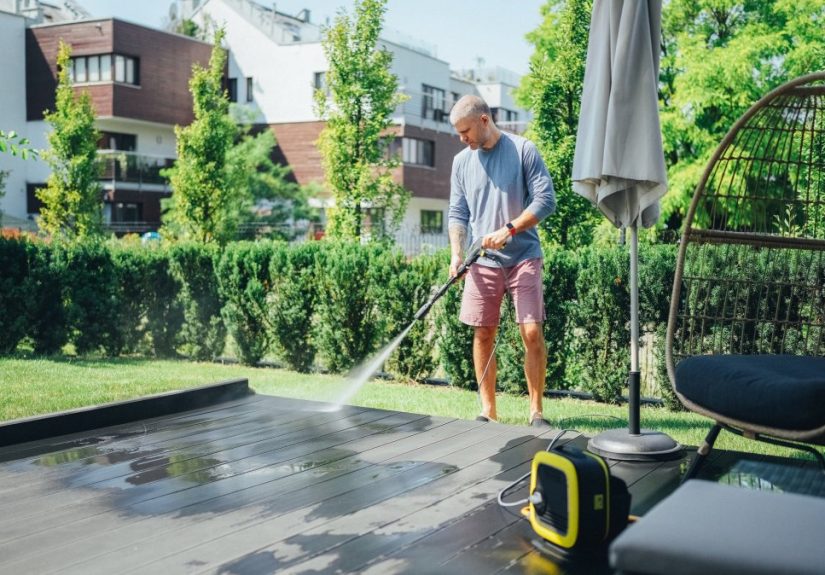
A pressure washer can blast moss off fast, but it’s not a tool to use blindly:
- Too much pressure can damage soft stone, brick, or the surface of concrete.
- It can blow out the sand between pavers, leaving joints open for more weeds, moss, and shifting.
- Used correctly and at moderate pressure, it’s a great way to rinse after scrubbing or chemical treatment.
If you’re unsure, start with a lower setting and test in a corner. Think “firm shower” rather than “cutting through steel.”
Step 3: Deep-Clean and Rebuild the Joints
Once the moss is gone, it’s a perfect time to give your patio a deeper refresh. This helps it look better and makes it harder for moss to reestablish.
- Sweep thoroughly: Remove dead moss, sand, leaves, and debris from all joints and corners.
- Check for low spots: Look for pavers that have sunk or areas where water still pools. If needed, lift and reset pavers or add base material to fix the grade.
- Refill joints: Brush in fresh sand between pavers. For better moss and weed resistance, consider polymeric sand, which hardens slightly when activated with water.
- Rinse gently: Lightly mist the surface to settle the sand (especially polymeric) without washing it out.
This joint work is like closing tiny open invitations that moss and weeds love to accept.
Step 4: Stop Moss from Coming Back
Long-term success is less about the one-time clean and more about changing the conditions that moss loves. Here’s how to make your patio much less moss-friendly.
Improve drainage
- Make sure the patio slopes slightly away from the house so water doesn’t pool.
- Redirect downspouts that dump water directly on or next to the patio.
- Clear any drains or channels that may be clogged with leaves or sediment.
- Fix sunken areas where water consistently sits after storms.
Dry surfaces are the enemy of moss. If water disappears quickly after rain, you’ve already won half the battle.
Let more light reach the surface
- Trim back overhanging branches that block sun.
- Move large planters, storage boxes, or furniture occasionally so the same spot doesn’t stay permanently shaded and damp.
- In dense, shady yards, even removing a small shrub or thinning a hedge can help light and airflow.
Moss isn’t a big fan of strong, direct sunlight. Increasing light and air can dramatically slow its return.
Seal the surface and joints (when appropriate)
On many concrete and paver patios, a good penetrating sealer can help repel water and make surfaces easier to clean. Sealing also:
- Reduces the amount of moisture that lingers in the top layer.
- Makes it harder for moss spores, algae, and stains to grip.
- Works especially well when combined with polymeric sand in joints.
Always choose a sealer appropriate for your patio materialnatural stone, concrete, brick, or porcelain may each need different products.
Adopt simple weekly and seasonal habits
- Weekly: Quick sweep to remove leaves, petals, and dirt that hold moisture.
- Monthly: Light rinse with a hose or mild soapy water in problem areas.
- Seasonally: Before wet seasons, do a more thorough clean, check drainage, and remove any early moss patches before they spread.
The goal is not perfection; it’s keeping the patio just clean and dry enough that moss never gets a serious foothold again.
Material-Specific Tips
Concrete slab patios
- Concrete can usually tolerate diluted bleach or commercial moss cleaners when rinsed thoroughly.
- Avoid using super-acidic DIY mixes (like strong vinegar or cola) repeatedly, which can etch the surface over time.
- A penetrating concrete sealer can help reduce future staining and moss growth.
Paver patios (concrete or clay)
- Be careful with pressure washing to avoid blasting out joint sand.
- Refill joints with standard or polymeric sand after deep cleaning.
- Consider a paver-specific sealer that protects both surface and joints.
Natural stone patios
- Some stones are sensitive to acids. Always test vinegar or strong cleaners in a hidden spot first.
- Use stone-safe cleaners when in doubt, especially on limestone, marble, or softer stones.
- Seal porous stone to limit moisture absorption that encourages moss.
Wood or composite decks near your patio
If your “patio” is actually a deck or sits right next to one:
- Use cleaners specifically labeled for wood or composite decking.
- Avoid straight bleach unless the product label says it’s safe for your material.
- Focus on improving airflow under the deck and trimming nearby plants.
When It’s Time to Call a Pro
There’s no shame in declaring, “This moss has won the battle” and bringing in reinforcements. Consider professional help when:
- The patio has severe settling, sinking, or drainage issues that require regrading.
- You’re dealing with delicate or high-end materials like specialty stone or custom pavers.
- There’s so much moss and staining that you’d rather not spend multiple weekends scrubbing.
Pros can clean, repair, re-level, and seal your patio, giving you a kind of “reset” so your future maintenance is much easier.
Real-Life Experiences: Living With (and Beating) a Mossy Patio
Mossy patios are such a universal problem that nearly every homeowner who’s had an outdoor space for a few years has a story. Here are some common patterns and “lessons learned” that can help you shortcut your own trial-and-error.
The shaded corner that kept coming back
Picture a small concrete patio tucked behind the house on the north side. It never sees direct sun in winter, and by early spring it’s a green, slick mess. The owners tried scrubbing every year, and the moss always came back fast.
What finally worked for them wasn’t just stronger cleaners; it was a combination approach:
- They installed a simple gutter extension to redirect runoff away from the patio.
- They trimmed a few branches from a neighboring tree to allow more light and airflow.
- After a thorough cleaning with a mild bleach solution and a scrub brush, they sealed the concrete.
The result? Moss still appears in tiny patches some winters, but instead of covering the whole slab, it pops up in small spots that are easy to treat quickly with boiling water or a light vinegar spray.
The paver patio that turned into a sponge
Another homeowner had a beautiful paver patio that slowly became a moss-and-weed jungle between joints. They tried pressure washing, but that just blew sand everywhere and left the joints open, which made the problem worse.
After a bit of research, their new routine looked like this:
- Scrape and sweep out as much moss as possible with hand tools and a stiff broom.
- Spot-treat the worst areas with diluted bleach or a paver-safe moss killer, then rinse thoroughly.
- Re-sand the joints with polymeric sand, activating it with a light mist of water.
- Finish with a paver sealer to help lock everything in place.
They noticed that even after a rainy winter, moss was slower to appear and mostly showed up near planters where soil spilled over. Now they know exactly where to check and do quick touch-ups once or twice a year.
The “no-chemicals” experiment
Some homeowners prefer to keep things as natural as possible, especially around kids, pets, and edible gardens. One family with a small brick patio decided to run a “no-chemicals” experiment.
Their playbook:
- Seasonal boiling water treatments on the heaviest moss patches.
- Regular baking soda applications to shady, damp bricks where moss tended to reappear.
- A compact, stiff deck brush hanging by the back door for quick scrubs after wet stretches.
- Trimming back a dense shrub that had kept one corner perpetually damp.
Did they eliminate moss forever? No. But they turned a dangerously slick patio into one that was easy to keep under control, without resorting to stronger chemicals. For them, a little green in the joints is part of the charmas long as it’s not covering the whole surface.
What most people eventually realize
After a season or two of fighting moss, homeowners usually come to the same conclusion: the magic isn’t in a single product, it’s in a combo of cleaning, drainage, light, and regular habits. Once you accept that moss is responding to the conditions you’re giving it, the fixes feel more logicaland far less frustrating.
The bottom line: With a thoughtful plan, you can absolutely reclaim your patio from moss, keep it safer and cleaner, and spend more time enjoying the space instead of scrubbing it.