Table of Contents >> Show >> Hide
- First, the official U.S. flag is not black
- Why flags are so emotionally loaded in the first place
- So what does the black American flag usually mean?
- What the black American flag does not automatically mean
- Do not confuse it with these other flags
- The role of art and reinterpretation
- Is flying a black American flag legal?
- Why the meaning feels especially contested today
- Bottom line: what does the black American flag mean?
- Real-world experiences and reactions tied to the black American flag
- SEO tags
If you have seen an all-black American flag on a truck, a T-shirt, a front porch, or somewhere deep in the internet’s unofficial museum of strong opinions, you are not alone. It is one of those symbols that makes people stop, squint, and immediately wonder, “Okay… what exactly is that supposed to mean?”
The short answer is this: there is no single official meaning for the black American flag. It is not part of the official U.S. flag design, and the federal government does not assign it a formal definition. Instead, its meaning changes depending on who is displaying it, where it appears, and what message the person wants to send.
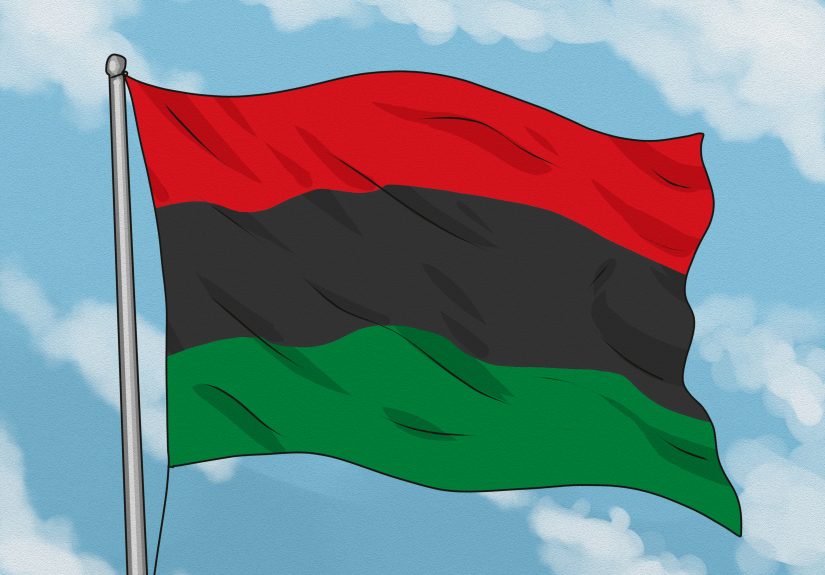
That is why the symbol can feel confusing. To some people, it signals defiance, strength, or a refusal to back down. To others, it suggests aggression, intimidation, or extreme politics. In other contexts, people are not even talking about a plain black American flag at all. They may be referring to a black-and-white “Thin Blue Line” flag, the black POW/MIA flag, or David Hammons’s famous African American Flag, which uses red, black, and green instead of red, white, and blue.
So let’s clear the fog. Here is what the black American flag can mean, where the idea comes from, why the internet keeps giving it one tidy definition when reality is messier, and how to read the symbol with a little more context and a little less guesswork.
First, the official U.S. flag is not black
Before talking about the black version, it helps to start with the real Stars and Stripes. The official American flag is defined in U.S. law as thirteen alternating red and white stripes with white stars on a blue field. That basic design goes back to the Continental Congress in 1777. In other words, the legal and historic national flag is red, white, and bluenot blacked out, grayed out, or moodily dressed like it just listened to one sad country song too many.
That matters because the all-black American flag is an unofficial variation. It is a reinterpretation, not a government-recognized national symbol. So when people ask, “What does the black American flag mean?” the honest answer is not a neat dictionary entry. It is a context question.
Why flags are so emotionally loaded in the first place
Part of the confusion comes from how emotionally powerful flags are in the United States. Today, Americans often treat the flag as sacred, but that intense reverence was not always there from day one. Historians have noted that the flag became more deeply mythologized over time, especially during and after the Civil War, and later through 20th-century customs, ceremonies, and formal flag code traditions.
That history helps explain why altered flags get strong reactions. Change the colors, tilt it upside down, add a stripe, or make it monochrome, and people do not see “just a design choice.” They see a statement. Sometimes a patriotic one. Sometimes a protest. Sometimes a threat. Sometimes all three before lunch.
So what does the black American flag usually mean?
In modern use, the black American flag usually falls into four broad buckets:
1. Defiance and refusal to yield
This is the most common explanation people give. In this reading, the black flag signals toughness, resistance, or a refusal to surrender. Some people interpret it as “we do not back down,” “we will stand our ground,” or “we are done being polite about this.”
That makes it popular among people who want a harder-edged version of patriotism. It still uses the shape and symbolism of the American flag, but the black color changes the tone from celebratory to confrontational. Same symbol, very different vibe.
2. A darker “no quarter” message
Here is where the subject gets more intense. Online explanations often claim that the black American flag means “no quarter,” which is a military phrase meaning no mercy and no prisoners. Historically, black flags in warfare and piracy have carried different meanings in different times and places, and the internet often compresses all that messy history into one dramatic slogan.
There is a reason this idea sticks. In war language, “no quarter” has long referred to refusing to spare an enemy who surrenders. That is an extreme meaning, and modern law of war rejects it. In American Civil War legal history, the Lieber Code addressed the issue directly. So when people today use the black flag in that aggressive way, they are borrowing from older violent symbolismnot invoking some official American tradition.
That is also why many historians and fact-checkers caution against oversimplified internet claims that there was one clean, universally recognized “black American flag” with a fixed Civil War-era meaning. The evidence is much murkier than social media memes suggest. A lot of modern certainty is, frankly, retrofitted swagger.
3. Protest, anti-establishment anger, or political alienation
Sometimes the black American flag is not about military rhetoric at all. Sometimes it is a protest symbol. People who feel alienated from the government, angry about national direction, or deeply distrustful of institutions may use it as a visual way to say, “This country is in a dark place,” or, “I still identify with America, but I reject the cheerful version of the story.”
That is one reason the same flag can be read very differently depending on setting. Flown in one place, it may look like edgy décor. At a rally, it may read as an ideological message. On social media, it may be pure aesthetic branding. In a tense political moment, it can feel openly hostile.
4. Aesthetic patriotism
Not every person flying a black American flag has studied war symbolism, constitutional history, or museum catalogs. Some people simply think it looks cool. There is a whole market for subdued, monochrome, tactical-style versions of the American flag on hats, patches, hoodies, knives, mugs, and enough garage décor to furnish a very specific kind of basement.
In these cases, black can be used to signal grit, seriousness, masculinity, rebellion, or military style. That does not erase the symbol’s baggage, but it does explain why some displays are more about branding than ideology.
What the black American flag does not automatically mean
This is the part people often skip. Seeing a black American flag does not automatically tell you the person displaying it is making one exact statement. Symbols travel. Meanings drift. Context is everything.
It does not always mean support for violence. It does not always mean racism. It does not always mean anti-government extremism. But it also does not always mean harmless décor. The setting, accompanying symbols, tone, and even the type of flag matter.
If the flag appears with other political symbols, that changes the reading. If it is sold as a “no surrender” emblem, that changes the reading. If it is used in a memorial or artistic context, that changes the reading too. A symbol can be loaded without being universally fixed.
Do not confuse it with these other flags
The Thin Blue Line flag
A black-and-white American flag with a single blue stripe is not the same as an all-black American flag. That symbol is generally used to show support for law enforcement, though it has also become controversial because critics see it as politically divisive or as a symbol used in opposition to Black Lives Matter. If you see black, white, and one blue line, you are in a different symbolic neighborhood.
The POW/MIA flag
The POW/MIA flag is also black, but it is a separate and officially recognized symbol honoring prisoners of war and those missing in action. It has a white emblem and the phrase “You Are Not Forgotten.” So yes, it is black, American, and meaningfulbut it is not the same thing as a plain black American flag.
David Hammons’s African American Flag
This one is crucial. Artist David Hammons created a famous reimagined American flag using the red, black, and green colors associated with the Pan-African flag. That work is not an all-black American flag. It is a different symbol with a different purpose: to explore Black identity, belonging, exclusion, and pride within the American story.
That distinction matters because many people casually say “black American flag” when they are actually talking about Black American identity, African American history, or red-black-green symbolism. Those are related conversations, but they are not interchangeable.
The role of art and reinterpretation
American artists have been altering the flag for decades. Jasper Johns famously turned the U.S. flag into modern art in the 1950s, helping viewers see a familiar national symbol as something to examine rather than merely salute. Later works, including monochrome and dark-toned versions, pushed that conversation further. Once the flag becomes an artistic object, color shifts stop being “wrong” in a simple sense and start becoming arguments.
That artistic tradition is one reason monochrome flag imagery keeps resurfacing. A black American flag can function visually like a national symbol in mourning, a symbol stripped of optimism, or a critique disguised as patriotism. It asks a very American question: can you love a country and still challenge the version of it hanging in the gift shop?
Is flying a black American flag legal?
Generally, yes. Americans have broad First Amendment protections for symbolic expression, including controversial or altered uses of flag imagery. That does not mean everyone will like it. It does mean a person can often use flag symbolism in expressive ways that others find offensive, unsettling, or dramatic enough to make the neighborhood Facebook group combust.
So while the U.S. Flag Code describes customs and etiquette, political and artistic expression involving the flag has strong constitutional protection. That is one reason so many altered versions exist in public life.
Why the meaning feels especially contested today
The black American flag has become more contested because modern Americans read flags through the lens of current culture wars. A century ago, many people would have treated a flag mostly as a military or national marker. Today, it is also branding, identity, grievance, protest, community signaling, and internet shorthand.
In that environment, a black flag rarely stays “neutral.” One viewer sees patriotism with teeth. Another sees intimidation. Another sees a fashion choice. Another sees a warning sign. The disagreement is not just about the color black. It is about what Americans think patriotism is supposed to look like in the first place.
Bottom line: what does the black American flag mean?
The best answer is this: the black American flag is an unofficial symbol whose meaning depends on context. Most often, it is used to communicate defiance, toughness, protest, or a darker, more confrontational form of patriotism. In some circles, it is linked to “no quarter” rhetoric or never-surrender messaging. In others, it is mostly aesthetic. And in cultural conversations about Black American identity, people may actually be referring to entirely different flags, especially the Pan-African flag or David Hammons’s African American Flag.
So if you want to interpret it accurately, do not ask only, “What does the flag mean?” Ask, “Who is flying it, where, and alongside what?” Symbols do not come with subtitles. Annoying, yes. Historically accurate, also yes.
Real-world experiences and reactions tied to the black American flag
One reason this topic keeps getting attention is that people do not usually encounter the black American flag in a textbook first. They encounter it in real life, where meaning feels personal. Someone sees it hanging outside a neighbor’s house and wonders whether it signals patriotism, anger, or a “please do not talk to me unless your conversation begins with the Constitution” energy. Someone else spots it on a lifted pickup truck and reads it as defiance. Another person sees it on a hat or T-shirt and assumes it is just part of the tactical, monochrome fashion trend. Same flag shape, wildly different emotional reactions.
At protests or politically charged events, the experience becomes even sharper. A black American flag in a rally setting can feel like a visual amplifier. Even when no words are spoken, it can communicate frustration, distrust, or confrontation. People who support the display may experience it as strength or resolve. People who dislike it may experience it as a threat. That split reaction is part of why the symbol remains controversial: it does not merely decorate a scene, it changes the emotional temperature of the room.
There is also the confusion factor, which is real and constant. Many people think they saw a black American flag when what they actually saw was the Thin Blue Line flag, the POW/MIA flag, or an artistic reinterpretation. That confusion creates awkward but revealing conversations. One person says, “That is support for police.” Another says, “No, that is anti-government.” A third says, “Actually, I thought it was museum art.” Suddenly everyone is holding a different symbolic map, and nobody is using the same legend.
Museum experiences add another layer. When viewers encounter altered American flags in art spaces, they often describe a different kind of reactionless immediate anger, more reflection. In a gallery, the blackened or recolored flag invites questions about identity, grief, exclusion, power, and belonging. The same basic image that feels confrontational on a bumper sticker may feel contemplative on a museum wall. That contrast tells you a lot about how setting shapes meaning.
Black American communities may have a very different set of experiences around related flag imagery. For many, the red, black, and green Pan-African colors are familiar through Juneteenth events, Black History Month celebrations, community gatherings, and cultural pride displays. In those settings, the experience is not about menace at all. It is about memory, heritage, resilience, and identity. That is why precision matters so much. When people casually blur all “black American flags” together, they flatten very different traditions into one vague, overheated symbol.
In everyday life, that is probably the biggest lesson. People do not just interpret flags with their eyes. They interpret them through personal history, politics, family stories, military background, racial experience, media exposure, and sometimes whatever argument they had online the night before. The black American flag lands hard because it taps into all of that at once.