Table of Contents >> Show >> Hide
- What Makes a Good Vegetable Pho
- Ingredients for Vietnamese Vegetable Pho with Bok Choy and Mushrooms
- Step-by-Step Recipe Method
- Flavor Tips That Make This Recipe Better Than “Pretty Good”
- Easy Variations and Substitutions
- Storage, Reheating, and Food Safety Tips
- Why This Vietnamese Vegetable Pho Recipe Works
- Kitchen Experiences and Real-World Notes (Extra Section)
- SEO Tags
Some soups are “nice.” Pho is not nice. Pho is dramatic. It walks into your kitchen with perfume-level aromas, fogs up your glasses, and makes everyone ask, “Are we opening a restaurant, or…?” This Vietnamese vegetable pho with bok choy and mushrooms delivers that same comforting magic in a meatless format, with a deeply savory broth, silky rice noodles, tender mushrooms, and fresh toppings that let everyone customize their bowl like a soup DJ.
This version is built from tested techniques used across major U.S. recipe publishers and food writers: charring onion and ginger for smoky sweetness, toasting whole spices for fragrance, layering umami with mushrooms (and optional kombu/miso/tamari), and keeping the noodles and toppings separate until serving so the bowl tastes fresh instead of soggy. In other words: all the flavor, none of the fuss, and no 14-hour broth commitment unless you’re trying to impress your ancestors.
What Makes a Good Vegetable Pho
Traditional pho is known for its aromatic broth, rice noodles, protein, and a big tray of fresh toppings. In a vegetarian or vegan bowl (often called pho chay), the challenge is replacing the richness of meat-based broth without making the soup taste flat. The good news: mushrooms are basically the overachievers of the produce aisle.
A great vegetarian pho broth usually includes a combination of:
- Charred onion and ginger for sweetness, depth, and that subtle smoky note.
- Whole warming spices like star anise, cinnamon, cloves, and coriander.
- Umami builders such as mushrooms, tamari or soy sauce, and optional kombu or miso.
- A balanced finish with salt, a little sweetness, and acidity from lime at the table.
The broth is the star. The noodles, bok choy, and mushrooms are the supporting cast. And like every good ensemble, they should not all overact at once. The trick is keeping the vegetables tender-crisp, the noodles springy, and the broth hot enough to tie everything together.
Ingredients for Vietnamese Vegetable Pho with Bok Choy and Mushrooms
For the Broth
- 1 large white or yellow onion, halved or quartered
- 1 large piece fresh ginger (about 3 to 4 inches), halved lengthwise
- 4 star anise pods
- 2 cinnamon sticks
- 4 whole cloves
- 1 teaspoon coriander seeds
- 1/2 teaspoon fennel seeds (optional, but lovely)
- 8 cups water (or 4 cups water + 4 cups low-sodium vegetable broth)
- Stems from 8 to 12 ounces shiitake mushrooms (save the caps for the soup)
- 1 small piece kombu (optional, for extra depth)
- 2 to 4 tablespoons tamari or soy sauce, to taste
- 1 to 2 teaspoons sugar, maple syrup, or rock sugar (optional, to balance)
- Salt to taste
For the Soup Bowls
- 8 to 12 ounces flat rice noodles (banh pho)
- 8 to 12 ounces shiitake or mixed mushrooms, sliced
- 2 baby bok choy (or 1 large), sliced lengthwise
- 1 to 2 teaspoons neutral oil
- 1 teaspoon rice vinegar (optional, helps steam and brighten the bok choy)
- Protein (optional): baked tofu, pan-fried tofu, or extra mushrooms
Classic Pho Toppings
- Mung bean sprouts
- Thai basil or regular basil
- Cilantro
- Thinly sliced scallions
- Thinly sliced onion (red or white)
- Jalapeño or Thai chili slices
- Lime wedges
- Hoisin and sriracha (optional, served on the side)
Step-by-Step Recipe Method
1) Char the Onion and Ginger
This step is where your broth graduates from “vegetable soup with ambition” to “pho.” Place the onion and ginger under a broiler (or directly over a gas flame if you’re comfortable doing that) until they are visibly charred. You want blackened edges and softened centers, not fully incinerated onion fossils.
Why this matters: charring adds smoky sweetness and complexity. Many strong pho recipes use this technique because it creates a more layered broth without extra ingredients.
2) Toast the Spices
In a large pot, toast the star anise, cinnamon, cloves, coriander seeds, and fennel seeds over medium heat for 2 to 3 minutes, just until fragrant. The kitchen should smell amazing. If it smells burnt, we do not call that “rustic” start over.
Toasting wakes up the spices and gives the broth that recognizable pho aroma. It’s one of the simplest upgrades you can make.
3) Simmer the Broth
Add the water (or water plus vegetable broth), charred onion and ginger, mushroom stems, kombu (if using), and tamari/soy sauce. Bring everything to a gentle boil, then reduce to a simmer for 30 to 45 minutes.
If you want a richer vegan broth, stir in a small spoonful of white miso near the end (after removing from high heat), or simmer a few dried shiitake mushrooms in the pot. Taste and adjust:
- Too flat? Add a splash of tamari.
- Too sharp? Add a small pinch of sugar.
- Too intense? Add a little hot water.
- Needs brightness? Let lime handle that at the table.
Once the broth tastes fragrant and savory, strain it through a fine-mesh sieve. Discard the solids, and keep the broth hot.
4) Cook the Mushrooms and Bok Choy
Heat a skillet with a little oil. Add sliced mushrooms with a pinch of salt and cook until browned. Browning is key here mushrooms need color to build flavor.
Add the bok choy and cook just until it softens but still has some bite. You can add a splash of rice vinegar and cover the pan briefly to create steam. The goal is tender-crisp, not floppy. Bok choy should still look alive when it hits the bowl.
5) Prepare the Rice Noodles
Cook the noodles according to the package directions. This matters more than people think. Pho noodles vary a lot by brand and style (fresh vs. dried), and overcooked noodles go from silky to sad very quickly.
If using fresh rice stick noodles (banh pho tuoi), they may need only a very quick dip in hot or boiling water. If using dried noodles, cook just until tender, then drain well. If they get sticky, a quick rinse with warm water can help right before assembly.
6) Assemble the Bowls
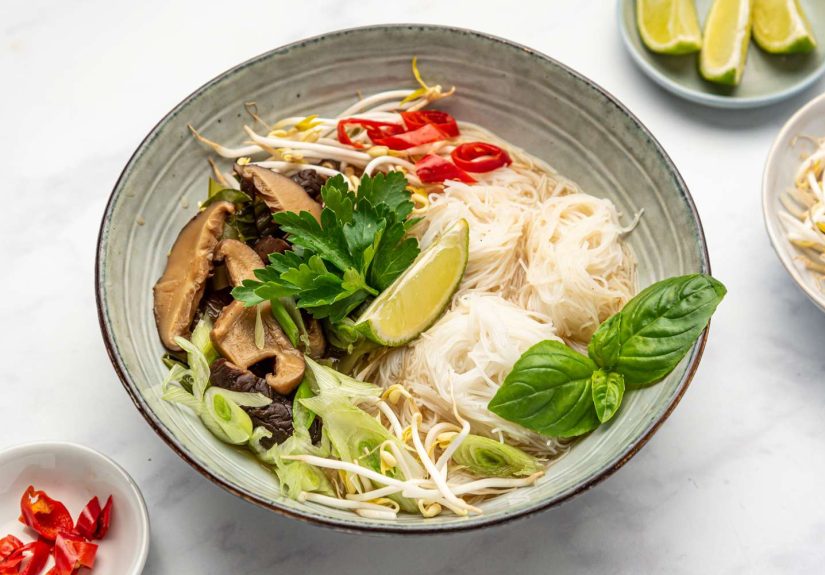
Divide noodles among bowls. Top with mushrooms, bok choy, and tofu (if using). Ladle in very hot broth. Add scallions, herbs, bean sprouts, jalapeños, and onion. Finish with a generous squeeze of lime.
Serve hoisin and sriracha on the side instead of dumping them into the whole pot. Pho is a bowl-by-bowl experience, and everyone should be allowed to build their own flavor universe.
Flavor Tips That Make This Recipe Better Than “Pretty Good”
Use Mushroom Stems in the Broth, Caps in the Bowl
This is a simple pro move. Mushroom stems add deep savory flavor while simmering, and the caps hold a better texture for the final bowl. You get more flavor and less waste, which is basically the culinary equivalent of a double win.
Season the Broth a Little Stronger Than You Think
Rice noodles are bland by design (they are the blank canvas), so the broth should taste slightly stronger in the pot than you expect. Once it meets the noodles and toppings, it balances out.
Keep Toppings Fresh and Cold
The hot broth and cool herbs/bean sprouts are part of the magic. That temperature contrast creates the fresh, layered texture people love in pho.
Don’t Overload the Bowl
A common mistake is turning pho into a vegetable pile with a splash of broth. Use enough broth to let the noodles move freely and give the aromatics room to bloom. Pho should be slurpable, not excavated.
Easy Variations and Substitutions
Make It Vegan
This recipe is already vegan if you use tamari/soy and skip fish sauce. For extra richness, add tofu and a drizzle of scallion-garlic oil on top before serving.
Make It Gluten-Free
Use rice noodles made from 100% rice and choose gluten-free tamari. Double-check bottled sauces if serving with hoisin or sriracha.
Swap the Greens
Bok choy is perfect here because it cooks fast and stays crisp, but you can also use napa cabbage, spinach, or gai lan (Chinese broccoli) if needed. Just adjust the cooking time.
Add More Umami
If your broth tastes “nice but not addictive,” add one of these:
- A small spoonful of white miso
- A few extra dried shiitake mushrooms
- A little more tamari
- A pinch of sugar to round out the savory notes
Storage, Reheating, and Food Safety Tips
The best way to store leftover vegetable pho is to keep the components separate:
- Broth in one container
- Noodles in another
- Cooked mushrooms/bok choy separate if possible
- Fresh herbs and sprouts stored dry and chilled
This prevents the noodles from bloating and the herbs from turning into green confetti. It also makes leftovers taste way more intentional and less like “mystery fridge soup.”
For food safety, refrigerate leftovers promptly (within 2 hours), cool large amounts in shallow containers, and keep your refrigerator cold. When reheating, bring the broth back to a strong simmer or boil, and make sure leftovers are heated thoroughly. If reheating in the microwave, stir and heat evenly.
Why This Vietnamese Vegetable Pho Recipe Works
This Vietnamese Vegetable Pho Bok Choy and Mushrooms Recipe works because it respects the structure of pho:
- Aromatic broth first (char + spices + umami)
- Quick-cooked noodles with the right texture
- Tender vegetables that still have life
- Fresh toppings for contrast and customization
It also fits real life. You can make the broth ahead, prep toppings while it simmers, and build bowls on demand. It feels like a weekend project, but it behaves like a weeknight meal if you plan it right.
And honestly, that’s the sweet spot for home cooking: something that tastes impressive, smells like a tiny miracle, and still lets you eat before midnight.
Kitchen Experiences and Real-World Notes (Extra Section)
One of the best things about making vegetable pho at home is how the experience changes from the first pot to the fifth. The first time, most people focus on the recipe. They measure every spice, watch the broth like a science project, and stare nervously at the rice noodles as if they might file a complaint. By the second or third time, the process becomes less about rules and more about rhythm.
You start noticing the sounds: the dry spices clicking in the pot before they bloom, the soft hiss when onion hits the broiler pan, the quick splash as broth meets noodles. Then there’s the smell shift that moment when cinnamon and star anise move from “interesting” to “oh wow, this is definitely pho.” It’s the kind of kitchen aroma that makes people wander in and ask questions they don’t really need answers to, like, “How long until dinner?” while holding a lime they clearly plan to eat early.
There’s also a very satisfying visual payoff. Before serving, the broth looks dark and serious in the pot. Then you build the bowl: pale noodles, golden-brown mushrooms, bright green bok choy, herbs, sprouts, red chili slices. Suddenly the whole thing looks like something from a restaurant, except you’re wearing socks and there’s a cutting board in the sink. That contrast fancy bowl, very normal kitchen chaos is part of the fun.
Another real-life bonus: this recipe is a great “shared meal” format. If you serve the noodles, broth, and toppings separately, everyone gets to build a bowl exactly how they like it. One person goes heavy on basil and bean sprouts. Another adds every jalapeño slice in a 3-mile radius. Someone else decides tofu is optional and doubles the mushrooms. No arguments, no custom orders, no dramatic table negotiations.
It’s also a surprisingly practical recipe for leftovers. A lot of soups get murky and tired after a day in the fridge, but pho can taste fresh again if you store the parts separately. Reheat the broth, loosen the noodles, add new herbs and lime, and the bowl feels revived instead of recycled. That makes it a strong choice for meal prep especially on busy weeks when cooking a full dinner from scratch sounds like a fantasy.
The most common learning curve is seasoning confidence. Many home cooks under-season the broth at first because they worry it will taste too salty in the pot. Then they pour it over noodles and realize the noodles quietly stole half the flavor. After one bland batch, you learn fast: season the broth boldly, then let the toppings and lime bring it into balance. It’s not a mistake; it’s a rite of passage.
In the end, making Vietnamese vegetable pho is more than following a recipe. It’s an experience recipe the kind that fills the house with spice, turns dinner into an assembly ritual, and somehow makes a regular evening feel a little special. Even when the noodles clump, even when you forgot to buy bean sprouts, even when someone uses too much sriracha and pretends it was “the plan,” the bowl still delivers comfort. And that’s exactly what pho is supposed to do.