Table of Contents >> Show >> Hide
- Why This Bleach-Free Stain Remedy Works
- The Best Way to Mix Dish Soap and Hydrogen Peroxide
- Which Table Linen Stains Respond Best?
- How to Treat Linen, Cotton, and Delicate Tablecloths Safely
- What Not to Do When Removing Table Linen Stains
- When You Need More Than the Soap-and-Peroxide Combo
- The Best Routine for Keeping Table Linens Stain-Free Longer
- Final Takeaway
- Real-Life Experiences With This Surprising Combo
- SEO Tags
Table linens have a tough job. They sit quietly through holiday dinners, birthday cakes, pasta nights, coffee refills, and the occasional red wine catastrophe, then somehow get blamed when the evidence sticks around. If your favorite tablecloth, napkins, or heirloom runner looks like it survived a food fight, the good news is this: you may not need bleach to bring it back to life.
The surprisingly effective combo is simple: dish soap and hydrogen peroxide. It sounds like something a very resourceful aunt would whisper over a casserole dish, but there’s real logic behind it. Dish soap helps loosen greasy food residue, while hydrogen peroxide tackles many colored stains that make table linens look doomed. Together, they can be a smart, bleach-free way to treat common messes on washable tablecloths and napkins.
That said, this is not a “dump it on everything and hope for the best” situation. Linen and cotton tablecloths still deserve a little respect. In this guide, we’ll break down why this stain-lifting combo works, how to use it safely, which stains it handles best, and what to do when your table linen is still clinging dramatically to last Thanksgiving.
Why This Bleach-Free Stain Remedy Works
The beauty of this method is that it attacks stains from two angles at once. Dish soap is excellent at cutting through oily, buttery, or sticky residue. Think salad dressing, gravy, frosting, sauce splatters, and that mysterious ring from something delicious but not exactly identifiable anymore. Meanwhile, 3% hydrogen peroxide works as a mild oxygen-based bleaching agent, which can help lift stains from coffee, tea, wine, berries, tomato sauce, and other pigment-heavy spills.
In plain English: one ingredient goes after the greasy part, and the other goes after the color. It’s like sending in a two-person cleanup crew instead of one exhausted intern with a paper towel.
This combo is especially useful for table linen stains without bleach because chlorine bleach can be too harsh for many fabrics, especially linen. Repeated bleach use can weaken fibers, fade color, and in some cases leave whites looking more tired than brighter. If your goal is to lift stains while keeping fabric looking elegant instead of punished, dish soap and hydrogen peroxide make a lot more sense as a first move.
The Best Way to Mix Dish Soap and Hydrogen Peroxide
For general stain treatment on washable table linens, a practical starting point is:
- 1 part dish soap
- 2 parts 3% hydrogen peroxide
If you’re working on a brightly colored tablecloth and want to be extra cautious, you can dilute the mixture with a little water. Some stain-specific guides also use equal parts dish soap and hydrogen peroxide for stubborn wine stains, so there’s a little flexibility here. The main goal is to create a solution strong enough to loosen the stain without overwhelming the fabric.
How to apply it
- Blot up any excess food or liquid first. Do not rub like you’re trying to erase history.
- Test the mixture on a hidden area, such as an inside hem or underside corner.
- Apply the solution with a clean cloth, sponge, or soft brush.
- Gently work it into the stain.
- Let it sit for 10 to 20 minutes for tougher marks.
- Blot, rinse thoroughly with cool water, and wash according to the care label.
- Air dry until you’re sure the stain is gone.
That last step matters more than people think. A dryer can set leftover stain residue, even when the linen looks clean while it’s still damp. Wet fabric is a notorious liar.
Which Table Linen Stains Respond Best?
1. Red wine stains
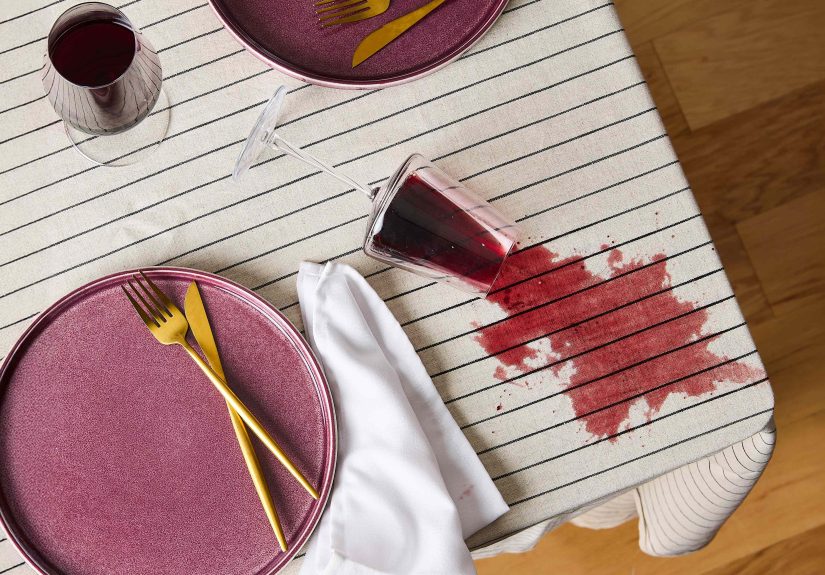
Red wine is the diva of table stains. It arrives dramatically, spreads quickly, and refuses to leave quietly. If the spill is fresh, blot first. Then use the dish soap and hydrogen peroxide mix on the affected area. This can be especially helpful when the stain has both pigment and residue.
If the stain is old, don’t panic. You may need two rounds of treatment. Just don’t jump straight to chlorine bleach unless the care label clearly allows it and gentler methods have failed.
2. Coffee and tea rings
These stains often look simple, but tannins can hang on stubbornly, especially on pale linens. The soap-and-peroxide method can work well here, particularly if the coffee came with cream or sugar. That combination turns a neat little beverage mark into a multitasking stain with both color and residue.
3. Tomato sauce and berry stains
Pigmented food stains love fibers. Pasta sauce, cranberry relish, blueberry syrup, strawberry jam, and salsa can sink into table linens fast. Because these stains often contain both oils and natural dyes, the combo treatment is a great first choice. Treat them as soon as possible, then rinse and launder.
4. Grease and butter spots
If the stain is mostly oily, dish soap does a lot of the heavy lifting. Hydrogen peroxide may still help brighten the area, but the soap is the hero when the stain comes from butter, gravy, vinaigrette, or cooking oil.
5. Old, mystery stains
Ah yes, the mysterious beige cloud discovered when you unfold the “good” tablecloth six months later. These are harder because time lets stains oxidize and bond with fibers. Still, this combo is worth trying before you give up. Let the solution sit longer, rinse well, and repeat if needed. Old stains are annoying, but they are not always permanent.
How to Treat Linen, Cotton, and Delicate Tablecloths Safely
Not all table linens are built the same. A basic cotton napkin and a vintage embroidered linen runner should not be treated with the exact same level of enthusiasm.
For everyday cotton tablecloths
You usually have more flexibility. Cotton can handle gentle stain work, soft brushing, and normal laundering after rinsing. This makes it the easiest fabric for the dish soap and hydrogen peroxide method.
For linen tablecloths
Linen is durable in some ways, but it also has a more refined personality. It can weaken or discolor if handled too harshly. That’s why bleach-free stain removal is especially appealing for linen. Use cold or cool water, test the stain solution first, and avoid aggressive scrubbing that can rough up the fibers.
For colored or printed table linens
Always test first. Hydrogen peroxide can lighten some dyes. If the fabric is richly colored, add a little water to your mixture, treat only the stained area, and keep the contact time shorter on the first round.
For vintage, embroidered, lace, or “dry clean only” pieces
Step away from the DIY hero cape. If the item is antique, fragile, embellished, or labeled dry clean only, professional cleaning is the safer route. Family heirlooms should not become experimental chemistry projects on a Tuesday afternoon.
What Not to Do When Removing Table Linen Stains
Plenty of stain problems get worse not because the stain was impossible, but because the cleanup went off the rails. Here are the big mistakes to avoid:
Do not skip the spot test
Even gentle products can affect dyes and finishes. Hidden-corner testing takes one minute and can save a tablecloth you actually like.
Do not combine random cleaners
Dish soap and hydrogen peroxide are a useful pairing. That does not mean every cleaning ingredient deserves an invitation. Do not mix hydrogen peroxide with bleach. Do not mix it with vinegar in the same container. If you use vinegar as a separate stain step, rinse thoroughly before switching products.
Do not scrub like you’re sanding a deck
Rough scrubbing can distort fibers, fray delicate weaves, and spread the stain. Gentle, repeated blotting and light brushing usually work better.
Do not apply heat too soon
That means no dryer, no hot iron, and no “it probably came out” optimism. Heat can set the stain for good. Air dry first, inspect in daylight, and only then move on.
Do not overuse chlorine bleach
If your item is linen, colored, printed, or even just precious to you, bleach is rarely the best first move. Gentler approaches often get the job done with less risk.
When You Need More Than the Soap-and-Peroxide Combo
Sometimes a stain has been marinating in fabric for too long, or it’s the kind of stain that laughs at your first attempt. That doesn’t mean the tablecloth is finished. It just means you may need a second-line strategy.
Try an oxygen bleach soak
If the care label allows it, an oxygen bleach soak can help brighten dingy whites and lift lingering stains without the harsher effects of chlorine bleach. This is a smart follow-up for washable table linens, especially after pretreating individual spots.
Use enzyme detergent for food-based stains
If the stain includes protein, dairy, sauce, or food residue, an enzyme-based detergent can help break down what plain soap leaves behind. This is especially handy after the initial stain treatment.
Launder properly after pretreating
Once you’ve treated the stain, rinse thoroughly, then wash according to the care label. Don’t automatically choose the hottest water possible. Linen often does better with cooler or warm settings, while some sturdy cotton pieces can tolerate warmer water.
Repeat before escalating
One gentle treatment repeated twice is often safer than one aggressive treatment that damages the fabric. Your tablecloth would like patience more than punishment.
The Best Routine for Keeping Table Linens Stain-Free Longer
Stain removal is great. Preventing the stain from settling in like a tenant with no lease is even better. A few habits can keep your table linens cleaner without bleach over the long haul:
- Blot spills as soon as they happen.
- Rinse or pretreat before tossing linens into a hamper.
- Wash table linens sooner rather than “when you get around to it.”
- Store linens completely clean and fully dry.
- Use breathable storage instead of plastic if you’re keeping special pieces long term.
A lot of “mystery stains” are really old food spots plus time plus oxidation. In other words, storage can turn a tiny spill into a future headache.
Final Takeaway
If you’ve been reaching for bleach every time a tablecloth gets hit with coffee, wine, sauce, or butter, it may be time for a smarter first move. Dish soap and hydrogen peroxide offer a practical, affordable, and often highly effective way to lift table linen stains without bleach. The combo works because it targets both grease and color, which is exactly what many food and drink stains leave behind.
Used carefully, it can help rescue everything from everyday napkins to your favorite dinner-party tablecloth. Just remember the basics: spot test first, rinse thoroughly, wash according to the care label, and air dry before declaring victory. It may not be glamorous, but neither is throwing out a perfectly good linen because a ravioli got rowdy.
Real-Life Experiences With This Surprising Combo
One reason this method has so much staying power is that it matches the way stains actually happen in real homes. Table linens rarely get stained in neat, laboratory-approved ways. They get splashed during rushed breakfasts, spotted during holiday dinners, and quietly marked by salad dressing nobody noticed until the next morning. That’s why so many people end up loving the dish soap and hydrogen peroxide combo: it feels realistic. It uses products many households already have, and it handles the kind of mixed messes that happen in real life.
A common experience goes like this: someone hosts a dinner, a guest tips a glass of red wine, everyone gasps for a full two seconds, then the internet gets consulted. Salt might get tossed on first, a towel might get involved, and eventually the stained tablecloth lands in a sink. This is where the soap-and-peroxide method often shines. The dish soap starts softening the oily or sugary residue, while the hydrogen peroxide begins working on the dark pigment. It’s not magic, but it can feel suspiciously close when the stain starts fading after you had emotionally already replaced the tablecloth in your head.
Another frequent story involves coffee or brunch stains. Syrup, jam, butter, coffee with cream, and berry compote all seem determined to land on pale linen. People often assume these are “light” stains because they don’t look dramatic at first. Then they dry. Then they oxidize. Then three days later they suddenly look like the table runner has a personal grudge against elegance. In these situations, a gentle pretreating session with dish soap and hydrogen peroxide can make a major difference, especially when followed by proper rinsing and air drying.
There are also plenty of cautionary tales, and they’re useful too. Some people skip the spot test and discover that richly dyed linens do not appreciate surprise chemistry. Others use the right mixture but forget to rinse thoroughly, which can leave fabric feeling tacky. And many people make the classic mistake of tossing the tablecloth into the dryer too soon, only to realize later that the stain is still faintly visible and now much harder to remove. If there’s one lesson repeated again and again, it’s that patience beats force. Gentle treatment, careful rinsing, and air drying usually deliver better results than aggressive scrubbing and wishful thinking.
People who care for heirloom linens also tend to appreciate this bleach-free approach because it feels less harsh. Nobody wants to attack embroidered napkins from a grandparent with a chemical sledgehammer. While not every old stain will fully vanish, many people find that the fabric looks noticeably fresher, brighter, and less blotchy after careful treatment. Sometimes success is total stain removal. Sometimes success is getting the tablecloth back on the table instead of banishing it to the “maybe I can cut this into cleaning rags” pile.
The broader experience is reassuring: you do not always need a specialty product, and you definitely do not always need chlorine bleach. Sometimes the winning move is simply understanding what kind of stain you’re dealing with, using the right combination, and giving it a little time to work. It’s not flashy, but it is deeply satisfying. And honestly, anything that rescues your table linens without making them smell like a public pool deserves a little respect.