Table of Contents >> Show >> Hide
- Pyrography, Explained Without the Fancy Smoke
- Why Hyperrealistic Pyrography Is So Ridiculously Difficult
- Meet the Artist Behind the Burnt-Edge Realism
- How Fire Becomes Skin, Fabric, and Feeling
- What You Might See in a “38 Pics” Gallery (Without Reposting the Gallery)
- Why the Internet Can’t Stop Sharing Fire-Made Portraits
- How to Appreciate Pyrography Portraits Like a (Friendly) Art Nerd
- Experiences That Come With Fire-Made Portraits (An Extra )
- Conclusion
Imagine leaning in toward a portrait so lifelike you expect it to blinkonly to realize the “ink” is heat, the “pencil” is flame,
and the “paper” is wood (and sometimes canvas). That’s the first magic trick of pyrography: it looks like a vintage photograph from
across the room, but up close it’s a choreography of scorched tones, crisp highlights, and texture you can almost feel through your eyes.
The second trick is harder: doing it with hyperrealism. Because unlike paint, fire doesn’t politely wait for you to change your mind.
One extra breath of heat and the value shifts. One slightly darker pass and the cheekbone becomes a shadow you can’t un-shadow. And yet,
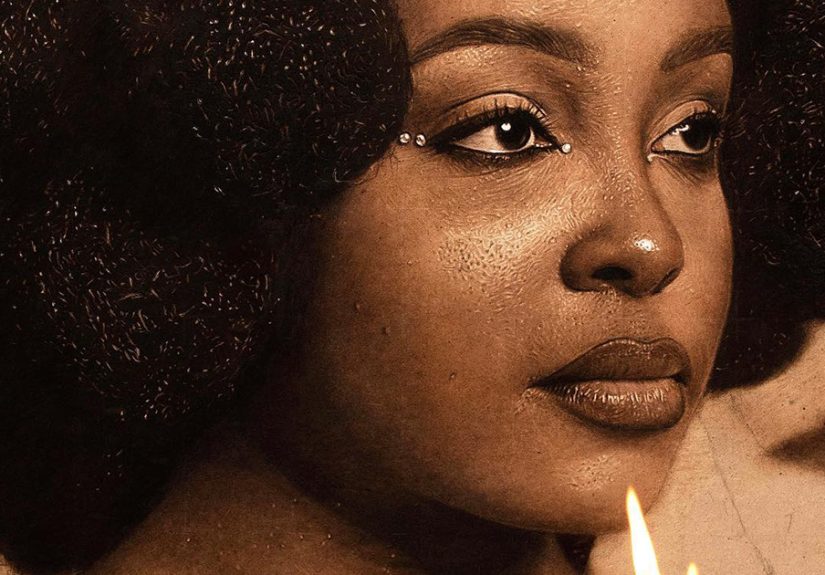
this Nigerian pyrography artist makes faces emerge with uncanny realismskin texture, soft gradients, and expressions that carry stories
before you even notice the technique.
Pyrography, Explained Without the Fancy Smoke
Pyrography (also called wood burning) is the art of making images by scorching a surfaceoften wood, sometimes leather, and in contemporary
practice, even mixed-media surfaces. The word roots literally point to “writing with fire,” which feels like a dramatic slogan until you
watch a portrait appear from controlled burn marks and realize it’s actually a very accurate job description.
What makes pyrography visually distinctive is its built-in palette. Think warm browns, sepia shadows, toasted midtones, and bright highlights
created by leaving areas untouched. The surface itself becomes part of the “color theory.” Instead of adding pigment, the artist is carving
a tonal range out of heat, pressure, and patience.
Why Fire Can Look Like a Photograph
Human eyes read realism through value (light and shadow) more than color. Pyrography is basically value-focused by naturedarkening areas to
create depth, leaving highlights to suggest shine, and using micro-transitions to mimic curved forms. When those transitions are smooth enough,
the brain does what it always does: it assumes the image must have been captured by a lens.
Why Hyperrealistic Pyrography Is So Ridiculously Difficult
If you’ve ever drawn a portrait with graphite, you know the game: build layers, adjust, erase, refine. Pyrography changes the rules. It’s closer
to sculpting than sketching because the mark is literally a transformation of the surface. The medium rewards control, yesbut it also punishes
hesitation and overconfidence in equal measure.
There’s No “Undo” Button (and That’s the Point)
In painting, you can cover. In pencil, you can erase. In fire, you negotiate. Hyperrealism demands thousands of tiny decisions: the exact edge of
a nostril shadow, the softness under an eye, the micro-contrast of pores, the sheen on a lower lip. Pyrography asks for all of that precision
while reminding youpolitely, then loudlythat the surface is keeping score.
Texture Is Both Friend and Frenemy
Wood grain is gorgeous. It’s also a restless collaborator. A grain line can read like hair, a wrinkle, a scar, or a distracting streakdepending on
how it interacts with light and value. Skilled pyrography artists learn to work with the grain rather than fight it, letting natural patterns
support the portrait instead of hijacking it.
Heat Behaves Like a Living Thing
Heat spreads. It blooms. It reacts to surface density, moisture, and timing. That’s why pyrography is often described less as “drawing” and more
as “control.” Not control in the bossy sensecontrol in the “I respect physics and we have a working relationship” sense.
Meet the Artist Behind the Burnt-Edge Realism
The artist at the center of this story is self-taught and known for producing hyperrealistic portraits using fire-based processes on wood and, in
newer work, canvas. His practice has been described as a blend of pyrography with other materials and approachesan evolution that keeps the
“fire-made” signature while expanding what the surface can say.
What’s most compelling isn’t just the technique (though the technique absolutely deserves its own applause break). It’s the intention: portraits
that center Black identity, everyday dignity, and the emotional quiet that often carries the loudest truth. Many pieces feel like they’re capturing
a pause between momentswhen someone is thinking, deciding, remembering, or simply existing without performance.
Hyperrealism That’s Not Just “Look How Real This Is”
Hyperrealistic art can sometimes drift into “technical flex” territoryimpressive, but emotionally neutral. Here, the realism serves a different job:
it makes the subject unavoidable. You can’t dismiss the face as symbolic or generic. The specificity forces attention, and attention is where meaning
starts.
How Fire Becomes Skin, Fabric, and Feeling
When people first see a pyrography portrait, they tend to ask the same question: “How is that even possible?” The more interesting question is
“What choices make it feel alive?” In a photoreal portrait, life often shows up in the small stuff: the wet highlight on an eye, the soft shadow
at the corner of a mouth, the tiny crease that suggests a smile almost happened.
Values First, Details Second
Hyperrealism is built on structure. Before pores and eyelashes, there’s the architecture of the faceplanes, curves, and transitions. In a fire-based
medium, that structure usually appears as layered tonal fields: deep shadows anchoring the form, midtones shaping it, and highlights carving the final
realism. The portrait “turns” in space when those values are calibrated just right.
Edges Tell the Truth
Realism isn’t about making everything sharp. It’s about knowing what should be sharp. A crisp edge can pull attention to the eye. A softened edge can
suggest depth or motion. In pyrography, edges are especially powerful because the contrast is built into the burn. A controlled transition can feel
like air. A hard edge can feel like a decision.
The Sepia Effect Isn’t a FilterIt’s a Mood
The warm tonal spectrum of burned wood naturally evokes memory: old photographs, sunlit rooms, inherited stories. That visual association matters. It’s
one reason fire-made portraits can feel intimate even when you’ve never met the subject. The medium itself whispers “history,” and the portrait answers
back with “presence.”
What You Might See in a “38 Pics” Gallery (Without Reposting the Gallery)
Articles about this artist often circulate in a gallery formatdozens of portraits stacked like a visual feast. Since this piece is meant for publishing
without duplicating anyone’s photo set, here’s a “guided look” at the kinds of moments a large collection of his portraits tends to highlight.
- Eyes that do the talking: direct gaze, side-eye, distant focuseach one a different emotional temperature.
- Skin rendered with respect: tonal nuance that treats complexion as depth, not a single flat shade.
- Fabric and pattern: folds, wraps, and textures that signal culture and personal style without stealing the spotlight.
- Hands and posture: small gestures that hint at work, waiting, resilience, or quiet pride.
- Negative space as narrative: areas left open or sketch-like so the finished realism feels even more deliberate.
- Conceptual surprises: portraits that introduce symbolismidentity cards, layered materials, or partially revealed forms.
The result is a body of work that’s visually consistent (you know it when you see it) but emotionally varied. Some portraits feel celebratory. Others
feel reflective. A few feel like they’re asking you a question and refusing to accept a shallow answer.
Why the Internet Can’t Stop Sharing Fire-Made Portraits
Online audiences love “process shock”the moment when you realize the medium is not what you assumed. Pyrography delivers that surprise instantly:
people think “photograph,” then “drawing,” then “wait… fire?” That sequence is practically engineered for replays, comments, and the kind of disbelief
that turns into admiration.
It’s Satisfying in the Same Way a Time-Lapse Is Satisfying
Fire-based portrait making often appears in short videos because the transformation is dramatic. A blank surface darkens, shapes emerge, highlights pop,
and suddenly a face is looking back. It’s the visual version of watching dough become breadexcept the oven is in your hand and the bread is staring at you.
It Feels Like Innovation Without Losing Tradition
Pyrography has deep roots as a craft and folk art, but contemporary artists are pushing it into gallery spaces by combining it with modern portrait
languagehyperrealism, conceptual framing, and social themes. That bridge between tradition and contemporary commentary makes the work feel both timeless
and new.
How to Appreciate Pyrography Portraits Like a (Friendly) Art Nerd
You don’t need an art history degree to enjoy pyrography. You just need a few viewing habits that help your eyes catch what’s actually happening.
Step Back, Then Lean In
From a distance, notice the overall realism: expression, composition, mood. Then move closer and look for the “language of the medium”the way tones
shift, the texture of the surface, the tiny transitions where the artist controlled heat to create softness rather than harsh burn lines.
Look for the “Quiet Decisions”
In portraits, the loudest feature is often the eyesbut the quiet decisions are where mastery lives: the half-shadow under the cheekbone, the fade along
the jawline, the delicate contrast that suggests breath and warmth. Those subtleties are what make hyperrealism feel human rather than mechanical.
Notice What the Artwork Asks You to Feel
The best portraits don’t just show you a face; they invite an emotional response. Does the subject feel guarded, calm, defiant, tender, tired, hopeful?
When a portrait is made with firean element associated with survival, danger, warmth, transformationthat emotional layer can feel even more charged.
Experiences That Come With Fire-Made Portraits (An Extra )
A funny thing happens when you spend time with pyrography portraits: you start paying attention to heat in everyday life. Not in a dramatic “everything is
symbolic” waymore like an accidental awareness that transformation often looks ordinary until you watch it closely.
Experience #1: The double-take that turns into a stare. People often describe the first encounter as a two-step reaction. Step one is
disbelief (“That’s a photo”). Step two is curiosity (“No, waitwhy does it feel different?”). The longer you look, the more you notice the portrait’s
atmosphere: the warmth of the tones, the way shadows sit in the grain, the sense that the image was revealed rather than painted. That’s when the stare
beginsthe kind where you’re not just looking at art, you’re listening to it.
Experience #2: Feeling the patience in your own body. Hyperrealism carries a hidden emotional message: time was spent here. With pyrography,
that time feels even more physical because the medium is unforgiving. Viewers sometimes report a strange empathynot only for the subject, but for the
making of the subject. You can almost sense the artist pausing at a delicate transition, deciding how dark a shadow should be, choosing restraint over
speed. It’s a reminder that patience isn’t just a personality trait; it’s a visible ingredient.
Experience #3: The warmth-cold paradox. Fire is hot. Burnt portraits can feel emotionally coolcalm, controlled, quiet. That tension is part
of the appeal. The medium suggests intensity, yet the expression might be stillness. You start noticing the same paradox in people: a composed face that
hides a complicated interior, a soft expression that carries strength. Fire-made portraiture trains you to respect the distance between appearance and reality.
Experience #4: The “memory filter” effect. Sepia tones are culturally coded. They whisper “archive,” “inheritance,” “story passed down.”
So even when the subject is contemporarymodern hairstyle, modern posturethe work can feel like it’s carrying history. Viewers often connect that to
identity: how the present self is never just the present self, but a conversation with family, culture, and the world that shaped you. The portrait becomes
less about a single person and more about the invisible line behind them.
Experience #5: The urge to slow down online. Most scrolling habits are fast. But process-driven art disrupts speed. When a portrait looks like
a photo and then reveals itself as fire-made, your brain rewards you for stopping. The experience is almost educational: it reminds you that attention is a
choice, and that sometimes the best part of an image is the moment you learn you were wrong about it.
Experience #6: Respecting the medium’s seriousness. It’s tempting to treat pyrography as a cool trick“painting with fire” sounds like a
party conversation starter. But spending time with the work shifts that framing. Fire isn’t just a gimmick; it’s a language. It carries cultural and emotional
weight: survival, purification, danger, warmth, ceremony, transformation. When an artist uses that language to portray Black identity with tenderness and
clarity, the medium becomes part of the message, not a distraction from it.
In other words, the experience isn’t only visual. It’s behavioral. You leave the work a little more aware of how things changeslowly, deliberately, sometimes
irreversiblyand how beauty can be built from that exact reality.
Conclusion
Pyrography is already a bold choice. Hyperrealism is already a demanding goal. Combining themthen using that combination to center identity, dignity, and
lived emotionturns “wow, that’s impressive” into “wow, that means something.” This Nigerian artist’s fire-made portraits don’t just prove that heat can be
controlled; they prove that attention can be earned, held, and transformed into empathy.