Table of Contents >> Show >> Hide
- Why Teeth Fossilize So Well in the First Place
- What Actually Happens During Fossilization
- Why Fossilized Teeth Turn Dark
- Why Fossilized Teeth Look Shiny
- Why Shark Teeth Are the Classic Example
- Why Some Fossil Teeth Are Darker Than the Root or the Attached Bone
- Common Myths About Dark, Shiny Fossil Teeth
- So, What Is the Real Secret?
- Experiences That Make This Mystery Feel Real
- SEO Tags
At first glance, a fossil tooth can look less like an old body part and more like a polished gemstone that somehow wandered into a gravel pile. It is often dark, slick, and strangely dramatic, as if nature hired a luxury-brand stylist. That glossy, shadowy appearance is one of the reasons fossil teeth are so irresistible to collectors, museum visitors, and anyone who has ever bent down at the beach and thought, “Wait, is that a rock… or a shark?”
The short answer is this: fossilized teeth often look shiny and dark because teeth begin as highly mineralized structures, especially in the enamel, and then spend thousands to millions of years being chemically altered underground. During fossilization, organic material decays, pores can fill with minerals, original crystal structures can become more stable, and trace elements such as iron and manganese can change the color. The result is a fossil that may keep a smooth, glossy crown while picking up a darker tone from the burial environment.
In other words, that dramatic look is not one single trick. It is a team effort starring enamel, groundwater, sediment chemistry, and a very long clock.
Why Teeth Fossilize So Well in the First Place
Teeth are among the best survivors in the fossil world. That is not an accident. They are built to handle biting, grinding, shearing, and all the other rude things mouths do to food. Because of that, they begin life as some of the hardest, most mineralized tissues in vertebrates.
Enamel Is the Star of the Show
The crown of a tooth is covered by enamel, a hard outer layer made mostly of mineral. In living animals, enamel is already shiny and naturally smooth. It is not fluffy, not spongy, and definitely not modest. It is dense, durable, and built to resist wear. That matters enormously after burial, because a tissue that starts out heavily mineralized tends to resist decay and structural collapse better than softer tissues.
This is one reason fossil teeth are so common compared with other parts of the skeleton. In sharks especially, the teeth are the real fossil celebrities. Shark skeletons are mostly cartilage, which breaks down far more easily than hard dental tissues. Teeth, by contrast, are much more likely to survive burial, pressure, and time. So when ancient sharks disappear, their teeth often stay behind like durable little calling cards.
Dentin and Roots Tell a Different Story
A tooth is not one uniform block. Beneath the enamel sits dentin, and the root is structured differently from the crown. These inner and lower parts are typically more porous and more vulnerable to chemical change after burial. That means fossil teeth often weather unevenly. The crown may remain smooth and glossy, while the root looks rougher, duller, and more chalky.
This contrast is one of the biggest clues to the “shiny, dark” mystery. The glossy part you notice first is usually the enamel-rich crown. The less glamorous root is often more altered by groundwater and sediment chemistry.
What Actually Happens During Fossilization
Fossilization is not a single magical zap. It is a long process involving burial, decay, mineral movement, and chemical stabilization. Once a tooth is shed, buried, or left behind after the animal dies, the organic components begin to break down. Water moving through sediment carries dissolved minerals. Over time, those minerals can enter open spaces, fill pores, or alter the existing mineral framework.
In many fossils, this happens through processes such as permineralization and replacement. Permineralization means minerals fill natural pore spaces. Replacement means original hard tissue can be chemically swapped, at least in part, with new mineral material. In fossil teeth, the exact balance varies. Some tissues remain closer to their original mineral state, while others become more thoroughly altered.
That is why fossil teeth are so visually varied. Two teeth from the same species can look completely different if one was buried in oxygen-poor mud rich in manganese and another sat in sediment loaded with iron or phosphate. Fossilization is chemistry with a location problem: where the tooth ends up matters a lot.
Why Fossilized Teeth Turn Dark
Now we get to the color makeover. Modern teeth are often white, cream, or light brown. Fossil teeth, however, commonly appear black, charcoal gray, chocolate brown, bluish black, or even greenish. That darker color usually has less to do with age alone and much more to do with the burial environment.
Iron and Manganese Are Major Players
As a buried tooth interacts with groundwater and sediment, trace elements can be incorporated into its structure or deposited on its surfaces. Iron and manganese are especially important because they can darken fossils dramatically. A tooth buried in one chemical setting may turn nearly jet black, while another in a different matrix may become reddish brown or bluish gray.
This is why paleontologists and museum experts often caution against reading too much into color by itself. A black fossil tooth does not automatically mean it is older than a tan one. In many cases, color reflects local geochemistry more than a simple age scale. The sediment is basically acting like a slow, patient dye bath that never clocks out.
Coatings and Crusts Can Add Even More Darkness
Some fossils also develop mineral coatings on the outside. Iron oxides, manganese oxides, calcite, and other minerals can form thin layers or crusts on fossil surfaces. These coatings can deepen the color, change the texture, and sometimes make the tooth look even more dramatic than the original tissue alone would suggest.
That means the dark appearance may come from two overlapping effects: chemical changes inside the fossil and mineral coatings outside it. Think of it as both the paint and the varnish getting involved.
Why Fossilized Teeth Look Shiny
The shine is where the story gets especially interesting, because people often assume the gloss must be a sign of polish added later by humans. Sometimes collectors do clean specimens, of course, but many fossil teeth look shiny long before anyone takes them home.
The Crown Starts Out Glossy
The enamel or enameloid on the crown is naturally smooth and glossy even before fossilization. In sharks and many other vertebrates, the crown is the sleek, hard-working part of the tooth. If that surface is preserved well, the fossil can retain a polished look that seems almost too pretty to be ancient.
That preserved smoothness is a huge part of the answer. The tooth does not become shiny from nowhere. It began with a glossy outer layer, and fossilization sometimes preserves that layer surprisingly well.
Dense Mineral Structure Helps Preserve Surface Quality
Because enamel is so mineral rich, it tends to resist heavy alteration better than more porous parts of the tooth. The crown may therefore keep a cleaner outline and smoother finish, while the root absorbs more change. This is why many fossil teeth seem to have two personalities: the crown looks elegant and polished, the root looks like it has been through several geological breakups and one very long nap.
Burial and Wear Can Enhance the Effect
After fossilization, transport in sediment, streams, beaches, or surf can wear away rough edges and leave exposed enamel-looking surfaces especially smooth to the eye. Not every fossil tooth gets this treatment, but when it does, the result can be a specimen that catches light beautifully. The shine you see is often a combination of original enamel texture, mineral stability, and later physical smoothing.
Why Shark Teeth Are the Classic Example
If fossilized teeth had a public relations department, shark teeth would run it. They are among the most common vertebrate fossils people actually find, especially in places like Florida, North Carolina, and parts of the Atlantic and Gulf coastal plain. They are also excellent examples of the shiny-dark phenomenon.
Sharks shed enormous numbers of teeth over their lifetimes, which gives the fossil record plenty of raw material. Their teeth are built from hard calcium phosphate tissues and are often preserved long after the rest of the body is gone. Once buried, they can pick up colors from the surrounding sediment and groundwater. That is why fossil shark teeth are often black or dark gray, while modern shark teeth are usually much lighter.
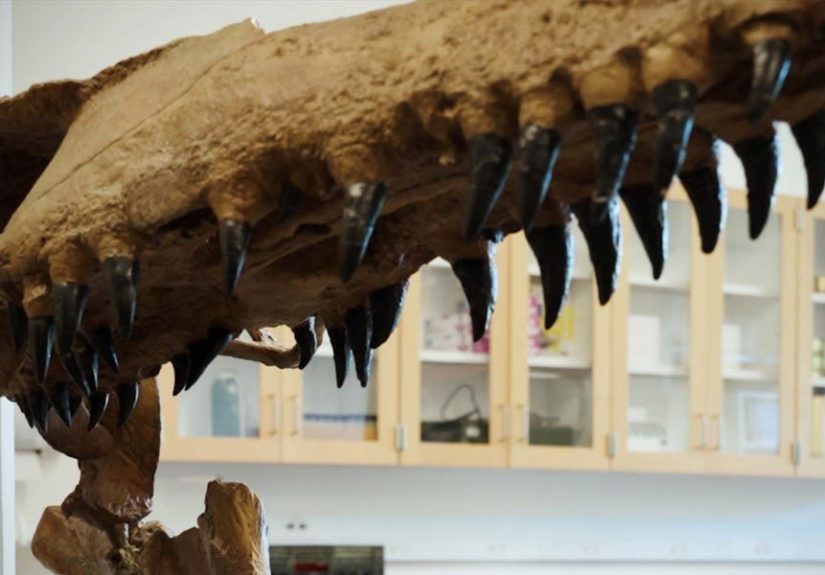
Collectors love megalodon teeth for exactly this reason. A well-preserved megalodon crown can have a dark, almost lacquered look, especially when the enamel-rich surface remains intact. It is prehistoric menace with showroom gloss.
Why Some Fossil Teeth Are Darker Than the Root or the Attached Bone
One of the most revealing details on a fossil tooth is the mismatch between the crown and the root. The crown may be darker, smoother, and shinier, while the root appears lighter, rougher, or more porous. This difference reflects structure as much as color chemistry.
The crown’s enamel starts nearly all-mineral and stays relatively resistant to change. The root and dentin, however, are more open to chemical alteration. That means they may absorb minerals differently, weather differently, and preserve differently. So when a fossil tooth looks like it is wearing a glossy black jacket over a matte brown sweater, that is not weird. That is anatomy meeting geology.
Common Myths About Dark, Shiny Fossil Teeth
Myth 1: Black Means Fake
Not at all. Dark coloration is common in genuine fossil teeth and often reflects iron, manganese, and other burial-related elements.
Myth 2: Shiny Means It Was Varnished
Sometimes a specimen has been cleaned or stabilized, but many fossil teeth are naturally glossy because the enamel-rich crown preserves a smooth surface.
Myth 3: The Darkest Tooth Is Always the Oldest
Color can hint at burial conditions, but it is not a reliable age clock by itself. Sediment chemistry matters too much.
Myth 4: All Fossil Teeth Should Look the Same
Definitely not. Color, shine, texture, and density can vary widely depending on species, anatomy, mineral content, and the environment in which the tooth fossilized.
So, What Is the Real Secret?
The secret behind why fossilized teeth have a shiny, dark look is that they combine biological toughness with geological makeover power. Teeth start out as mineral-rich structures, especially in the enamel. Then, after burial, they go through chemical changes driven by groundwater, sediment, and time. Iron and manganese can darken them. Mineral coatings can deepen the tone. The enamel-rich crown often stays smoother and glossier than the more porous root.
So the next time you see a dark fossil tooth glinting in sunlight, remember this: you are looking at a tiny collaboration between anatomy and deep time. Part original tooth, part chemical history, part underground art project. Nature, as usual, did not settle for beige.
Experiences That Make This Mystery Feel Real
There is a big difference between reading about fossil teeth and actually seeing one in person. On a screen, the science makes perfect sense. Enamel, minerals, burial, iron, manganese, done. But in real life, the emotional reaction tends to arrive first. A fossil tooth often looks so sharp, dark, and glossy that your brain briefly refuses to place it on the timeline. It does not feel ancient in the dusty, crumbling sense. It feels alive in the visual sense, like it still means business.
That is especially true for beachcombers and creek hunters who find fossil shark teeth for the first time. Many describe the moment the same way: everything around the tooth looks ordinary until the crown catches the light. Sand is dull. Shell fragments are chalky. Pebbles are random. Then suddenly there is a small black triangle with a sheen that seems too intentional to be natural. That contrast is exactly why beginners miss them at first and then, once they know what to look for, can never unsee them again.
Museum experiences create a different kind of fascination. In a case full of fossils, dark teeth tend to pull the eye immediately. Bones can be impressive, but teeth often look more “finished.” They have edges, symmetry, and polish. Even when they are incomplete, they seem designed. That visual neatness makes people lean closer. A fossil tooth can look like jewelry made by a very aggressive jeweler.
Collectors also learn quickly that not all shine is equal. Some teeth have a deep satin gloss. Others flash almost like wet stone. Some crowns are smooth while the roots remain rough and grainy. Handling a few specimens side by side makes the science visible without anyone needing to say the word “diagenesis.” You can literally see how the crown preserved differently from the root. The chemistry becomes tactile.
There is also a strange thrill in realizing that the dark color is not just decoration. It is evidence. That black or charcoal tone is the record of a burial environment, groundwater movement, and mineral exchange. What looks stylish is actually scientific. The tooth is carrying a geologic memory in its color.
For families, students, and amateur fossil hunters, this often becomes the gateway lesson that makes paleontology click. A fossil is no longer just “something old.” It becomes a story about materials, environments, and survival. Why did the tooth last when the skeleton did not? Why is the crown glossy? Why is the root dull? Why is one tooth brown and another black? Those questions turn a cool object into a field guide for deep time.
And honestly, that may be the best experience connected to fossil teeth: they reward curiosity fast. You do not need a lab to notice their mystery. You just need light, attention, and a willingness to wonder why an ancient tooth looks like it was polished by the planet itself.