Table of Contents >> Show >> Hide
- What “Dangerous” Really Means for an Active Volcano
- The 15 Most Dangerous Active Volcanoes in the World
- 1) Campi Flegrei (Italy)
- 2) Mount Vesuvius (Italy)
- 3) Mount Merapi (Indonesia)
- 4) Taal Volcano (Philippines)
- 5) Popocatépetl (Mexico)
- 6) Volcán de Fuego (Guatemala)
- 7) Mount Nyiragongo (Democratic Republic of the Congo)
- 8) Sakurajima (Japan)
- 9) Nevado del Ruiz (Colombia)
- 10) Cotopaxi (Ecuador)
- 11) Krakatau / Anak Krakatau (Indonesia)
- 12) Mount Rainier (United States)
- 13) Mount Etna (Italy)
- 14) Mayon (Philippines)
- 15) Ruapehu (New Zealand)
- How Volcano Monitoring Keeps “Dangerous” from Becoming “Disastrous”
- Volcano Safety Basics (That People Ignore Until It’s Too Late)
- Experiences: What It’s Like to Be Near the World’s Most Dangerous Active Volcanoes (Safely)
- Conclusion
Volcanoes are the world’s most dramatic reminder that Earth is not “finished.” Most days, that’s great: fertile soil, hot springs, jaw-dropping landscapes,
and tourist photos that make your friends whisper, “Is that a screensaver?” But when an active volcano sits next to a dense population, a busy flight corridor,
or a coastline that can amplify a tsunami, “beautiful” can turn into “please grab the go-bag.”
This list isn’t meant to scare you into moving to a featureless plain (they’re underrated, but still). It’s meant to explain why certain active volcanoes
rank as especially dangerous: not just because they erupt, but because of what they erupt, how fast hazards move, and how many people and critical systems
lie in the blast radiussometimes literally.
What “Dangerous” Really Means for an Active Volcano
A volcano can be wildly explosive and still be “less dangerous” if it’s remote. And a volcano with frequent small eruptions can be dangerous if it’s
parked near a city like an angry neighbor with a leaf blower. In this article, “dangerous” is a mix of:
- Exposure: How many people live, work, or travel nearby (including major airports and shipping lanes).
- Hazard type: Fast killers like pyroclastic flows and lahars often matter more than slow lava.
- Eruption style: Some volcanoes flip from “puffing” to “life-changing” quickly.
- History: Past deadly events often reveal the worst-case playbook.
- Secondary risks: Tsunamis, landslides, roof collapse from ash, gas hazards, and long-term disruption.
The 15 Most Dangerous Active Volcanoes in the World
A quick note: this is a “most dangerous” list, not a “most cinematic” list. (Though several of these could absolutely win an award for Best Supporting Ash Cloud.)
Many are monitored closely and managed welldanger doesn’t automatically mean disaster. It means the stakes are high.
1) Campi Flegrei (Italy)
Campi Flegrei is a large volcanic caldera west of Naples, famous for ground uplift and earthquake swarms (bradyseism) that signal ongoing unrest.
The danger here isn’t a single coneit’s a broad system where vents could open in different places. With dense neighborhoods nearby and complex evacuation logistics,
even moderate eruptions could have outsized consequences.
2) Mount Vesuvius (Italy)
Vesuvius is the headline act in the Naples regionan active volcano with a long record of explosive behavior and major hazards like pyroclastic flows and heavy ashfall.
It’s “dangerous” because of what it can do and how many people live close enough that evacuation becomes a race against time and traffic.
History’s message is blunt: this volcano doesn’t do subtle when it’s in the mood.
3) Mount Merapi (Indonesia)
Merapi is one of Indonesia’s most active volcanoes, and it sits in one of the world’s most densely populated volcanic landscapes.
Its signature threats include pyroclastic flows (superheated avalanches of ash and gas) and lahars (mud-and-debris flows) that can follow valleys and river channels.
Merapi’s danger comes from frequent activity, steep slopes, and communities close enough that “watching it” can become “running from it.”
4) Taal Volcano (Philippines)
Taal is a small volcano with a big personalitylocated within a caldera lake system, capable of explosive, water-driven eruptions.
The combination of magma and water can produce sudden blasts, ash clouds, and base surges that move fast and low.
Add nearby population centers and the fact that “small volcano” doesn’t mean “small impact,” and Taal earns its spot.
5) Popocatépetl (Mexico)
Popocatépetl is one of Mexico’s most active volcanoes, and it’s close enough to major population centers that ash and aviation impacts can ripple outward quickly.
Ongoing activity can include ash emissions, explosions, and lava dome growth and destruction in the summit crater.
The danger isn’t only a catastrophic eruptionit’s also the steady, disruptive reality of ash, closures, and escalation risk in a heavily traveled region.
6) Volcán de Fuego (Guatemala)
Fuego is a powerful reminder that volcano hazards can be brutally fast.
Explosive eruptions can generate pyroclastic flows that behave like burning avalanches, sweeping down valleys and burying communities in ash and debris.
Even when the eruption column is the star of the show, the most lethal action often happens lower on the slopeswhere people live and work.
7) Mount Nyiragongo (Democratic Republic of the Congo)
Nyiragongo is infamous for fast-moving lava and a history of lava lake activity.
When it erupts, lava can travel quickly enough to outpace realistic escape on foot in certain neighborhoods, and impacts can extend into urban areas near Goma.
The danger here is speed, proximity, and infrastructure vulnerabilityplus the cascading risks that come from mass displacement and disrupted services.
8) Sakurajima (Japan)
Sakurajima, within the Aira volcanic system, is intensely active and close to the city of Kagoshima.
Frequent eruptions can send ash onto populated areas, forcing routines that sound almost fictionallike “daily ash cleanup” becoming a normal chore.
Its danger comes from persistent explosive activity, urban exposure, and the reality that small-to-moderate eruptions can still create big problems.
9) Nevado del Ruiz (Colombia)
Nevado del Ruiz is a case study in why lahars deserve respect.
Volcano heat plus snow and ice can produce sudden floods of mud, water, and debris that travel far down river valleys.
The tragedy associated with past events shows how deadly “secondary hazards” can beespecially when communities are far from the summit and think they’re safe.
10) Cotopaxi (Ecuador)
Cotopaxi is a steep, glaciated stratovolcano, and that glaciation is not a cute accessoryit’s a lahar generator.
Explosive eruptions can trigger ashfall and pyroclastic activity, but the broader, longer-reach threat often involves mudflows racing along drainages.
With major communities and critical routes in potential pathways, Cotopaxi’s danger is as much about water and debris as it is about lava.
11) Krakatau / Anak Krakatau (Indonesia)
Anak Krakatau (“Child of Krakatau”) is a volcano with a terrifying side hustle: tsunami generation.
Volcanic flank collapses and underwater landslides can displace water suddenly, creating waves that arrive with little warning.
In a region with busy coastlines and tourism, the coupling of eruption + collapse + tsunami risk makes this system uniquely dangerous.
12) Mount Rainier (United States)
Rainier is a postcard-perfect mountain that also happens to be a powerful lahar factory: steep slopes, lots of snow and ice, and altered rock that can fail.
The greatest danger isn’t necessarily lavait’s debris flows that can surge down valleys into populated areas.
Rainier’s risk is amplified by downstream development and the reality that lahars move fast and don’t care about your commute.
13) Mount Etna (Italy)
Etna is one of the world’s most active volcanoes and has an extraordinarily long record of eruptions.
While much of Etna’s activity is effusive (lava flows), explosive bursts and ash emissions can disrupt air travel and affect nearby communities.
Etna’s danger is a mix of frequency, infrastructure exposure (especially airports and roads), and the simple fact that it’s always ready for an encore.
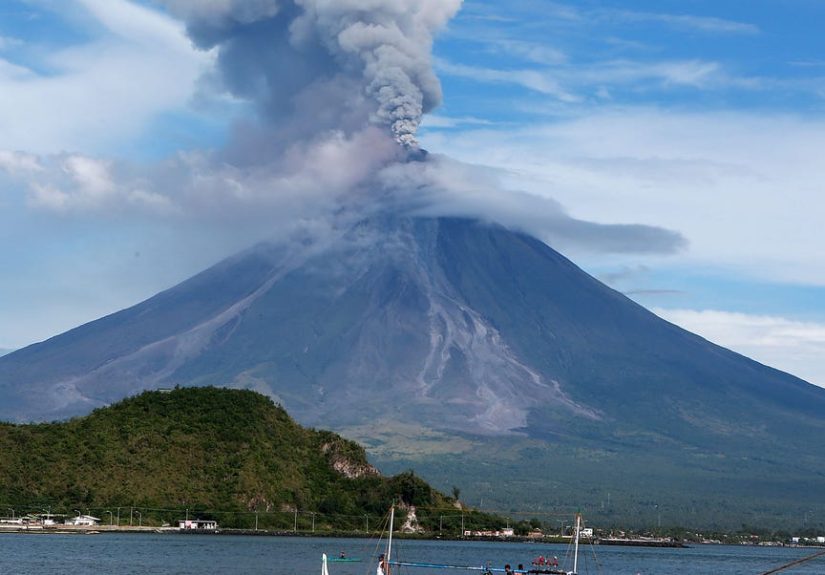
14) Mayon (Philippines)
Mayon is famous for its near-perfect coneand for being persistently active.
Recent eruptive episodes have included lava flows, ash emissions, and pyroclastic density currents, which are among the most dangerous volcanic hazards.
With communities and agriculture on its flanks and tourism that draws people close, Mayon’s risk is the classic “beautiful but busy” volcano problem.
15) Ruapehu (New Zealand)
Ruapehu’s crater lake is a key character in its hazard story.
Phreatic activity and sudden lake-related processes can generate lahars that threaten valleys and infrastructure, including areas associated with recreation.
Ruapehu’s danger is less about a constant lava show and more about sudden, water-driven events that can surprise people who came for snow, not mud.
How Volcano Monitoring Keeps “Dangerous” from Becoming “Disastrous”
Modern volcano monitoring blends old-school fieldwork with high-tech sensing: seismic networks (to detect magma movement), GPS and satellite measurements
(to track swelling or sinking), gas monitoring (because rising magma often “breathes” differently), thermal cameras, and in some cases lahar detection systems.
Weekly activity reporting and coordinated hazard communication help translate science into decisionslike when to close a summit trail, reroute flights, or issue evacuations.
Volcano Safety Basics (That People Ignore Until It’s Too Late)
- Ash isn’t “just dust”: It can irritate eyes and airways, worsen asthma, and cause major disruption even when it’s not lethal.
- Pyroclastic flows are not outrunnable: If officials say “leave,” don’t negotiate like it’s a late checkout.
- Lahars can travel far: You don’t need to be near the crater to be at riskvalleys can funnel danger downstream.
- Respect closures: Volcanoes don’t care about your itinerary, and the rescue teams shouldn’t have to either.
Experiences: What It’s Like to Be Near the World’s Most Dangerous Active Volcanoes (Safely)
If you’ve never been near an active volcano, here’s the surprising truth: the experience often starts quietly. Not “movie quiet,” but “wait, is that thunder?”
quiet. Visitors at monitored viewpoints frequently describe a low rumble that’s less a sound and more a vibrationlike the planet clearing its throat.
Sometimes you see a steam plume that looks harmless, like a giant kettle warming up. Other times, you catch the sharp tang of sulfur on the wind and realize
nature is basically running a chemistry lab with no ventilation.
In places like Sakurajima or Etnawhere activity is frequentlife around the volcano can feel oddly normal. People go to work. Kids go to school.
Someone probably complains about parking. And then you notice the details: ash collecting on rooftops, a faint gray film on cars, shopkeepers selling masks,
and locals who check alert levels the way other people check sports scores. The vibe is less “panic” and more “practical respect,” like living next to an ocean
that occasionally reminds you it invented storms.
In tropical volcano zones, rain can turn yesterday’s ash into tomorrow’s mudflow problem. Guides and rangers talk about valleys the way surfers talk about rip currents:
“Beautiful, but don’t get cocky.” And if you’re near a steep, active cone like Merapi or Mayon, the landscape itself teaches the lessonchannels carved by past flows,
boulders stranded where they absolutely do not belong, and villages that sit just far enough away to exist, but close enough to keep an evacuation plan on speed dial.
The most intense “safe” experience tends to be a controlled viewpoint during elevated unrestwhen you can see ash pulses or glowing material at night,
but you’re outside the official danger zone. People often report a strange emotional mix: awe, adrenaline, and a sudden urge to become extremely polite to the Earth.
(You knowjust in case it’s listening.)
If you ever travel to volcano regions, the best souvenir isn’t a rock. It’s good judgment. Stick to official routes, listen to local authorities,
and treat hazard signs like they were written by someone who has seen the outtakes. Wear eye protection if ash is possible, carry a mask, and keep your phone charged.
And here’s the unsexy pro tip that saves lives: know your uphill and downhill options. Many hazards follow valleys. Your goal is not to “be brave.”
Your goal is to be boringly alive.
Conclusion
The world’s most dangerous active volcanoes are dangerous for a simple reason: they combine powerful hazards with high exposure.
But danger is not destiny. Monitoring, preparedness, smart land-use planning, and clear public communication all reduce risk.
The takeaway isn’t “avoid volcanoes forever.” It’s “respect them like a force of nature that occasionally rewrites maps.”
Because they can. And they will. Just hopefully not on your vacation.