Table of Contents >> Show >> Hide
- What Is Sangria, Exactly?
- The Sangria Formula (So You Can Make It Without Panic-Googling)
- Classic “Red-Style” Sangria Mocktail Recipe (Best for a Crowd)
- Easy Sangria Variations (Same Pitcher, Different Personality)
- Common Sangria Mistakes (And How to Fix Them)
- Serving Ideas and Pairings
- FAQ: Sangria Recipe Questions People Always Ask
- Experiences With Sangria Recipes: What You Learn After a Few Pitchers (500+ Words)
- Conclusion
- SEO Tags
Sangria is the “show up with a pitcher and suddenly you’re the fun person” drink. Traditionally, it’s a wine-based fruit punch served at parties and patios.
This version keeps the same bright, fruity spiritbut makes it non-alcoholic, so it’s a sangria mocktail everyone can enjoy.
Think of it as sangria’s friendly cousin who always remembers where they parked.
Below you’ll get: a foolproof sangria recipe (zero-proof), the flavor logic behind it, easy variations (summer, winter, low-sugar),
and a full section of real-world “learned-the-hard-way” hosting experiencesso your pitcher tastes intentional, not accidental.
What Is Sangria, Exactly?
At its core, sangria is a fruit-forward punch built around a flavorful base (traditionally red wine), citrus, chopped fruit, and often a bubbly topper.
The magic isn’t complicatedit’s the way fruit, juice, and aromatics hang out together long enough to taste like one cohesive thing.
In this guide, we’re making a virgin sangria that captures the same vibe: deep fruit flavor, a little tang, and a sparkling finish.
You’ll still get the “ooh what’s in this?” effectwithout the “uh-oh what did I text?” sequel.
The Sangria Formula (So You Can Make It Without Panic-Googling)
A great sangria mocktail is basically a build-your-own flavor equation. Once you understand the parts, you can swap ingredients based on season,
what’s on sale, or what your fridge is quietly judging you for.
1) Base (the “wine-like” body)
- Red grape juice for classic “red sangria” depth
- Pomegranate or cranberry juice for tartness and color
- Unsweetened iced tea (black or hibiscus) for tannin-like structure (optional but highly recommended)
2) Citrus (the brightness)
- Orange + lemon is the classic backbone
- Lime adds a sharper edge (great if your mix is very sweet)
3) Fruit (the snack that became a beverage)
- Choose one citrus + two non-citrus fruits (e.g., orange + apple + berries)
- Keep fruit bite-sized so it releases flavor but still looks cute in a glass
4) Sparkle (the “party”)
- Club soda, seltzer, lemon-lime sparkling water, or ginger beer
- Add it right before serving so it stays fizzy
5) Sweetener (optionaldon’t default to it)
- Fruit and juice can be sweet enough on their own
- If needed: honey, simple syrup, agave, or maple syrup (start small)
6) Aromatics (small effort, big flex)
- Cinnamon stick, mint, basil, rosemary, or a pinch of grated ginger
- These add “complexity” (a fancy word for “wow, this tastes grown-up”) without alcohol
Classic “Red-Style” Sangria Mocktail Recipe (Best for a Crowd)
This is the go-to non-alcoholic sangria recipe you can serve at a barbecue, game night, baby shower, or
“we cleaned the apartment so we deserve something cute” afternoon.
Yield
Serves 6–8 (about 8 cups). Easily doubles.
Ingredients
- 3 cups 100% red grape juice (chilled)
- 2 cups pomegranate juice (or cranberry juice for a tarter profile)
- 1 cup orange juice (fresh is great; bottled is fineno shame in convenience)
- 1–2 tablespoons fresh lemon juice (to taste)
- 1 tablespoon fresh lime juice (optional, for extra zip)
- 2–3 cups berry-flavored seltzer or club soda (added at the end)
- 1 orange, thinly sliced into half-moons
- 1 apple (Honeycrisp, Gala, or Fuji), thinly sliced
- 1–2 cups berries (strawberries, blueberries, raspberriesor a mix)
- 1 cinnamon stick (optional)
- 1–2 tablespoons honey or simple syrup (optional, only if needed)
- Ice, plus mint leaves for serving (optional)
Instructions
-
Build the fruit base: In a large pitcher, add orange slices, apple slices, and berries. If using honey/simple syrup,
drizzle it over the fruit and gently stir. (This helps pull juice from the fruitaka flavor, aka happiness.) - Add the juices: Pour in grape juice, pomegranate juice, orange juice, and lemon (and lime, if using). Stir.
-
Chill and let it mingle: Refrigerate for 1 to 4 hours. This gives the fruit time to “macerate” and the flavors time to blend.
If you’re making it ahead, aim for the shorter end if you used a lot of citrus slices to avoid bitterness. - Finish with fizz: Right before serving, add seltzer/club soda. Stir gently.
- Taste and adjust: If it’s too sweet, add more lemon. If it’s too tart, add a splash more grape juice or a tiny bit of sweetener.
- Serve: Pour over ice. Add mint if you want to look like you planned this.
Make-Ahead Tips (Because Nobody Wants Last-Minute Chaos)
- Up to 24 hours ahead: Mix everything except the fizzy ingredient. Keep it chilled. Add sparkle right before serving.
-
Keep fruit looking fresh: If you’re worried about mushy fruit, add delicate fruits (berries, peaches) closer to serving time,
and rely on sturdier fruits (apples, oranges) for the longer chill. - Skip watery ice: Freeze some grapes or berries and use them like ice cubes. It’s practical and Instagram-friendly.
Easy Sangria Variations (Same Pitcher, Different Personality)
1) White-Style Citrus Sangria Mocktail
Use white grape juice + a splash of lemonade, then add sliced peaches, green grapes, and orange.
Top with lemon-lime seltzer for a bright, summer feel.
2) Sparkling “Party” Sangria Mocktail
Make the base a little stronger (more juice, less water), chill it well, then top with extra seltzer or ginger beer.
Great for brunch, birthdays, and any event where people say “just one glass” and immediately lie.
3) Winter Cranberry-Spice Sangria Mocktail
Swap in cranberry juice, add orange slices, apple slices, and a cinnamon stick. A small pinch of grated ginger makes it taste cozy.
Top with plain seltzer so the spice comes through.
4) Tropical Sangria Mocktail
Use pineapple juice + white grape juice, add mango and strawberries, and top with coconut-flavored sparkling water.
This is the vacation version of sangria. It emotionally refuses to check email.
5) Low-Sugar Sangria Mocktail
Choose 100% juices, skip added sweeteners, and let fruit do the work. Add extra citrus for brightness and use
plain seltzer or lightly flavored sparkling water.
Common Sangria Mistakes (And How to Fix Them)
Your sangria tastes bitter
- Cause: Citrus slices steeping too long, or too much peel/pith flavor.
- Fix: Use more juice (lemon/orange) instead of lots of slices, or add citrus slices closer to serving time.
Your fruit is mushy and sad
- Cause: Delicate fruit soaking too long.
- Fix: Add berries and soft fruits later; keep apples and oranges in from the start.
It tastes watery
- Cause: Too much ice melting, or a base that’s too diluted.
- Fix: Chill the pitcher thoroughly before serving, use frozen fruit as “ice,” and keep the sparkle ratio moderate.
It’s too sweet
- Cause: Sweet juice + sweet fruit + sweetener (a triple threat).
- Fix: Add lemon/lime juice, use unsweetened tea for structure, or top with plain seltzer.
Serving Ideas and Pairings
Sangria is a social drinkmeaning it pairs beautifully with foods you can eat while holding a napkin like a tiny flag of surrender.
Try it with tacos, grilled skewers, burgers, charcuterie boards, spicy wings (the citrus helps), or salty snacks like chips and salsa.
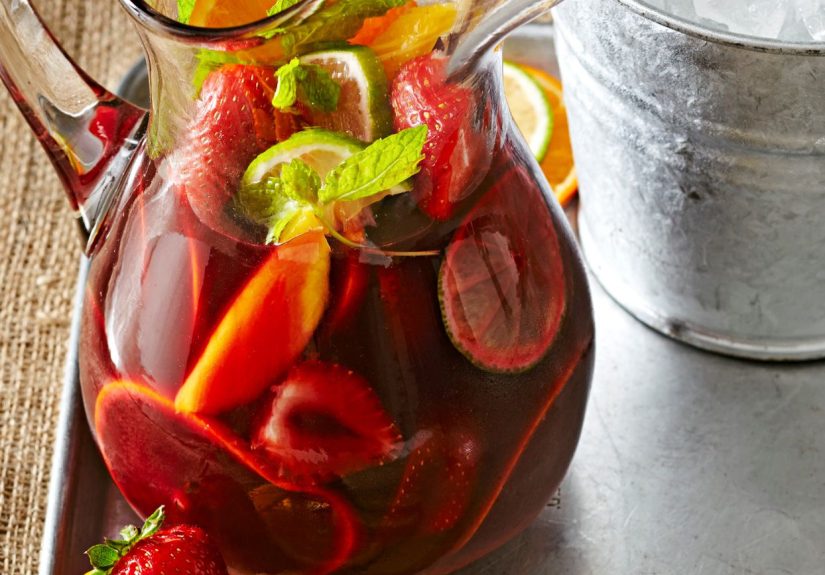
Want it to feel fancy? Serve in a clear pitcher with visible fruit layers, add a big spoon, and garnish with mint.
People will assume you have your life together. Don’t correct them.
FAQ: Sangria Recipe Questions People Always Ask
Can I make sangria the night before?
Yesespecially for a mocktail version. Keep it chilled and wait to add anything fizzy until right before serving.
If you’re using lots of citrus slices, consider adding them closer to serving so the flavor stays bright, not bitter.
Do I have to use fresh fruit?
Fresh fruit looks best, but frozen fruit works as both flavor and ice. If your berries are frozen, add them near the end so they don’t break down too much.
What’s the best fruit for sangria?
Apples and oranges are classic because they hold their shape and release flavor gradually. Berries add color and aroma.
Stone fruits like peaches are great but softeradd them later if you want them to look pretty in the glass.
How do I make it taste more “grown-up” without alcohol?
Add unsweetened black tea (or hibiscus tea) for structure, keep sweetness in check, and use herbs like rosemary or mint.
A tiny pinch of grated ginger also adds complexity without turning it into a spicy science experiment.
Experiences With Sangria Recipes: What You Learn After a Few Pitchers (500+ Words)
If you’ve ever made sangriaalcoholic or notyou know the first pitcher is about the recipe… and the next few are about
experience. Sangria is one of those “easy” drinks that still has a personality. It behaves differently at a humid backyard cookout
than it does at a cozy holiday party. It also behaves differently when your guests are snackers (constant refills) versus sippers (one glass for two hours).
Over time, you start making little adjustments that don’t show up in a basic recipe card, but make the final drink feel dialed-in.
One of the biggest “aha” moments people have is realizing that sangria isn’t supposed to taste like straight juice.
If it’s all sweetness and no brightness, it feels heavyeven if it’s cold. That’s why citrus matters so much.
A small squeeze of lemon can turn a flat pitcher into something that tastes fresh and intentional.
The funny part is that guests will say, “Wow, what’s in this?” as if you used a secret ingredient,
when really you just added acidity like a responsible adult.
Another lesson: the fruit is not just decoration. If you dump fruit in at the last second, it looks festive, but the flavor won’t be fully integrated.
On the other hand, if you let soft fruit soak forever, it starts to look like it lost a fight with a blender.
The sweet spot is giving the pitcher enough time to “mingle” (usually a few hours) but not so much time that everything turns mushy or bitter.
In practice, this means sturdier fruits (apples, grapes, citrus slices with minimal pith) can go in early, while berries and peaches are better added later.
Once you start splitting fruit timing like this, your sangria instantly looks more polished.
Hosting also teaches you the value of temperature strategy. If your sangria isn’t cold enough, people compensate with extra ice.
Extra ice melts. Melted ice waters it down. Then you’re standing in your kitchen wondering why your pitcher tastes like fruit-scented regret.
The easiest fix is boringbut powerful: chill everything first. Chill the juices. Chill the pitcher if you can.
And if you want to feel like a genius, freeze fruit and use it as ice. Guests think it’s a creative flourish;
you know it’s just a practical way to keep the flavor from drifting.
You’ll also notice that different gatherings call for different “energy levels” of sangria.
At a summer barbecue, people love bright and fizzyso you lean into citrus, use berry seltzer, and keep it light.
At a fall or winter party, a deeper base (cranberry + pomegranate, maybe a cinnamon stick) makes it feel seasonal and cozy.
And at kid-friendly events or mixed crowds, a non-alcoholic sangria becomes a surprisingly inclusive centerpiece:
everyone gets the same special-looking drink, and nobody is stuck with “just water” while other people sip something fun.
Finally, the most real-world sangria experience of all: pitchers disappear faster than you expect.
Sangria is smooth, fruity, and easy to drinkso people go back for refills without thinking.
If you’re serving a group, make more than you think you need, and keep a “backup base” in the fridge (juice blend without fruit or fizz).
When the pitcher is half gone, you can top it up quickly, add fresh fruit for looks, and finish with sparkle right before serving.
Your guests will assume you’re effortlessly prepared. You can accept the compliment without revealing the truth:
you just outsmarted the pitcher.
Conclusion
A great sangria recipe doesn’t have to be complicated. With a fruit-forward base, the right amount of citrus,
a smart fruit mix, and sparkle added at the end, you can make a sangria mocktail that tastes festive, looks gorgeous,
and works for practically any occasion. Keep it chilled, taste before serving, and remember: the fruit is doing the heavy liftinglet it shine.