Table of Contents >> Show >> Hide
- Why a Rectangular Oak Dining Table Works So Well
- Oak Brings More Than Good Looks
- How to Choose the Right Size
- Popular Styles of Rectangular Oak Dining Tables
- How to Style a Rectangular Oak Dining Table
- What to Look for Before You Buy
- How to Care for an Oak Dining Table
- Is a Rectangular Oak Dining Table Worth It?
- Experience: Living With a Rectangular Oak Dining Table
- Conclusion
A rectangular oak dining table is one of those rare home pieces that manages to be practical, stylish, and a little bit heroic at the same time. It holds Tuesday-night takeout, holiday feasts, school projects, coffee chats, laptop marathons, and the occasional dramatic family debate over whether anyone actually needed a third basket of bread. In other words, it earns its keep.
That staying power is exactly why the rectangular oak dining table remains such a favorite in American homes. Oak has a reputation for durability, visible grain, and warmth, while the rectangular shape makes it easy to seat more people, work with longer rooms, and adapt to both everyday life and special occasions. If you want a dining table that feels timeless without feeling boring, this combination hits a sweet spot.
In this guide, we’ll break down what makes a rectangular oak dining table such a smart investment, how to choose the right size, which styles work best, what to know about maintenance, and how to make the table feel like the center of the room instead of just another slab with legs. Because yes, a dining table is furniture. But it is also where life happens with napkins, receipts, and maybe one mysterious crayon under the bench.
Why a Rectangular Oak Dining Table Works So Well
The biggest advantage of a rectangular oak dining table is balance. Oak gives you visual texture and structural strength, while the rectangular shape gives you flexibility. Together, they create a table that feels substantial without being fussy. It can look at home in a modern farmhouse dining room, a minimal contemporary apartment, a classic traditional house, or a family kitchen that is always one fruit bowl away from chaos.
Rectangular tables are especially useful because they make the most of length. In many homes, dining rooms and open-plan spaces naturally favor longer layouts. A rectangular oak dining table follows that footprint better than a round or square option, which means it often feels more intentional in the room. It also tends to seat more people more comfortably, especially when chairs are lined up on the long sides.
Oak helps seal the deal. Unlike some wood species that can feel too dark, too red, or too delicate, oak usually lands in the Goldilocks zone. White oak tends to read cleaner, softer, and slightly more modern. Red oak often feels warmer and more traditional. Both can be beautiful, depending on the finish and the rest of your space.
Oak Brings More Than Good Looks
Let’s give oak the spotlight it deserves. People often choose oak because it looks warm and natural, but the bigger story is that it also performs well over time. A dining table is not a decorative side piece. It takes daily abuse. Plates slide. Water glasses sweat. Keys land where they shouldn’t. Someone always thinks a cardboard box counts as a placemat. Oak handles real life better than many softer woods.
Its grain is part of its charm. A rectangular oak dining table has movement and character even when the styling is simple. That makes it easier to decorate around because the wood itself already brings visual interest. You do not have to overload it with a giant centerpiece, a dramatic runner, and enough candles to start a period drama. Often, the grain is the decoration.
Oak also ages well. Small changes in color, minor wear, and the soft patina that develops with use can make the table feel better over time, not worse. That is especially true if you choose a solid wood table or a high-quality oak veneer over a sturdy core. Either way, the best tables are the ones that still look appealing after years of birthdays, homework, and aggressively enthusiastic pizza nights.
How to Choose the Right Size
Here is where a lot of shoppers go wrong: they fall in love with the table first and measure the room second. That is how you end up with a gorgeous rectangular oak dining table that leaves exactly four inches for a human to squeeze past. Beautiful? Yes. Functional? Only if your guests are willing to move sideways like cartoon crabs.
Start With Room Clearance
For comfort, your table should have enough breathing room around it. A good rule is to leave about 36 inches between the table edge and walls or nearby furniture. More is even better in high-traffic spaces. That clearance helps people pull chairs out, sit comfortably, and walk through the room without turning dinner into an obstacle course.
Use Seating as a Guide
Most rectangular tables are around 36 to 40 inches wide, with length determining how many people they seat. A table around 48 inches long typically works for four. Around 60 inches can handle four to six. Around 72 to 78 inches is often comfortable for six to eight. Once you get into the 84- to 96-inch range, you are usually entering serious hosting territory.
Another helpful benchmark is to allow roughly 24 inches of width per person. That gives each diner enough elbow room to eat without accidentally engaging in fork combat. If you like generous place settings, statement chargers, or side dishes that multiply the second company arrives, adding a little extra space is wise.
Think About the Table Base
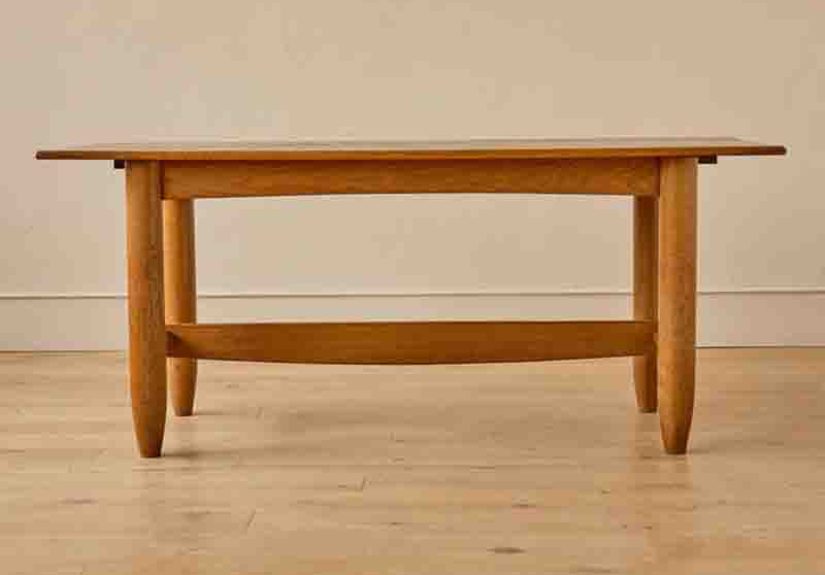
Leg placement matters more than many shoppers expect. A rectangular oak dining table with legs pushed toward the corners generally allows more flexible seating than a design with bulky legs intruding into chair space. Trestle bases can also work beautifully, especially for farmhouse or transitional styles, but they should still leave enough knee room for guests on the sides and ends.
Popular Styles of Rectangular Oak Dining Tables
One reason this type of table stays popular is that it can shift personalities without losing its identity. Oak is versatile enough to look sleek, rustic, refined, or relaxed depending on the design details.
Modern Minimalist
If you like clean lines, a rectangular oak dining table with a slim profile and softly finished white oak can feel calm and architectural. Think straight edges, understated legs, and no extra ornamentation. This style pairs beautifully with neutral dining chairs, textured rugs, and sculptural lighting.
Farmhouse and Rustic
For a more casual, welcoming look, farmhouse-inspired oak tables lean into chunkier tops, visible grain, and sturdier bases. A trestle or plank-style rectangular oak dining table can make the room feel grounded and friendly. This is the table that practically begs for a bowl of apples, a stack of linen napkins, and someone announcing they made biscuits “from scratch” with suspicious confidence.
Traditional and Transitional
Classic silhouettes with turned legs or softly shaped edges can bridge old and new. A rectangular oak dining table in this category often works well in homes where you want warmth and polish without drifting into formality. Add upholstered host chairs at the ends and simpler side chairs along the sides for a layered, collected look.
Extendable Designs
If your home flips between everyday dining and larger gatherings, an extendable rectangular oak dining table is one of the smartest choices you can make. It gives you a manageable footprint most of the time and extra seating when needed. For many households, that flexibility beats buying a giant fixed table that dominates the room every day of the year.
How to Style a Rectangular Oak Dining Table
The easiest mistake in styling is overdecorating. Because oak already has texture and presence, it rarely needs much help. A rectangular oak dining table tends to look best when the styling is simple, low, and functional.
Start with scale. Long tables look good with one elongated centerpiece or a series of smaller items rather than one oversized floral arrangement that blocks everyone’s face. A low ceramic bowl, a line of candlesticks, or a few small vessels with greenery often works better than a towering bouquet that turns dinner into a guessing game.
Next, think contrast. Oak loves materials that make its grain stand out. Linen softens it. Black metal sharpens it. Glass keeps it airy. Stone adds a little polish. If your rectangular oak dining table is a light finish, darker chairs can give the room definition. If the table is medium or dark oak, lighter textiles and woven textures can brighten the space.
Finally, remember that chairs do not have to match the table exactly. In fact, a slightly mixed look often feels more current. Benches on one side, upholstered chairs at the ends, or contrasting wood tones can make the room feel more personal and less like it was purchased in a single, panicked Saturday sweep.
What to Look for Before You Buy
Not every oak table is created equal. Some are built for decades. Others are built for a good photo and a shorter career. Before buying a rectangular oak dining table, pay attention to construction, finish, and daily practicality.
Solid Oak vs. Veneer
Solid oak offers heft, authenticity, and often better long-term value. It may also show movement over time because wood expands and contracts with humidity, which is natural. Oak veneer can also be a strong option when it is well-made, especially if you want a more budget-friendly table with a consistent appearance. The real key is quality construction rather than simply chasing one label.
Finish Matters
Some finishes highlight the natural grain. Others mute it for a smoother, more uniform look. Matte and low-sheen finishes are popular because they feel modern and relaxed, but they may show marks differently than glossier finishes. If you have kids, frequent dinner guests, or a tendency to treat the dining table like a temporary office, look for a finish designed for performance and everyday durability.
Daily Use Check
Ask yourself honest questions. Will this rectangular oak dining table be used only for dinner, or for homework, crafts, and remote work too? Do you need extension leaves? Do you prefer rounded corners for a softer look and fewer bruised hips? Will armchairs fit underneath comfortably? Great furniture shopping starts with realism, not fantasy. Buy for your actual life, not your imaginary candlelit dinner party with twelve perfectly behaved guests.
How to Care for an Oak Dining Table
Oak is hardworking, but it still likes a little respect. Good care is not complicated. In fact, the best routine is refreshingly boring, which is exactly what you want from maintenance.
Dust the table regularly with a soft cloth. Clean spills quickly, especially water, wine, sauces, and anything involving citrus or vinegar. Use coasters, placemats, or felt pads to reduce scratches, heat marks, and water rings. Avoid harsh cleaners and abrasive products, which can damage the finish or dull the surface over time.
Try not to place your rectangular oak dining table in prolonged direct sunlight or right beside extreme heat sources. Like many wood pieces, it can react to temperature swings and light exposure. And yes, this is the part where the table politely asks you to stop pretending the top is an ironing board, pot stand, or shipping station.
If wear shows up after years of use, that is not the end of the story. One of the advantages of wood furniture is that many tables can be refreshed, refinished, or touched up depending on the construction and finish. A good oak table has a future. It does not have to be perfect to remain beautiful.
Is a Rectangular Oak Dining Table Worth It?
For many homes, absolutely. A rectangular oak dining table checks the boxes that matter most: it is functional, durable, welcoming, and adaptable across styles. It works for quick weekday meals and for the kind of long dinners where dessert appears, disappears, and then mysteriously reappears. It can be dressed up for holidays or left mostly bare on ordinary days and still look polished.
More importantly, it is the kind of piece that earns emotional value. You do not just buy it for the room. You buy it for the life that will happen around it. That is why so many people are willing to spend a little more for solid materials, a thoughtful size, and a design they will still want to live with years from now.
If you want one table that can carry a room without screaming for attention, a rectangular oak dining table is a very strong candidate. Timeless without being stiff. Practical without being plain. Warm without trying too hard. Honestly, that is a pretty enviable résumé for four legs and a top.
Experience: Living With a Rectangular Oak Dining Table
There is a difference between admiring a rectangular oak dining table in a showroom and actually living with one. In a store, it looks like a stylish furniture choice. At home, it quickly becomes the unofficial headquarters of the house. It is where groceries get sorted, packages get opened, and coffee gets poured before anyone is fully ready to speak in complete sentences. It starts as a dining table and somehow ends up as a stage for daily life.
One of the best things about the experience is how naturally it blends into routines. In the morning, the table can feel crisp and quiet, especially when the sunlight catches the grain in the oak. By afternoon, it might be holding laptops, notebooks, and a bowl of fruit that no one has touched all week. By evening, it shifts again, turning into the place where dinner slows people down just enough to talk. Few pieces of furniture work that hard while still looking composed.
Another thing people notice is how forgiving oak feels emotionally. That may sound dramatic for a table, but hear me out. Some furniture is so delicate-looking that every glass of water feels like a potential crime. A rectangular oak dining table usually feels more relaxed. You still care for it, of course, but you are not constantly hovering over it like a nervous museum guard. That makes the room feel more livable, which is exactly what most people want.
Hosting also tends to get easier. A rectangular shape naturally gives everyone a place. You can line up chairs quickly, add a bench if needed, and still keep the room organized. For holidays or birthdays, the table often becomes the social anchor before dinner even starts. People gather around it to set down drinks, arrange flowers, sample appetizers, or “help” while mostly staying in the way. It creates a center of gravity that rounder or smaller tables do not always provide in the same way.
Over time, the table develops a personality. Maybe there is a seat everyone gravitates toward. Maybe one corner becomes the preferred spot for morning coffee. Maybe the end closest to the kitchen turns into the unofficial serving zone at every gathering. These patterns sound small, but they are what turn a rectangular oak dining table from a purchase into part of the household rhythm.
The visual experience matters too. Oak tends to look better with age, especially when the finish and grain are allowed to shine. Tiny signs of wear often make it feel real rather than ruined. The table begins to reflect life instead of resisting it. That is part of the charm. It does not stay frozen in showroom perfection. It becomes familiar, useful, and a little sentimental.
In the end, living with a rectangular oak dining table is less about owning a trend and more about enjoying a reliable centerpiece. It supports everyday mess, big celebrations, and everything in between. And if a piece of furniture can survive spaghetti night, holiday hosting, craft projects, and one relative who always puts a sweating glass down without a coaster, that is not just furniture. That is legend.
Conclusion
A rectangular oak dining table remains a smart choice because it combines size flexibility, everyday durability, and timeless style in one hardworking piece. Whether your taste leans modern, rustic, classic, or somewhere gloriously in between, oak gives you warmth and character while the rectangular shape keeps the room functional. Choose the right dimensions, leave enough clearance, pay attention to finish and construction, and you will likely end up with a table that serves your home beautifully for years.
Best of all, this is not the kind of furniture that only looks good in photos. It works in real life. It hosts, adapts, ages, and keeps showing up. And in a home full of disposable things, that kind of quiet reliability feels pretty special.