Table of Contents >> Show >> Hide
A stroke can change life in a single afternoon. One minute you are arguing about what to watch on TV, and the next minute your brain has slammed on the brakes. That is the frightening part. The hopeful part is this: recovery does not end when the emergency does. For many people, recovering from stroke is a long, active process shaped by rehabilitation, daily practice, support, and a fair amount of stubbornness.
In the United States, stroke affects hundreds of thousands of people every year, and it remains a leading cause of long-term disability. But disability is not the same thing as defeat. Modern stroke rehabilitation can help people improve strength, movement, communication, swallowing, thinking, mood, and independence. Some people recover quickly. Others improve more gradually over months or years. Most fall somewhere in the messy middle, where progress is real but not always dramatic.
This guide explains how stroke rehabilitation works, what practical recovery tips actually help, and what the outlook may look like for survivors and families trying to rebuild everyday life.
Why stroke recovery takes time
A stroke injures brain tissue by interrupting blood flow or causing bleeding in the brain. Because different parts of the brain control different abilities, recovery depends on where the stroke happened, how severe it was, how quickly treatment began, and whether complications followed. A small stroke may leave mild weakness or speech changes. A more severe stroke can affect walking, swallowing, memory, vision, balance, bladder control, mood, or the ability to manage daily tasks.
The brain, however, is not a static machine with a single on-off switch. It can adapt. Through a process often called neuroplasticity, healthy areas of the brain can sometimes take over part of the work of injured areas. Rehabilitation is designed to encourage that rewiring. In plain English, it gives the brain useful homework. A lot of it. Repeatedly. Often when you would rather be doing literally anything else.
That repetition matters. Practicing transfers, standing, dressing, speaking, swallowing safely, or using a weak hand is not busywork. It is the engine of recovery. The goal is not perfection in one dramatic leap. The goal is steady improvement, built one ordinary movement at a time.
What stroke rehabilitation usually includes
Stroke rehab is rarely just one therapy and a pep talk. It is usually a team effort.
Physical therapy
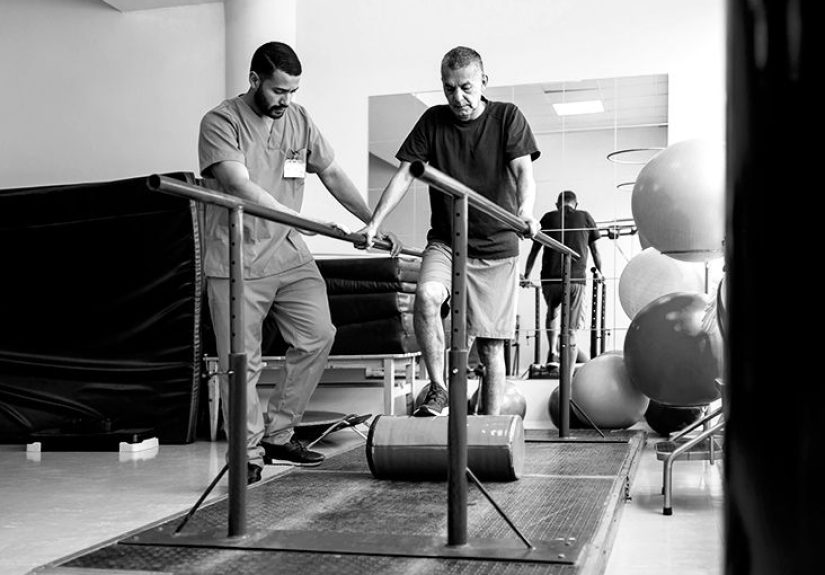
Physical therapy focuses on mobility. That may include balance training, walking practice, strengthening, stretching, positioning, transfers, endurance work, and exercises to reduce stiffness or improve coordination. For someone who cannot walk independently, physical therapy may begin with sitting upright safely, standing with support, or relearning how to shift weight without falling over like a folding chair.
Occupational therapy
Occupational therapy helps people regain everyday skills. This includes dressing, bathing, grooming, toileting, cooking, using the bathroom safely, writing, handling objects, and adapting the home or routine to improve independence. Occupational therapists also help with one-handed techniques, equipment recommendations, and strategies for vision or attention problems.
Speech-language therapy
Speech-language pathologists do much more than help with speech. They can work on aphasia, slurred speech, voice problems, cognition, memory strategies, and swallowing difficulties. After stroke, some people know exactly what they want to say but cannot get the words out. Others can speak but struggle to understand language. Some have trouble swallowing safely, which raises the risk of choking, dehydration, poor nutrition, or aspiration pneumonia.
Cognitive and emotional support
Stroke recovery is not just physical. Survivors may deal with depression, anxiety, irritability, fatigue, impulsivity, slowed thinking, personality changes, or frustration with lost independence. Counseling, neuropsychology, support groups, and medication can all play a role. Emotional care is not an optional bonus feature. It is part of rehabilitation.
Rehabilitation nursing, social work, and care coordination
Recovery also depends on medication management, skin care, bowel and bladder routines, education, insurance navigation, home planning, transportation, equipment, and caregiver support. Social workers and rehab nurses often help families connect the dots between hospital discharge and real life, which is good because real life rarely arrives with an instruction manual.
Where stroke rehab happens
Rehabilitation can take place in several settings, depending on medical needs and functional ability.
Inpatient rehabilitation is often best for people who can tolerate intensive therapy and need close medical oversight. This setting usually provides coordinated therapy several days a week.
Skilled nursing or subacute rehabilitation may be used when a person still needs nursing care but cannot yet handle more intensive rehab.
Home health rehabilitation can help after discharge when leaving home is difficult. Therapists work on safety, mobility, and daily activities in the place where problems actually happen: the home.
Outpatient rehabilitation is common once a person is medically stable and able to travel. It often focuses on continued gains in movement, endurance, speech, cognition, and community participation.
Some survivors move through all of these stages. Others need only one or two. The best setting is the one that matches the person’s current needs and recovery goals, not the one that sounds the most heroic.
Stroke recovery timeline: what to expect
Recovery after stroke is highly individual, but a few patterns are common. Rehabilitation often starts in the hospital once the person is medically stable. Early therapy may begin with positioning, swallowing checks, sitting up, or simple movement practice. In the first days and weeks, the focus is often safety, discharge planning, and identifying the main impairments that need treatment.
The first few months after stroke are often the period of fastest improvement. That does not mean recovery stops after that. It means early gains can be more noticeable. Later progress is still possible, but it may come in smaller, harder-won steps.
Some people return to work, driving, exercise, and independent living. Others need long-term support with mobility, communication, or daily care. Many continue improving well beyond the early recovery window, especially when they stay engaged in therapy, home exercise, and healthy routines.
The most realistic expectation is not a perfect timeline. It is a flexible one. Recovery is often less like climbing stairs and more like hiking a muddy trail: progress, slips, plateaus, another burst of progress, then a nap.
Practical tips for recovering from stroke
1. Set small goals that actually fit real life
“Walk normally again” is a meaningful dream, but it is not a daily plan. Better goals are specific and measurable: stand at the sink for five minutes, practice ten sit-to-stands, use the left hand during lunch, say the names of family members clearly, or safely get in and out of bed.
2. Practice consistently
Rehabilitation works best when therapy sessions are reinforced at home. Home exercises, speech practice, memory strategies, and daily movement all matter. Short, regular practice is often more effective than an occasional heroic burst followed by total exhaustion.
3. Protect your energy
Post-stroke fatigue is common. Plan important tasks for the time of day when energy is best. Alternate activity with rest. Reduce distractions. Break big tasks into smaller steps. “Pacing yourself” may sound unexciting, but it beats burning through all your energy before lunch.
4. Make communication easier
If speech or understanding is affected, family members should use short sentences, reduce background noise, allow extra response time, and ask simple yes-or-no or choice-based questions when helpful. Do not finish every sentence for the survivor. Support communication; do not hijack it.
5. Take swallowing problems seriously
Coughing during meals, a wet-sounding voice after swallowing, pocketing food, or repeated throat clearing can signal dysphagia. Follow the speech therapist’s instructions carefully, including food textures, liquid consistency, posture, and pacing. Swallowing is not the time for improvisational cooking experiments.
6. Reduce fall risk at home
Remove clutter and loose rugs. Improve lighting. Use grab bars, handrails, shower chairs, or raised toilet seats if needed. Keep commonly used items within easy reach. A safer home is not “giving up.” It is smart design with better odds.
7. Watch mood and mental health
Sadness, hopelessness, anxiety, irritability, or loss of interest in normal activities should not be brushed off as “just part of it.” Post-stroke depression is common and treatable. Emotional symptoms deserve the same attention as physical symptoms.
8. Prevent another stroke
Secondary prevention is a major part of recovery. That usually means taking prescribed medications, keeping blood pressure under control, managing diabetes or cholesterol if present, stopping smoking, staying active as able, following up with doctors, and addressing conditions such as atrial fibrillation. Recovering from one stroke while ignoring stroke prevention is like fixing a roof and leaving the window open in a storm.
9. Support the caregiver too
Caregivers often carry physical, emotional, and financial strain. They need sleep, breaks, information, and backup. A burned-out caregiver is not a badge of honor. It is a warning sign that the recovery plan needs more support.
Outlook after stroke
The outlook after stroke depends on many factors: stroke type, size, location, overall health, age, access to rehabilitation, family support, and whether another stroke is prevented. There is no universal script.
Some people recover enough to return to work and previous hobbies. Some remain independent but need adaptive strategies. Others live with lasting disability and require help with daily activities. Even when recovery is incomplete, quality of life can improve substantially with the right therapy, equipment, routines, and support.
It is also important to understand that success in stroke rehabilitation is not measured only by whether someone gets “back to normal.” Sometimes success means speaking clearly again. Sometimes it means walking to the mailbox. Sometimes it means swallowing safely, taking a shower with less help, or feeling confident enough to go to a family dinner without panic. These wins may look small from the outside, but inside recovery, they are enormous.
Hope matters, but realistic hope matters most. Stroke rehab is not magic. It is structured, repetitive, frustrating, meaningful work. And for many people, it works.
Common experiences during stroke recovery
One of the hardest parts of stroke recovery is how strange everyday life can feel afterward. Survivors often describe the early days as disorienting. You may know what you want your body to do and then watch it refuse to cooperate. You may feel exhausted by tasks that once seemed automatic, like buttoning a shirt, reading a text, or carrying a plate from the counter to the table without turning it into modern art.
Many people say the first emotional hurdle is impatience. They want progress to happen on a schedule that makes sense to them. Recovery, unfortunately, did not get that memo. One week a person may suddenly lift an arm higher or say a difficult word more clearly. The next week may feel flat. These plateaus can be discouraging, but they are common. Therapy is often working even when improvement is not flashy.
Fatigue is another experience survivors talk about again and again. This is not ordinary tiredness. It can feel like the brain has used up its battery by noon. A short outing, a therapy session, or a long conversation may leave someone wiped out for hours. Families sometimes misunderstand this and assume the survivor is not trying hard enough. Usually the opposite is true. The person is trying so hard that the effort is invisible.
Communication changes can also be deeply frustrating. A survivor with aphasia may understand far more than others realize but struggle to express it. That mismatch can make social situations painful. People may speak too quickly, talk over the survivor, or direct questions to the caregiver instead. On the best recovery days, support and patience make conversation possible. On the worst days, it can feel like being trapped behind glass.
There are practical frustrations too. A once-independent adult may need help showering, walking, eating, or remembering medications. That shift can bring grief, embarrassment, anger, and sometimes humor so dark it could qualify as espresso. Many survivors benefit from acknowledging those emotions instead of pretending everything is inspiring all the time. Stroke recovery can include gratitude and grief in the same hour.
Caregivers have their own experience of recovery. They often become schedulers, drivers, medication trackers, cheerleaders, and backup memory systems while trying to keep the rest of life running. Many feel guilty when they are tired, resentful, or overwhelmed. Those feelings are common, and they do not mean the caregiver loves the survivor any less. They usually mean the situation is hard, which is a wildly accurate assessment.
Still, recovery often brings meaningful victories that families remember for years: the first clear sentence, the first trip outside alone with supervision, the first safe meal after swallowing therapy, the first time a favorite song is sung correctly, the first laugh that sounds fully like the old laugh. These moments matter because they remind everyone that stroke changes life, but it does not erase the person.
Over time, many survivors build a “new normal.” It may include adaptive equipment, slower mornings, therapy homework, medication alarms, and more planning than before. But it can also include renewed confidence, stronger relationships, and a sharper appreciation for progress that once would have seemed too small to notice. In that sense, stroke recovery is not only about getting abilities back. It is also about learning how to live forward.
Conclusion
Recovering from stroke is rarely simple, quick, or linear. It involves rehabilitation, repetition, prevention, patience, and support from professionals and loved ones. The journey may include physical therapy, occupational therapy, speech-language treatment, mood care, home changes, and ongoing medical follow-up. While the outlook varies from person to person, meaningful improvement is possible at many stages of recovery. The key is to start where you are, work with the right rehab team, and keep building from there.