Table of Contents >> Show >> Hide
- Why Amsterdam Feels More Like a Character Than a Postcard
- Neighborhoods That Refuse to Blend Into One Beige Experience
- Dutch Design in Amsterdam: Clean Lines, Warm Soul
- Food, Bars, and the Glory of Not Trying to Impress Too Hard
- The City’s Character Also Includes Its Contradictions
- What Amsterdam Gets Right
- A Longer Experience of Amsterdam: Where the City Starts Talking Back
- Conclusion
Amsterdam is one of those cities that could easily become unbearable if it tried too hard. Picture it: glossy canals, tidy bicycles, museum masterpieces, flower boxes doing their absolute most. In lesser hands, the whole place could feel like a refrigerator magnet with a municipal budget. And yet Amsterdam avoids that fate. It stays human. Slightly crooked. Sometimes crowded. Often quirky. Endlessly itself.
That is the real appeal of Amsterdam. Not perfection. Personality.
Yes, the canal houses are gorgeous. Yes, the museums are world-class. Yes, you will probably take a photo of a bridge and briefly believe you have become a serious visual poet. But what makes Amsterdam memorable is not a polished fantasy version of Europe. It is the city’s lived-in character: the brown cafés with dark wood and older-than-your-group-chat stories, the neighborhoods that shift from elegant to scruffy in half a block, the ferry ride to creative industrial spaces in Noord, the quiet residential streets behind the famous attractions, and the way the city keeps making room for old buildings, new ideas, and people who do not all move at the same speed.
For travelers, designers, urbanists, and anyone who prefers a city with actual opinions, Amsterdam offers a lesson in charm without fakery. It does not need to be flawless to be magnetic. In fact, its imperfections are often the point.
Why Amsterdam Feels More Like a Character Than a Postcard
Many cities are beautiful. Fewer have a personality strong enough to interrupt your itinerary. Amsterdam does. It nudges you off the checklist and into the rhythm of the place. One minute you are headed to a major museum. The next, you are standing outside a tiny bookshop, staring at a canal house that leans just enough to suggest the building may have once had a dramatic night.
The city’s beauty is real, but it is not sterile. The canal ring is elegant without feeling over-rehearsed. Amsterdam’s famous gabled houses are visually striking, yet the best streets do not feel frozen in time. They feel occupied. Curtains are half-drawn. Bikes are chained in improbable clusters. Windows reveal kitchens, reading lamps, plants that are thriving, and plants that are hanging on emotionally. It all adds up to something warmer than perfection: intimacy.
That intimacy is one reason Amsterdam photographs well and lives even better. The city is compact enough to encourage wandering, layered enough to reward it, and self-assured enough not to explain itself every five minutes.
The Canals Are Pretty, but They Are Also Practical
Amsterdam’s canals are not just scenic accessories. They are the city’s structure, memory, and mood board. They carry the legacy of trade, defense, expansion, and daily life. On the water, Amsterdam looks cinematic. Up close, it feels more interesting than cinematic. There are cargo histories, merchant ambitions, quiet residential stretches, hidden gardens, and the occasional reminder that wealth, beauty, and power have never been innocent categories.
That layered quality matters. A canal cruise can be lovely, but the deeper experience comes when you realize the city is not merely cute. It is historical, commercial, artistic, liberal, contradictory, and constantly reinterpreting itself. Amsterdam works because it wears history like a well-used coat, not a costume.
Bicycles Keep the City Honest
If Paris glides and New York hustles, Amsterdam pedals. Cycling is not a decorative lifestyle choice here; it is the city’s operating system. That changes everything. Streets feel scaled to humans. Movement feels active instead of theatrical. Residents do not look as though they are performing urban chic for your benefit. They are just going somewhere, ideally before the rain changes its mind.
There is also something wonderfully anti-pretentious about a city where serious professionals, stylish creatives, students, and grandparents all get around on two wheels. Bikes flatten social performance. They make a city feel less posed and more lived in. They are transportation, yes, but also a cultural signal: function is not the enemy of charm.
Tourists quickly learn this lesson, usually at the exact moment they drift into a bike lane and receive a look sharp enough to slice Gouda. It is a useful correction. Amsterdam is friendly, but it is not your theme park. Respecting how the city moves is part of understanding its personality.
Neighborhoods That Refuse to Blend Into One Beige Experience
Amsterdam shines because it does not flatten itself into one version of “nice.” Its neighborhoods keep changing the conversation.
Jordaan: Cozy, Stylish, and Slightly Smug in the Best Way
Jordaan is often what people picture when they imagine their ideal Amsterdam afternoon. Narrow canals. independent shops. good-looking windows. cafés that somehow make loafing feel culturally significant. Once a working-class district, it now balances heritage and polish with surprising grace. Jordaan can look immaculate in photos, but what keeps it appealing is that it still feels personal rather than corporate. You walk through it and get the sense that people actually live there, decorate there, cook there, argue there, and occasionally leave very elegant bicycles outside.
De Pijp: Less Formal, More Flavor
De Pijp gives Amsterdam another register entirely. It is energetic, diverse, and excellent at reminding visitors that Dutch identity is not a museum exhibit. This is where food, street life, and local pace feel especially vivid. It is a neighborhood where markets, cafés, global flavors, and lived multiculturalism matter more than postcard symmetry. If Jordaan is a beautifully arranged bookshelf, De Pijp is a kitchen table with six cuisines, two half-finished conversations, and one person insisting you try something spicy.
That food story matters. Amsterdam’s dining scene is more interesting than old stereotypes allow. Indonesian and Surinamese influences, in particular, give the city a depth and range that surprise travelers expecting only pancakes and beer. You can absolutely eat a stroopwafel and then move on with your day, but Amsterdam becomes more itself when you taste the city’s immigrant histories as well as its classic comforts.
Noord: Industrial Edges, Creative Energy
Across the water, Amsterdam Noord feels like a reminder that cities should keep evolving. Former industrial spaces have become design destinations, cultural venues, and creative playgrounds without sanding off their rougher edges. Ferries connect it to the center quickly, but the psychological shift is part of the appeal. Suddenly Amsterdam is less canal-ring romance and more experimentation.
Noord proves a bigger point: personality in Amsterdam does not come only from preservation. It also comes from adaptive reuse, reinvention, and a willingness to let neighborhoods develop distinct identities. The city understands that old and new do not need to fight. They can flirt a little, borrow each other’s jackets, and become more interesting together.
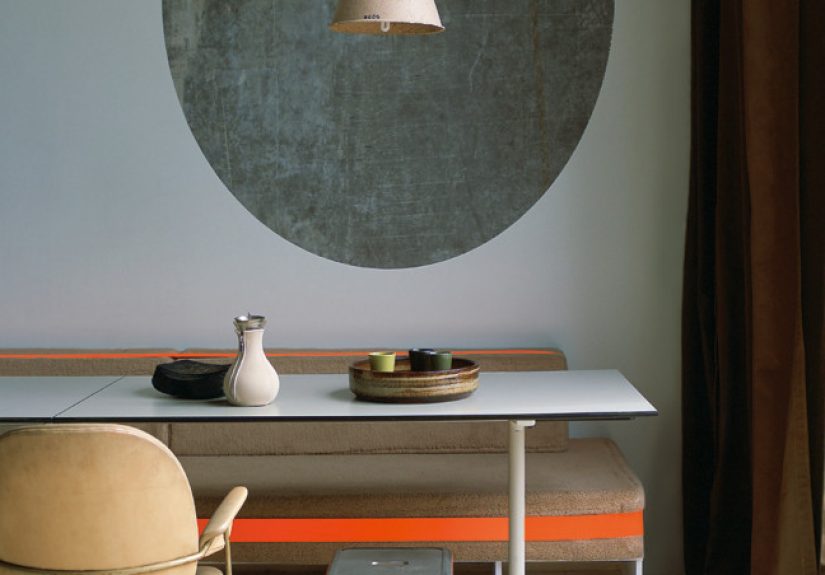
Dutch Design in Amsterdam: Clean Lines, Warm Soul
Amsterdam is often described as stylish, and that is true, but the style here is not about shiny perfection. It is about restraint with wit. Dutch design tends to value clarity, utility, texture, and cleverness. In Amsterdam, that sensibility appears everywhere: in boutique hotels tucked into canal houses, in converted industrial spaces, in curated shop windows, in understated interiors that still manage to feel playful.
The city’s design appeal also comes from contrast. You might move from a Golden Age façade to a modern museum, from a vintage-heavy boutique to a sleek concept store, from a centuries-old bridge to a contemporary reuse project in a matter of minutes. That visual mix is not messy. It is expressive. Amsterdam does not worship one era. It edits across them.
Even some of its most memorable places to stay reflect this attitude. Canal-view hotels, repurposed historic buildings, and even former bridgekeeper structures turned into lodging show how Amsterdam turns infrastructure into atmosphere. The city is very good at making old bones feel current without bleaching out their backstory.
Food, Bars, and the Glory of Not Trying to Impress Too Hard
Amsterdam’s food and drink culture fits the theme perfectly. The city can do elegant dining, but it is often most lovable when it feels relaxed, local, and just a little unbothered by trends. Brown cafés are the best example. Their dark wood, cozy corners, and no-nonsense comfort make them the opposite of algorithm-friendly minimalism. They are not trying to go viral. They are trying to give you a drink, a plate of something hearty, and a place to stay longer than planned.
Then there is the broader food scene, which is where Amsterdam’s personality gets even more delicious. Alongside Dutch classics, the city offers Indonesian, Surinamese, and other global influences that reflect centuries of migration, trade, and cultural exchange. This means the best way to eat in Amsterdam is not to hunt for one “perfect local dish” and call it a day. It is to understand that local culture is layered. The city’s flavor comes from overlap.
That mix makes Amsterdam more compelling than a one-note culinary destination. It is not precious. It is varied. It can serve you apple pie in a historic café, then hand you a deeply satisfying rice plate, then finish the day with natural wine or a beer near the water. Honestly, that is a strong personality profile.
The City’s Character Also Includes Its Contradictions
To praise Amsterdam honestly, you have to admit that its charm is not innocent. This is a city shaped by trade, wealth, empire, migration, tolerance, tourism, and debate. The picturesque canal house may be attached to a complicated history. The liberal image that attracts visitors exists alongside real tensions about crowding, commercialization, and respect for local life.
That is exactly why “personality, not perfection” is the right lens. Amsterdam is not interesting because it has solved urban life. It is interesting because it reveals urban life so clearly. It shows how beauty and contradiction can exist on the same block. It asks visitors to enjoy the city, but not flatten it. See the museums, yes. Walk the canals, absolutely. But also understand that the city is more than its highlights and more than its stereotypes.
This matters especially in places like the Red Light District, which many travelers approach with the subtlety of a brass band falling down stairs. Amsterdam deserves better than that. Respectful travel means remembering that real neighborhoods are not spectacle machines. The city’s most powerful qualities are often found when you trade gawking for noticing.
What Amsterdam Gets Right
Amsterdam gets scale right. It gets atmosphere right. It gets everyday beauty right. It understands that culture is not only housed in major institutions, though it certainly has those. Culture also lives in street patterns, in neighborhood bars, in reused buildings, in market stalls, in ferries, in parks, in design details, and in the social compact that allows individuality to breathe.
Most of all, Amsterdam gets character right. It does not scrub away the odd bits. It does not pretend that every façade is a fairytale or every district should appeal to everyone in the same way. It trusts visitors to appreciate distinction. That confidence is part of its magnetism.
So no, Amsterdam is not perfect. Some streets are crowded. Some corners are over-photographed. The weather occasionally behaves like a passive-aggressive roommate. But perfection would be boring. Amsterdam wins because it is specific. Because it has edges. Because it can be elegant and eccentric in the same breath.
And because, in an age of polished sameness, a city with genuine personality feels like luxury.
A Longer Experience of Amsterdam: Where the City Starts Talking Back
Spend enough time in Amsterdam and the city stops posing for your camera and starts behaving like a person. That is when it gets good. The first day is usually all visual seduction: the bridges, the water, the neat rhythm of canal houses, the bicycles lined up like a design installation that accidentally became transportation. By the second day, however, Amsterdam begins to reveal that it is less interested in impressing you than in seeing whether you can keep up.
You notice this in the mornings first. A canal that looked cinematic at sunset suddenly feels practical at 8 a.m., edged by people commuting with groceries, backpacks, flowers, dogs, or impossible confidence in a headwind. The city’s beauty does not disappear in daylight; it becomes busier, funnier, more democratic. Amsterdam is at its best when it has coffee in one hand and somewhere to be.
Walk long enough and each neighborhood changes the tone of the conversation. In the center, history presses close. In Jordaan, the prettiness is real, but there is enough texture to stop it from becoming precious. In De Pijp, the city loosens its collar. In Noord, it experiments a little. Even silence sounds different from one district to the next. Some parts whisper. Some parts hum. Some parts look like they were built by people who respected geometry but still liked a surprise.
One of the most underrated pleasures in Amsterdam is doing something slightly ordinary. Not a must-see. Not a major attraction. Just sitting in a brown café while the room gathers itself around you. Ordering apple pie because the table next to you did. Watching locals come in with the kind of confidence that says, “Yes, this stool and I have history.” That is when Amsterdam’s personality becomes unmistakable. The city is not asking to be admired from a distance. It wants to be inhabited, briefly and respectfully.
Even its contradictions become part of the experience. The same city that offers museum calm can also feel packed, noisy, and tourist-weary. The same canal that looks romantic at twilight may carry stories about trade, wealth, and power that are far less gentle. Yet Amsterdam does not collapse under those contradictions. It absorbs them. It keeps going. It remains handsome without becoming shallow, progressive without becoming smug, historic without becoming embalmed.
That may be the city’s greatest trick. Amsterdam has aesthetics, certainly, but it also has attitude. It lets beauty be useful. It lets design feel lived in. It allows old places to become new places without pretending the seams are not there. And in those seams, that visible stitching between past and present, polish and grit, elegance and everyday life, the city becomes unforgettable.
So when people talk about Amsterdam as if it were perfect, they miss the best part. The city’s appeal is not that it has no flaws. It is that its quirks, tensions, habits, and layers create a place with genuine character. Amsterdam does not charm you by being flawless. It charms you by being unmistakably, stubbornly, gloriously itself.
Conclusion
Amsterdam lingers in the mind because it offers more than scenic canals and famous museums. It offers character. Its bike-first rhythm, neighborhood variety, brown café comfort, layered food culture, adaptive design, and complicated history make it feel less like a polished attraction and more like a living conversation. That is why travelers who look beyond the obvious tend to fall hardest for it. In Amsterdam, personality beats perfection every time.