Table of Contents >> Show >> Hide
- What Patton Oswalt Actually Meant
- From Comedy Peer to Cultural Power Center
- Why the L. Ron Hubbard Comparison Hit So Hard
- The Spotify Era Changed Everything
- Patton Oswalt’s Relationship With Joe Rogan Is the Point
- Comedy, Influence, and the Collapse of Old Gatekeepers
- Why This Story Keeps Getting Shared
- The Experience Behind the Headline: When Someone You Knew Becomes a Movement
- Conclusion
Some celebrity headlines arrive with all the grace of a folding chair to the face. This was one of them. When Patton Oswalt compared his long, complicated relationship with Joe Rogan to knowing L. Ron Hubbard before Scientology, the line landed because it was funny, sharp, and just uncomfortable enough to stick in your brain like a burr in a thrift-store sweater. It also did something rare: it turned a pop-culture jab into a serious point about influence, platform, and what happens when a guy you once knew as “pretty good at stand-up” wakes up one day as a one-man weather system in American media.
That is the real story here. Oswalt was not just tossing a flashy insult into the void because comedians are legally required to do at least three spicy things a fiscal quarter. He was describing the surreal feeling of watching a former comedy-scene peer evolve into someone whose opinions can shape political conversation, pandemic debate, and the general temperature of the internet. In other words, this was not really about Scientology. It was about scale. And in the age of podcasts, scale is basically wizardry with microphones.
What Patton Oswalt Actually Meant
Oswalt’s comparison came out of a story-within-a-story, which is very on-brand for a comic whose brain seems permanently tuned to “deep cut plus side quest.” He recalled an anecdote involving writer Harlan Ellison, who had known L. Ron Hubbard before Hubbard became, well, L. Ron Hubbard. The point was not that Rogan and Hubbard are identical figures. The point was the eerie whiplash of knowing someone in one ordinary context and then later seeing that same person grow into a giant, culture-shaping force.
Oswalt’s larger argument was that public influence often has less to do with expertise than with reach. Once somebody has a massive platform, the culture starts working backward, assuming that reach must equal wisdom. That idea is what made the comparison sting. It reframed Rogan not merely as a podcaster or comic, but as a symbol of a broader modern habit: mistaking popularity for authority. That is not just a Rogan problem. That is a 21st-century America problem wearing noise-canceling headphones.
From Comedy Peer to Cultural Power Center
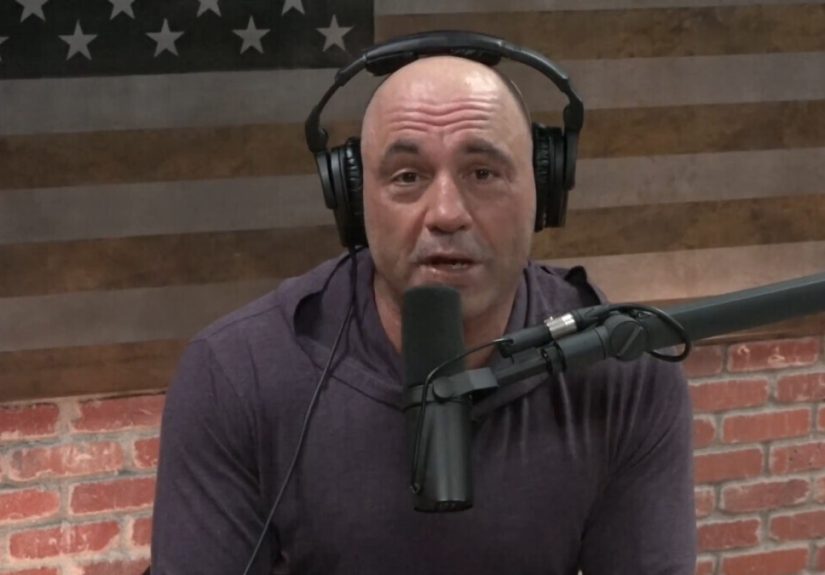
To understand why Oswalt’s line resonated, you have to remember that Joe Rogan did not appear out of thin air in a cloud of elk meat, kettlebells, and three-hour conversations. He came up through stand-up. He had TV visibility through NewsRadio and later Fear Factor. He was already a recognizable entertainment figure before podcasting turned him into something much bigger: a hybrid of host, gatekeeper, provocateur, and cultural amplifier.
Oswalt knew that earlier version of Rogan. That is what gives his observation extra weight. He is not reacting to a distant public figure the way a random social media critic might. He is reacting to someone from his wider professional orbit, someone he knew before the Spotify megadeals, the political influence, the guest controversies, the COVID-era firestorms, and the endless online debates over whether Rogan is a curious conversationalist, a chaos engine, or somehow both before lunch.
That familiarity is the engine of the headline. This is not “comedian attacks podcaster.” This is closer to “comedian stares into the bizarre cosmic mirror of modern fame and sees a former peer controlling a media empire with a barstool and a headset.” It is funny because it is absurd. It is newsworthy because it is true enough to make people uneasy.
Why the L. Ron Hubbard Comparison Hit So Hard
It was about power, not theology
The Hubbard reference worked because it instantly communicated the scale of transformation. Hubbard was once just a pulp writer before becoming the founder of something far larger, stranger, and more consequential. Oswalt’s point was that Rogan, in his view, has undergone a similarly dramatic shift in public significance. He was once a comic in the mix. Now he is a figure whose guests, opinions, endorsements, and rhetorical habits can ripple into politics, media, and public health debates.
It captured the weirdness of parasocial authority
Rogan’s show has always thrived on intimacy. The format is loose, long, and conversational. That makes listeners feel like they are not consuming a performance so much as hanging out in the room. This is podcasting’s superpower and its danger. It turns familiarity into trust and trust into influence. Once that machine gets big enough, it starts producing a form of soft authority that can outperform traditional institutions. Doctors have degrees. Journalists have editors. Rogan has vibe, scale, and a fan base that often treats curiosity like certification.
It exposed the modern media loophole
Oswalt’s underlying critique was brutal in its simplicity: if someone has enough listeners, the culture starts assuming they must know something. That is the loophole. In the old model, expertise was supposed to come first and audience second. In the current model, audience often comes first and expertise gets stapled on later like a fake mustache on a résumé. That reversal helps explain why Rogan’s reach has mattered so much, and why criticism of him has been so heated.
The Spotify Era Changed Everything
Rogan’s ascent from giant podcaster to unavoidable power center accelerated when Spotify signed him to a landmark licensing deal in 2020. That agreement announced to the entire media industry that podcasting was no longer a scrappy side hustle for people recording in closets between emotional breakdowns. It was big-money infrastructure. And Rogan was the crown jewel.
Then came the controversies that made the scale of that investment impossible to ignore. During the COVID era, Rogan faced heavy criticism over episodes that were accused of amplifying misinformation and vaccine skepticism. Medical professionals called on Spotify to adopt stronger policies. Neil Young and Joni Mitchell pulled music from the platform. Spotify added content advisories. Episodes were removed amid other controversies. Through it all, Rogan remained central because he was too important to the platform’s podcast identity to treat like just another creator.
That context is what gives Oswalt’s comment its backbone. He was not comparing Rogan to some abstract villain because they disagree about a few culture-war topics. He was talking about a man whose media footprint grew so large that corporations, musicians, doctors, politicians, and newsrooms all had to respond to it. Once that happens, the conversation stops being “Do you like this host?” and becomes “What does it mean when this host functions like an institution?”
Patton Oswalt’s Relationship With Joe Rogan Is the Point
The headline works because Oswalt did not describe Rogan as a monster from birth or a cartoon supervillain forged in a cryogenic chamber under Austin. He has repeatedly suggested some version of the same uncomfortable thought: Rogan, on a personal level, can still seem like a nice guy. That tension matters. It complicates the story in a useful way.
We are used to cultural criticism that comes prepackaged like microwaved outrage. Good person. Bad person. Team A. Team B. Roll credits. Oswalt’s framing was messier and smarter. He was essentially saying: I knew this guy, I do not think he was always this symbol, but I now live in a world where his influence feels enormous and weird and sometimes dangerous. That is a much more adult observation than the internet usually rewards.
It also explains why the comparison felt less like a cheap dunk and more like a lament wrapped in a joke. There is real disbelief inside it. Oswalt sounds like someone looking at a map of modern media and saying, “Wait, that guy runs this much weather?” The humor is there, but the bafflement is real.
Comedy, Influence, and the Collapse of Old Gatekeepers
There was a time when comics were mostly judged by albums, specials, sets, and whether they could destroy a room after two tequila sodas and a divorce announcement. Now comedians can also become political interpreters, health skeptics, culture-war avatars, and lifestyle gurus. The boundaries have melted. A microphone used to mean jokes. Now it can mean ideology, identity, and direct access to millions of listeners who treat every tangent like scripture with better production value.
Rogan did not invent that shift, but he may be one of its clearest embodiments. He sits at the crossroads of comedy, masculinity culture, anti-establishment rhetoric, self-optimization theater, and long-form media. That is part of why his influence extends beyond entertainment. And that is why Oswalt’s joke landed harder than a normal celebrity squabble. He was not merely commenting on a person. He was commenting on a system that rewards confidence, proximity, scale, and endless talk.
In that sense, the line about Hubbard was less a roast than a theory. A darkly funny theory, yes. But still a theory. It proposes that modern fame no longer requires a church, a party, or a TV network to build devotion. It just needs a platform, a loyal audience, and a cultural moment hungry for anti-gatekeeper energy. Throw in a few million followers, some controversy, and an ecosystem that mistakes boldness for insight, and suddenly a comic podcast host can become a civic force.
Why This Story Keeps Getting Shared
People keep passing around this quote because it crystallizes a feeling many Americans already have but struggle to phrase: the people shaping public life are no longer always the people with the most training, credentials, or institutional legitimacy. Sometimes they are the people with the strongest parasocial bond, the best timing, and the loudest reach. That realization is funny until it isn’t.
Oswalt’s comment also taps into a common human experience. Most of us have had a tiny, non-famous version of this feeling. You know someone from school, work, family, or your old social circle. Years later, that person becomes unrecognizablenot necessarily evil, just transformed by power, attention, ideology, or the strange incentives of the internet. Multiply that by millions of listeners and a giant corporate platform, and suddenly the headline stops sounding like celebrity gossip and starts sounding like anthropology.
The Experience Behind the Headline: When Someone You Knew Becomes a Movement
Here is where the story gets bigger than both Patton Oswalt and Joe Rogan. The most unsettling part of Oswalt’s analogy is not the celebrity clash. It is the emotional texture underneath it. There is a particular kind of unease that comes from watching someone you once understood become someone the whole culture now argues about like a weather pattern, a stock market signal, and a campfire myth all at once.
That feeling is familiar in the social media era. Maybe it is an old friend who drifts into conspiracy culture. Maybe it is a former coworker who reinvents himself online as a life coach, political oracle, or digital alpha philosopher with a ring light and suspiciously strong opinions about seed oils. Maybe it is a comedian who used to just tell jokes and now sounds like a shadow cabinet member with MMA gloves. The point is not that every transformation is sinister. The point is that digital platforms accelerate identity until regular people start looking mythic, even to those who knew them when they were still just borrowing phone chargers and complaining about parking.
Oswalt’s comparison works because it captures that vertigo. He is talking about the disorientation of scale. When you know a person before their mythology hardens, you keep a mental snapshot of the earlier version. That snapshot does not disappear just because the rest of the world starts treating them as a movement, a brand, or a threat. So your reaction becomes split-screen. Part of you still sees the guy from the comedy trenches. Another part sees the public figure whose words now ricochet through politics, culture, health debates, and every comment section in America that has not yet been condemned for biohazard risk.
There is also grief in that experience, even when nobody says the word. Not grief in the tragic sense, but grief in the relational sense. You are mourning the simplicity of how a person used to fit inside your mind. It was easier when they were just talented, funny, flawed, ordinary, and local. It is harder when they become symbolic. Symbols are exhausting. They belong to everybody. They get argued over. They stop being people in public, even if privately they still laugh at the same dumb joke about airport food.
That is why Oswalt’s line feels more reflective than rage-filled. It reads like someone trying to describe a modern emotional problem for which there is no neat language: what do you call it when a person you knew becomes an institution, and the institution is weirder than the person ever was? In that sense, this is not just a story about Patton Oswalt and Joe Rogan. It is a story about America in the podcast age, where influence can outrun expertise, familiarity can become authority, and one old acquaintance can wake up as a civilization-level group chat.
Conclusion
Patton Oswalt’s comparison of Joe Rogan to L. Ron Hubbard before Scientology was memorable because it combined comedy with diagnosis. It was funny, yes, but it was also a crisp explanation of how modern influence works. Oswalt was not simply mocking a fellow comic. He was describing the shock of seeing an ordinary entertainment figure become a massive public force whose reach extends far beyond jokes.
That is why the story matters. It is not just another celebrity spat fed into the internet’s wood chipper. It is a revealing moment in a much bigger conversation about podcast culture, trust, authority, and the way fame now mutates into power. Oswalt put it in comedian language because that is what he does best. But beneath the punch line was a serious warning: when a platform gets big enough, people stop asking whether someone is qualified and start assuming they must be. And that, as headlines go, is a lot scarier than any comparison to Hubbard could ever be.