Table of Contents >> Show >> Hide
- What “Oak Folding Stool, 2015” Actually Refers To
- Materials That Do the Heavy Lifting: Oiled Oak + Waxed Leather
- Dimensions, Folded vs. Unfolded, and Why It Feels So “Small-Space Friendly”
- Where This Stool Shines: Practical Uses That Don’t Feel Like Compromises
- Comfort and Ergonomics: A Stool Can Be Kind to Your Back
- Safety and Stability: The “Please Keep Your Fingers” Section
- Care for Oiled Oak and Waxed Leather: Simple, Not Fussy
- Styling Ideas: Making a Folding Stool Look Like It Belongs
- Buying Guide: What to Look for in Any Oak Folding Stool
- Is the Oak Folding Stool, 2015 Worth It?
- Conclusion
- Real-World Experiences with the Oak Folding Stool, 2015 (About )
Some furniture tries to be a personality. This one tries to be usefulquietly, beautifully, and without hogging your square footage.
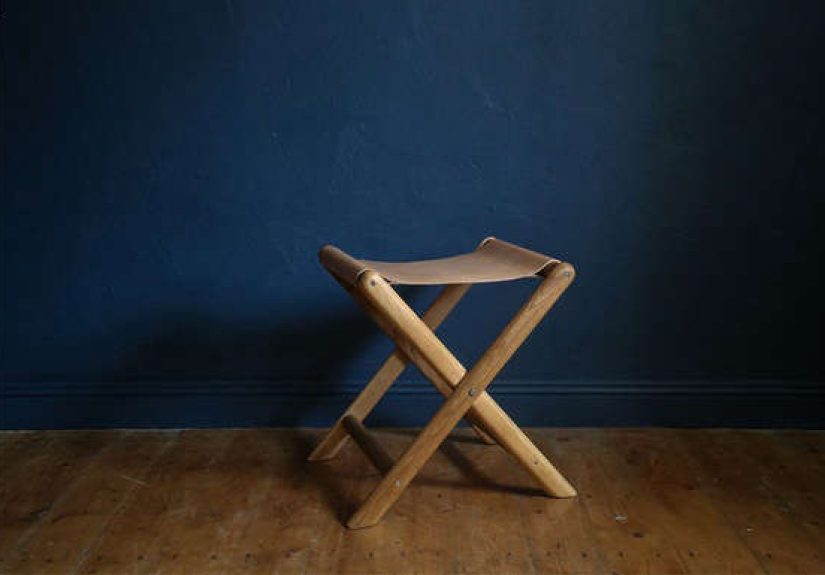
The Oak Folding Stool, 2015 (by Superfolk) is the kind of piece you notice twice: first because it looks
calmly handsome, and then again because it folds flat and disappears like it has somewhere better to be.
If you’ve ever hosted “just two friends” and somehow ended up with a living room full of humans, you already understand why a
well-made folding stool is a tiny miracle. This one leans into that miracle with an oiled oak frame, a
hand-stitched waxed leather seat, and proportions that feel equally at home in a kitchen, by a campfire, or hanging on a wall
waiting for its next cameo.
What “Oak Folding Stool, 2015” Actually Refers To
The Oak Folding Stool, 2015 is a specific design associated with Superfolkknown for pared-back homewares inspired by outdoor living
and crafted with traditional techniques. In this stool’s case, that translates to a sturdy but lightweight folding structure, made to be
easy to carry, easy to store, and pleasant to sit on (which is the bare minimum, but you’d be shocked how many stools ignore that part).
It’s also a piece with a clear point of view: honest materials, minimal fuss, and the sort of build that gets better with timelike denim,
cast iron, or a favorite playlist you refuse to “clean up” because the chaos is the charm.
Materials That Do the Heavy Lifting: Oiled Oak + Waxed Leather
Why oak works so well for a folding stool
Oak is a classic furniture wood for a reason: it’s tough, wear-resistant, and visually interesting without being loud. Oak’s grain reads as
“real wood” from across the roomhelpful when your home has a mix of modern pieces and hand-me-downs and you’re trying to make it all look
intentional.
In U.S. interiors, you’ll often hear oak discussed in terms of red oak vs. white oak. White oak tends to have a tighter grain
and is often described as more moisture-resistant than red oak due to its cellular structure, which is one reason it’s popular in high-wear
applications like flooring. Red oak, meanwhile, is widely used in furniture and can show warmer undertones and more open grain. Either way,
“oak” signals durabilityand for a folding stool that gets moved, unfolded, leaned on, and borrowed by guests who don’t know their own strength,
durability is the whole point.
What an “oiled oak frame” means in real life
An oil finish generally highlights the wood’s natural grain and keeps the look matte-to-satin rather than plasticky. It also tends to be
repair-friendly: small scuffs can often be refreshed without stripping the whole piece. The tradeoff is that oil finishes typically require
a bit more mindful care than thick film finishes like polyurethaneespecially around water and harsh cleaners.
The upside? An oiled oak frame doesn’t scream for attention. It just quietly looks better the longer you live with it. Think “calm cabin energy,”
even if your actual home is more “city apartment with a heroic amount of storage bins.”
Why waxed leather makes a surprisingly smart seat
A waxed leather sling seat does two things that rigid seats can’t: it gives slightly (more comfortable over time) and it
travels well (folding without becoming awkward). Waxed leather also develops patinameaning it records life. A few creases? Character.
A little darkening where people sit? A history lesson, but chic.
The practical angle matters too: leather is easier to wipe down than many fabrics, and the “waxed” aspect can add a bit of resistance to scuffs
and light moisturethough it still deserves respect, not a spray bottle ambush.
Dimensions, Folded vs. Unfolded, and Why It Feels So “Small-Space Friendly”
One reason this stool gets so much attention is that it’s genuinely compact when stored. The published dimensions are:
- Folded: 42w × 11d × 69h cm (about 16.54w × 4.33d × 27.17h inches)
- Unfolded: 42w × 45d × 52h cm (about 16.54w × 17.72d × 20.47h inches)
Translation: when open, it’s a low, stable perch; when folded, it becomes a slim vertical shape you can tuck behind a door, slide beside a bookshelf,
or hang up so it looks like functional wall art. (Yes, your furniture can be a multitasker. No, it won’t start doing your email.)
Where This Stool Shines: Practical Uses That Don’t Feel Like Compromises
The best folding furniture doesn’t feel like “backup.” It feels like an intentional piece that simply happens to fold. Here are ways people tend to
use an oak folding stool like this without it ever feeling like a sad substitute chair:
- Extra kitchen seating: pull it out when someone wants to keep you company while you cook.
- Entryway perch: the “I’m tying my shoes like a responsible adult” station.
- Living room overflow seating: when the couch is full and the floor is… not the vibe.
- Bedside stool: place a book, a water glass, and your optimism for tomorrow.
- Closet helper: sit while you sort, fold, and question how you acquired 19 black T-shirts.
- Balcony or patio seat: compact enough to store indoors but happy outside for a while.
- Camp and beach trips: low-profile comfort that’s easy to carry and quick to deploy.
- Photography/plant styling: a small platform for products, plants, or a “nice corner” moment.
- Footrest: because your legs also deserve a treat.
- Kids’ “I want to be involved” seat: handy, but still supervisefolding mechanisms demand respect.
Comfort and Ergonomics: A Stool Can Be Kind to Your Back
Let’s be honest: a stool is not a recliner. But it can still be comfortableespecially when the seat has a little give and the height encourages a
more natural posture. A low stool often works well for casual sitting: shoes on/off, quick conversations, guitar playing, campfire hangs, or “I’m
sitting for five minutes” (which will become twenty; time is a liar).
For longer sits, comfort comes down to three things:
- Seat tension: a leather sling can distribute weight more evenly than a hard plank seat.
- Foot placement: if your feet can rest flat and stable, your lower back usually feels better.
- Micro-movement: a slightly flexible seat encourages small posture shiftsoften a good thing.
In other words, the stool doesn’t need to be a throne. It just needs to avoid punishing you for existing.
Safety and Stability: The “Please Keep Your Fingers” Section
Any folding furniture has two recurring villains: pinch points and wobble. The good news is that both are manageable
with a tiny routine that takes less time than arguing about what movie to watch.
Pinch points: what to watch for
Folding chairs and stools have long been associated with pinch and shear hazards, which is why U.S. safety guidance and standards frequently call out
scissoring and rotating parts. You don’t need to memorize regulations to be safe; you just need to respect the mechanism.
- Unfold and fold slowly, with hands on the main framenot near moving joints.
- Keep fingers away from crossing members when the stool is halfway open.
- If kids are around, treat folding like you would treat a car door: you’re in charge of the closing.
Stability: the quick check before you sit
- Flat floor: if the ground is uneven, rotate or repositiondon’t “make it work.”
- Fully open: confirm the stool is completely deployed and not hovering in a half-locked limbo.
- Hardware glance: if anything feels loose or squeaky in a new way, stop and inspect before using.
- No acrobatics: it’s a stool, not a ladder. Don’t stand on it unless the design explicitly supports that use.
A well-designed folding stool should feel planted when open. If it doesn’t, something is offsurface, alignment, hardware, or wearand it’s worth
addressing before someone becomes a cautionary tale at your next dinner party.
Care for Oiled Oak and Waxed Leather: Simple, Not Fussy
Two truths can coexist: this stool is built for real life, and real life is messy. The goal is not perfection; the goal is keeping the materials healthy
so the stool stays strong and keeps looking good.
Oak frame care (oiled finish)
- Dust first: microfiber or a soft cloth keeps grit from acting like sandpaper.
- Damp, not wet: a lightly damp cloth is plenty for most cleanup; dry immediately afterward.
- Avoid harsh cleaners: alcohol-heavy disinfectants and overly aggressive wipes can haze or degrade many finishes.
- Mind the humidity: wood is hygroscopicmeaning it exchanges moisture with the airso big swings in humidity can contribute to movement over time.
- Refresh the oil when needed: if the wood looks thirsty or patchy, a compatible oil product can restore the finish (always test in an inconspicuous spot).
If you live somewhere with extreme seasonal changes or heavy HVAC use, it helps to aim for a comfortable indoor humidity range. Not because your stool is
dramatic, but because wood responds to its environment. Keep things reasonably steady and you reduce the odds of cracks, gaps, or stubborn joints.
Waxed leather seat care
- Wipe regularly: dry dusting or a barely damp cloth removes surface grime.
- Use mild soap sparingly: if you need deeper cleaning, mild soap and lukewarm water on a soft cloth is typically safer than strong chemicals.
- Air dry only: if it gets wet, blot and let it dry naturallyno hair dryers, no heat vents, no “I’ll just put it in the sun.”
- Condition occasionally: leather benefits from periodic conditioning, especially in dry climates or sunny rooms.
- Skip the experiments: avoid vinegar, alcohol, bleach, and random kitchen concoctions unless the leather maker recommends it.
Waxed leather will evolve. That’s the point. The goal is to prevent drying and cracking while letting the seat develop that soft, lived-in feel that makes
people say, “Okay, this is actually comfortable,” with mild surprise.
Styling Ideas: Making a Folding Stool Look Like It Belongs
Because the materials are honestoak and leatherthis stool plays well with a lot of interior styles:
- Modern minimal: pair it with clean lines, neutral textiles, and matte black accents.
- Warm rustic: add woven baskets, linen throws, and pottery for an “effortless cabin” feel.
- Scandi-inspired: combine with pale woods, soft lighting, and simple functional objects.
- Eclectic: let it be the calm piece that balances bolder art, color, or patterns.
One of the best “designer tricks” is to let functional objects be visible when they’re beautiful. If you have wall space, hanging a folded stool can look
intentionalalmost like a sculptural elementwhile still being ready for guests.
Buying Guide: What to Look for in Any Oak Folding Stool
Even if you’re comparing multiple folding stools, the decision tends to come down to a few fundamentals:
1) Frame geometry and joinery
A good folding stool feels stable because of how the legs splay and how the joints distribute weight. Look for tight joinery, solid fasteners, and a frame
that doesn’t rack (twist) when you gently shift your weight.
2) Hardware quality
Hinges and pivot points are the heart of the design. Smooth movement is great; controlled movement is better. The stool should open confidently and fold without
grinding, snagging, or feeling like it’s about to argue with you.
3) Seat material and comfort
Leather slings can be more forgiving than rigid seats. If you’re buying without trying, look for clear details on leather thickness, stitching, and how the sling
attaches to the frame. The seat is where you’ll feel the difference between “pretty” and “actually usable.”
4) Intended use: indoor-only vs. indoor/outdoor
If you want beach/camp versatility, consider how you’ll handle sand, moisture, and sun exposure. Oak and waxed leather can do outdoor duty, but storing the stool
indoors and drying it after damp use will dramatically extend its life.
Is the Oak Folding Stool, 2015 Worth It?
If your priority is the cheapest possible folding seat, no. If your priority is a beautiful, long-lasting piece that behaves like real furniture
(not temporary event seating), the value makes more sense. You’re paying for materials, craftsmanship, and a design that doesn’t feel disposable.
The simplest way to judge it is to ask: Would I leave this out in my home even when I’m not using it? If the answer is yes, then it’s not just a stool.
It’s part of your space.
Conclusion
The Oak Folding Stool, 2015 hits a sweet spot: compact but comfortable, minimal but warm, practical but genuinely handsome. Its oiled oak frame and
waxed leather seat are a classic combination for a reasonthey’re durable, repair-friendly, and they age with grace. Add in the ability to fold flat and store easily,
and you’ve got the rare “extra seat” that doesn’t feel like an afterthought.
If you live in a small space, host often, or simply love objects that work hard without looking busy, this stool is an easy piece to appreciate. Just unfold it carefully,
keep the wood and leather clean with gentle methods, and let the patina tell your home’s story.
Real-World Experiences with the Oak Folding Stool, 2015 (About )
People who end up loving a piece like the Oak Folding Stool, 2015 usually don’t love it because it “folds.” They love it because it changes how a home
functions in small, satisfying wayswithout making the home look like it’s prepared for a conference at all times.
In small apartments, the stool often becomes the unofficial “third seat,” the one you don’t think about until you need it. A friend drops by while you’re cooking,
and instead of doing the awkward “do you want to sit on the bed?” dance, you unfold the stool and suddenly the kitchen becomes a social space. The low height feels
casual, like the conversation doesn’t need to be formal, and the leather sling seat has a bit of give that keeps it from feeling like a punishment.
In entryways, owners frequently describe the stool as the thing that makes leaving the house feel less chaotic. Shoes go on faster when you can sit down. Bags get
sorted. A kid can perch while you hunt for the missing mitten that apparently entered a witness protection program. When folded, the stool can tuck against the wall
so the entry doesn’t feel crowdedbecause the last thing anyone needs is to start the day by tripping over “helpful” furniture.
For outdoor use, the experiences tend to be the kind you remember: a sunset at the beach, a campsite breakfast, a lakeside moment where someone says, “Wait, you brought
a real chair?” The stool’s appeal in these settings is that it’s light enough to bring along without feeling like a burden, yet sturdy enough to feel trustworthy when you
actually sit. Many people like that the materials don’t look overly technical or plasticky; oak and leather feel natural in natural places.
Over time, the seat develops creases and deeper tone where people sit most. Instead of reading as “worn out,” it reads as “worn in.” That patina becomes a quiet record:
the holiday when the dining table needed one more seat, the summer when you kept it near the door for quick porch hangs, the week you reorganized your closet and used it as
the only reasonable place to collapse and rethink your life choices.
The most common long-term experience is surprisingly simple: the stool becomes a default solution. Need a quick perch? Stool. Need a footrest? Stool. Need a small styling
platform for a plant that wants to feel important? Stool. The folding feature stops being the headline and becomes the bonuslike having a great jacket that also happens to
have deep pockets. You stop “owning a folding stool” and start “owning a piece you actually use,” which is the most flattering review furniture can get.