Table of Contents >> Show >> Hide
- Why Children and Animals Connect So Deeply
- The Moment I Realized This Was More Than Cute
- 20 Photos That Capture Her Special Bond With Animals
- 1. The First Nose-to-Nose Hello
- 2. The Barn Cat Who Pretended Not to Love Her
- 3. A Horse, a Fence, and a Quiet Conversation
- 4. The Puppy Tackle
- 5. The Rabbit Whisper
- 6. The Chicken Negotiation
- 7. Mud Boots and a Loyal Dog
- 8. The Kitten Nap
- 9. The Goat With Big Opinions
- 10. The Shelter Dog Smile
- 11. The Butterfly Pause
- 12. The Old Dog’s Afternoon
- 13. The Donkey Who Loved Attention
- 14. The Rainy-Day Window Watchers
- 15. The Tiny Frog Discovery
- 16. The Dog Reading Buddy
- 17. The Cow Behind the Gate
- 18. The Hamster Hand Tunnel
- 19. The Rescue Cat Blink
- 20. The Goodbye Hug
- What Photographing Her Taught Me About Childhood
- How to Safely Encourage a Child’s Bond With Animals
- Photography Tips for Capturing Children With Animals
- Why These Photos Matter to Me
- Personal Experiences Behind the Photos
- Conclusion
Some children run toward the playground. My daughter runs toward the nearest animal like she has received a secret text message from nature itself. A dog at the park? Instant friendship. A barn cat pretending not to care? Five minutes later, it is purring like a tiny motorcycle. A horse behind a fence? She approaches with the calm seriousness of a diplomat negotiating world peaceexcept the peace treaty involves carrots.
As a parent and photographer, I began noticing something I could not ignore: my daughter does not simply “like” animals. She listens to them. She lowers her voice when they are nervous, waits when they are shy, and celebrates the smallest sign of trusta nose bump, a soft blink, a paw placed near her shoe. That special bond with animals became one of my favorite subjects to photograph, not because every picture is perfect, but because every picture feels honest.
This photo story is about childhood, kindness, patience, and the magical little conversations that happen without words. It is also about what animals can teach children: empathy, responsibility, confidence, boundaries, and the fine art of not trying to hug a chicken that has clearly chosen chaos.
Why Children and Animals Connect So Deeply
The bond between children and animals can look almost magical, but there is real emotional substance behind it. Animals offer a kind of companionship that feels simple and nonjudgmental. They do not care about spelling tests, mismatched socks, or whether a child has peanut butter on her sleeve. They respond to tone, movement, consistency, and trust.
Research on the human-animal bond has often linked positive animal interactions with social and emotional benefits for children. Pets and companion animals may encourage empathy, reduce stress, support confidence, and give children opportunities to practice caregiving in a way that feels natural. A child who learns to refill a water bowl, speak gently to a nervous dog, or wait patiently for a cat to approach is also learning self-control, observation, and respect.
In our house, those lessons rarely arrive as formal speeches. They arrive as everyday moments: my daughter whispering “it’s okay” to a rescue puppy, sitting still so a rabbit can sniff her hand, or reminding me that the old dog needs his blanket because “his knees are probably having a Monday.” She may be small, but her compassion has the posture of someone much older.
The Moment I Realized This Was More Than Cute
At first, I photographed these interactions because they were adorable. Any parent with a camera understands the reflex: child plus animal equals immediate storage crisis on your phone. But over time, I saw patterns. My daughter did not rush animals. She studied them. She watched ears, tails, paws, eyes, and posture. If an animal moved away, she waited. If it leaned closer, she smiled without making a big dramatic production of it.
That is when I realized I was not just taking cute animal photos. I was documenting a relationship built on trust. The images became less about posing and more about witnessing. The best photos happened when I stopped giving directions and started paying attention.
20 Photos That Capture Her Special Bond With Animals
Each of these 20 photos tells a slightly different story. Some are funny, some are quiet, and a few look like scenes from a children’s book that wandered into real life wearing muddy boots.
1. The First Nose-to-Nose Hello
In this photo, my daughter crouches in front of a gentle dog, both of them perfectly still. It is not a dramatic moment, but it is a meaningful one. She lets the dog come to her, proving that trust is not grabbedit is invited.
2. The Barn Cat Who Pretended Not to Love Her
This cat had the facial expression of a retired detective. It ignored everyone, then climbed onto my daughter’s lap as if it had always planned to do so. The photo captures her trying not to move because she knows the honor she has received.
3. A Horse, a Fence, and a Quiet Conversation
Horses are magnificent teachers of calm energy. My daughter stood beside the fence, holding out her hand, waiting. The horse lowered its head slowly. The picture shows no action, yet it feels full of trust.
4. The Puppy Tackle
Not every animal moment is poetic. Sometimes a puppy decides love means launching itself into your knees. This photo is blurry, loud, and absolutely perfect.
5. The Rabbit Whisper
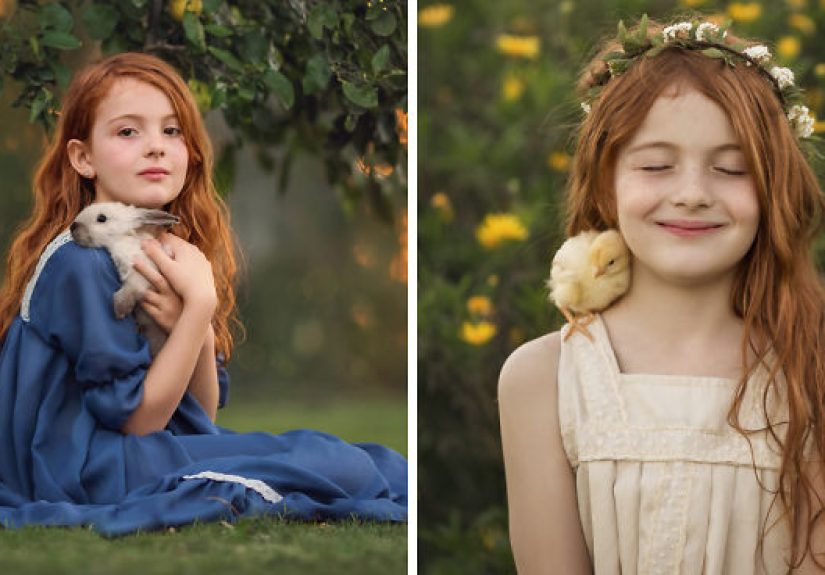
She sat on the grass with a rabbit tucked near her side, speaking so softly I could barely hear her. The rabbit stayed. That was the whole story, and it was enough.
6. The Chicken Negotiation
Chickens do not care about your photography goals. One chicken strutted across the frame like a tiny feathered celebrity, while my daughter followed with complete seriousness. The result is one of my funniest pictures.
7. Mud Boots and a Loyal Dog
There is a photo of her walking down a dirt path with a dog beside her. No leash, no posing, just two friends moving in the same direction. It reminds me that companionship is sometimes beautifully simple.
8. The Kitten Nap
A kitten fell asleep against her arm, and my daughter froze as if protecting a royal crown. The photo captures the tenderness of being trusted by something tiny.
9. The Goat With Big Opinions
The goat wanted snacks. My daughter wanted a cuddle. The goat won. The photo is basically a documentary about negotiation, disappointment, and hay.
10. The Shelter Dog Smile
One of the most emotional photos came during a visit with adoptable dogs. My daughter sat beside a shy dog who slowly relaxed, then leaned into her. It was a small moment, but the camera caught the shift from fear to comfort.
11. The Butterfly Pause
A butterfly landed near her hand, and she did not chase it. She simply watched. That picture reminds me that children can learn wonder without possession.
12. The Old Dog’s Afternoon
Our older dog moves slowly now, but my daughter adjusts her pace for him. The photo of them resting together in afternoon light is one of my favorites because it shows love as patience.
13. The Donkey Who Loved Attention
This donkey leaned into her hand like it had found a professional ear-scratcher. My daughter laughed so hard the final photo is slightly crooked, which somehow makes it better.
14. The Rainy-Day Window Watchers
She and the cat sat at the window watching rain. Neither looked at the camera. Sometimes the strongest images are the ones where nobody is performing.
15. The Tiny Frog Discovery
Finding a frog turned her into a scientist, philosopher, and security guard all at once. She observed it carefully, asked questions, and made sure nobody stepped too close.
16. The Dog Reading Buddy
In one photo, she reads aloud while a dog rests beside her. Animals can make children feel safe while practicing skills, especially because dogs do not interrupt to correct pronunciation. Frankly, some adults could learn from that.
17. The Cow Behind the Gate
The cow looked enormous beside her, but she was not afraid. She was respectful. The image shows scale, curiosity, and the quiet confidence that grows when children are taught how to behave safely around animals.
18. The Hamster Hand Tunnel
Small animals require gentle hands and slow movements. The hamster photo is funny because my daughter looks deeply honored that a creature the size of a dinner roll chose her sleeve as a hallway.
19. The Rescue Cat Blink
A slow blink from a cat can feel like winning an emotional lottery. My daughter blinked back, and I caught the moment. It is one of the quietest photos in the collection, but also one of the most intimate.
20. The Goodbye Hug
The final photo shows her saying goodbye to an animal friend after a visit. It is sweet, but also a little bittersweet. Bonds with animals teach joy, but they also teach children how to care deeply, even when a moment does not last forever.
What Photographing Her Taught Me About Childhood
Photography often rewards speed, but photographing children with animals rewards patience. The most meaningful images rarely happen when everyone is perfectly arranged. They happen in the second after the pose falls apart: when the dog sighs, the cat stretches, the child laughs, or the horse lowers its head.
My daughter’s bond with animals taught me to stop chasing “perfect” pictures. Perfect pictures can be stiff. Real pictures breathe. A muddy paw print, messy hair, crooked hat, or grass stain can make a photo more memorable because it carries the truth of the moment.
It also taught me that children reveal themselves around animals. Some become brave. Some become calm. Some become nurturing. Some become comedians, especially when goats are involved. In my daughter’s case, animals bring out her gentlest instincts. She becomes more observant, more patient, and more aware of the space around her.
How to Safely Encourage a Child’s Bond With Animals
A beautiful child-animal bond should always be built on safety and respect. Adults need to supervise interactions, especially with young children, unfamiliar animals, farm animals, small mammals, reptiles, or any animal that may be stressed. Children should be taught to ask before petting, approach slowly, avoid pulling ears or tails, and never disturb animals while they are eating, sleeping, hiding, or caring for babies.
Handwashing matters too. Animals can carry germs even when they look healthy, so children should wash their hands after touching animals, cages, bedding, food bowls, or outdoor animal areas. Regular veterinary care, vaccines, parasite prevention, and clean living spaces help protect both pets and families.
Respect is just as important as hygiene. I often remind my daughter that animals have feelings, moods, and boundaries. A wagging tail does not always mean “hug me immediately.” A cat walking away is not being rude; it is making a choice. A rabbit hiding is not a failed friendship; it is a rabbit being a rabbit. Teaching children to honor those signals makes every interaction kinder.
Photography Tips for Capturing Children With Animals
Use Natural Light Whenever Possible
Soft outdoor light or window light creates warmth without startling animals. Flash can frighten pets or make them uncomfortable, so I avoid it whenever I can.
Let the Moment Lead
Instead of forcing a pose, I watch how the child and animal naturally interact. A real laugh beats a perfect smile every time.
Get Low
Kneeling or sitting brings the camera closer to the child’s world. It also makes animals feel more present in the frame instead of looking like background decorations with fur.
Focus on Hands, Eyes, and Body Language
A tiny hand resting gently on a dog’s back can tell a whole story. So can a horse’s relaxed ears, a cat’s soft blink, or a child’s careful posture.
Keep Sessions Short
Animals and children both have limited patience. When the moment is over, it is over. Trying to extend it usually results in chaos, snacks, or someone lying dramatically on the floor.
Why These Photos Matter to Me
Years from now, my daughter may not remember every animal’s name or every place we visited. But these photos will help her remember who she was: a child who approached living creatures with wonder instead of entitlement, with gentleness instead of noise, and with curiosity instead of fear.
That matters. In a world that often moves too quickly, animals teach children to slow down. They teach responsibility without lectures. They teach emotional awareness without worksheets. They teach that love is not always loud. Sometimes love is sitting still long enough for a shy cat to come closer.
Personal Experiences Behind the Photos
The longer I photographed my daughter with animals, the more I understood that the camera was not the center of the story. The relationship was. My job was simply to be ready when the story revealed itself. Some days that meant standing in a field for twenty minutes while she waited for a horse to trust her. Other days it meant capturing half a second before a puppy turned an elegant portrait into a wrestling match.
One experience I will never forget happened with a nervous rescue dog. The dog had no interest in posing, treats, or my very professional parent-photographer enthusiasm. My daughter sat several feet away and did nothing. No reaching. No calling. No “come here, puppy!” performance. She just sat quietly and looked at the ground. After a while, the dog moved closer. Then closer again. Finally, it placed its head near her knee. I took the photo quickly, but the lesson stayed with me longer than the image: trust cannot be rushed just because an adult has a camera and a plan.
Another favorite memory involves a barn kitten that followed her everywhere. The kitten climbed hay bales, attacked a shoelace, disappeared under a bucket, then returned as if reporting for duty. My daughter treated it like a tiny guest with important opinions. She made sure it had space, shade, and no accidental squeezing from enthusiastic younger cousins. When the kitten finally curled beside her, she whispered, “I think she picked me.” That sentence still makes me smile.
Photographing these moments has also made me a better observer. I pay attention to small details now: the way my daughter’s shoulders relax around animals, the way her voice changes, the way her hands become careful. I have learned to photograph the before and after, not just the obvious middle. The approach matters. The waiting matters. The goodbye matters. Those quiet edges often hold the emotion.
There have been funny failures too. A goat once ate part of a flower crown before I could take the picture. A dog shook water all over my lens. A chicken walked directly toward the camera with the confidence of a movie villain. My daughter usually found these disasters hilarious, which reminded me that the best childhood memories are not polished. They are alive, unpredictable, and occasionally covered in feathers.
These experiences changed the way I think about family photography. I no longer want every image to look like a magazine cover. I want them to feel like proof: proof that my daughter loved deeply, noticed small things, respected animals, and found friends in unexpected places. The photos are not just about animals. They are about the kind of heart she is growing.
When I look through the collection, I see more than 20 pictures. I see patience, laughter, muddy shoes, careful hands, and the beginning of lifelong compassion. And honestly, if childhood has to be documented, I cannot think of a better co-star than an animal who refuses to pose but somehow steals the entire scene.
Conclusion
My daughter’s special bond with animals has become one of the most meaningful stories I have ever photographed. Through dogs, cats, horses, rabbits, goats, chickens, and all the wonderfully unpredictable creatures in between, she has learned lessons that no lecture could teach as beautifully: be gentle, pay attention, respect boundaries, and let trust grow at its own pace.
These 20 photos are not just cute snapshots. They are little windows into empathy. They show a child discovering that animals are not props, toys, or background characters. They are living beings with personalities, preferences, fears, and affection to give when they feel safe. Capturing that connection has reminded me that childhood wonder is not something we create for the camera. It is something we are lucky enough to witness.
Note: This article was written as original web-ready content and synthesized from reputable U.S.-based information on child development, human-animal interaction, pet safety, humane education, and family photography best practices. Source links are intentionally not inserted in the article body.