Table of Contents >> Show >> Hide
- What Actually Happened With Margot Robbie’s Baby Bump Photos?
- Why Were People Trolling Margot Robbie?
- The Bigger Issue: Pregnancy Does Not Cancel Personal Style
- Fans Defended Margot Robbie Against Body-Shaming Comments
- Margot Robbie Has Spoken Before About Pressure On Women
- Why Online Body-Shaming Spreads So Quickly
- Pregnancy Style Is Not A Public Referendum
- What The Backlash Says About Celebrity Privacy
- How Media Outlets Can Cover Stories Like This Better
- What Readers Can Learn From The Margot Robbie Baby Bump Debate
- Conclusion: The Real Decency Is Letting People Live
- Experience-Based Reflections: What This Moment Feels Like In Real Life
- SEO Tags
Editorial note: This article discusses public commentary around Margot Robbie’s pregnancy style and online body-shaming. It focuses on media culture, privacy, and digital behavior rather than judging anyone’s body, pregnancy, or personal choices.
Margot Robbie has spent years being one of Hollywood’s most talked-about stars, whether she is transforming into Barbie, producing sharp female-led films through LuckyChap, or turning a red carpet into a fashion event without appearing to break a sweat. But in 2024, one of the internet’s strangest debates erupted around something far more personal: her baby bump.
After reports confirmed that Robbie and her husband, producer Tom Ackerley, were expecting their first child, photos of the actress on vacation, at Wimbledon, and at public events quickly circulated online. Many fans responded warmly. Others, however, seemed to believe that pregnancy came with a dress code written by Victorian ghosts holding clipboards.
One harsh reaction, widely echoed in coverage of the backlash, scolded Robbie with the phrase, “Have a bit of decency.” The criticism appeared to target outfits that showed her bump, especially relaxed vacation looks and chic maternity styling. The problem? A pregnant person existing comfortably in public is not a scandal. It is Tuesday. Maybe Wednesday if the algorithm is feeling dramatic.
What Actually Happened With Margot Robbie’s Baby Bump Photos?
In July 2024, multiple outlets reported that Margot Robbie was pregnant with her first child with Tom Ackerley. The couple, who married privately in 2016 after meeting years earlier on the set of Suite Française, have long kept much of their personal life low-key. They are public figures, yes, but not public property.
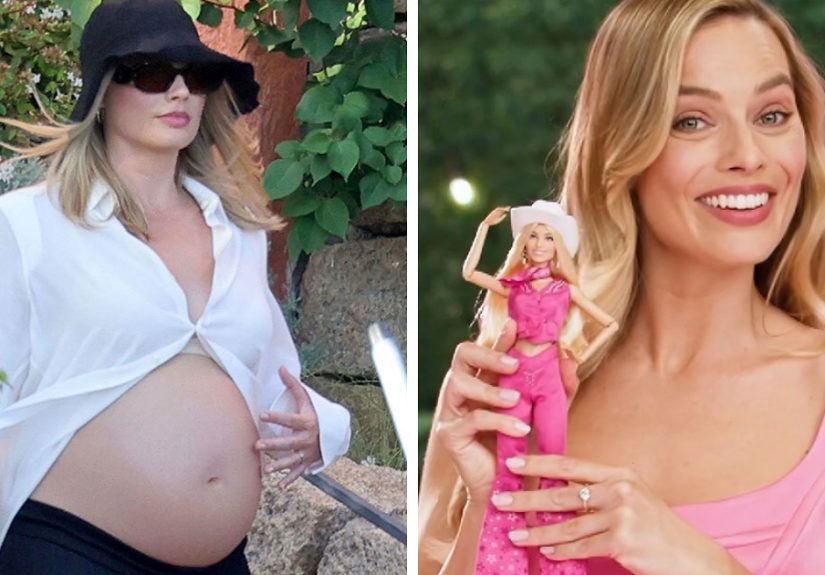
The pregnancy news gained traction after paparazzi photos showed Robbie on vacation in Italy. She was seen wearing a white crop top that revealed her bump, and the images quickly spread across entertainment sites and social media. Soon after, she attended Wimbledon in a polished white-and-black Alaïa dress, then later appeared at a screening of My Old Ass, a film produced by LuckyChap, in a sleek gray dress that made her maternity style part of the fashion conversation.
None of this should have been controversial. Robbie was not staging a press conference about abdominal visibility. She was walking, traveling, attending events, supporting projects, and living her life. Yet online commentary turned a normal pregnancy moment into another round of public body inspection.
Why Were People Trolling Margot Robbie?
The criticism fell into a familiar pattern. Some commenters called her outfit choices “attention-seeking.” Others described her looks as “inappropriate” or implied that a pregnant woman should cover up more. The phrase “Have a bit of decency” captured the tone perfectly: less fashion critique, more unsolicited morality lecture.
But here is the odd part. Celebrity culture constantly demands access. Fans want updates, photos, appearances, interviews, behind-the-scenes moments, and “authentic” glimpses of personal life. Then, when a celebrity is seen doing something ordinary, the same culture sometimes punishes her for being visible. It is like inviting someone to dinner and then complaining that they used a fork.
In Robbie’s case, the trolling also exposed a double standard around pregnancy. Pregnant celebrities are often expected to look glowing but not too glamorous, stylish but not too bold, maternal but not “showy,” private but not invisible. That is not a reasonable standard. That is a circus hoop set on fire.
The Bigger Issue: Pregnancy Does Not Cancel Personal Style
One reason the story traveled so widely is that Margot Robbie’s maternity fashion was not apologetic. She did not disappear into shapeless clothing because strangers might have opinions. At Wimbledon, she wore a crisp designer dress. On vacation, she chose breezy pieces suited to warm weather. At public events, she leaned into elegant silhouettes.
That should be normal. Pregnancy changes a body, but it does not erase a person’s taste, confidence, humor, schedule, or right to wear clothing that feels comfortable. A baby bump is not an indecent object. It is a visible sign of pregnancy, and pregnancy is not something people need to hide behind curtains like a forbidden antique.
The reaction also reveals how much language matters. Words like “flaunting” can sound harmless, but they often carry judgment. If someone wears a fitted dress while pregnant, is she “flaunting,” or is she simply wearing a dress? If she wears a crop top on vacation, is she “showing off,” or is she dressed for the weather? The framing can turn ordinary clothing into a character trial.
Fans Defended Margot Robbie Against Body-Shaming Comments
Not everyone joined the criticism. Many people defended Robbie, arguing that she should be allowed to enjoy pregnancy without strangers dissecting her body. Influencers and commentators also called attention to the misogyny behind the backlash, pointing out that women’s bodies are often treated as community discussion boards.
The defense was not only about Robbie as a celebrity. It was about a broader principle: pregnancy is personal, and public visibility does not remove someone’s right to dignity. When online critics treat maternity fashion as a moral emergency, they are not protecting decency. They are confusing control with concern.
That distinction matters. Genuine concern respects boundaries. Control tries to write rules for someone else’s body, clothes, and behavior. The internet sometimes struggles with this difference, possibly because comment sections were built without enough oxygen.
Margot Robbie Has Spoken Before About Pressure On Women
Robbie’s pregnancy also revived past conversations about the pressure placed on women after marriage. Years before becoming a mother, she pushed back against the expectation that women should immediately answer questions about children simply because they are married. Her point was simple and still relevant: reproductive choices are deeply personal.
That context makes the 2024 trolling feel even more revealing. First, society asks women when they will have children. Then, when they do become pregnant, society debates how they should look while pregnant. After that, it often debates how quickly they should “bounce back.” Somewhere in there, the actual person is expected to smile politely while everyone else holds a microphone.
Robbie and Ackerley have generally kept their relationship private while building a major creative partnership through LuckyChap. Their company has been involved in projects such as I, Tonya, Promising Young Woman, Barbie, and My Old Ass. That professional context is important because Robbie is not merely a celebrity being photographed. She is a producer, actor, business owner, and creative force. Reducing her public appearances to whether strangers approve of her maternity outfits is not just rude; it is boring.
Why Online Body-Shaming Spreads So Quickly
Online body-shaming spreads because it is easy, emotional, and rewarded by attention. A thoughtful comment takes effort. A cruel one takes five seconds and a Wi-Fi signal. Platforms often reward posts that trigger reactions, even when those reactions are outrage, mockery, or pile-ons.
Celebrity pregnancy adds another layer. Photos are instantly shareable, fashion choices become headlines, and personal milestones become public entertainment. The result is a strange environment where a woman can be criticized for hiding a pregnancy, revealing a pregnancy, dressing casually while pregnant, dressing elegantly while pregnant, speaking about pregnancy, or not speaking about it at all.
This is why the Margot Robbie baby bump backlash became more than a celebrity gossip story. It became a snapshot of how the internet talks about women’s bodies. The comments aimed at Robbie may have been about one famous person, but the message can travel much further. Everyday pregnant people read those discussions too. So do teens, new mothers, people struggling with body image, and anyone who has ever felt watched instead of seen.
Pregnancy Style Is Not A Public Referendum
There is no universal maternity uniform. Some people prefer loose clothing. Some like fitted dresses. Some want comfort above all. Some enjoy fashion more during pregnancy because it helps them feel like themselves during a season of change. All of those choices are valid.
Margot Robbie’s pregnancy style drew attention because she is famous and fashionable, but the principle applies to everyone. A pregnant person should not have to dress for the comfort of strangers. The public can notice an outfit without turning it into a courtroom exhibit.
Also, “decency” is a slippery word when used to police women. It often sounds noble, but in practice it can mean, “Dress in a way that makes me comfortable.” That is not decency. That is personal preference wearing a judge’s wig.
What The Backlash Says About Celebrity Privacy
Robbie’s pregnancy was mostly handled privately. She and Ackerley did not turn every update into a spectacle. Public reporting filled in the timeline: pregnancy confirmation, public outings, maternity fashion moments, and eventually news that the couple had welcomed a son. Even with that limited information, the internet found plenty to debate.
This raises a useful question: how much do audiences actually need to know? Fans can admire Robbie’s work, enjoy her style, and celebrate happy news without demanding full access to her family life. Curiosity is normal. Entitlement is where the wheels come off.
Celebrity culture often blurs the line between public interest and private life. A red carpet outfit is fair to discuss. A person’s body, pregnancy, or parenting choices should be approached with more care. Fame may increase visibility, but it does not erase humanity.
How Media Outlets Can Cover Stories Like This Better
Entertainment media has a responsibility here. Headlines about “showing off” a baby bump can attract clicks, but they can also amplify the same framing that fuels criticism. There is a difference between covering public reaction and turning body commentary into a sport.
Better coverage would focus on context: Robbie’s public appearances, her creative work, her privacy, the double standards women face, and the broader problem of online body-shaming. It can still be readable, stylish, and even fun. A story does not need to be cruel to be clickable. Shocking, yes, I know. The internet may need a chair.
Writers can also avoid repeating harmful comments without purpose. If a cruel quote is included, it should be used to analyze the issue, not to give the cruelty a bigger stage. The point is not to pretend backlash did not happen. The point is to avoid making the backlash the main character.
What Readers Can Learn From The Margot Robbie Baby Bump Debate
The simplest lesson is also the most powerful: not every thought needs to become a comment. Seeing a celebrity photo does not require a public verdict. If the outfit is not harming anyone, the emergency level is zero. Put down the gavel. Hydrate. Continue scrolling.
Another lesson is that body commentary rarely stays contained. A remark aimed at a famous person can reinforce standards that affect ordinary people. When someone says a pregnant celebrity should “cover up,” that message can land on anyone who is pregnant, postpartum, or simply trying to feel comfortable in their skin.
Finally, the backlash reminds us that admiration should not become ownership. Fans can love Margot Robbie’s performances, follow her fashion, and celebrate her milestones without treating her body as public property. Respect is not less interesting than criticism. It just has better manners.
Conclusion: The Real Decency Is Letting People Live
The controversy around Margot Robbie showing her baby bump says less about her and more about the internet’s habit of turning women’s bodies into debate topics. Robbie wore clothes, attended events, enjoyed time with her husband, supported her work, and moved through pregnancy in public view. The outrage came from people who mistook visibility for invitation.
“Have a bit of decency” may have been aimed at Robbie, but the phrase boomerangs. Real decency means letting pregnant people dress comfortably. Real decency means not shaming bodies online. Real decency means remembering that a celebrity photo is still a picture of a human being, not a permission slip for cruelty.
Margot Robbie did not owe the internet a hidden pregnancy, a modesty memo, or a wardrobe approved by anonymous strangers. She owed herself comfort, privacy, and joy. That should not be controversial. But since the internet occasionally needs reminders written in bold marker: a baby bump is not indecent. Body-shaming is.
Experience-Based Reflections: What This Moment Feels Like In Real Life
The Margot Robbie baby bump backlash feels familiar because many people have seen smaller versions of it happen in everyday life. A pregnant coworker walks into the office and suddenly everyone becomes a fashion critic, nutrition expert, calendar calculator, and amateur life coach. Someone says, “You’re carrying high.” Someone else says, “Are you sure it’s not twins?” A third person offers a comment so unnecessary it should come with a return label.
Online, the same behavior becomes louder. Instead of one awkward remark near the coffee machine, there are hundreds of comments under a photo. Some are supportive, some are curious, and some behave as if pregnancy style must be approved by a committee of strangers who have never met the person involved. That is why Robbie’s story connects beyond celebrity news. It reflects a common experience: people often feel entitled to comment on bodies when those bodies are changing.
For many readers, the lesson is personal. Think about the last time someone commented on your appearance when you did not ask. Maybe it was about weight, clothes, skin, height, hair, or whether you looked “tired.” Even when the comment is not meant to be cruel, it can stick. During pregnancy, that feeling can become more intense because the body is already changing in visible and private ways. The last thing anyone needs is a comment section acting like a panel of judges on a reality show nobody auditioned for.
The healthier experience is different. It sounds like, “You look happy,” “I hope you’re feeling well,” or simply, “Congratulations.” It respects the person instead of inspecting the body. It allows room for style, comfort, personality, and privacy. It also recognizes that a public figure may be visible without being emotionally available for every stranger’s opinion.
There is also a useful lesson for anyone who creates content online. Before posting a reaction to a celebrity photo, ask: does this add insight, kindness, humor, or value? Or does it simply turn someone’s body into entertainment? The best commentary can be sharp without being cruel. It can analyze culture without attacking a person. It can say, “This backlash reveals a double standard,” instead of joining the pile-on.
Margot Robbie’s experience shows how quickly a normal life moment can become a digital debate. But it also shows that public pushback can matter. Fans who defended her helped shift the conversation from “What is she wearing?” to “Why do people feel entitled to judge?” That shift is important. It turns gossip into media literacy. It turns outrage into reflection. And honestly, the internet could use more reflection and fewer emergency meetings about crop tops.