Table of Contents >> Show >> Hide
- The Comment That Changed the Temperature on Set
- Why That Moment Was Bigger Than Vanity
- The Plastic Surgery Decisionand the Immediate Regret
- When Cosmetic Surgery and Opioids Collide
- The “Perfect” Irony: A Movie Title That Hits Too Close
- Beauty Standards, Then vs. Now (Spoiler: The Pressure Just Got a Wi-Fi Upgrade)
- What We Can Learn From Curtis’ Story
- If You’ve Ever Been “That Person” in the Mirror
- Experience Corner: of Real-World “I Felt That” (Without the Celebrity Trailer)
- Conclusion: The Remark Was SmallThe Lesson Is Huge
Hollywood is famous for glamour, premieres, and awards-season speeches that make you ugly-cry in public (no shame).
It’s also famous for something far less sparkly: the kind of offhand comment that lands like a bowling ball on your self-esteem.
In a candid conversation about beauty standards, aging, and what it costs to be “camera-ready,” Jamie Lee Curtis shared a
moment from early in her career that still stingsan “embarrassing” remark from a cinematographer that pushed her toward
plastic surgery at 25. The part that hits hardest isn’t just the comment. It’s what happened next: regret, pressure,
and a path that led her toward opioid dependence.
Curtis has spent decades proving she doesn’t need anyone’s approval (or anyone’s idea of “perfect”).
But this story is a reminder that even icons have a “before”before the confidence, before the perspective,
and before the hard-earned ability to say, “Actually… no.”
The Comment That Changed the Temperature on Set
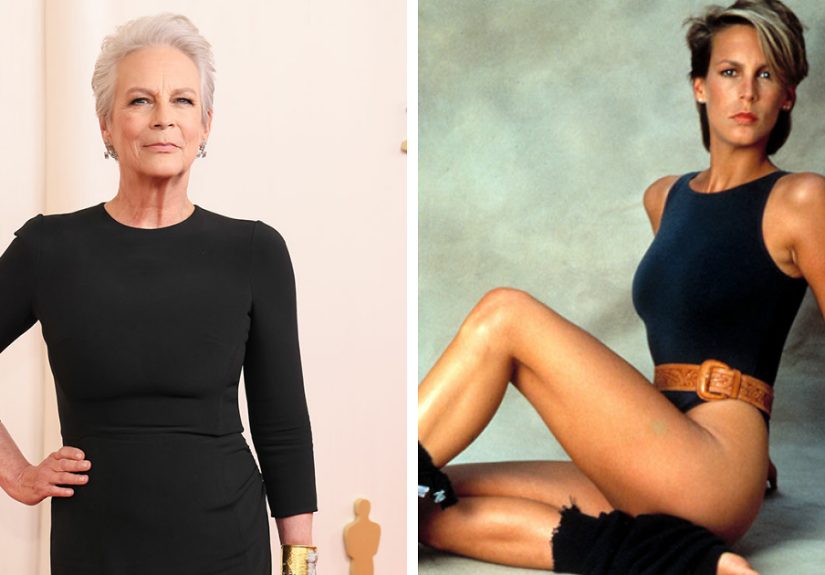
While filming Perfect (1985)a movie she took seriously as an actor, and yes, one where she famously looked incredible in a leotard
Curtis recalled a cinematographer refusing to shoot her because of how her eyes looked on camera. The quote was blunt:
“I’m not shooting her today. Her eyes are baggy.”
Curtis said she was 25 at the time, and the remark felt humiliating. In her telling, it wasn’t framed as feedback about lighting,
angles, or a long day on set. It landed as a verdict on her facedelivered in a way that suggested her appearance was a production problem.
And in an industry where “the camera sees everything” is treated like a law of physics, that kind of comment can feel like a career threat.
Here’s the cruel trick: a single sentence can shrink your world. Suddenly you’re not thinking about the scene, the character, or the craft.
You’re thinking, Is my face the problem? Am I the problem? That’s how a “technical” critique becomes personaland how personal becomes permanent.
Why That Moment Was Bigger Than Vanity
It’s easy for outsiders to reduce stories like this to a simple headline: “Celebrity got plastic surgery.”
But Curtis’ account is really about power. On a film set, a cinematographer’s opinion isn’t just an opinionit can decide what gets shot,
what gets lit, and what gets immortalized on screen. When someone in that position says you’re not being filmed today,
it can trigger a fear that you’re not employable tomorrow.
And for women in Hollywoodespecially in the 1980sthe rules were often unspoken but brutally clear:
you could be talented, hardworking, and prepared… and still be evaluated like a product.
A face is treated like inventory. A wrinkle becomes a “continuity issue.” A human body becomes “coverage.”
Curtis has since become outspoken about how beauty expectations can distort reality, especially when filters, fillers,
and “effortless” perfection are marketed like self-care. But back then, she was a young working actor absorbing the message
that looking “right” mattered as much as being right for the role.
The Plastic Surgery Decisionand the Immediate Regret
Curtis said that after the movie wrapped, she went ahead with plastic surgery. And she didn’t sugarcoat how it went:
“Not well.” She added that it’s “not what you want to do when you’re 25 or 26,” and said she regretted it immediatelythen and now.
That “now” is key. Curtis has become a public advocate telling women they’re gorgeous as they are, which makes her regret sharpernot because
she’s judging her younger self, but because she can see how pressure hijacked her choice.
She’s also told versions of the same story across multiple interviews over the years. In a long-form profile, she described being mortified by
a cameraman’s refusal to shoot her and connected an “eye job” to the start of a destructive cycle. The details have been framed differently in different
tellings, but the through-line stays consistent: an on-set remark about “puffy/baggy” eyes pushed her toward cosmetic interventionand she wishes it hadn’t.
That’s the part many people relate to, famous or not: decisions made under shame rarely feel like freedom.
When Cosmetic Surgery and Opioids Collide
Curtis’ story doesn’t stop at regret. It turns into something largerand more urgent.
She explained that painkillers entered the picture after the procedure, and she became “very enamored with the warm bath of an opiate.”
She has described being quiet and private about it, with no public meltdownjust a dependency that grew in the shadows.
This is one of the most important points in her account: addiction doesn’t always look like chaos from the outside.
Sometimes it looks like functioning, working, smiling, showing upwhile hiding a daily reliance that you swear you’ve got under control
(until you don’t).
Curtis later spoke publicly about sobriety and recovery, noting in that interview that she’d been sober for decades.
Her willingness to connect beauty pressure with opioid dependency has helped widen a conversation many people would rather keep separate:
the emotional forces that push someone toward “fixing” their body, and the medical pathways that can lead to dependence.
The “Perfect” Irony: A Movie Title That Hits Too Close
It’s hard not to notice the irony: the film was titled Perfect, and the story Curtis tells is basically the opposite of perfection.
It’s messy, human, and painfully recognizable.
In the CBS interview, she even joked about seeing photos of herself in that leotard and thinking, “Really? Come on.”
Which is classic Curtis humorself-aware, a little salty, and very funny. But it also underlines the heartbreak:
she was already objectively stunning by Hollywood standards. And still, a single comment was enough to make her feel “not shootable.”
That’s how warped the system can be. When perfection is the minimum requirement, nobody winsnot even the people who seem to have everything.
Beauty Standards, Then vs. Now (Spoiler: The Pressure Just Got a Wi-Fi Upgrade)
The 1980s: Gatekeepers on Set
In the era Curtis describes, beauty pressure often arrived through gatekeepers: producers, directors, cinematographers, magazines.
The feedback was direct, sometimes cruel, and delivered by people with authority over your employment.
The 2020s: Gatekeepers in Your Pocket
Today, the pressure comes with push notifications. Filters can reshape faces in real time. Cosmetic procedures are normalized by
“morning routine” videos. And the idea of a “flaw” is constantly manufacturedbecause insecurity sells.
Curtis has criticized the way cosmetic procedures and beauty filtering can erase individuality and “wipe out” natural variation.
Her point isn’t that nobody should ever change anything about themselves. It’s that the cultural baseline has shifted toward
a standardized faceone that looks suspiciously like it was designed by an algorithm with a coupon code.
If you’ve ever looked at a photo of yourself and thought, “Wait… is that what I really look like?”congratulations,
you’ve met the modern version of the same pressure Curtis faced on set. Different delivery system. Same emotional hook.
What We Can Learn From Curtis’ Story
1) One comment can be a trauma seed
Curtis’ “embarrassing” moment is a reminder that words can lodge in the brain like a tiny splinter.
You might forget the entire dayexcept for that one sentence you replay for years.
2) Shame is not a reliable advisor
Decisions made to escape embarrassment tend to come with a receipt.
Sometimes the cost is emotional. Sometimes it’s financial. Sometimes, as Curtis’ story shows, it can become medical.
3) “Quiet addiction” is still addiction
The myth that addiction only looks like rock-bottom chaos keeps people from getting help early.
Curtis’ openness has helped normalize a more accurate picture: dependence can be private, functional, and deeply dangerous.
4) Advocacy can come from regretnot hypocrisy
Curtis telling women “You’re gorgeous” isn’t undermined by her past. It’s strengthened by it.
She’s not preaching from a pedestal; she’s speaking from a scar.
If You’ve Ever Been “That Person” in the Mirror
Not everyone is on a movie set under fluorescent lights with a crew waiting. But the emotional mechanics are familiar:
someone points at a feature you never questioned before, and suddenly you can’t unsee it.
If you’re feeling that right now, here’s a grounded way to slow the spiral:
- Pause before you “fix.” Give yourself time for the emotion to settle.
- Reality-check the source. Was it feedback, cruelty, or someone else’s insecurity leaking out?
- Talk it through with a safe person. Shame grows in silence; it shrinks in conversation.
- Separate “camera problems” from “human problems.” Lighting is not your identity.
- If you’re considering a procedure, treat it like a major decision. Research, second opinions, mental readinessno panic bookings.
Curtis’ story doesn’t exist to scare anyone. It exists to tell the truth: sometimes the smallest moment can set off the biggest chain reaction.
And sometimes the most radical thing you can do is refuse to let a passing remark become your life’s narrator.
Experience Corner: of Real-World “I Felt That” (Without the Celebrity Trailer)
Curtis’ story resonates because it mirrors everyday experiencesjust with brighter lights and higher stakes. You don’t need a film crew
to understand what it’s like to have your confidence rearranged by a careless comment.
Experience #1: The “new flaw” you can’t stop seeing. Someone says, “You look tired,” or “Your under-eyes are dark,” or “That angle isn’t your best.”
Before that moment, you may have never paid attention to that feature. After it, your brain treats it like breaking news. You start checking mirrors,
switching lighting, changing how you pose in photos, Googling solutions at 1 a.m. The issue isn’t the featureit’s the sudden belief that everyone else
has been noticing it the whole time.
Experience #2: The workplace version of the film set. In regular life, the “cinematographer” can be a boss, a client,
a teacher, or anyone with power over your opportunities. A comment about looking “professional,” “polished,” “presentable,” or “fresh” can quickly become
code for “change your face.” People often describe feeling trapped: they want to be taken seriously, and they worry appearance is being used as a gate.
That’s how pressure disguises itself as “helpful feedback.”
Experience #3: The social-media magnifying glass. A person posts a photo and immediately fixates on one detail,
then compares themselves to filtered faces that don’t exist in real life. Many describe the weird whiplash of seeing themselves on a front-facing camera:
“Is that really me?” That disconnect can create a craving for controlediting, contouring, proceduresanything to make the image match the ideal.
The trap is that the ideal keeps moving.
Experience #4: The “quick fix” that turns into a longer journey. Some people seek cosmetic changes expecting emotional reliefconfidence,
calm, closure. But if the original wound came from shame, the relief can be brief. The mind simply picks a new target. This is why many therapists talk about
strengthening body neutrality: not “I must love every feature every day,” but “My face is allowed to be a face.” It’s a tool for living, not a résumé.
Experience #5: Choosing yourself after the comment. The most encouraging stories tend to share a turning point:
someone realizing the comment says more about the speaker than the subject. People describe learning to ask, “Would I say that to someone I love?”
If the answer is no, then why accept it as a life rule? Over time, confidence can be rebuiltnot by winning a beauty contest,
but by refusing to outsource your worth to random opinions.
Curtis’ story is extreme in consequence, but familiar in feeling. If a single remark has ever tried to write your self-image for you,
consider this your reminder: you get final edit.
Conclusion: The Remark Was SmallThe Lesson Is Huge
Jamie Lee Curtis’ recollection isn’t celebrity gossip. It’s a case study in how body criticism, power, and shame can collide in a split secondand how
the aftermath can ripple for decades. Her honesty about regret and recovery makes the story matter beyond Hollywood,
because it exposes a truth many people carry quietly: we don’t always choose change because we want it. Sometimes we choose it because we’re cornered.
If there’s a takeaway worth keeping, it’s this: your face is not a problem to solve.
And if someone tries to make you feel “unshootable,” “unpresentable,” or “not enough,” that says more about the culture than it does about you.