Table of Contents >> Show >> Hide
- Why I Focus on the Animals Most People Ignore
- The Strange Magic of Photographing Small Wildlife
- The Gear That Helps Me Work Small
- Ethics Come Before the Photo
- What I’ve Learned From Photographing Overlooked Creatures
- Specific Small Animals Worth Photographing
- Why These Photos Matter Beyond Aesthetics
- 500 More Words From the Field: What the Experience Really Feels Like
- Conclusion
Most people walk past the best drama in nature without noticing a thing. They’ll admire a deer, point at a hawk, maybe gasp politely at a fox. Meanwhile, a moth shaped like a scrap of velvet is clinging to tree bark two feet away, a jumping spider is doing tiny Olympic-level calculations on a fence post, and a salamander is quietly patrolling the forest floor like the neighborhood night manager. I photograph those animalsthe small ones, the ignored ones, the creatures that rarely get the celebrity treatmentand the more I do it, the more convinced I become that the natural world’s biggest miracles are often the ones hiding in plain sight.
This kind of small animal photography is part art, part patience, and part humble acceptance that a snail can absolutely ruin your schedule by moving one inch in the wrong direction. It lives at the intersection of macro photography, wildlife observation, and conservation storytelling. And it has changed the way I see backyards, sidewalks, gardens, wetlands, and forests. Once you start looking closely, the world stops being background scenery and starts feeling like a crowded city full of tiny lives, each with its own business, beauty, and attitude.
Why I Focus on the Animals Most People Ignore
There’s something deeply satisfying about giving visual attention to animals that rarely receive it. Big mammals tend to dominate our ideas about wildlife, but small creatures do a shocking amount of the planet’s daily work. Pollinating insects help support ecosystems and agriculture. Native bees, butterflies, moths, beetles, and flies are not just decorative extras; they are part of the machinery that keeps landscapes functioning. Salamanders, which many people never see at all, can be powerful indicators of forest health. Spiders, beetles, ants, and other arthropods help recycle organic matter, control pests, and knit together food webs that support larger species.
Yet many of these animals are overlooked because they are small, quiet, common-looking, or unfairly categorized as creepy. That’s where photography becomes useful. A camera can slow people down long enough to notice the metallic shine of a beetle’s wing case, the architectural elegance of a snail shell, or the absurdly expressive face of a tree frog. Once viewers see detail, they often feel curiosity. Curiosity tends to lead to appreciation. And appreciation is far more likely to lead to protection than indifference ever will.
In other words, I photograph tiny animals because they deserve better public relations.
The Strange Magic of Photographing Small Wildlife
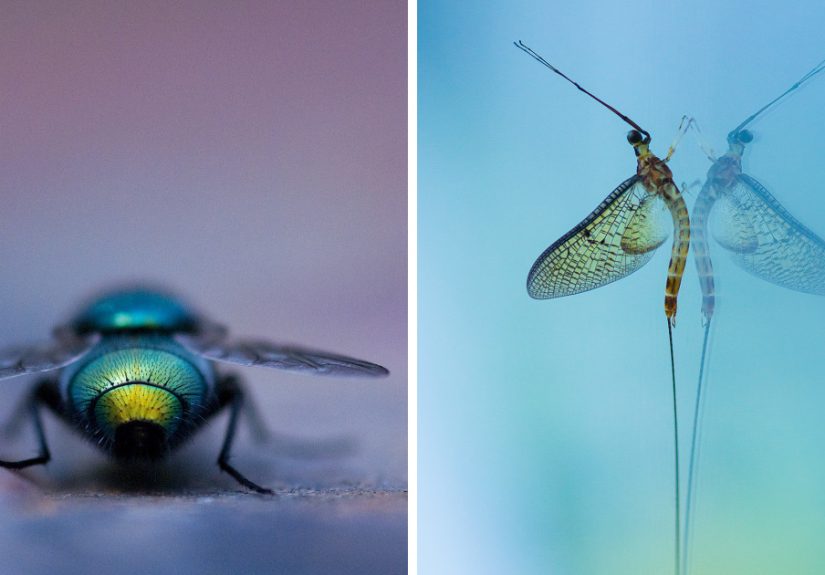
Photographing overlooked animals is not just about making small things look bigger. It’s about making them feel important. A good close-up of a moth can reveal scales that look hand-painted. A portrait of an ant can turn an everyday sidewalk commuter into something that looks like it belongs in a science-fiction movie. A wet salamander under leaf litter can suddenly seem regal instead of random. Macro and close-up photography reveal texture, pattern, symmetry, and behavior that the naked eye often misses.
That visual shift matters. When people think of wildlife photography, they often picture long telephoto lenses aimed at sweeping landscapes and charismatic megafauna. But photographing small animals asks for a different kind of attention. It rewards kneeling, crouching, waiting, and learning. It’s less about conquest and more about observation. You are not chasing a dramatic trophy image. You are entering a tiny world and trying not to act like a clumsy giant.
And yes, sometimes you do end up flat on the ground, bargaining emotionally with a leafhopper.
The Gear That Helps Me Work Small
Macro lenses and working distance
When photographing insects, spiders, snails, frogs, or other tiny subjects, a true macro lens is incredibly helpful. Macro lenses are built to focus very close, often at near life-size magnification. That means details that would normally disappearcompound eyes, translucent wings, fine hairs, raindrops on skinsuddenly become visible. Working distance also matters. If you are too physically close to a skittish subject, it may flee before you even settle your hands. Lenses with more working distance can make life easier because they let you stay a bit farther back while still filling the frame.
Light, depth of field, and the eternal battle with blur
One of the trickiest parts of macro wildlife photography is depth of field. At close focusing distances, the zone of sharpness becomes incredibly thin. You can focus on an insect’s eyes and lose the rest of its face in an artistic fog half a millimeter later. That can be beautiful when used intentionally, but it can also be maddening when you want more of the subject sharp. This is why aperture choices matter, why steady handholding matters, and why some photographers use tripods, flash, or focus stacking when conditions allow.
Lighting matters just as much. Small diffused light sources, reflectors, flash setups, or even careful use of a handheld light can help separate a subject from clutter and reveal detail. Early morning, overcast weather, and nighttime searches can all be useful depending on the animal. Many insects and amphibians are easier to spot at night or when cooler temperatures make them less active. The point is not to blast tiny animals with chaos and call it art. The point is to create enough clean, controlled light to show them respectfully and clearly.
You do not need a truckload of gear
Fancy equipment helps, but it is not the whole story. A modest camera, a macro-capable lens or close-up filter, stable posture, and patient observation can go a very long way. You can build a strong portfolio of backyard wildlife without booking an expedition to somewhere dramatic and pronounceable. A patch of native flowers, a damp log, or a porch light during moth season can be a full studio if you know how to look.
Ethics Come Before the Photo
This is the rule I care about most: the well-being of the animal and its habitat comes before the image. Always. Wildlife photography is not ethical simply because the subject is small. Tiny animals are not props. They can be stressed, displaced, injured, or exposed just as easilysometimes more easilythan larger ones.
That means I do not move animals just to place them on prettier backgrounds. I do not tear apart habitat for a cleaner shot. I do not handle amphibians casually. I do not pin, chill, trap, or manipulate live creatures for convenience. If a moth lands where the composition is messy, then the composition is messy. If a salamander is tucked under leaves in dim light, then I work with the scene instead of redesigning the forest floor like an overconfident art director.
Ethical small animal photography also means paying attention to breeding, feeding, and sheltering behavior. Repeated disturbance can matter. Flash overuse can matter. Trampling the plants around a pollinator patch can matter. The Leave No Trace mindset is not just for hikers with expensive water bottles. It belongs to photographers too.
And honestly, ethical restraint usually makes the work better. Images feel richer when the subject remains in a real environment, behaving naturally, connected to the textures and messiness of its actual world.
What I’ve Learned From Photographing Overlooked Creatures
The first lesson is that “ordinary” is often just a failure of attention. A pill bug on a brick wall is ordinary until you notice its segmented armor. A hoverfly is ordinary until sunlight hits its wings like stained glass. A garden spider is ordinary until you see the geometry it builds every morning with no engineering degree and zero need for applause.
The second lesson is that scale changes emotion. Tiny animals often seem abstract at a distance. Up close, they become individuals. Their faces become readable. Their textures become intimate. Their fragility becomes obvious. A portrait can turn “bug” into “native bee dusted in pollen” or “salamander carrying the wet shine of the whole forest on its back.” That shift matters because people protect what they can emotionally recognize.
The third lesson is that small wildlife photography is secretly a lesson in habitat. You begin with an animal, but soon you start noticing the whole system around it: native plants, leaf litter, wet wood, flowering weeds, roadside edges, mossy stones, nighttime humidity, seasonal timing. Photograph enough tiny creatures and you stop asking only, “How do I get the shot?” You start asking, “What does this animal need to be here at all?” That question is where photography starts becoming conservation.
Specific Small Animals Worth Photographing
Moths
Moths are one of the best arguments against casual human arrogance. Many people dismiss them as dull butterflies that work the night shift. Then a camera reveals satin patterns, furry bodies, improbable antennae, and camouflage so clever it borders on comedy. They are spectacular subjects for backyard wildlife photography and a wonderful gateway into noticing biodiversity around porch lights, gardens, and woodland edges.
Native bees and hoverflies
If you want to photograph pollinators and tell a deeper ecological story, start here. Native bees come in an astonishing variety of sizes, colors, and behaviors. Hoverflies, often mistaken for bees, add even more visual variety and are useful pollinators too. These animals connect photography directly to habitat conversations about flowering plants, nesting sites, and seasonal food sources.
Salamanders and frogs
Amphibians are small miracles with a moisture requirement. Photographing them can be incredibly rewarding, especially in wet forests or near ponds after rain. They are also sensitive animals, which makes ethics and hygiene especially important. When photographed respectfully in natural settings, they become some of the most expressive small wildlife subjects you can findhalf jewel, half secret.
Spiders, beetles, and snails
These are perfect subjects for photographers who enjoy texture, pattern, and surprise. Jumping spiders look like they have opinions. Beetles can seem armored, metallic, prehistoric, or hilariously formal. Snails bring shape, pace, and patience to the frame. None of them asks for glamour lighting, but all of them benefit from careful composition and a willingness to admire what most people hurry past.
Why These Photos Matter Beyond Aesthetics
Beautiful small animal photography is not just decorative. It can shift perception. When people see insects only as nuisances, spiders only as threats, and salamanders only as slippery accidents under a rock, public support for habitat protection becomes harder to build. Photography helps translate science into feeling. It puts a face on biodiversity. It can make roadside weeds look like pollinator restaurants, leaf litter look like nursery habitat, and the “messy” corner of a yard look like a living neighborhood.
That is one reason I keep returning to overlooked animals. They remind me that conservation is not only about saving the grand and rare. It is also about recognizing the small, common, underappreciated creatures that hold ecosystems together. A world with fewer moths, beetles, bees, frogs, and salamanders would not just be less interesting. It would be less functional, less resilient, and much lonelier than most people realize.
500 More Words From the Field: What the Experience Really Feels Like
The experience of photographing overlooked small animals is far less glamorous than people imagine and far more rewarding than it has any right to be. There are no roaring crowds, no dramatic safari soundtrack, and very few moments in which you feel cool. More often, you are crouched beside a patch of clover while neighbors wonder why you are emotionally invested in a bee the size of a raisin.
But that is exactly what makes it special. These moments feel earned. You cannot rush a tree frog into turning its head toward the light. You cannot lecture a moth into landing on the nice leaf instead of the ugly plastic chair. You cannot ask a snail to please hold still in a more cinematic way. Small animal photography trains you to accept reality as collaboration, not obedience. The animals are in charge. You are just the observant guest with a camera and mild knee pain.
Some of my favorite sessions begin with no expectation at all. I step outside after rain, and the world suddenly feels rearranged. The bricks are darker, the soil smells alive, and tiny movement appears everywhere once I slow down. A snail emerges like a patient philosopher. Ants restart their traffic system as if the storm were only a brief scheduling issue. A spider web catches droplets and becomes a jeweled bridge. In those moments, photography becomes less about “capturing” nature and more about witnessing it carefully enough to do it justice.
Night can be even more magical. A flashlight beam on a garden path can reveal moths, crickets, beetles, and sometimes a frog sitting in complete confidence like it pays rent there. The darkness simplifies everything. Background clutter disappears. Tiny reflective eyes suddenly shine. Sounds get louder. The world feels intimate and slightly mysterious, as if the smallest residents finally came out after the noisy daytime crowd went home.
There is also a quiet emotional shift that happens over time. The more I photograph these creatures, the less I think in categories like “pest,” “bug,” or “gross.” I start noticing behavior first. I notice a hoverfly cleaning itself. I notice a beetle choosing its path around a pebble. I notice the delicate way a moth rests, the absurd boldness of a jumping spider, the elegant caution of a salamander moving through wet leaves. Familiarity softens disgust. Attention replaces fear. That may be one of photography’s most underrated powers.
Of course, not every outing is poetic. Sometimes the light is terrible. Sometimes the wind treats every stem like a trampoline. Sometimes I spend twenty minutes trying to focus on a dragonfly only to return home with one usable image and forty-seven close-ups of failure. But even those sessions teach something. They teach patience, fieldcraft, observation, and humility. They remind me that nature is not a studio set built for my convenience.
And then, every once in a while, everything aligns. The subject pauses. The background melts into soft color. The eyes snap into focus. For one frame, a tiny animal that most people would never notice fills the screen with personality and presence. That is the moment I keep chasing. Not because it is rare, but because it proves the point every single time: the overlooked world is not empty. It is overflowing. We just have to get low enough, slow enough, and curious enough to see it.
Conclusion
I photograph small animals that are usually overlooked because they reveal a version of nature that is intimate, essential, and wildly underrated. They teach me to pay attention, to work ethically, and to see habitat as more than scenery. They also happen to be incredibly photogenic once they are given half a chance. In a culture that loves the loudest, biggest, and most obvious things, small animal photography feels like a useful correction. It says that wonder does not have to be enormous to matter. Sometimes it fits on a leaf, hides under bark, or waits in the wet shadows after rain. And sometimes, if you are patient enough, it looks straight into the lens and completely steals the show.