Table of Contents >> Show >> Hide
- Why Your Thanksgiving Table Setup Matters
- Step 1: Start with the Foundation
- Step 2: Layer the Plates Like You Meant It
- Step 3: Place the Flatware the Easy Way
- Step 4: Add Napkins and Glassware
- Step 5: Create a Centerpiece That Does Not Block the Conversation
- Step 6: Finish with Personal Touches
- Common Thanksgiving Table Setting Mistakes to Avoid
- What a Simple Thanksgiving Table Can Still Do Beautifully
- Real-Life Hosting Lessons: What You Learn After Setting a Thanksgiving Table a Few Times
- Conclusion
Thanksgiving has a funny way of turning otherwise calm adults into gravy-stirring, pie-guarding, chair-counting event managers. One minute you are thawing the turkey, and the next you are staring at a pile of plates wondering if the soup spoon goes on the right, the left, or straight into your stress dreams. The good news? Setting a beautiful Thanksgiving table is not rocket science, and it definitely does not require a degree in formal etiquette.
If you have ever wanted your holiday meal to look polished without feeling stiff, you are in the right place. A good Thanksgiving table setting should do three things: make guests feel welcome, support the food you are actually serving, and look festive enough that people pause before diving face-first into the mashed potatoes. That is the sweet spot.
In this guide, you will learn exactly how to set a table for Thanksgiving dinner in six easy steps. We will cover where the plates go, how to place flatware and glasses, what to do with napkins, and how to add those final touches that make the whole table feel warm, thoughtful, and celebration-ready. Whether your style is classic, modern, rustic, budget-friendly, or “I found these candles five minutes ago and now we are committing,” this method works.
Let’s build a Thanksgiving table setting that says, “Welcome, eat well, stay awhile,” instead of, “I panic-bought decorative gourds at noon.”
Why Your Thanksgiving Table Setup Matters
A well-set table does more than hold plates. It sets the mood before the first roll is passed. It tells guests where to sit, how the meal will flow, and whether the evening is leaning cozy-casual or holiday-magazine glamorous. More importantly, it takes pressure off you as the host. When each place setting is clear and intentional, people settle in faster, help themselves more easily, and spend less time asking, “Which fork am I supposed to use?”
The smartest approach is to keep your table practical. Thanksgiving is already a generous, abundant meal. Your table should support that abundance without becoming crowded, overly formal, or so decorated that Aunt Linda has to lean around a pumpkin tower to make eye contact. Beauty is good. Visibility is better.
Step 1: Start with the Foundation
Choose your table base
Before you touch a plate, decide what will sit underneath everything else. This foundation can be a tablecloth, table runner, placemats, chargers, or some combination of the four. Think of it as the outfit your Thanksgiving dinner table wears before the accessories arrive.
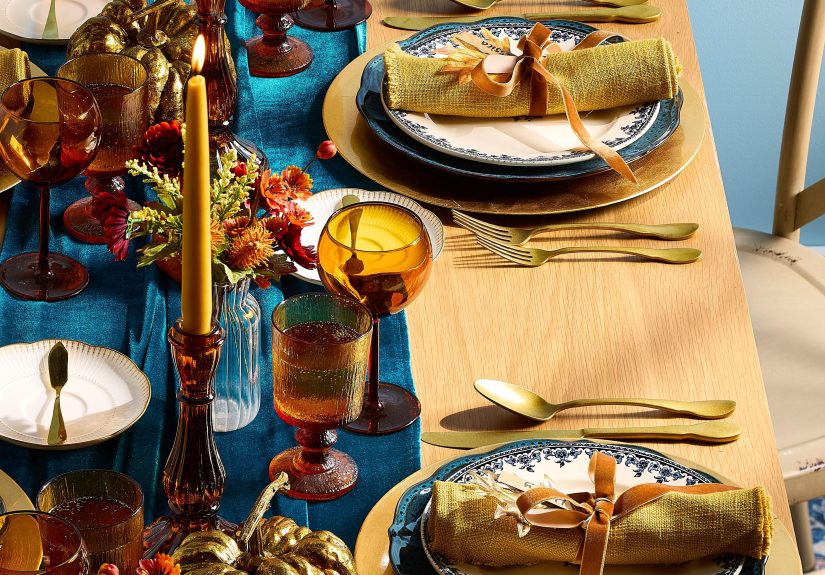
If you want a more traditional or polished look, begin with a tablecloth in white, cream, taupe, rust, olive, or another warm fall tone. If your table is beautiful on its own, skip the full cloth and use a runner or placemats instead. Chargers instantly make the table feel more dressed up, and they also help define each guest’s personal space. On a crowded table, that is basically a public service.
This is also the moment to think about your color palette. Thanksgiving table decor does not have to be trapped in orange-and-brown land forever. Those colors are classic, yes, but soft neutrals, deep jewel tones, muted greens, copper accents, and even unexpected shades like blue or burgundy can all look stunning. Choose two or three main tones and repeat them throughout the table so the setting feels intentional instead of accidentally assembled from the back of three different cabinets.
Practical tip
If you are serving a big meal family-style, leave enough room for serving bowls and platters. If space is tight, a buffet setup for food can save the table from becoming a crowded obstacle course of casseroles and elbows.
Step 2: Layer the Plates Like You Meant It
Build the place setting from the center
The plate is the anchor of each place setting. Start with a charger or placemat, then place the dinner plate in the center. If you are serving salad or a starter, layer the salad plate on top of the dinner plate. If soup is part of the menu, the soup bowl can sit on top of the salad plate until that course is served.
This layered look makes a Thanksgiving table feel abundant and special, which is exactly what the holiday calls for. It also signals the flow of the meal without anyone needing an instruction manual. The table says, “We are organized, festive, and fully prepared for carbs.”
If you are keeping things casual, you can simplify the setup with just one dinner plate and a folded napkin. If you want a more elevated look, add a bread plate at the upper left of the main setting. That detail is optional, but it does add a classic holiday-dinner feel.
Style tip
Mixing textures works beautifully for Thanksgiving table settings. Pair ceramic dinner plates with woven chargers, linen napkins, wood accents, or metallic flatware. The contrast adds warmth and depth without asking you to buy an entirely new set of dishes for one meal.
Step 3: Place the Flatware the Easy Way
Remember the basic layout
This is the part that intimidates people, but it is actually simple. Forks go on the left. Knives and spoons go on the right. The knife blade should face the plate. That is the golden rule of a basic Thanksgiving place setting.
If you are serving multiple courses, arrange utensils in the order they will be used, from the outside in. So if your guests will eat salad before the main meal, the salad fork sits to the outside of the dinner fork. If soup comes first, the soup spoon goes on the outer right. By the time guests reach the utensil closest to the plate, they are at the main course. It is like a quiet little roadmap made of stainless steel.
The key to a polished look is alignment. Keep the bottoms of the utensils roughly even with the bottom of the plate. Tiny details like that make the table look calm and intentional rather than like the silverware was tossed into place during a dramatic commercial break.
What not to do
Do not overload the setting with pieces nobody will use. Thanksgiving dinner is not improved by random extra forks. If there is no soup, skip the soup spoon. If dessert will be served later from the kitchen or buffet, bring out dessert forks then. A clean setup always looks better than an overcomplicated one.
Step 4: Add Napkins and Glassware
Napkins first
Napkins are the unsung heroes of holiday hosting. They are practical, decorative, and suspiciously good at making even ordinary dinnerware look more expensive. For a standard setup, place the napkin to the left of the plate or beneath the forks. For a more styled look, fold it on top of the plate, thread it through a napkin ring, or tuck a place card or sprig of greenery into the fold.
Cloth napkins almost always elevate a Thanksgiving table. They add softness, color, and a sense of occasion. Paper napkins are perfectly fine for a casual gathering, but if you want the table to look photo-ready, linen or cotton is the way to go.
Then glasses
Place the water glass above the knife, slightly to the right. If you are serving wine, add the wine glass just to the right of or slightly below the water glass. Keep the arrangement simple and consistent across each place setting. The goal is not to recreate a fine-dining diagram from memory. The goal is to make sure guests know where their drink goes and have space to reach it without knocking over a candlestick.
If you are serving only water and maybe one signature drink, one glass per person on the table may be enough. If your crowd includes kids, consider sturdy, stemless glasses. Thanksgiving already comes with enough unpredictable movement; you do not need a wobbly goblet adding suspense.
Step 5: Create a Centerpiece That Does Not Block the Conversation
Keep the decor low and inviting
This is where many hosts get a little overexcited and accidentally build a floral wall between relatives. A great Thanksgiving centerpiece should be beautiful, seasonal, and low enough that guests can still see one another. Low arrangements, garlands, candles, mini pumpkins, fruit, leaves, branches, or a few grouped vases work much better than towering displays that force everyone into awkward sideways communication.
Natural elements are especially effective for Thanksgiving table decor. Try eucalyptus, magnolia leaves, dried wheat, pears, pomegranates, figs, pinecones, or small gourds. They add texture and warmth without making the table feel too formal. Candles also work wonders. Tapers, tea lights, or flameless candles instantly make the table feel cozy and flattering. Let us be honest: everyone looks better by candlelight, especially after a second helping of stuffing.
Budget-friendly centerpiece ideas
You do not need a florist-sized budget to make the table look festive. A runner with scattered leaves and a few candleholders can be enough. A bowl of seasonal fruit can double as decor. A rustic pitcher filled with grocery-store flowers can look charming and intentional. Thanksgiving style should feel generous, not financially reckless.
Step 6: Finish with Personal Touches
Add the details that make guests feel seen
The final step is what turns a nice table into a memorable one. Place cards are one of the easiest ways to make the meal feel thoughtful. They also solve the subtle chaos of seat selection before it starts. You can go elegant with handwritten cards, playful with mini pumpkins, or simple with names tucked into napkin folds.
Small personal details also make a big impact. A favor at each seat, a printed menu, a gratitude note, or a tiny sprig of rosemary can add charm without clutter. If children are joining the meal, you can make their settings more fun with labeled cups, crayons, or a simple Thanksgiving activity card at the table.
Before guests arrive, do one final scan. Are the plates centered? Are the glasses aligned? Is there enough elbow room? Can people actually pass the mashed potatoes without launching a spoon into the cranberry sauce? If the answer is yes, congratulations. Your Thanksgiving dinner table is ready.
Common Thanksgiving Table Setting Mistakes to Avoid
Even a gorgeous table can go sideways if it is not functional. Here are a few common mistakes worth dodging:
- Overdecorating the center: If guests have to lean around your centerpiece like they are in a spy movie, it is too tall.
- Using too many dishes: Set out only what the meal requires.
- Cramming the table: Leave breathing room between settings.
- Ignoring the food flow: Decide early whether you are serving family-style, plated, or buffet.
- Waiting until the last minute: Setting the table the night before saves your sanity on Thanksgiving Day.
What a Simple Thanksgiving Table Can Still Do Beautifully
Here is the truth: the best Thanksgiving table is not necessarily the fanciest one. It is the one that helps people gather comfortably, eat happily, and linger long enough for the pie debate to become oddly emotional. A simple table with clean place settings, warm lighting, soft linens, and one or two seasonal accents can feel every bit as inviting as a magazine-worthy tablescape.
That is especially helpful if you are hosting in a small space, serving a mixed-age crowd, or trying to keep costs under control. A stylish Thanksgiving dinner table should support the experience, not steal all your energy before anyone even arrives.
Real-Life Hosting Lessons: What You Learn After Setting a Thanksgiving Table a Few Times
There is something no diagram tells you about how to set a table for Thanksgiving dinner: the table is rarely perfect, and that is part of what makes it memorable. The first time many people host, they imagine the evening like a glossy catalog. The napkins are crisp. The candles glow evenly. The flatware shines like it has a contract with the moon. Then real life shows up in socks, asks where to put the deviled eggs, and moves a place card because cousins want to sit together. Suddenly the table becomes less about perfection and more about adaptation.
That is why experience matters. After a few Thanksgiving dinners, you learn that comfort beats rigidity every time. You notice that guests care more about whether they can reach the gravy than whether the salad fork is precisely three-quarters of an inch from the dinner fork. You realize that a slightly relaxed table often feels more welcoming than one that looks too precious to touch. The goal is not to make people nervous about where to rest their water glass. The goal is to make them feel at home.
You also start noticing the little things that really improve the evening. A low centerpiece matters because people want to talk and laugh across the table. Place cards help more than expected because they avoid that awkward pre-dinner shuffle where everyone pretends they are fine sitting anywhere while clearly hoping not to be wedged between the toddlers and the politics guy. Cloth napkins feel special, yes, but they are also genuinely useful during a meal built on butter, gravy, cranberry sauce, and optimism.
Another lesson? Set the table early. Not “thirty minutes before people arrive while you are also basting the turkey” early. Really early. The night before is ideal. It frees your brain on Thanksgiving Day and lets you enjoy the table as part of the celebration rather than another task on a too-long list. It also gives you time to notice if you are somehow one fork short, which is the kind of holiday plot twist nobody enjoys.
And then there is the emotional part. A Thanksgiving table is never just plates and glasses. It holds traditions. Maybe the table runner belonged to your grandmother. Maybe the mismatched dishes came from years of piecemeal collecting. Maybe the kids made the place cards and spelled two names wrong, which somehow makes them even better. Those details turn a functional table into a meaningful one.
By the end of the night, the prettiest part of the table is usually not the centerpiece or the layered plates. It is the evidence of a meal shared well: napkins unfolded, glasses half-empty, crumbs where the rolls disappeared first, and that relaxed post-dinner glow that says everybody ate too much and plans to do it again next year. That is the real magic of a Thanksgiving table setting. It begins with six easy steps, but what it creates is something much bigger: a place where people gather, celebrate, and remember why the holiday matters in the first place.
Conclusion
If you have been wondering how to set a table for Thanksgiving dinner in just 6 easy steps, now you have a method that is both practical and polished. Start with a strong base, layer plates thoughtfully, place flatware with confidence, add napkins and glassware, keep your centerpiece low and cozy, and finish with personal details that make guests feel welcome. That is it. No panic. No mystery fork crisis. No need to transform your dining room into a formal banquet hall unless that is truly your idea of a good time.
A beautiful Thanksgiving table is really about hospitality. It helps people slow down, settle in, and enjoy the meal and the company around them. So set the table, light the candles, straighten the napkins one last time, and let the holiday do what it does best: gather people together over food, gratitude, and at least one very strong opinion about stuffing.