Table of Contents >> Show >> Hide
- First, a quick reality check: does tea tree oil actually kill lice?
- Safety comes first (because “natural” doesn’t always mean gentle)
- What you’ll need
- Step 1: Confirm it’s actually lice (not dandruff cosplay)
- Step 2: Choose your tea tree oil approach
- Step 3: Wet combingthe method that actually earns results
- Step 4: Where tea tree oil fits into the routine (without turning your scalp into a drama queen)
- Step 5: Repeat treatment on the right schedule (because eggs are stubborn)
- Step 6: Clean your environmentwithout going full hazmat
- Step 7: Prevent reinfestation (the part everyone forgets)
- When to skip tea tree oil and call a professional
- Common myths (so you don’t waste a weekend)
- Key takeaways
- Real-life experiences : what people run into when using tea tree oil for lice
Head lice have a special talent: showing up at the exact moment you’ve got a busy week, a school picture day,
or a family trip coming up. The good news is that lice are more annoying than dangerousand you’ve got options.
One popular “natural” approach involves tea tree oil (from Melaleuca alternifolia), usually paired with
the real MVP of lice removal: a fine-toothed nit comb.
This guide walks you through a practical, safety-first way to use tea tree oil as part of a lice-removal plan,
explains what the science does (and doesn’t) say, and helps you avoid the classic mistakes that make lice feel
like an uninvited long-term houseguest.
First, a quick reality check: does tea tree oil actually kill lice?
Tea tree oil has been studied for antimicrobial and anti-parasitic properties, and some research suggests it can affect
liceespecially when used in formulated products or combined with other ingredients. But here’s the important nuance:
major health organizations generally do not list essential oils as first-line treatment, especially for children,
because evidence and safety data are limited compared with standard treatments.
What the research suggests
-
Lab studies show tea tree oil can be toxic to lice under controlled conditionsbut lab results don’t always translate
perfectly to “real hair on a real kid who just rolled on the couch.” -
Clinical trials of products that include tea tree oil (often combined with other oils) have reported good results in some settings.
That doesn’t prove plain, undiluted essential oil is a safe or reliable DIY cure. -
Bottom line: tea tree oil may help as an adjunct, but the most consistent “natural” strategy is still careful combing,
repeating checks, and preventing reinfestation.
What that means for you
If you want to try tea tree oil, the safest approach is to use it as part of a complete plan:
confirm lice, use a properly diluted product, comb thoroughly, and repeat on schedule.
If lice keep coming back, don’t assume tea tree oil “failed”it might be reinfestation, missed steps, or incorrect diagnosis.
Safety comes first (because “natural” doesn’t always mean gentle)
Tea tree oil is an essential oilhighly concentrated and potentially irritating. Used incorrectly, it can cause redness,
burning, or an allergic skin reaction. It should never be swallowed, and it should be kept away from eyes, mouths,
and little hands that explore the world by tasting it.
If you’re treating a child, it’s especially important to be cautious. Many “natural remedy” recipes online skip
safety details and jump straight to “add 50 drops and manifest victory.” Please don’t.
What you’ll need
- Good lighting (phone flashlight counts)
- Fine-toothed nit comb (metal combs often grab better than flimsy plastic)
- Hair clips to section hair
- Regular conditioner (for wet combing)
- Towels and a washable shirt
-
Tea tree oil option (choose one):
- A commercial lice product that contains tea tree oil (follow the label exactly), or
- A properly diluted tea tree oil mixture in a carrier (only if you’re confident you can do this safely)
If you’re not sure about mixing essential oils safely, pick a reputable, pre-formulated product or skip tea tree oil
entirely and focus on wet combing (which is boring but effective).
Step 1: Confirm it’s actually lice (not dandruff cosplay)
The best sign of an active infestation is seeing a live louse. Nits (eggs or egg casings) can remain stuck
to hair for a long timeeven after treatmentso nits alone don’t always mean you still have an active problem.
Where to look
- Behind the ears
- At the nape of the neck
- Crown of the head (especially in thick hair)
Use a nit comb on slightly damp hair and wipe the comb on a white tissue or paper towel. If you see tiny moving insects
(about the size of a sesame seed), that’s your confirmation.
Step 2: Choose your tea tree oil approach
Option A: Use a pre-formulated lice product containing tea tree oil
This is typically the safer “tea tree oil” route because the concentration is controlled and instructions are clear.
Follow the label for application time, whether hair should be wet or dry, and whether a second treatment is needed.
Don’t improvise with “extra time” or “extra product” unless a clinician tells you to.
Option B: Use tea tree oil only as an add-on to wet combing
If you’re wary of scalp irritation (smart), you can use a small amount of properly diluted tea tree oil in a carrier
and focus your results on consistent combing. Think of tea tree oil here as a “supporting actor,” while the comb is the
lead role.
Important: If there’s any history of skin sensitivity, eczema flares, or prior reactions to essential oils,
skip DIY tea tree oil and choose a safer plan.
Step 3: Wet combingthe method that actually earns results
Wet combing works by physically removing lice and nits. It’s not glamorous. It’s not quick. But it’s one of the most reliable
non-drug approaches when done correctly and repeated consistently.
How to do wet combing (the practical version)
- Wash hair with regular shampoo, then rinse.
- Apply plenty of conditioner (this helps immobilize lice and makes combing smoother).
- Detangle with a wide-tooth comb first.
- Section the hair (small sections win; giant sections are how lice stay employed).
- Using a nit comb, comb from scalp to ends. After each pass, wipe the comb on a tissue and check for lice/nits.
- Keep going until the whole head is combed. Rinse conditioner out afterward, then comb once more if you can.
How often should you comb?
A strong schedule is every 2–3 days for 2–3 weeks, or until you’ve had multiple checks in a row
with no lice found. Consistency matters more than heroic, one-time marathons.
Step 4: Where tea tree oil fits into the routine (without turning your scalp into a drama queen)
If you’re using a tea tree oil lice product, apply it exactly as directed, then follow with combing (unless the label
says combing is optionalwhich, honestly, combing still improves outcomes).
If you’re using tea tree oil as a supportive add-on, the most reasonable place to use it is:
- Before combing, to help make the process easier (if your skin tolerates it), or
- After combing, in a gentle scalp-safe product (like a low-concentration shampoo), as part of ongoing checks
Do not rely on tea tree oil alone. Lice don’t care about your optimism. They care about whether you removed them (and their eggs)
from the hair shaft.
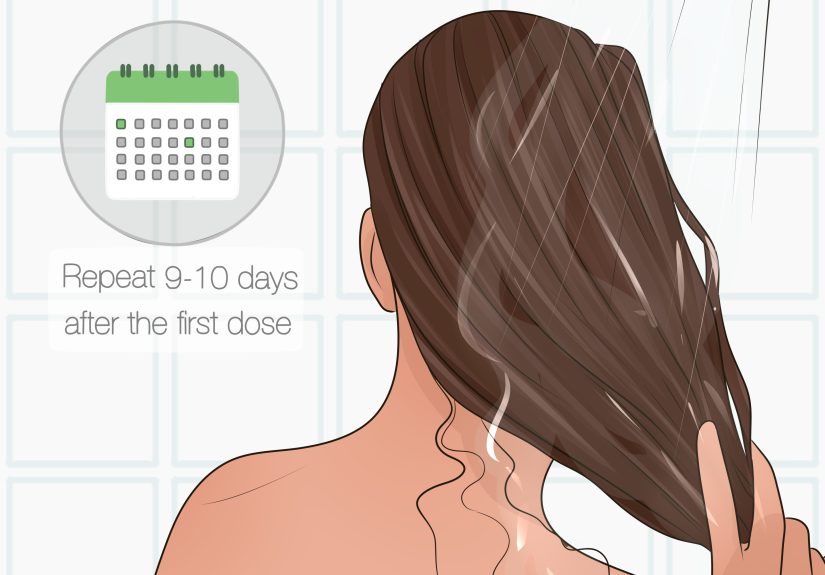
Step 5: Repeat treatment on the right schedule (because eggs are stubborn)
Many lice treatments don’t reliably kill every egg, which is why repeat treatment is common. Eggs can hatch after the first treatment,
and newly hatched lice need to be removed before they mature and lay more eggs.
A simple schedule you can stick to
- Day 0: Treat (tea tree product or wet combing plan), then comb thoroughly
- Days 2–3: Comb and check
- Days 5–6: Comb and check
- Day 7–10: Repeat per product directions or continue combing cycle
- Continue: Check/comb every 2–3 days for 2–3 weeks
If you’re seeing live lice after you’ve followed directions carefully (and repeated appropriately), that’s the moment to consider
switching strategiesoften to a proven non-insecticidal option or a prescription treatment recommended by a clinician.
Step 6: Clean your environmentwithout going full hazmat
Lice mainly spread through head-to-head contact. They don’t live long away from the scalp, and you typically don’t need to
deep-clean your entire home like you’re preparing for a museum inspection.
Do this (it’s enough)
- Wash and dry bedding/clothes used in the previous 48 hours on hot settings.
- Soak combs/brushes in hot water for several minutes.
- Vacuum the couch/chairs where heads rest (simple vacuuming is fine).
- Seal non-washables in a bag for a couple of weeks if you’re worried.
Skip this (it’s either unnecessary or risky)
- Foggers and fumigant sprays (they can be toxic and aren’t needed)
- Hours of scrubbing walls and floors (lice are not running a side hustle on your baseboards)
Step 7: Prevent reinfestation (the part everyone forgets)
Many “treatment failures” are actually reinfestationsomeone close still has lice, or hair-to-hair contact keeps happening.
The goal is to break the cycle without turning into the Hair Police.
Smart prevention moves
- Check close household members the same day you discover lice.
- Teach kids to avoid head-to-head contact during outbreaks (selfies can wait).
- Put long hair in braids or a bun for a couple of weeks.
- Avoid sharing brushes, hats, and hair accessoriesespecially at sleepovers.
Also worth saying out loud: lice are not a hygiene issue. Lice like clean hair, dirty hair, fancy hair, messy hairlice are not picky.
When to skip tea tree oil and call a professional
Tea tree oil isn’t the right move for everyone. Consider medical guidance if:
- Your child is very young or has sensitive skin conditions
- You see signs of infection (oozing, crusting, increasing pain)
- There are repeated infestations despite correct, consistent treatment
- Someone has a history of allergic reactions to essential oils
- You’re not sure it’s lice (diagnosis matters more than product hopping)
Clinicians can recommend options like dimethicone-based treatments, benzyl alcohol, topical ivermectin, spinosad, or other approaches depending on age and situation.
Common myths (so you don’t waste a weekend)
Myth: “If I remove every nit once, we’re done.”
Reality: you may need repeated combing and follow-up checks because new lice can hatch if eggs survived the first round.
Myth: “Lice jump from kid to kid like tiny athletes.”
Reality: lice crawl; they spread mainly through close head contact.
Myth: “If I use enough oil, I can smother them all.”
Reality: suffocation-style methods aren’t reliably effective across the board, and heavy oils can irritate skin and make combing harder.
Key takeaways
- Tea tree oil may help, but evidence is limited and it’s not a top first-line recommendationespecially for kids.
- The best “natural” foundation is wet combing on a consistent schedule.
- If you use tea tree oil, favor properly formulated products and prioritize safety.
- Prevent reinfestation by checking close contacts and focusing on head-to-head exposure.
- If repeated attempts fail, shift to proven alternatives or prescription options with professional guidance.
Real-life experiences : what people run into when using tea tree oil for lice
If you’ve never dealt with lice before, the first experience can feel weirdly emotional. People often report a mix of
disbelief (“No waythat’s lint”) and instant urgency (“Cancel everything, we live here now”). That’s normal. Lice carry a
stigma they don’t deserve, and the stress can make it harder to follow a calm, repeatable plan.
One of the most common experiences is discovering that the combing is the hardest part, not the product choice.
Families often start with big confidence and a tiny comb, then realize thick hair, curls, coils, or long layers can turn
a “quick check” into a full production. The people who succeed tend to do two things: they section the hair into smaller
parts than they think they need, and they treat combing like a routine instead of a single battle.
When tea tree oil is involved, a frequent experience is scalp sensitivity. Some people love the smell; others feel like
they’re wearing a pine forest as a hat. If the mixture is too strong or applied too often, dryness and irritation can show up
especially along the hairline, behind the ears, and at the nape of the neck (exactly where you already have the most lice activity).
That irritation can create more itching, which can make people think the lice are worseeven when they’re improving.
Another very common “aha” moment: realizing that nits are sticky on purpose. People often expect eggs to slide off like dandruff.
They don’t. Nits are glued to the hair shaft, and removing them takes patience. Many families find it easier to set up a system:
a bright lamp, a towel over the shoulders, a show or playlist for the person being combed, and a timer (because without a timer,
time becomes a suggestion and everyone slowly melts).
People also report that the most frustrating part is the second week. The first treatment feels productive, but then a few days later
you spot one moving louse and your brain goes straight to, “We did nothing!” In reality, this is often just the life cycle at work:
an egg survived, it hatched, and now you need the follow-up combing/treatment to stop the next generation. The families who get
lasting results typically stick to a repeating schedule for 2–3 weekseven when they’re tired of thinking about hair.
Finally, many people learn (sometimes the hard way) that lice management is a group project. If one sibling is treated but the other
isn’t checked, lice can cycle back. If a best friend has an active infestation and there’s lots of close contact, reinfestation is possible.
Real-world success often looks like: treat the confirmed case, check close contacts, communicate calmly with school/daycare,
and then focus on consistent combing. No shame, no panic, no “burn the couch.” Just a plan.
If tea tree oil ends up being irritating or stressful, it’s okay to pivot. The goal isn’t to prove you can do a “natural” remedy.
The goal is to remove lice safely and completelyand sometimes the most “natural” choice is simply the method that’s easiest to do correctly.