Table of Contents >> Show >> Hide
- Why Glasses Break So Easily During a Move
- What You Need Before You Start Packing Glasses
- How to Pack Glasses When Moving: Step-by-Step
- How to Pack Different Types of Glasses
- The Best Box for Packing Glasses
- Common Mistakes to Avoid When Packing Glasses
- Can You Pack Glasses Without Packing Paper?
- How to Load Glasses Into the Moving Truck
- Unpacking Glasses Without Breaking Them at the Finish Line
- Final Thoughts on How to Pack Glasses When Moving
- Moving-Day Experiences: What People Learn the Hard Way About Packing Glasses
- SEO Tags
Moving is already chaotic enough without adding the sound of shattered glass to the soundtrack. If you are wondering how to pack glasses when moving, the good news is that it is not complicated. The bad news is that it does require patience, decent packing supplies, and the self-control to stop saying, “Eh, one layer of paper is probably fine.” It probably is not.
Whether you are packing everyday drinking glasses, coffee mugs, champagne flutes, or that one fancy crystal set you only use when guests come over and suddenly become a different, more elegant version of yourself, the goal is the same: protect every piece from pressure, bumps, and that one box corner that always seems to find trouble.
In this guide, you will learn the best way to pack glasses for moving, what supplies actually matter, how to wrap different types of glassware, what mistakes to avoid, and how to make unpacking far less annoying later. Let’s keep your glassware intact and your blood pressure somewhat reasonable.
Why Glasses Break So Easily During a Move
Glassware is fragile for three main reasons: it cracks under pressure, chips when pieces knock into each other, and breaks when there is too much movement inside the box. That means the safest packing method is not just about wrapping each glass. It is also about choosing the right box, cushioning the bottom, filling empty spaces, packing glasses upright, and keeping heavy weight off the top.
In other words, your glasses do not break because they are dramatic. They break because they were allowed to rattle around like maracas in the back of a moving truck.
What You Need Before You Start Packing Glasses
Before you wrap a single tumbler, gather all your supplies in one place. This makes the job faster and helps you pack consistently.
Essential packing supplies
- Small or medium sturdy moving boxes
- Dish pack boxes or glass divider boxes
- Cell dividers for separating glasses
- Packing paper
- Bubble wrap for extra-delicate pieces
- Packing tape
- Permanent marker for labels
- Soft towels or dishcloths as backup cushioning
If you can get glassware boxes with built-in dividers, great. If not, you can still pack glasses safely with regular boxes, as long as you wrap each item well and cushion the box properly. Small boxes are usually better than large ones because they are easier to carry and less likely to become dangerously heavy. A giant box full of glassware is less of a moving box and more of a terrible idea with handles.
How to Pack Glasses When Moving: Step-by-Step
1. Sort your glassware first
Start by grouping glasses by type and weight. Put everyday drinking glasses together, mugs together, stemware together, and valuable or sentimental items in their own category. This helps you choose the right amount of wrapping and stops you from mixing heavy pieces with delicate ones.
It is also a smart time to declutter. If a glass is already chipped, cracked, or suspiciously sticky no matter how often it gets washed, now may be the perfect time to part ways.
2. Reinforce the bottom of the box
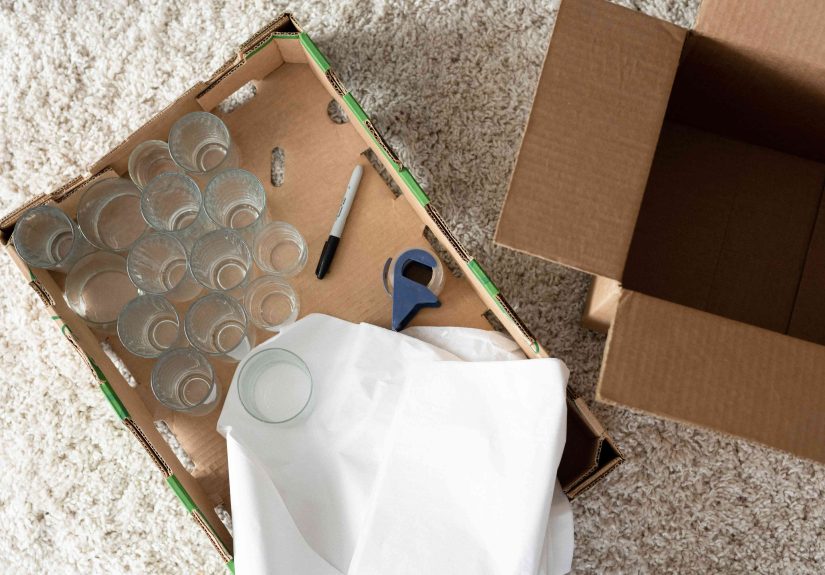
Before packing anything, tape the bottom of the box well. Use more tape than feels emotionally necessary. Then add a thick cushion layer on the bottom using crumpled packing paper, bubble wrap, or a folded towel. This shock-absorbing base helps protect the glasses if the box is set down too hard.
3. Stuff the inside of each glass
One of the most important steps in packing glassware for moving is filling the hollow center. Gently stuff each glass with crumpled packing paper. This supports the shape of the glass and gives it more resistance against pressure during transport.
Do not jam the paper in so tightly that you create stress on the glass. Think “supportive hug,” not “boa constrictor.”
4. Wrap each glass individually
Lay a sheet or two of packing paper flat on a table. Place one glass near a corner of the paper, then roll it diagonally while tucking the paper around the sides. Make sure the rim and base are fully covered. For fragile stemware, mugs with handles, or thin crystal, add a second layer of paper or bubble wrap.
If you are packing wine glasses, pay extra attention to the stem. Wrap the stem separately before wrapping the whole piece. If you are packing mugs, protect the handle with extra paper so it does not become the first casualty of moving day.
5. Place glasses upright in the box
This surprises some people, but glasses should usually be packed upright, not laid on their sides. Standing them upright helps distribute pressure more evenly and reduces the risk of cracks. Place heavier, sturdier glasses on the bottom of the box and lighter, more delicate pieces on top.
If you are using cell dividers, place one wrapped glass in each section. If you are not using dividers, arrange the glasses snugly and use plenty of crumpled paper between them so they do not touch.
6. Fill all empty space
Once the box is partially or fully packed, fill every gap with crumpled packing paper, bubble wrap, or soft linens. Empty space is the enemy. If the glasses can shift, they can collide. If they can collide, they can break. This is not optimism versus pessimism. This is physics.
7. Add a top cushion layer
Before sealing the box, add another thick layer of padding across the top. This creates a protective buffer when boxes are stacked nearby or when the box lid flexes during the move.
8. Seal and label the box clearly
Tape the box shut securely and label it with clear wording such as:
- FRAGILE
- GLASSES
- THIS SIDE UP
- KITCHEN
Use arrows to show upright direction. This does not guarantee everyone will treat the box like a museum artifact, but it improves your odds.
How to Pack Different Types of Glasses
Everyday drinking glasses
These are generally sturdier than fine crystal, but they still need individual wrapping. Stuff the inside, wrap once or twice, and place them upright. If they are thick glass tumblers, they can go near the bottom of the box.
Wine glasses and champagne flutes
These need extra care because of thin rims and fragile stems. Wrap the stem separately first, then wrap the entire glass. Use dividers if possible, and never let stemware touch other pieces inside the box.
Coffee mugs
Mugs are often thicker, but their handles are vulnerable. Add extra padding around each handle and avoid placing anything heavy against it. Pack mugs upright and keep them snug with packing paper around the sides.
Crystal and sentimental glassware
For expensive or sentimental items, double-wrap every piece and consider double-boxing. That means packing wrapped glasses in a smaller box, then placing that box inside a larger box with cushioning all around it. It is a little more work, but far less painful than explaining why Grandma’s crystal goblet did not survive the trip.
The Best Box for Packing Glasses
The best moving boxes for glassware are small, sturdy boxes designed for fragile kitchen items. A dish pack box or glass pack kit with dividers is ideal because it separates each item and reduces contact. Divider boxes are especially helpful for stemware, thin glasses, and mixed glassware collections.
If specialty boxes are not available, use a strong small box and create your own separation with lots of paper, cardboard inserts, or clean kitchen towels. You can also ask wine and liquor stores if they have sturdy sectioned boxes available. That is one of the rare times moving advice and budget advice shake hands and agree on something.
Common Mistakes to Avoid When Packing Glasses
Using oversized boxes
Bigger is not better here. Large boxes get heavy fast and increase the risk of dropping, crushing, or rough handling.
Skipping the paper inside the glass
Wrapping the outside is not enough. Interior support matters, especially for thin glassware.
Letting glasses touch each other
Even well-wrapped items can chip if they knock together. Use dividers or enough filler to stop movement completely.
Laying glasses flat
For most glassware, upright packing is safer and more stable during transit.
Overpacking one box
A box that is too heavy is harder to carry and more likely to get dropped. Spread the load across multiple boxes instead.
Forgetting loading strategy
Even perfectly packed glasses can be damaged if the box is crushed in the truck. Keep fragile boxes low and stable, and never stack heavy items on top of them.
Can You Pack Glasses Without Packing Paper?
Yes, but it is not your first choice. If you run out of packing paper, use clean dish towels, soft T-shirts, cloth napkins, or bubble wrap. These alternatives can work well, especially for sturdy everyday glasses. Just make sure the wrapping is thick enough, the inside of each glass is still supported, and the box has enough filler to prevent movement.
Newspaper can be tempting, but it may leave ink marks on some items. If you use it as an outer layer, make sure cleaner material is wrapped directly against the glass first.
How to Load Glasses Into the Moving Truck
Packing the box correctly is only half the job. Once the boxes are ready, load them carefully into the moving truck or container.
- Keep glassware boxes upright at all times.
- Place them on a flat, stable surface near the floor.
- Do not put heavy boxes, furniture, or appliances on top.
- Wedge them securely so they do not slide around during transit.
- Unload fragile boxes early so they are not buried under everything else.
If you are moving by car, place fragile boxes where they will not tip over, such as the floor behind a seat or in a flat section of the trunk. Seat belts for boxes may feel dramatic, but honestly, sometimes drama is appropriate.
Unpacking Glasses Without Breaking Them at the Finish Line
After the move, unpack glassware sooner rather than later. Boxes of fragile kitchen items are not the kind of mystery surprise you want to rediscover three months later.
Set the box on a counter or table, open it carefully, and remove the top padding first. Take out one glass at a time. Check for cracks before placing items into cabinets. Save usable packing paper and bubble wrap for future storage or the next move, because apparently adulthood is just rotating the same boxes through different zip codes.
Final Thoughts on How to Pack Glasses When Moving
The best way to pack glasses when moving is simple: use a sturdy box, cushion the bottom, stuff the inside of each glass, wrap every piece individually, pack them upright, fill all empty space, and label the box clearly. That method works for everyday drinkware, wine glasses, mugs, and delicate crystal alike.
Yes, it takes longer than tossing everything into one box and hoping for the best. But hope is not bubble wrap, and wishful thinking is not a cell divider. A little extra effort now can save money, stress, and the heartbreak of opening a box full of glittering sadness later.
If you remember only one thing, let it be this: glasses break when they move too much or get crushed. Stop those two problems, and you are already most of the way to a safer move.
Moving-Day Experiences: What People Learn the Hard Way About Packing Glasses
Ask almost anyone who has moved more than once, and they will tell you that packing glasses looks easy right up until it is not. The first time around, people often underestimate how much wrapping fragile items really need. A common experience is assuming sturdy tumblers can handle a little bumping around because they seem durable in the kitchen. Then moving day happens, the truck hits a few potholes, and suddenly two favorite water glasses have turned into a cautionary tale. What feels “good enough” in the living room rarely feels good enough after three hours on the road.
Another frequent lesson comes from rushing. People often leave the kitchen for last because it feels messy and time-consuming, and glasses are usually still in use right up until the final day. That creates a perfect storm: less time, less patience, and more temptation to throw items into the nearest box with a towel and a prayer. In real moving situations, this is where breakage usually starts. The most successful packers are rarely the fastest. They are the ones who build in time, work in small batches, and wrap each glass the same careful way every single time.
There is also the experience of realizing that labeling matters more than expected. Many people assume they will remember which box has the fragile glassware in it. Then the boxes all look alike, a helpful friend stacks a heavy appliance box on top, and things go sideways. People who have had smooth moves often say the same thing afterward: clear labels made a bigger difference than they thought. “Fragile” is helpful, but “Fragile – Glasses – This Side Up – Kitchen” is much better. Specific beats vague every time.
One of the most useful real-world observations is that mixed boxes tend to create problems. When glasses are packed alongside random kitchen gadgets, candles, or pantry containers, the box becomes harder to balance and easier to overload. People who have learned this the hard way usually switch to packing like with like. Glasses go with glasses. Mugs go with mugs. Delicate stemware gets its own protected space. That approach makes unpacking easier too, which matters a lot when you are standing in a new kitchen surrounded by boxes and questioning all your life choices.
Finally, experienced movers often say the emotional value of glassware sneaks up on you. Maybe it is not the pricey crystal that worries you most. Maybe it is the coffee mug from your first apartment, the pint glass from a favorite trip, or the set of juice glasses your mom always used on holidays. Packing those items carefully is not just about avoiding replacement costs. It is about protecting small routines and memories that make a new place feel familiar. That is why taking extra time with glassware is never wasted effort. On moving day, intact glasses do more than survive the trip. They help your new house start feeling like home a little faster.