Table of Contents >> Show >> Hide
- Before You Start: Know What Vinyl Siding Really Needs
- Tools and Materials You Will Want Nearby
- 13 Perfect Tips for Installing Vinyl Siding
- 1. Start with a flat, dry, nailable wall
- 2. Install the weather barrier and flashing first
- 3. Snap a perfectly level chalk line
- 4. Shim the starter strip if the wall is uneven
- 5. Hang corner posts and trim pieces loosely, not tightly
- 6. Use the right fasteners in the right place
- 7. Nail in the center of the slot and leave the panel loose
- 8. Leave expansion gaps at ends and around openings
- 9. Lock each panel fully, but do not stretch it upward
- 10. Plan your lap direction and stagger your seams
- 11. Treat windows and doors like the detail work they are
- 12. Do not face-nail unless the system truly requires it
- 13. Finish the top course neatly and inspect the whole wall for movement
- Common Vinyl Siding Mistakes to Avoid
- Is Vinyl Siding a Good DIY Project?
- Conclusion
- Real-World Experience: What Installing Vinyl Siding Actually Feels Like
Vinyl siding has a reputation for being the “easy” exterior cladding. That is only half true. It is easier to handle than many heavier materials, and it can absolutely reward a careful DIYer with crisp curb appeal. But it also has one giant personality trait: it loves to move. Heat, cold, sun, shade, and seasonal swings all make vinyl expand and contract. If you install it too tightly, it will protest by buckling, rattling, warping, or looking like it got dressed in the dark.
That is why learning how to install vinyl siding is less about brute strength and more about respecting the rules. You need a flat wall, solid prep, correct flashing, straight starter strips, and enough breathing room for every panel to slide just a little. Think of it as building a handsome rain jacket for your house. Stylish? Yes. Forgiving? Not always.
This guide breaks the process down into 13 practical tips that make vinyl siding installation cleaner, smarter, and a whole lot less frustrating. Whether you are re-siding a shed, updating a garage, or tackling a full house, these tips will help you avoid the classic mistakes that turn a good-looking project into a call-back nightmare.
Before You Start: Know What Vinyl Siding Really Needs
Before the first panel goes up, remember this: vinyl siding is not your water barrier. It is your cladding. The wall behind it still needs proper weather protection. That means a smooth, nailable surface, a water-resistive barrier such as house wrap where required, and properly integrated flashing around windows, doors, corners, and penetrations.
You should also know that this is not a “maybe I can finish before lunch” project. A quality vinyl siding installation takes planning, measuring, staging, and patience. You are not just snapping panels together. You are building an exterior system that needs to look good from the street and perform well in wind, rain, and temperature swings.
Tools and Materials You Will Want Nearby
- Vinyl siding panels and matching accessories
- Starter strips, J-channel, utility trim, inside and outside corner posts
- House wrap and flashing tape, if needed for your assembly
- Corrosion-resistant nails or approved fasteners
- Hammer or appropriate nailer set carefully
- Utility knife, tin snips, and a measuring tape
- Level or laser level and chalk line
- Zip tool, snap-lock punch, and nail-hole slot punch
- Ladder, scaffolding, safety glasses, and gloves
Now, let’s get to the good stuff: the 13 tips that separate a smooth install from an exterior comedy of errors.
13 Perfect Tips for Installing Vinyl Siding
1. Start with a flat, dry, nailable wall
If the wall underneath is wavy, the siding will not magically become straight out of politeness. Vinyl follows the surface beneath it. Check the sheathing, framing, and any existing substrate for bows, proud edges, soft spots, and moisture damage. Replace anything rotten, shim low spots, and make sure the wall is reasonably flat before you begin.
This is the unglamorous part of the job, but it matters the most. Beautiful siding over a bad wall is like wearing a tuxedo over a twisted ankle. Something is still off, and everybody can tell.
2. Install the weather barrier and flashing first
One of the biggest rookie mistakes is treating siding like waterproof armor. It is not. Proper house wrap or another approved water-resistive barrier should go on before the siding, and window and door flashing should be integrated correctly so water is directed outward, not into the wall cavity.
This step is especially important around windows, doors, hose bibs, vents, and ledger connections. If water gets behind the siding, the wall assembly needs a clean path to shed it. Do not skip this just because the siding itself looks weather-ready. Looks can be deceiving, and water is extremely good at finding your optimism.
3. Snap a perfectly level chalk line
The starter strip sets the tone for everything above it. If it is off, every course that follows will broadcast the mistake to the neighborhood. Find the lowest point of the wall, measure carefully, and snap a level chalk line around the installation area.
Take your time here. Re-check it. Then check it again like a mildly suspicious detective. A starter strip that begins level gives your first course a fair chance, and that first course controls the visual success of the whole wall.
4. Shim the starter strip if the wall is uneven
Even when your chalk line is perfect, the wall surface may not be. If the substrate dips or swells, shim the starter strip as needed so it stays straight and supported. A loose, sagging, or wavy starter strip means a wavy installation later, and the siding will not hide it.
Think of the starter strip like the first row of tile or the first shelf bracket in a closet. If the base is wrong, the rest of the work spends its life trying to apologize for it.
5. Hang corner posts and trim pieces loosely, not tightly
Inside corners, outside corners, and J-channel all need room to move. These parts should be secured according to the product instructions, but not pinned so tight that they cannot expand and contract. On vertical accessories, the usual technique is to anchor near the top and allow the rest of the fasteners to sit in the slots so the piece can move.
Also watch your spacing at the top and bottom. Many installation details require clearance near the eaves and below the starter strip. Ignore that, and the trim can bind when temperatures change.
6. Use the right fasteners in the right place
Vinyl siding is picky about fasteners, and for good reason. Use corrosion-resistant nails, screws, or other approved fasteners that match the manufacturer’s instructions and penetrate the framing or acceptable substrate properly. Cheap shortcuts here can lead to rust stains, loose panels, or panels that cannot move correctly.
Fastener placement matters, too. Nails should typically go through the nailing hem, not through the face of the siding. If you need extra help reaching a nailable surface, use a slot punch instead of improvising with “creative” holes that look like they were negotiated with a screwdriver and bad intentions.
7. Nail in the center of the slot and leave the panel loose
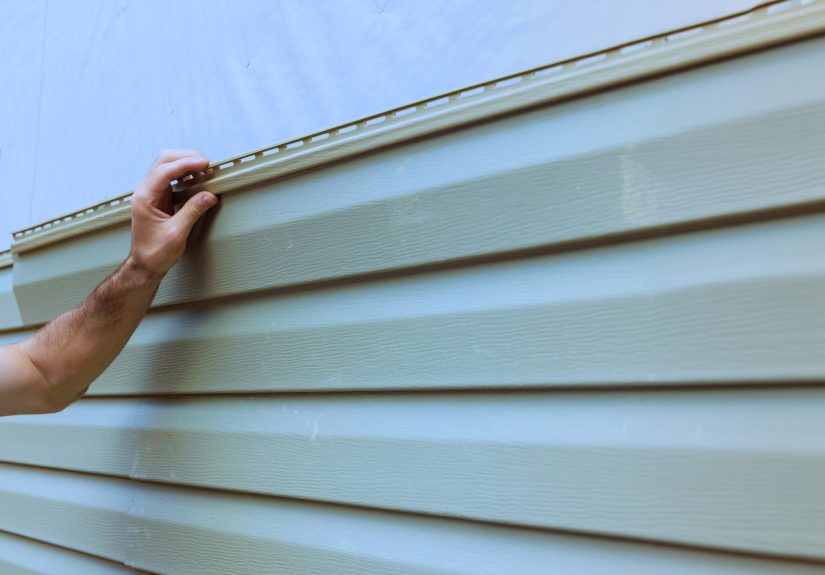
This is the golden rule of vinyl siding installation. Fasten in the center of the nailing slots, and do not drive the fastener head tight against the panel. The siding needs a tiny amount of play so it can slide as temperatures change.
If you nail it tight, the panels cannot move. Then the sun comes out, the vinyl expands, and suddenly your wall develops ripples that resemble a potato chip having an emotional crisis. After fastening, each panel should still be able to move slightly side to side.
8. Leave expansion gaps at ends and around openings
Vinyl expands and contracts more than many first-time installers expect. That is why you need clearance where panels meet corner posts, J-channel, and other stops. Exact measurements vary by manufacturer, profile, and temperature, but standard guidance often calls for about a quarter inch of gap, with more allowance in colder weather.
The big lesson is simple: do not jam panels hard into trim. Leave room. Vinyl is not being lazy. It is preparing for July.
9. Lock each panel fully, but do not stretch it upward
Each course should be properly engaged with the one below it before fastening. Apply enough upward pressure to make sure the lock is seated, but do not yank the panel tight from the top while nailing. That can preload the panel with tension, and tension is one of the fastest ways to invite distortion later.
A properly locked panel sits naturally. A stretched panel looks fine for five minutes and then spends the next few years regretting your enthusiasm.
10. Plan your lap direction and stagger your seams
Vinyl siding overlaps are normal, but they should not look chaotic. For the best appearance, plan the layout so laps face away from common lines of sight. On front elevations, many installers work from corners toward the main entry so laps are less obvious. On side walls, working from back to front can keep the finished look cleaner.
Also stagger seams so they do not stack into a stair-step pattern. Concentrated lap joints draw the eye immediately. Spread them out, balance them visually, and use longer panels strategically where they will reduce seam clutter.
11. Treat windows and doors like the detail work they are
Most ugly siding jobs are not ugly because of the field panels. They are ugly because the installer got casual around openings. Windows and doors need accurate measuring, correct J-channel or receiving trim, clean cutouts, and proper clearance at both ends of the panel.
Under-window areas deserve extra attention. You will often need to notch and trim the panel, then use utility trim or undersill trim to secure the cut edge neatly. Measure twice, cut once, and test-fit before you commit. This is not a place for guesswork unless your design goal is “barn finds meet modern confusion.”
12. Do not face-nail unless the system truly requires it
Face-nailing vinyl siding is usually a last resort, not a lifestyle. If the installation detail calls for a finished top course, use the correct accessory pieces and punches to create a secure, clean termination. Randomly shooting nails through visible siding is a fast way to damage the panel and create stress points.
When special conditions require a modified fastening method, use the accessory tools made for the job, such as a snap-lock punch or slot punch. Vinyl siding rewards people who use purpose-built tools and punishes people who say things like, “Eh, close enough.”
13. Finish the top course neatly and inspect the whole wall for movement
The final course is where craftsmanship shows up in broad daylight. Your top termination should look clean, lock correctly, and sit flat without being forced. Once the wall is complete, go back and inspect every section. Tug lightly at courses to make sure they can still move a bit, confirm that trim pieces are straight, and look for overdriven fasteners, tight ends, or awkward lap placement.
A good final inspection catches small problems before they become warm-weather buckle drama. If a panel cannot move, fix it now. Future you deserves fewer surprises and more compliments.
Common Vinyl Siding Mistakes to Avoid
- Nailing panels too tight
- Skipping house wrap or sloppy flashing details
- Starting from an unlevel line
- Ignoring expansion clearance at trim and corners
- Letting seams stack in obvious patterns
- Forcing panels upward under tension
- Trying to “fix” bad cuts with caulk everywhere
- Face-nailing where proper trim would solve the problem
Is Vinyl Siding a Good DIY Project?
Yes, but with a realistic asterisk. A shed, workshop, or detached garage is a great place to learn. A whole-house re-side is absolutely possible for a skilled DIYer, but it is still an advanced exterior project. You need comfort with ladders, weatherproofing details, layout, accurate cutting, and the discipline to follow the manufacturer’s instructions for the exact product in your hands.
If the house has lots of dormers, tall walls, tricky transitions, or extensive moisture damage, hiring a pro may be the smartest move. Saving money is wonderful. So is not discovering in August that your “weekend upgrade” has started to impersonate lasagna.
Conclusion
If you want to know how to install vinyl siding the right way, the answer is not speed. It is control. Prep the wall. Protect it with the right barrier and flashing. Keep everything level. Give the vinyl room to move. Use the right trim, the right fasteners, and the right tools. Then step back, inspect the details, and enjoy a finished exterior that looks sharp without acting dramatic every time the temperature changes.
The best vinyl siding jobs look effortless, but they are built on a hundred smart little decisions. Follow these 13 tips, and your installation has a much better chance of looking clean, lasting longer, and staying flat enough to make the neighbors suspicious that you secretly hired a pro.
Real-World Experience: What Installing Vinyl Siding Actually Feels Like
Anyone can read a product guide and understand the basic sequence of installing vinyl siding. The real education starts when you are on a ladder with a tape measure in one hand, a panel in the other, and a sudden realization that walls are rarely as square as they pretend to be. In real projects, the first surprise is usually how much prep affects everything. A wall that seemed “pretty good” from the driveway starts revealing dips, bows, and odd framing decisions the second you run a level across it. That is when experienced installers slow down. They know an extra hour of prep can save a full day of fighting stubborn panels later.
Another common experience is learning that vinyl siding punishes impatience instantly. The first few courses can trick you into feeling overconfident. Snap, nail, repeat. Then you reach a window, a hose bib, or a light block, and suddenly the job becomes less like stacking panels and more like tailoring a suit. Every cut matters. Every trim piece matters. Every tiny clearance gap matters. The installers who get the best results are usually the ones who stop pretending they can eyeball everything.
Temperature also changes the mood of the job. On a cool morning, panels may feel cooperative. By afternoon, especially in direct sun, the material behaves differently. That is why pros obsess over not nailing too tight and always leaving room at ends and openings. They have seen what happens when vinyl gets trapped. A wall can look perfectly fine on installation day and then buckle later when the weather shifts. That is a humbling lesson, and it tends to stick.
There is also a visual side to the experience that only becomes obvious on the wall. Lap placement, seam staggering, and panel length choices may seem minor on paper, but they have a huge effect on curb appeal. People may not know why one siding job looks polished and another looks messy, but they can absolutely see the difference. Smart installers think ahead several courses, especially near the front of the house, because they know the eye catches repetitive seam patterns fast.
Most of all, real experience teaches respect for the small tools. A zip tool, snap-lock punch, and slot punch do not look glamorous, but they solve the exact problems that make beginners miserable. The same goes for a solid chalk line, a reliable level, and the willingness to dry-fit before fastening. Vinyl siding is often described as simple, and in a way it is. But it is only simple when the installer respects the details. That is the funny part: the project starts out looking like a battle of panels and nails, but it ends up being a lesson in patience, layout, and restraint. In other words, vinyl siding is easy right up until the moment you try to rush it.