Table of Contents >> Show >> Hide
- Step 1: Find the Upholstery Cleaning Code (Your Couch’s Secret Decoder Ring)
- Step 2: Do the “Dry Clean” First (Vacuuming Counts)
- Step 3: Spot-Test Everything (Even “Gentle” Cleaners)
- Step 4: Spot-Clean Stains the Right Way (Blot, Don’t Wrestle)
- Step 5: Deep Clean Upholstery (Without Soaking It)
- Common Upholstery Stains and What Usually Works
- Special Fabrics: Microfiber, Performance Fabric, and “Please Don’t Ruin Me” Materials
- How to Prevent Water Rings, Crunchy Patches, and Other Upholstery Tragedies
- When to Call a Professional Upholstery Cleaner
- A Simple Upholstery Cleaning Schedule (Because Future-You Deserves Nice Things)
- Quick FAQ: Upholstery Cleaning Questions People Google at 11:47 PM
- of Real-Life Upholstery Cleaning Experiences (So You Don’t Learn the Hard Way)
- Conclusion
Upholstery is basically a magnet for crumbs, pet hair, body oils, mystery smudges, and that one stain you swear “appeared overnight.” The good news: most fabric furniture can be cleaned safely at homeif you follow a few rules that keep you from turning a small spot into a sad, soggy science experiment.
This guide walks you through how to clean upholstery the smart way: how to decode the fabric tag, vacuum like you mean it, spot-clean common stains, deodorize, and deep-clean without wrecking the fibers (or your weekend).
Step 1: Find the Upholstery Cleaning Code (Your Couch’s Secret Decoder Ring)
Before you spray anything, find the care tagusually under seat cushions or along the underside of the frame. That tag often includes a cleaning code. This code matters because some fabrics handle water fine, while others treat water like a personal insult.
Common upholstery cleaning codes
- W: Water-based cleaners are safe (like upholstery shampoo or mild dish soap solution).
- S: Solvent-based cleaners only (water can cause spotting, rings, or damage).
- W/S (or S/W): Either water-based or solvent-based cleaners are okay.
- X: Vacuum/brush onlyno liquids. (Yes, it’s as dramatic as it sounds.)
No tag? You’re not doomed. You’re just promoted to “Fabric Detective.” Do a spot test in a hidden area (like the back hem) with your chosen method and let it dry fully before committing.
Step 2: Do the “Dry Clean” First (Vacuuming Counts)
Most upholstery looks dingy because of dry soildust, grit, and crumbs that grind into fibers like tiny sandpaper. If you skip vacuuming, you risk rubbing dirt deeper when you add moisture. So, start dry.
How to vacuum upholstery properly
- Remove pillows and throws.
- Use an upholstery brush attachment on cushions, arms, and the back.
- Switch to a crevice tool for seams, piping, and “cushion cracks” (where lost snacks go to retire).
- Pull off cushions and vacuum all sides and the deck underneath.
A solid maintenance target for most homes is vacuuming about once a week, especially if you have pets, kids, or a living-room popcorn economy.
Step 3: Spot-Test Everything (Even “Gentle” Cleaners)
Upholstery can react to cleaners in three annoying ways: color bleeding, texture change (hello, crunchy patch), and water rings. Always test your method in a small hidden area and check it once it’s completely dry. Wet fabric can look fine at first… then dry into regret.
Step 4: Spot-Clean Stains the Right Way (Blot, Don’t Wrestle)
The golden rule: blot, don’t rub. Rubbing pushes the stain deeper and frays fibers. Blot from the outside edge toward the center so the stain doesn’t spread like gossip.
Universal spot-clean steps
- Blot immediately with a clean white cloth or paper towel to absorb liquid.
- Lift solids with a spoon or dull knife. (Don’t mash them in like you’re making fabric salsa.)
- Apply cleaner to the cloth, not directly to the fabric, unless the product says otherwise.
- Blot gently, rotating to a clean area of the cloth as the stain transfers.
- Rinse lightly (for water-safe fabrics) by blotting with a cloth dampened with plain water.
- Dry fast with towels, airflow, and patience. Avoid soaking the padding.
DIY cleaner for “W” or “W/S” fabrics (simple and effective)
For many water-safe fabrics, a mild dish soap solution works well. Keep it gentlemore soap doesn’t mean more clean; it usually means more residue.
- Option A: A few drops (or about 1 teaspoon) of mild dish soap in warm water (use a bowl, not a bubble factory).
- Option B: For deodorizing or light grime, a mix of water + a small amount of white vinegar + a tiny amount of mild soap can help on many fabrics (still spot-test).
Use a microfiber cloth or sponge dampened and wrung out wellyour goal is “lightly damp,” not “my couch is now a wetland.”
What if the code is “S” (solvent-only)?
If your tag says S, water can create rings or discoloration. Many microfiber couches fall into this category and often respond well to rubbing alcohol (isopropyl alcohol), applied lightly and blottedagain, only after a spot test.
Safety note: ventilate the room, keep away from flames/heat, and use only the amount needed. “More” is not “better” with solvents.
If the code is “X” (no liquids)
Stick to vacuuming and gentle brushing. For spills, blot immediately with a dry cloth to absorb what you can, and consider calling a pro if a stain sets. “X” fabrics are the ones that punish improvisation.
Step 5: Deep Clean Upholstery (Without Soaking It)
Spot cleaning tackles the obvious messes. Deep cleaning targets the overall “why is it looking dull?” vibebody oils, fine soil, and odors that build up slowly.
Method 1: Low-moisture hand cleaning (best for many W / W/S fabrics)
- Vacuum thoroughly.
- Mix a mild soap solution (see above).
- Dip a sponge/cloth, wring it out very well, and wipe small sections.
- Follow with a cloth dampened with plain water to remove residue (don’t over-wet).
- Blot dry with towels and run a fan to speed drying.
Method 2: Baking soda deodorizing (a “between deep cleans” hero)
- Vacuum first.
- Sprinkle baking soda lightly over the fabric.
- Let it sit 20–30 minutes for mild odors, or longer for stronger smells (spot-test if your fabric is delicate).
- Vacuum thoroughly using an upholstery attachment.
This won’t remove every stain, but it’s fantastic for that “lived-in” smellespecially if you share your couch with pets, teenagers, or your own late-night snack decisions.
Method 3: Portable upholstery cleaner (good for families, pets, and chaos)
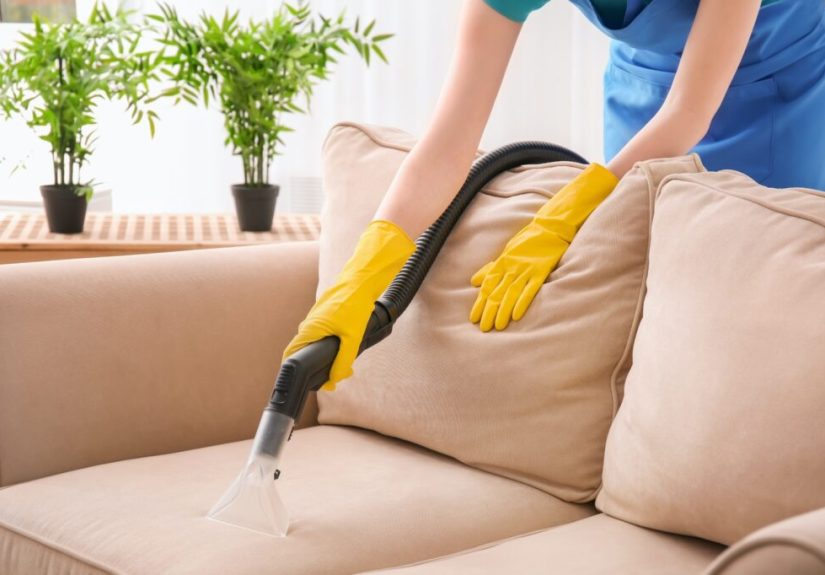
Portable extraction machines (the small “spot cleaner” types) can be helpful for recurring stains and pet accidents because they spray, agitate, and suction out dirty water. The trick is to avoid over-wetting and to do extra suction passes so the couch dries faster.
Method 4: Steam cleaning (use carefully)
Steam can loosen grime and refresh fabric, but it’s not for every material. Avoid steam on delicate fibers like silk, and keep moisture controlled. If you steam, use quick passes, don’t linger, and dry with strong airflow right after.
Common Upholstery Stains and What Usually Works
Always follow your cleaning code, and always spot-test. With that said, here are practical approaches that work for many households.
Coffee, soda, juice
- Blot immediately.
- For W/W-S fabrics: mild soap solution, blot, then blot with plain water.
- Dry quickly to prevent rings.
Grease (pizza, butter, lotion)
- Blot excess. Sprinkle an absorbent (like cornstarch or baking soda) and let it sit before vacuuming.
- Then spot-clean based on code (W or S methods).
Pet urine
- Blot as much as possible right away.
- Use an enzyme cleaner appropriate for your fabric code (many are water-based, so they’re typically for W/W-S fabrics).
- Rinse lightly (if allowed) and dry fast with airflow.
Ink
- Don’t scrub. Blot gently.
- Many solvent-safe fabrics respond better to alcohol-based blotting (spot-test first).
- For water-safe fabrics, use a specialty upholstery stain remover and follow label directions.
Makeup and food sauces
- Lift solids gently first.
- Use mild soap solution for W/W-S fabrics, blotting repeatedly.
- Rinse lightly and dry thoroughly.
Special Fabrics: Microfiber, Performance Fabric, and “Please Don’t Ruin Me” Materials
Microfiber
Microfiber is popular because it’s durable, but cleaning depends heavily on the code:
- S microfiber: Often cleaned with rubbing alcohol (light spray, blot, then brush once dry to restore texture).
- W microfiber: Mild soap solution works, but avoid water saturation to prevent marks.
- Always: Brush with a clean soft-to-medium brush after drying to lift the nap.
Outdoor/performance fabrics (example: Sunbrella-type upholstery)
Many performance fabrics are designed to handle routine cleaning with mild soap and water. A soft brush, thorough rinse, and full air-dry are key. Mold and mildew usually grow on dirt or residue rather than the fabric itselfso cleaning and rinsing matter.
Delicate natural fibers (silk, some linens, specialty wools)
These can be prone to water spotting and dye bleeding. Spot-test is non-negotiable. If you’re dealing with valuable or delicate upholstery, professional cleaning is often the safest move. When professionals spot-treat delicate fibers, they may use techniques (and even distilled water) to reduce the risk of rings and discoloration.
How to Prevent Water Rings, Crunchy Patches, and Other Upholstery Tragedies
- Use white cloths so dye doesn’t transfer to the fabric.
- Don’t oversoak. Too much moisture can wick stains outward or soak padding.
- Rinse residue (for W/W-S) because leftover soap attracts dirt like a magnet.
- Dry fast with fans and airflow. Slow drying can lead to odors or mildew.
- Work in sections and keep your method consistent to prevent uneven shading.
When to Call a Professional Upholstery Cleaner
DIY cleaning is greatuntil it isn’t. Consider professional help if:
- Your fabric code is X and the stain is noticeable.
- The upholstery is silk, antique, or high-value.
- There’s a large stain that has soaked into padding.
- You smell mustiness (possible deep moisture or mildew).
- You’ve tried twice and the stain is still laughing at you.
A Simple Upholstery Cleaning Schedule (Because Future-You Deserves Nice Things)
- Weekly: Vacuum cushions, arms, seams, and under cushions.
- Monthly: Deodorize with baking soda (if fabric-safe), rotate/fluff cushions.
- Every 6–12 months: Deep clean (low-moisture wipe-down or extraction, depending on fabric and lifestyle).
- As needed: Spot clean spills immediately (your fabric will thank you).
Quick FAQ: Upholstery Cleaning Questions People Google at 11:47 PM
Can I use vinegar on upholstery?
Often, yesif the fabric code allows water-based cleaning and you spot-test first. Vinegar is commonly used in DIY solutions for odor and grime, but too much or too strong a mix can irritate fibers or affect dyes. Mild and tested wins.
Is it okay to use hydrogen peroxide?
Hydrogen peroxide can lighten dyes and is risky on dark or delicate fabrics. If you use it, do so only on compatible materials, spot-test carefully, and follow product guidance. When in doubt, choose a fabric-safe upholstery stain remover.
How do I make my couch smell fresh without perfume?
Vacuum thoroughly (odors cling to dust), use baking soda if fabric-safe, and improve airflow. If odors persist, the smell may be in the padding, which sometimes needs extraction cleaning or professional treatment.
of Real-Life Upholstery Cleaning Experiences (So You Don’t Learn the Hard Way)
The first couch I ever “deep cleaned” taught me a lesson I still carry like a cautionary tale: the couch tag is not decorative. I ignored it, mixed a heroic bucket of suds, and went to town like I was auditioning for a cleaning commercial. The couch looked amazing… for about 20 minutes. Then it dried into a map of water rings so detailed I could’ve used it for navigation. The fix wasn’t fancyit was humility plus a redo using a properly wrung-out cloth, working in small sections, and drying with a fan so fast the cushions probably got a mild breeze-based personality.
Another time, a friend texted me “HELP” with a photo of a beige sofa and a very red wine spill. The key move was speed and restraint. We blotted like our lives depended on itno rubbing, no panic scrubbingand we kept rotating clean cloth sections so we didn’t just redeposit the stain. Because the fabric was water-safe, we used a mild soap solution, then blotted with plain water to remove residue. The real MVP was drying: towels pressed firmly (not dragged), then a box fan aimed like it was providing emergency couch ventilation. By morning, the stain was faint enough that the sofa didn’t look like it had attended a vineyard-themed crime scene.
Pet messes deserve their own chapter. I’ve dealt with the classic “why does this cushion smell like betrayal?” situation, and the biggest mistake people make is stopping after the surface looks clean. Odor often lives in the padding. When the fabric code allowed, extraction (even with a small portable cleaner) made a huge difference because it pulled out what blotting couldn’t. Enzyme cleaners helped too, but only when used correctly: enough contact time to work, then careful blotting and drying. If you rush that process, the smell tends to come back like it forgot its keys.
Microfiber taught me the value of spot-testing and brushing. After cleaning an “S” microfiber armrest with rubbing alcohol, it dried looking a little stiff. The fix was simple: once fully dry, a clean soft brush restored the texture and made it match the surrounding fabric. It’s a small step, but it turns “I cleaned it” into “you can’t tell I cleaned it,” which is basically the gold medal of upholstery care.
My overall takeaway: upholstery cleaning isn’t about aggressive scrubbingit’s about method. Know the code. Remove dry soil first. Use the gentlest effective cleaner. Blot more than you rub (ideally, never rub). Rinse residue when appropriate. And dry faster than your group chat can say, “Is the couch okay?” Do that, and your furniture will look better, last longer, and smell less like it’s secretly hosting a crumb convention.
Conclusion
Learning how to clean upholstery is mostly about doing the right things in the right order: decode the tag, vacuum thoroughly, spot-test, blot stains gently, and keep moisture under control. Add quick drying and regular maintenance, and your couch can stay fresh even if it’s the busiest seat in the whole house.