Table of Contents >> Show >> Hide
- Why the Right Tools Matter More Than a Giant Toolbox
- Best Hand Tools for Home Repair
- Best Power Tools for Home Improvement
- Safety Gear: The Tools Too Many Homeowners Skip
- How-To: Match the Right Tool to the Right Repair
- How to Build a Smart Tool Collection on a Budget
- When to Put the Tools Down and Call a Pro
- Final Thoughts
- Real-World Experience: What These Tools Taught Me the Hard Way
- SEO JSON
Every home eventually hands you a tiny crisis. A cabinet hinge loosens. A towel bar wobbles. A shelf needs hanging. A wall gets scuffed, dinged, or mysteriously attacked by furniture during “careful” moving. The good news is that most of these jobs do not require a contractor, a reality show crew, or a dramatic trip to the hardware store in pajama pants. They require the right tools.
This home repair how-to guide is all about the best home improvement tools for everyday fixes, beginner DIY projects, and the kind of maintenance that keeps your house from slowly turning into a very expensive shrug. The smartest toolkit is not the biggest one. It is the one that helps you measure accurately, cut cleanly, tighten safely, and stop guessing. Because in home repair, guessing is how you end up with three extra holes in the wall and a new appreciation for spackle.
Why the Right Tools Matter More Than a Giant Toolbox
Many homeowners make the same mistake at the beginning: they buy a bargain-bin mega kit stuffed with tools that feel suspiciously lightweight and smell faintly like regret. A better strategy is to build your kit around the tools you will actually use. Start with dependable basics, then add specialty tools as your projects grow.
The best home improvement tools do three things well: they solve common household problems, they save time, and they help you work more safely. A solid tape measure prevents expensive measuring mistakes. A good drill turns a frustrating twenty-minute task into a two-minute job. A level keeps your shelves from looking like they were installed on a pirate ship.
Best Hand Tools for Home Repair
1. Tape Measure
If home repair had a mascot, it might be the tape measure. You will use it for furniture placement, window treatments, shelves, replacement parts, appliances, picture hanging, and dozens of jobs you never saw coming. A 25-foot tape measure is usually the sweet spot for homeowners: long enough for room measurements, compact enough to live in a drawer or tool bag.
Look for one with a clear lock, easy-to-read markings, and a blade that does not curl into chaos the moment you extend it. Measuring twice is not glamorous, but it is still much cheaper than cutting once and apologizing later.
2. Screwdriver Set or Multi-Bit Screwdriver
Screws run the modern world. Cabinet hardware, outlet covers, light fixtures, toys, hinges, furniture, and random mystery panels all seem to rely on them. That makes a screwdriver set one of the true MVPs of a home repair toolkit.
A multi-bit screwdriver is a great space-saving choice for most homeowners, while a full set is helpful if you do frequent repairs. Keep Phillips and flathead sizes on hand, and do not use a too-small tip just because it is nearby. That is how screw heads get stripped and family-friendly language gets tested.
3. Claw Hammer
A claw hammer handles everything from hanging wall art to pulling stubborn nails. Choose one that feels balanced in your hand with a comfortable grip and enough heft to be useful without feeling like gym equipment. A smooth face is a smart choice for general home use because it is less likely to mark finished surfaces.
In practical terms, this is your “make it stay” and “make it come out” tool. Very few tools have that kind of range.
4. Pliers
Pliers are the problem-solvers of the toolbox. They grip, bend, pinch, hold, pull, and rescue fasteners that no longer believe in cooperation. A basic set should include slip-joint or groove-joint pliers, needle-nose pliers, and locking pliers if your budget allows.
They are especially useful for plumbing fittings, wire handling, bent nails, small hardware, and awkward jobs under sinks where your fingers suddenly become decorative rather than functional.
5. Adjustable Wrench and Hex Keys
An adjustable wrench is a must for nuts and bolts on plumbing fixtures, furniture, appliances, and assorted household hardware. It saves space and handles a wide range of fastener sizes. Add a set of hex keys, and you are ready for flat-pack furniture, towel bars, bike adjustments, and plenty of modern hardware.
This is one of those tool categories you do not appreciate until you need it. Then it becomes your best friend for an afternoon.
6. Utility Knife
A utility knife does far more than open boxes. It scores drywall, trims caulk, cuts carpet, slices paintable tape, opens packaging, and handles all the small cutting tasks that do not justify dragging out a saw. Buy one with replaceable blades and a secure locking mechanism.
A dull blade is more dangerous than a sharp one because it forces you to use more pressure. In other words, fresh blades are not a luxury. They are a peace treaty with your knuckles.
7. Level
If you plan to hang anything more advanced than optimism, you need a level. A torpedo level works well for most homeowners because it is compact, affordable, and easy to store. Use it for shelves, curtain rods, frames, cabinets, and wall-mounted accessories.
Without a level, everything can look fine until you step back. Then suddenly your carefully hung frame appears to be sliding toward another zip code.
8. Putty Knife, Caulk Tool, and Small Repair Extras
These are the quiet heroes. A putty knife helps with patching nail holes, spreading filler, scraping paint, and removing old caulk. A caulking tool makes cleanup neater and less frustrating. Toss in a flashlight, a small hardware organizer, and a stud finder, and your toolkit starts looking impressively capable.
Best Power Tools for Home Improvement
1. Cordless Drill/Driver
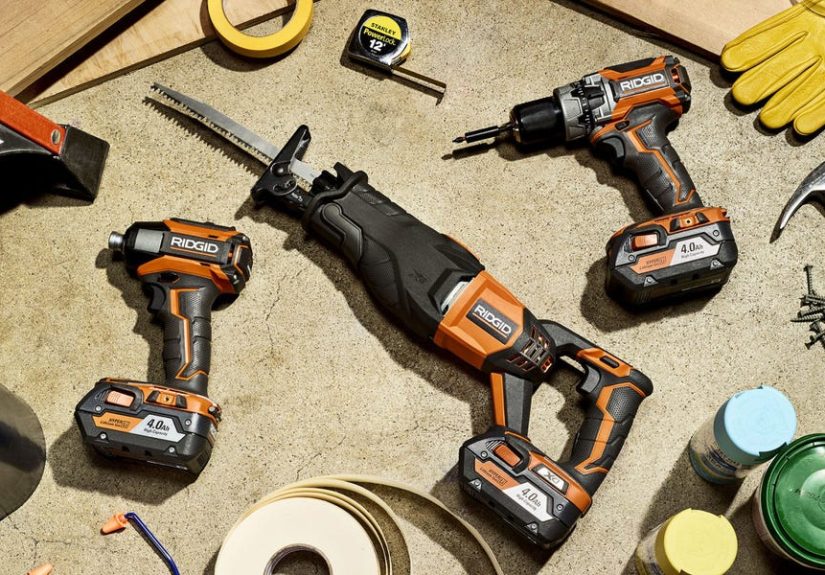
If you buy just one power tool, make it a cordless drill/driver. It drills pilot holes, drives screws, assembles furniture, installs curtain rods, mounts shelves, and speeds up almost every project. For basic home use, a compact model with adjustable clutch settings and a couple of batteries is usually perfect.
The clutch matters because it helps prevent overdriving screws and chewing up materials. That is a wonderful feature when you are working on drywall, soft wood, or anything that can be damaged by too much enthusiasm.
2. Stud Finder
Technically, this is not a power tool in the dramatic sense, but it deserves a place here because it saves walls, anchors, and nerves. A stud finder helps you locate framing behind drywall so you can mount heavier items more securely. That matters for shelves, mirrors, TVs, and anything you do not want crashing down at 2:00 a.m.
For many projects, the stud finder is the difference between “solid installation” and “well, that was a loud lesson.”
3. Oscillating Multi-Tool
This tool is a home repair Swiss Army knife. It can trim door jambs, cut drywall, scrape adhesive, remove grout, and make detailed cuts in tight spaces. If you tackle renovation work, flooring touch-ups, trim repair, or patch jobs, an oscillating multi-tool quickly earns its keep.
It is not always the first tool homeowners buy, but it often becomes the one they wonder how they lived without.
4. Circular Saw
If your projects involve lumber, shelving, basic framing, or bigger DIY upgrades, a circular saw is a strong next-level addition. It makes long, straight cuts faster than hand tools and helps with cutting plywood, boards, and trim stock. It is best for homeowners who have moved beyond hanging pictures and into “I think I can build that.”
That said, this tool demands respect. If you do not have a real need for it yet, wait. A good toolbox should grow with your skills, not sprint ahead of them.
5. Random Orbital Sander
For paint prep, furniture refinishing, patch blending, and smoothing rough wood, a random orbital sander is worth every penny. It speeds up sanding, produces a more even finish, and is much kinder to your patience than hand sanding. Pair it with the right grit sandpaper and a shop vacuum or dust control system for a cleaner result.
Safety Gear: The Tools Too Many Homeowners Skip
Safety gear is not optional garnish for your toolbox. It is part of the toolkit. At minimum, keep safety glasses, work gloves, hearing protection, and dust protection on hand. If you use power tools, inspect cords, read the manual, use the correct accessory for the tool, and avoid wet or damp conditions.
A sturdy step ladder is also essential. Do not balance on chairs, countertops, or your own confidence. Keep ladders stable, inspect them before use, and stay well away from overhead electrical lines. Home repair should improve your house, not create a new respect for urgent care.
How-To: Match the Right Tool to the Right Repair
Hanging a Shelf
You will want a tape measure, level, stud finder, drill/driver, screwdriver, and pencil. Measure the height, find the studs if possible, mark the bracket holes, level the layout, then drill and fasten carefully. This is one of the clearest examples of why layout tools matter as much as power tools.
Patching Small Wall Damage
For tiny holes and dents, use a putty knife, spackle or filler, sandpaper, and a utility knife. Clean the damaged area, apply filler smoothly, let it dry, sand flush, and repaint. If your patch looks bad at first, congratulations, you are doing DIY correctly. The second coat is where dignity returns.
Fixing Loose Cabinet Hardware
This is screwdriver territory, sometimes with a drill/driver on a low setting. Tighten the screws, check alignment with a level if needed, and replace stripped screws or wall anchors if the connection no longer holds. A multi-bit driver shines here.
Refreshing Caulk Around a Sink or Tub
Use a utility knife or caulk remover, a putty knife, cleaning supplies, painter’s tape, and a caulk gun. Remove old caulk fully, clean and dry the area, apply new caulk in a smooth bead, and tool it neatly. This is a small job that makes a bathroom or kitchen look ten years younger in about an hour.
Assembling Furniture Without Losing Your Mind
Keep hex keys, a screwdriver, a small hammer with a soft touch, pliers, and a drill/driver ready. Lay out all hardware first, avoid overtightening, and measure your space before assembly. Nothing spices up a Saturday like building a bookshelf that is one inch too wide for the wall you chose.
How to Build a Smart Tool Collection on a Budget
Buy the best version of the basics you will use constantly, then upgrade slowly. A quality hammer, tape measure, screwdriver, pliers, wrench, and drill will outperform a giant cheap kit every time. Store your tools where you can actually reach them, keep blades sharp, replace worn accessories, and clean dusty tools before they become gritty little saboteurs.
It also helps to think in project categories. If you mostly handle small indoor repairs, focus on layout tools, fastening tools, patching tools, and a drill. If you enjoy woodworking or weekend builds, then add saws, clamps, sanding tools, and better measuring gear. In other words, let your projects tell you what to buy next.
When to Put the Tools Down and Call a Pro
DIY is fantastic, but not every repair should become a personal character-building exercise. Call a professional for major electrical work, gas line issues, structural problems, roofing hazards, extensive plumbing failures, and anything that could compromise safety or code compliance. A good homeowner knows how to use tools. A great homeowner also knows when not to.
Final Thoughts
The best home improvement tools are not just objects in a box. They are what turn a homeowner into someone who can solve problems without panic-buying random gadgets at 8:45 p.m. Start with reliable hand tools, add a versatile cordless drill, invest in safety gear, and build your collection around the repairs you actually face. Home repair gets easier when your toolkit makes sense.
And once you have the right tools, the house starts feeling a little less like a list of chores and a little more like a place you can truly take care of. Also, you will finally stop using butter knives as screwdrivers, which is growth.
Real-World Experience: What These Tools Taught Me the Hard Way
The biggest lesson I learned about home repair is that the right tool almost always makes a job feel smaller. Years ago, I tried to hang a set of shelves with nothing but a cheap screwdriver, a fuzzy idea of where the studs might be, and the kind of confidence that only exists before consequences arrive. I skipped the level because I thought I could “eyeball it.” I could not. The shelves looked like they were preparing for launch. That was the day I stopped underestimating a tape measure, a level, and a stud finder.
Another memorable lesson came from a loose kitchen faucet. I crawled under the sink thinking it would be a five-minute fix, which is the official opening line of every thirty-five-minute repair. Space was tight, the nut was awkward, and my bare hands were accomplishing absolutely nothing. Once I grabbed the right pliers and an adjustable wrench, the entire job changed. What felt impossible turned into a simple sequence: grip, turn, tighten, test. The repair was not actually hard. I was just trying to do it with the wrong tools and a bad attitude.
The cordless drill changed my DIY life in the most dramatic way. Before I had one, assembling furniture felt like serving a sentence. After I got one, projects that used to eat half a day became manageable, and I stopped dreading curtain rods, cabinet hardware, and wall anchors. The key was learning that power is helpful only when control comes with it. The clutch settings mattered. Speed mattered. Pilot holes mattered. Once I stopped treating the drill like a miniature jackhammer, my work became cleaner and faster.
I also learned that safety gear is never the boring part. It is the part that lets you keep doing projects tomorrow. Safety glasses have saved me from flying debris more times than I can count, and gloves have prevented the kind of splinters that make you question all your life choices. A sturdy step ladder replaced my old habit of climbing onto chairs, which was not so much a technique as a negotiation with gravity. Even basic precautions make home repair feel more professional and far less chaotic.
What surprised me most is how much confidence comes from repetition. The first time I patched drywall, it looked like a lumpy pancake on the wall. The second time was better. The third time was actually good. Home repair rewards patience more than talent. When you have a dependable set of tools, you stop improvising so much and start learning real technique. That is when the house changes from a source of random annoyance into a place where you can steadily improve one project at a time.
So if there is any real experience-based advice I would pass along, it is this: buy fewer tools, but buy smarter ones. Learn what each tool is for. Respect safety. Measure more than you think you need to. And never trust your eyes alone when a level can settle the argument in three seconds. Your future self, your walls, and your shelves will all be grateful.