Table of Contents >> Show >> Hide
- What Is a Holter Monitor, Exactly?
- Does Medicare Cover a Holter Monitor?
- When Medicare Is Most Likely to Approve Coverage
- What Original Medicare Usually Pays
- How Medicare Advantage Changes the Picture
- What About Medigap?
- What Medicare Usually Will Not Cover
- How to Improve the Odds of Smooth Coverage
- Holter Monitor vs. Event Monitor: Why the Difference Matters
- Bottom Line
- Experiences With Holter Monitors and Medicare: What It Feels Like in Real Life
- SEO Tags
If the phrase Holter monitor sounds like a gadget from a low-budget sci-fi movie, you are not alone. In real life, though, it is much less dramatic and much more useful. A Holter monitor is a small wearable heart monitor that records your heart’s rhythm continuously, usually for 24 to 48 hours, while you go about your normal day. No cape required. No laser beams involved. Just a practical way to catch heart rhythm problems that a quick in-office ECG might miss.
For Medicare beneficiaries, the big question is not whether the device looks high-tech. It is whether Medicare will help pay for it. The good news is that Medicare often does cover Holter monitoring when it is medically necessary. The less-fun-but-important news is that coverage depends on why the test is ordered, where you get it, what kind of Medicare coverage you have, and whether your provider follows Medicare’s rules.
This guide breaks down how Holter monitors fit into Medicare coverage, what costs you may face, what Medicare Advantage changes, and how to avoid surprise bills. We will also cover what makes a Holter monitor different from longer event monitors, because heart testing has a knack for sounding simple until it very much is not.
What Is a Holter Monitor, Exactly?
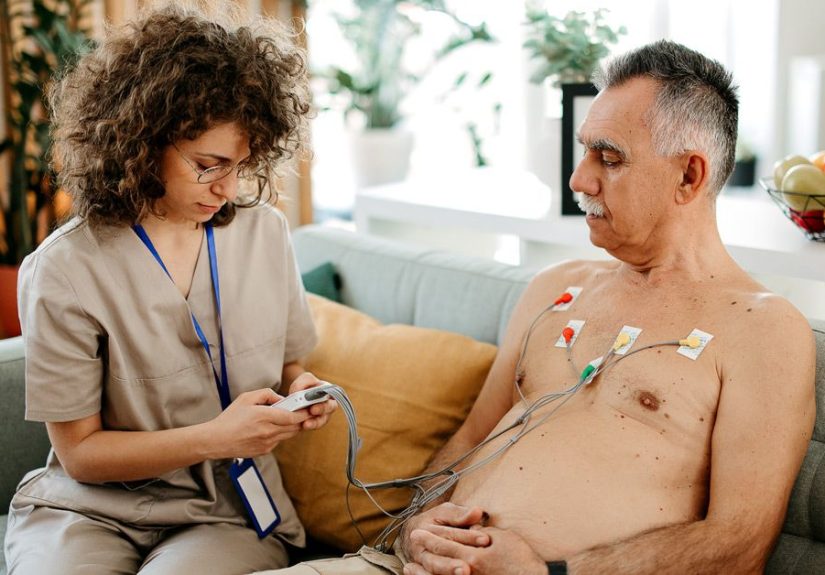
A Holter monitor is a type of ambulatory electrocardiogram, or ambulatory ECG. In plain English, that means it records your heart’s electrical activity while you are walking, sleeping, climbing stairs, folding laundry, complaining about the weather, or doing whatever a normal day throws at you.
Unlike a standard ECG, which gives your doctor a quick snapshot of your heart at one moment, a Holter monitor records continuously over a longer period. That matters because many rhythm problems are sneaky. They may show up only once in a while, then disappear right before you arrive at the clinic and sit politely on the exam table.
Doctors often order Holter monitoring when symptoms suggest a possible rhythm issue but a regular ECG does not fully explain what is going on. Common reasons include:
- Heart palpitations
- Unexplained dizziness
- Fainting or near-fainting
- Chest discomfort
- Shortness of breath
- Suspected bradycardia or other arrhythmias
- Checking how well an arrhythmia treatment or medication is working
Traditional Holter monitoring is usually best when symptoms happen daily or nearly daily. If symptoms pop up less often, a doctor may order a longer event monitor instead. Think of the Holter as the short-stay detective and the event monitor as the investigator willing to camp out longer.
Does Medicare Cover a Holter Monitor?
In many cases, yes. Under Original Medicare, Holter monitoring is generally covered through Medicare Part B when it is ordered as a medically necessary diagnostic test. Medicare Part B covers diagnostic non-laboratory tests when your provider orders them, and CMS local coverage policies for ambulatory ECG monitoring recognize Holter monitors as covered when the clinical situation supports their use.
That means Medicare is not paying just because a wearable heart device sounds helpful. Medicare is paying because your doctor has documented a medical reason to use it and the test is expected to help diagnose or manage a condition.
In practice, coverage is strongest when:
- A standard ECG, history, and physical exam did not fully explain your symptoms
- Your symptoms suggest a possible cardiac rhythm problem
- The test could change your treatment plan or help confirm a diagnosis
- The monitoring device is FDA-cleared and appropriately ordered
Medicare policies for ambulatory ECG monitoring specifically support coverage for patients with unexplained syncope, near syncope, episodic dizziness, chest pain, palpitations, shortness of breath, suspected bradycardia, nocturnal arrhythmias, atrial fibrillation rate-control assessment, antiarrhythmic medication adjustment, and evaluation after certain cardiac events or procedures. In other words, Medicare wants a clinical reason, not a curiosity purchase.
When Medicare Is Most Likely to Approve Coverage
1. You have symptoms that suggest an arrhythmia
If you have symptoms such as fluttering, racing beats, skipped beats, dizziness, fainting, or unexplained shortness of breath, a Holter monitor may be covered because it can help identify whether your heart rhythm is the culprit.
2. A standard ECG did not catch the problem
This is a classic Holter situation. Maybe your in-office ECG looked normal, but your symptoms keep showing up at home, while gardening, walking the dog, or arguing with the printer. Because arrhythmias can come and go, longer monitoring may be medically necessary.
3. Your symptoms happen daily or almost daily
Medicare coverage policies note that a 24- to 48-hour monitor is most appropriate for daily or near-daily symptoms. If your symptoms are less frequent, your doctor may choose a longer monitor instead. That distinction matters, because coverage depends not only on whether monitoring is needed, but also on which type is most appropriate.
4. Your doctor needs to evaluate treatment
A Holter monitor may also be used to see whether heart medications are working, whether rate control for atrial fibrillation is adequate, or whether treatment after an ablation or another rhythm-related intervention is doing its job.
What Original Medicare Usually Pays
If you have Original Medicare, Holter monitoring generally falls under Part B. That means your costs usually follow the standard Part B rules for diagnostic testing.
Here is the basic formula
- You must meet the annual Part B deductible
- After that, you typically pay 20% of the Medicare-approved amount for covered diagnostic non-laboratory tests performed in a doctor’s office or an independent diagnostic testing facility
- If the test is done in a hospital outpatient setting, you may also owe a hospital copayment, which can be more than 20%
For 2026, the standard Medicare Part B deductible is $283. Once you have met that deductible, Medicare generally pays 80% of the approved amount and you pay 20%, assuming the service is covered and your provider accepts assignment.
That last phrase matters. If your provider accepts assignment, they agree to take the Medicare-approved amount as full payment. That usually leaves you with the lowest out-of-pocket cost. If the provider does not accept assignment, your costs may be higher, and in some cases non-participating providers may charge up to the Medicare limiting charge.
A simple example
Let’s say your cardiologist orders a Holter monitor and the Medicare-approved amount for the service is hypothetical at $200. If you have already met your Part B deductible, your share would generally be about 20%, or $40, in a physician office or independent testing setting. If you have not met the deductible, you would first pay toward that deductible before Medicare starts sharing the cost.
That number is just an example, because actual approved amounts vary by provider, region, and setting. Still, the structure is the part that matters: deductible first, then coinsurance.
How Medicare Advantage Changes the Picture
If you are enrolled in a Medicare Advantage plan, your plan must cover all medically necessary services that Original Medicare covers. That includes medically necessary cardiac monitoring. So yes, a covered Holter monitor is still on the menu.
But Medicare Advantage plans do not have to charge you the exact same way Original Medicare does. Your plan may use:
- A flat copayment instead of 20% coinsurance
- A different coinsurance structure
- Provider networks
- Prior authorization requirements for certain services or items
This is where people get tripped up. Two beneficiaries can receive the same test and pay different amounts because one has Original Medicare and the other has a Medicare Advantage plan with its own rules. So if you have Medicare Advantage, do not assume the words “medically necessary” automatically mean “friction-free.” Check the plan’s evidence of coverage, network, and authorization rules before the test is scheduled.
What About Medigap?
If you have Original Medicare plus a Medigap policy, that supplemental coverage may help pay some or all of your out-of-pocket costs, depending on the plan you have. Medigap policies are designed to help with costs such as deductibles, copayments, and coinsurance in Original Medicare.
That means a Holter monitor that is covered by Part B may end up costing you much less if your Medigap plan picks up the Part B coinsurance. This is one reason some beneficiaries prefer Original Medicare plus Medigap for predictable access to diagnostic care. The tradeoff, of course, is that Medigap itself has a premium. Medicare is very good at reminding us that there is always a tradeoff.
What Medicare Usually Will Not Cover
Medicare is not likely to cover every heart-related gadget under the sun. A key distinction is between a doctor-ordered medical diagnostic monitor and a consumer wellness device.
For example, a smartwatch or hand-held smartphone-based ECG gadget may be useful for personal awareness, but that does not automatically make it a covered Medicare diagnostic service. CMS local policy for ambulatory ECG monitoring specifically excludes certain non-physician-prescribed hand-held, wrist-held, and smartphone-based devices from what is considered medically reasonable and necessary in that policy framework.
Coverage may also be denied when:
- The device ordered is not the right match for your symptoms
- The medical record does not document medical necessity
- The provider orders monitoring too frequently without support
- The test is performed mainly for screening without a qualifying diagnostic reason
- The provider or facility does not meet Medicare requirements
So, yes, Medicare will often help pay for the real thing. It is less interested in funding your curiosity, your gadget habit, or your impulse to turn your wrist into a cardiology lab.
How to Improve the Odds of Smooth Coverage
Get the reason for the test in writing
Ask your doctor’s office why the Holter monitor is being ordered and what symptoms or diagnosis it is meant to evaluate. A solid chart note can make all the difference.
Ask where the test will be performed
The location affects what you may owe. A hospital outpatient department can cost more than a physician office or independent testing facility.
Check whether the provider accepts assignment
With Original Medicare, using a provider who accepts assignment usually keeps your share lower and reduces billing surprises.
If you have Medicare Advantage, verify network and prior authorization
This is not the glamorous part of health care, but it is the part that saves people from administrative headaches.
Ask for an estimate
Medicare itself notes that specific amounts can depend on your other insurance, your provider’s charges, the facility type, and assignment status. Translation: ask before the electrodes go on.
Holter Monitor vs. Event Monitor: Why the Difference Matters
A lot of people use these terms like they are interchangeable. Medicare and cardiology do not. A Holter monitor usually records continuously for one to two days and is best when symptoms happen every day or close to it. An event monitor is often used for symptoms that happen less than daily and may be worn for weeks or longer.
That difference matters because a denied claim sometimes starts with an avoidable mismatch. If your symptoms happen once every two weeks, a 24-hour Holter study may simply not be the best diagnostic choice. Medicare expects the duration and type of monitoring to fit the clinical picture. In other words, the right test is not just about coverage. It is also about actually catching the problem.
Bottom Line
Medicare usually covers Holter monitors when they are ordered as medically necessary diagnostic tests under Part B. If you have Original Medicare, you will generally owe the Part B deductible first and then 20% of the Medicare-approved amount, though the setting and assignment status can affect the final bill. If you have Medicare Advantage, coverage still exists for medically necessary care, but plan rules, networks, and prior authorization may shape the process and your cost.
The biggest takeaway is simple: a Holter monitor is not just a wearable gadget. It is a formal diagnostic test, and Medicare coverage depends on documented medical need. When the symptoms, documentation, and device choice all line up, coverage is usually straightforward. When they do not, the billing experience can become its own kind of arrhythmia.
Experiences With Holter Monitors and Medicare: What It Feels Like in Real Life
The Medicare rulebook is one thing. Living through the process is another. For many people, the journey starts with a symptom that seems almost too minor to mention. A little flutter in the chest. A strange rush of heartbeat while carrying groceries. A dizzy spell that lasts only a minute. Many beneficiaries put these episodes in the mental drawer labeled “probably nothing,” right next to old coupons and mystery charging cords. But when the symptom keeps showing up, the doctor visit usually follows.
One common experience is frustration with the standard ECG. A patient goes to the clinic, explains that the heart feels odd at home, and then the office ECG comes back normal. It can feel ridiculous, like your heart has suddenly decided to behave because an audience is present. That is often the moment a Holter monitor enters the picture. Patients are relieved that there is another step to take, but they also worry about cost. Medicare beneficiaries especially want to know whether the test is covered before they agree to wear a recorder on their chest for two days.
Another real-world experience is how surprisingly ordinary Holter monitoring is. People expect something dramatic, but usually the appointment is quick. Electrodes go on, wires connect to a small device, instructions are given, and off you go. Then comes the funniest part: trying to live normally while being very aware that you are wearing medical equipment. You sleep carefully. You shower strategically before the device is placed. You become irrationally protective of a handful of stickers. And suddenly the symptom diary becomes important. “Palpitations at 3:12 p.m. while bringing in laundry” turns into useful clinical evidence.
For people with Original Medicare, the most stressful part is often not the test itself but the uncertainty around the bill. Did the doctor order it correctly? Was the test done in an office, a hospital outpatient department, or an independent facility? Did the provider accept assignment? These details sound boring until they affect your wallet. Beneficiaries who also have Medigap often describe the process as much less nerve-racking because they know supplemental coverage may pick up some of what Original Medicare does not. Medicare Advantage members, on the other hand, often talk about calling the plan first, checking networks, and making sure no plan rule gets in the way.
There is also the emotional side. Many patients go into Holter monitoring fearing that every skipped beat signals disaster. Others worry the test will show nothing and they will be back at square one. Both feelings are normal. Sometimes the monitor finds a clear arrhythmia and gives the cardiologist exactly what is needed to guide treatment. Sometimes it shows no dangerous rhythm problem at all, which can be reassuring in its own way. Either outcome can move the story forward.
In the end, the most common patient reaction is gratitude for clarity. A Holter monitor may not be glamorous, but it can turn vague symptoms into actionable information. And when Medicare coverage is understood ahead of time, the experience feels less like a bureaucratic maze and more like what it should be: a practical step toward figuring out what your heart is trying to say.