Table of Contents >> Show >> Hide
- Why sentimental items are so hard to sort
- Start with one question: What is this item doing for me now?
- 1. Keep the best, not the most
- 2. Create a memory box with real limits
- 3. Digitize what matters, especially paper memories
- 4. Display a few sentimental pieces on purpose
- 5. Store important originals the right way
- 6. Repurpose keepsakes into something usable
- 7. Pass items to family while the story is still alive
- 8. Donate usable items that carry memory but no longer need to stay
- 9. Let go of guilt along with the object
- When sentimental clutter may be a bigger problem
- Experiences people often have after decluttering sentimental items
- Final thoughts
Decluttering is supposed to feel like a fresh start. And sometimes it does. Sometimes it feels like sunshine, open shelves, and the sudden ability to locate your scissors without launching a household investigation. But when you hit the sentimental stuff, the whole project can screech to a halt like a shopping cart with one bad wheel.
That ticket stub from your first concert. Your grandmother’s handwritten recipe card. A baby onesie so tiny it could now fit a determined squirrel. Sentimental items are tricky because they are rarely just “things.” They are memory triggers, identity markers, and little emotional time machines. So if you have already decluttered and now you are staring at a small mountain of keepsakes wondering what on earth to do next, you are not failing. You are simply in the hardest part of the process.
The good news is that you do not have to choose between becoming a ruthless minimalist and living in a museum of your own past. There is a middle ground. The smartest approach is to keep what truly matters, preserve what is genuinely valuable, share what belongs with others, and let go of the rest in a way that feels thoughtful instead of brutal.
Why sentimental items are so hard to sort
Sentimental clutter is different from everyday clutter because the value is emotional, not practical. You are not just deciding whether to keep an object. You are deciding whether keeping the object is the best way to honor a person, a season of life, or a memory.
That is why a box of old birthday cards can feel heavier than a box of random kitchen gadgets. One holds stuff. The other holds stories. And stories are harder to toss in a donation bin without hearing your conscience whisper, “Wow, rude.”
But here is the truth that makes decluttering sentimental items easier: the memory and the object are not the same thing. The object may remind you of the moment, but it is not the moment. Once you really absorb that, it gets easier to make wiser choices about what stays and what goes.
Start with one question: What is this item doing for me now?
Before deciding what to do with a keepsake, ask what role it plays in your current life. Is it helping you remember something meaningful? Is it part of your family history? Is it beautiful enough to display? Is it useful? Or is it just sitting in a bin, quietly collecting dust and guilt?
If the item still serves a purpose, keep it in a deliberate way. If it does not, consider whether photographing it, digitizing it, passing it on, or donating it would preserve the meaning without preserving the clutter.
1. Keep the best, not the most
One of the most effective post-declutter strategies is editing down to the strongest representatives of your memories. You do not need all 47 of your child’s finger paintings to prove they were once adorable and deeply committed to using too much glitter. You may only need three or four that instantly bring back the feeling of that stage of life.
Choose sentimental items that are specific, vivid, and irreplaceable. A wedding invitation with notes on the back may matter more than a stack of generic event programs. One letter in a loved one’s handwriting can hold more emotional power than a drawer full of old paperwork.
A helpful rule
If several items tell the same story, keep the one that tells it best.
2. Create a memory box with real limits
A memory box is one of the most practical ways to handle sentimental items after decluttering, but only if it has boundaries. The phrase “I’ll just keep it in a memory box” is wonderful until you have six tubs labeled memory box and need a map to get through the garage.
Pick one container per person or one per life chapter. That could be a single archival box, a storage bin, or a deep drawer. Once the space is full, the rule is simple: something new comes in only if something else comes out.
This limit protects the meaning of the collection. It also prevents your most meaningful belongings from disappearing into a giant pile where nobody sees them, remembers them, or benefits from them.
3. Digitize what matters, especially paper memories
If your sentimental collection includes letters, children’s artwork, photos, cards, certificates, newspaper clippings, or old documents, digitizing can be a game changer. Scanning or photographing these items helps preserve the information and emotional value while reducing physical bulk.
Digitizing is especially useful when the original is fragile, duplicated, or hard to store. It is also smart for things you want to share with family. Instead of mailing the original recipe card around the country like a nervous relay race, you can create a high-quality scan and send copies to everyone.
What to digitize first
- Old family photographs
- Handwritten notes and cards
- Children’s artwork and school papers
- Programs, tickets, and travel keepsakes
- Recipes, letters, and family records
Once digitized, organize files into clearly labeled folders by person, year, or event. Back them up in at least two places, such as cloud storage and an external drive. A digital pile can still be a pile, so give your files names that Future You will actually understand.
4. Display a few sentimental pieces on purpose
Not every keepsake belongs in storage. Some sentimental items deserve to be seen and enjoyed. A framed note, a family quilt, a small heirloom bowl, or a few black-and-white photos can add soul to a home without making it feel crowded.
The key is curation. Choose a few meaningful pieces and display them intentionally instead of spreading sentimental items everywhere like confetti with unresolved feelings.
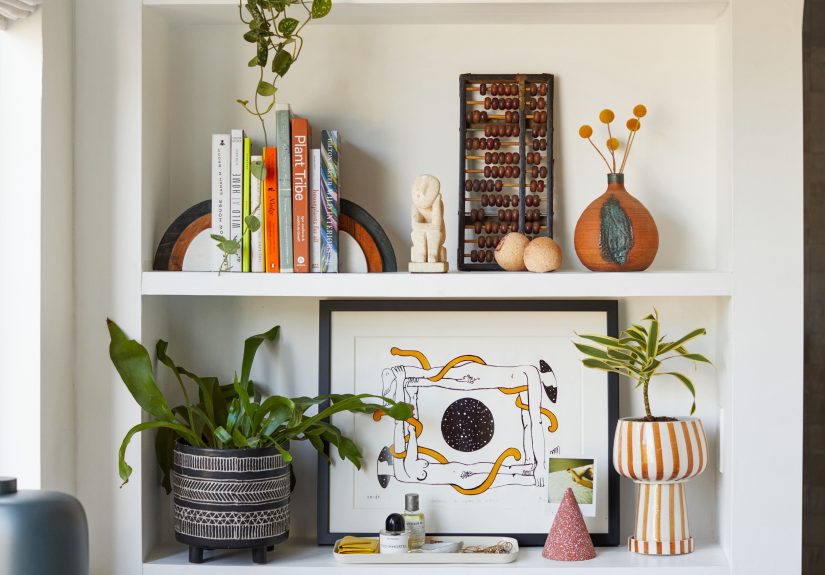
Think about creating one shelf, one wall, or one cabinet for meaningful items. This turns clutter into storytelling. It also makes your keepsakes work harder for you because they become part of daily life instead of forgotten objects in a closet.
If an original document or photo is especially delicate, display a copy and store the original safely. That way you get the beauty and the memory without risking damage.
5. Store important originals the right way
If you are keeping original sentimental items, proper storage matters. Heat, light, humidity, folding, overstuffed boxes, and dirty handling can quietly damage photos, papers, and textiles over time.
For paper items and photographs, use acid-free folders, sleeves, or boxes. Store them flat or upright without bending. Keep them in a climate-controlled area of your home, not in the attic, garage, or basement. Avoid direct sunlight and places with big temperature swings.
For fragile textiles like baby clothes, uniforms, or old linens, avoid cramming them under heavier items. Fold gently with care, or roll delicate fabric if needed. Clean hands are usually better than clumsy gloves when handling papers and photos, because you are less likely to tear something while trying to be extra precious.
Storage mistakes to avoid
- Stuffing papers into too-small boxes
- Using damaged plastic bins for delicate originals
- Leaving items in damp basements or hot attics
- Displaying originals in bright sunlight for long periods
- Saving everything but labeling nothing
6. Repurpose keepsakes into something usable
Sometimes the best thing to do with sentimental items post-declutter is not to store them at all. It is to transform them. Repurposing lets you preserve the emotional value while giving the object an active role in your life.
A few examples:
- Turn old concert tees into a quilt
- Frame recipe cards from relatives in the kitchen
- Make a photo book from children’s artwork
- Create a shadow box for military medals, baby shoes, or travel mementos
- Use fabric from a loved one’s clothing in a pillow or ornament
Repurposing works best when you choose a handful of truly meaningful items instead of trying to preserve every last thing in craft-project form. Not everything needs to become a pillow. Some things can simply become a memory and retire with dignity.
7. Pass items to family while the story is still alive
Many sentimental belongings are really family-history items in disguise. If something belongs more naturally with a sibling, cousin, child, or grandchild, consider passing it on now instead of storing it indefinitely.
This works especially well for heirlooms, letters, photo albums, or objects with a strong connection to a specific person. When you give the item, include the story. Write a note about who owned it, where it came from, and why it matters. Otherwise, future generations may lovingly inherit a mysterious spoon and no clue why everybody kept protecting it like treasure.
You can also scan documents and photos before passing the originals along. That way the history stays in the family, even if the physical item changes homes.
8. Donate usable items that carry memory but no longer need to stay
Some sentimental items are meaningful mainly because they remind you of a chapter of life, not because the object itself must remain with you forever. In those cases, donation can be a generous next step.
Clothing, books, housewares, décor, and furniture often get a second life through donation. This can feel especially good when the item still has practical value. A serving dish from a former home, a lamp from your first apartment, or a chair you associate with a loved one may continue being useful instead of sitting unseen for years.
Before donating, make sure the item is clean, usable, and accepted by the organization you choose. Good options may include local charities, thrift organizations, community centers, or specialty donation centers such as Habitat ReStore for certain home goods and building materials.
And yes, it is completely okay to take a photo before donating an item. That is not cheating. That is strategy.
9. Let go of guilt along with the object
A lot of sentimental clutter stays in our homes because of guilt. Guilt that something was expensive. Guilt that someone gave it to us. Guilt that letting it go means we did not care enough.
But keeping an item out of guilt is not the same as honoring it. In fact, guilt-based storage usually leads to neglect. The object ends up boxed, buried, and rarely appreciated. That is not a noble tribute. That is just emotional rent.
If you loved the person, appreciated the gift, or cherished the season of life it represents, then the item has already done its job. You are allowed to release it.
When sentimental clutter may be a bigger problem
If every attempt to sort sentimental items leads to intense distress, avoidance, family conflict, or rooms becoming unusable, it may help to slow down and get support. Sometimes the issue is not organization. It is grief, anxiety, or a deeper difficulty with discarding. In that case, working with a therapist, grief counselor, or professional organizer experienced with high-emotion decluttering can make the process far more manageable.
There is no shame in needing help. Sentimental items are tied to the human stuff, and the human stuff is usually the hard stuff.
Experiences people often have after decluttering sentimental items
One of the most surprising experiences people report after working through sentimental clutter is relief. Not the dramatic movie-scene kind, where they fling open the windows and laugh into the breeze, although sure, that would be nice. More often, it is a quieter relief. They stop feeling haunted by boxes they have been avoiding for years. They know what they kept. They know why they kept it. And the items that remain finally feel meaningful instead of overwhelming.
Parents often experience this with children’s keepsakes. At first, every drawing, report card, tiny shoe, and birthday hat feels untouchable. Then they sort through it and realize that a small set of items captures the whole story better than an entire closet ever could. A preschool self-portrait, one favorite stuffed animal, a handwritten Mother’s Day card with wildly inventive spelling, and a few candid photos can hold the emotional truth of childhood. What looked like downsizing at first ends up feeling more like editing a beautiful memoir.
Adults clearing out a late parent’s home often describe a different kind of experience. The task can begin with dread because every drawer seems loaded. But once they start separating legal papers from personal letters, everyday kitchen tools from actual heirlooms, and duplicate photos from one-of-a-kind pieces, the process becomes less chaotic. Many say that telling the story out loud helps. “This was Mom’s holiday platter.” “Dad used this toolbox every weekend.” The talking becomes part of the sorting. In some families, laughter shows up right next to grief, which is strangely healing.
People who digitize sentimental paper items often feel a big shift too. A box of old cards may have felt heavy and impossible when it lived on the floor of a closet. Once scanned, labeled, and saved, those same memories become accessible instead of stressful. You can revisit them when you want to, share them with family, and stop worrying that one plumbing disaster will wipe out decades of history. That sense of protection matters.
Another common experience is realizing that display beats storage. A quilt folded in a plastic bin can feel like responsibility. The same quilt draped over a chair can feel like love. A handwritten recipe tucked in a drawer can feel forgotten. Framed in the kitchen, it becomes part of everyday life. Many people discover that they do not actually want more sentimental items. They want a stronger relationship with the best ones.
There is also the experience of surprise generosity. After decluttering, people often pass along jewelry, ornaments, dishes, books, or photographs to relatives who genuinely want them. What felt heavy in one home becomes treasured in another. That transfer can be deeply comforting, especially when it happens with context. A short note, a date, a name, a story, and suddenly the handoff feels less like getting rid of something and more like continuing its life.
Of course, not every experience is peaceful right away. Some people feel shaky after donating something sentimental, even when they know it was the right choice. That feeling usually softens. What often remains is the realization that the memory did not disappear. They still remember the person. They still remember the season. The home feels calmer, and the love is still there. That may be the biggest lesson of all: when the clutter leaves, the meaning can stay.
Final thoughts
Figuring out what to do with sentimental items post-declutter is really about learning how to keep memory without keeping every object. Sometimes that means saving the original. Sometimes it means scanning it, displaying it, sharing it, repurposing it, or donating it. The best choice is the one that protects the meaning while making your home more livable.
Your keepsakes should support your life, not crowd it. So keep the treasures, preserve the fragile pieces, pass along the heirlooms, donate what can still serve someone else, and let the rest go. A meaningful home is not one that keeps everything. It is one that knows what matters.