Table of Contents >> Show >> Hide
- What Pointillism Really Means
- Why Tiny Dots Create Such a Big Impact
- From Seurat to Scratch Art
- The Patience Factor: Why Pointillism Feels Personal
- What Makes a Pointillist Piece Successful
- Why the Technique Still Feels Modern
- Specific Artistic Examples That Help Explain the Appeal
- The Experience of Looking at Going For The Winn!
- Experience and Reflection: What It Feels Like to Make and Live With Pointillist Art
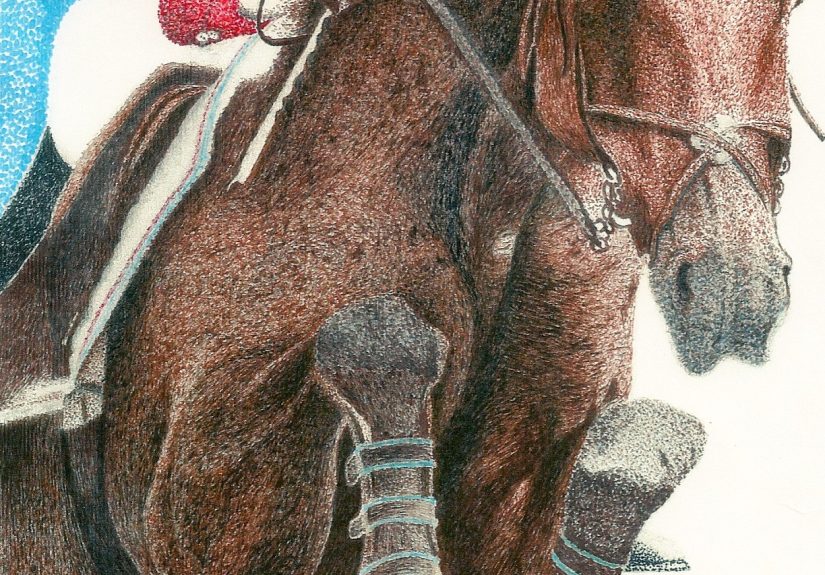
Some artworks whisper. Some shout. And some politely tap you on the shoulder with about a million tiny dots until you finally step back and say, “Oh wow.” That is the delicious magic of pointillism art. A piece like Going For The Winn! carries that exact kind of visual suspense: up close, it is discipline, patience, and microscopic decision-making; from a distance, it becomes image, mood, and surprise. It is the artistic equivalent of assembling a jigsaw puzzle one confetti-sized choice at a time.
Pointillism has fascinated viewers for well over a century because it turns small marks into big visual drama. The technique is most closely associated with Georges Seurat and Paul Signac, who helped shape the Neo-Impressionist movement in the late nineteenth century. Their idea was deceptively simple: instead of blending every color on the palette, place separate touches of color side by side and let the viewer’s eye do part of the mixing. The result is a surface that vibrates with life. In other words, it is science, patience, and artistic stubbornness having a very productive group project.
That legacy still matters today because modern artists continue to use dot-based methods to create works that feel both classic and fresh. Whether the medium is paint, pen, ink, or scratch art, the appeal remains the same. The viewer experiences two artworks at once: the close-up version made of marks, and the stepped-back version made of illusion. That double experience is exactly what makes a title like Going For The Winn! so compelling. It promises process and payoff in one breath.
What Pointillism Really Means
At its core, pointillism is a method of building an image with small, distinct dots or dot-like marks. The technique grew out of Neo-Impressionism, a movement that wanted more order and structure than the loose spontaneity often associated with Impressionism. Seurat and his circle were interested in optics, color relationships, and the way the eye perceives adjacent hues. Rather than mushing colors together into muddy compromise, they separated them. Tiny touches of blue and yellow could read as green from a distance. Red beside blue could energize a shadow. Orange next to blue could create a gorgeous visual hum.
This is where pointillism stops being merely “painting with dots” and becomes a lesson in perception. The dots are not random decoration. They are deliberate visual units. Each one helps create tone, depth, edge, and atmosphere. A skilled pointillist knows that the placement of one tiny mark can affect the balance of an entire section. That is not overdramatic. It is just the truth. In pointillism, every dot shows up to work.
Another useful distinction: people often use pointillism and divisionism interchangeably, but they are not always exact twins. Divisionism refers more broadly to separating color into individual touches for optical effect, while pointillism emphasizes the dotted application itself. Think of divisionism as the theory and pointillism as the particularly dot-happy outfit it wore to the party.
Why Tiny Dots Create Such a Big Impact
The power of pointillism technique comes from tension. Up close, the image looks fragmented. The surface seems busy, even restless. But step back, and those fragments click into unity. Suddenly the chaos organizes itself. A face appears. Fur glows. Water flickers. A background softens into atmosphere. The viewer becomes part of the mechanism, because the eye is literally helping fuse the composition.
That is one reason pointillist work feels so interactive. It changes depending on viewing distance. At a few inches away, you study the artist’s labor. At a few feet away, you receive the illusion. At several feet away, the composition often becomes even more luminous. It is almost like the artwork rewards you for moving around instead of standing there like a museum statue pretending you totally understand everything immediately.
The dot structure also gives the surface a distinctive rhythm. Unlike broad blended strokes, dots create a pulse. They can suggest shimmer, vibration, sparkle, and movement. This is especially effective in subjects involving hair, feathers, reflections, skies, grass, or textured backgrounds. Even still subjects can feel alive because the surface never goes completely dead. It is always humming with tiny visual events.
From Seurat to Scratch Art
Although pointillism is usually discussed in relation to painting, the logic of the technique travels beautifully into other media. That is where the connection to scratch art becomes especially interesting. In scratchboard, the artist works on a board coated with black ink over a white clay surface. Instead of adding dark marks onto light paper, the artist scratches away dark surface areas to reveal light beneath. It is a dramatic reversal that forces the artist to think in values, precision, and controlled texture.
Now add a pointillist mindset to that setup and things get wonderfully intense. Rather than carving long lines everywhere, the artist can build form through stippling, tiny scratches, repeated marks, and carefully distributed highlights. The effect can feel almost electric. In a dot-based scratch art piece, light does not simply appear; it emerges. Texture does not merely decorate the image; it constructs it.
That makes a lot of sense for a site like luzimmscratchart.com, which is associated with scratch art and commissioned portrait work. Pointillism and scratchboard share an important trait: both demand patience, control, and the willingness to trust a slow process. Neither medium really rewards rushing. You cannot bully a thousand dots into elegance. You have to earn it.
The Patience Factor: Why Pointillism Feels Personal
One of the reasons viewers connect so strongly with pointillist pieces is that the labor remains visible. Even when the final image looks seamless, you can still sense the hours inside it. That matters. In a world obsessed with fast results, dot art feels almost rebellious. It is proof that attention still exists.
When an artist says a work was done “a little over 4 years ago” and made from “lots of tiny dots,” the statement carries more than technical information. It carries memory. The artwork becomes a time capsule of concentration. Every tiny mark preserves a moment of decision: too dark, too light, too close together, too sparse, just right. The final piece is not only an image; it is a record of endurance.
That emotional layer helps explain why pointillist portraits, pet portraits, wildlife art, and detailed scratchboard commissions often feel so intimate. The viewer senses devotion in the surface. You cannot fake that level of care. Even people who know nothing about art history understand it instinctively. They look at the work and think, “Someone really stayed with this.” That response is powerful because it connects craft to character.
What Makes a Pointillist Piece Successful
A successful pointillism artwork is not just a technical flex. Yes, the dots matter. Yes, the precision matters. But the best pieces do more than show discipline. They organize light, value, color, and composition so that the image works at multiple distances.
1. Strong value structure
If the light and dark relationships are weak, no amount of tiny-dot heroics will save the image. Great pointillist work usually has a solid underlying structure. The dots serve that structure rather than distracting from it.
2. Smart color relationships
Pointillism sings when neighboring colors create energy. Warm and cool contrasts, complementary pairings, and subtle shifts in hue can make a surface glow instead of flatten.
3. Controlled density
Not every passage needs the same dot size or spacing. Dense areas can create focus and weight. Looser areas can breathe. Variation is part of what makes the image feel alive.
4. A readable subject
The technique should serve the image, not overshadow it. The best works make viewers admire the dots and care about what the dots have become.
Why the Technique Still Feels Modern
Pointillism may have nineteenth-century roots, but it still feels surprisingly contemporary. Part of that comes from how digital our visual culture has become. We spend our days looking at screens built from tiny units of light and color. In a funny way, pointillism trained for the pixel era long before the pixel got famous.
That resemblance gives dot-based art a fresh relevance. A pointillist work can feel handcrafted and modern at the same time. It bridges old-school discipline and contemporary visual logic. Viewers understand it both as a historical art method and as something oddly familiar. It is analog brilliance in a world that keeps zooming in.
There is also a broader cultural appeal in work that reveals process. People are drawn to behind-the-scenes effort, whether in cooking, woodworking, music production, or visual art. Pointillism makes process visible without ruining the final illusion. You get the satisfaction of the “how” and the pleasure of the “wow.” That is a rare combination.
Specific Artistic Examples That Help Explain the Appeal
Seurat’s A Sunday Afternoon on the Island of La Grande Jatte remains the most famous gateway into pointillism because it demonstrates how carefully placed dots can create atmosphere, figures, and monumental structure all at once. Paul Signac expanded the language with radiant color and maritime scenes that proved the technique could be luminous rather than stiff. Later artists such as Henri-Edmond Cross and even Henri Matisse explored Neo-Impressionist approaches in ways that loosened the method while preserving its chromatic energy.
These examples matter because they show that pointillism is not just about one visual look. It can be orderly, decorative, radiant, moody, or bold. It can describe leisure scenes, harbors, landscapes, portraits, and experiments in light. That flexibility helps explain why contemporary artists still return to dots, stippling, and broken color today. The method offers structure, but not a creative cage.
In a contemporary scratch art context, the same principle applies. A dot-based or stippled piece can evoke fur, skin, feathers, shine, atmosphere, and emotional focus with remarkable precision. The artist is still asking the eye to assemble the whole from countless parts. Only now the medium may involve scratching light out of darkness rather than laying bright pigment onto canvas. Same thrill, different toolkit.
The Experience of Looking at Going For The Winn!
The title Going For The Winn! has a cheerful confidence to it. It sounds playful, proud, and maybe just a little pun-loving, which is honestly a respectable way to approach art. Titles like this invite viewers in before the first dot even gets a chance to show off. They suggest that the piece is not just a technical exercise; it is a personal milestone, a reveal, a moment worth sharing.
Even without reducing the work to a single subject description, the title and technique tell us a great deal. We can expect an image built through persistence. We can expect visual cohesion from chaos. We can expect a surface that rewards both close inspection and distance. And we can expect the artist’s hand to remain palpable throughout the piece, because no pointillist work ever fully hides the labor that made it.
That is why a work like this can resonate online as well as in person. On the web, viewers appreciate the reveal: tiny dots becoming a recognizable image. In person, they get the richer experience of shifting distance and noticing the balance between fragmentation and unity. Either way, the technique makes people linger. And in art, lingering is a compliment.
Experience and Reflection: What It Feels Like to Make and Live With Pointillist Art
There is a special kind of relationship that forms between an artist and a pointillist piece. It does not arrive in one dramatic burst of inspiration with triumphant background music and a conveniently timed sunset. It arrives slowly, usually while the artist is wondering whether they have accidentally chosen the most time-consuming way possible to make an image. And then, dot by dot, the work begins to answer back.
At first, the process can feel almost absurd. You place a few marks and nothing seems to happen. Then you add more and still nothing seems to happen, except maybe a vague patch of tone and a suspicious desire for snacks. But eventually the image starts to gather itself. A shadow becomes believable. A highlight begins to glow. A texture appears where there used to be empty space. That is when pointillism becomes addictive. The artist realizes the smallest decisions can create surprisingly large emotional effects.
Working this way also teaches patience in a very literal sense. There is no shortcut around attention. You learn to slow down, to see tiny shifts in value, to respect negative space, and to trust that repetition is not the enemy of creativity. In fact, repetition becomes the engine of creativity. Every dot may be small, but it is not meaningless. A hundred careful marks can create softness. A thousand can create presence. Suddenly the artwork is not just about the subject anymore. It is about endurance, trust, and staying with the process long enough for the image to arrive.
And then there is the viewing experience after the piece is finished. Living with a pointillist artwork is a little like living with two artworks at once. In one mood, you stand close and admire the obsessive craftsmanship. In another, you step back and enjoy the total image. Sometimes the piece feels graphic and structured. Other times it feels atmospheric and almost alive. Lighting changes it. Distance changes it. Your mood changes it. That flexibility is part of its charm.
There is also something deeply satisfying about knowing a finished image came from thousands of tiny, unglamorous decisions. That knowledge changes the way you value the work. It becomes more than decoration. It becomes evidence of sustained attention in an age that does not always reward it. Viewers feel that, even if they cannot quite explain why. They understand that the artwork contains time. They understand that someone cared enough to keep going long after the exciting part wore off.
That may be the real beauty behind a title like Going For The Winn! It sounds celebratory, but it also hints at persistence. A pointillist piece earns its finish. It earns its clarity. It earns its drama. The final image is only the visible reward; the deeper reward is everything the process teaches along the way. Patience. Precision. Humility. Focus. And maybe a slightly improved ability to sit very still while staring at tiny dots for long stretches of time, which is either an artistic superpower or a very specific personality trait.
In the end, that is why pointillism continues to matter. It reminds us that beauty can be assembled patiently, that detail can build emotion, and that the smallest marks can carry the biggest payoff. Lots of tiny dots all put together, and this is what came up. Honestly, that is not just a description of the technique. It is a pretty good description of how meaningful art gets made in the first place.