Table of Contents >> Show >> Hide
- Why Floating Candles Are Basically Made for Valentine’s Day
- Safety First: Candle + Water Is Still Candle
- Supplies Checklist for a Floating Candle Valentine’s Centerpiece
- How to Make a Floating Candle Centerpiece Step by Step
- Build the Full Valentine’s Day Tablescape Around the Glow
- Styling Recipes: Pick Your Valentine’s Tablescape Personality
- Pro Tips for Nailing the Look (Without Overthinking It)
- Troubleshooting: Common Floating Candle Problems (And Fixes)
- Cleanup and Reuse (Because Future You Deserves Nice Things)
- Experience-Based Notes: What Hosts Learn After the First Try (Extra Insights)
- Conclusion
- SEO Tags
If Valentine’s Day had a love language, it would be candlelight. And if candlelight had a glow-up,
it would be floating candlestiny flames drifting on water like they’re starring in their own romantic
movie montage (complete with dramatic lighting and zero dialogue because… it’s a candle).
The best part: a floating candle Valentine’s Day tablescape looks fancy enough to impress your pickiest friend,
yet it’s surprisingly easy to pull off. This guide walks you through the whole vibedesign choices, step-by-step
centerpiece instructions, table-setting basics, safety must-dos, and a bunch of styling variations so you can go
“soft romance” or “moody modern” without panic-Googling at 11:47 p.m.
Why Floating Candles Are Basically Made for Valentine’s Day
A great tablescape is half beauty, half strategy. Floating candles nail both:
- They create instant ambiance with soft, reflective light that reads “romantic” without trying too hard.
- They stay low, so guests can actually see each other (crucial for dinner conversation and not just candle worship).
- They’re flexible: dress them up with flowers, fruit, greenery, or keep them minimal and modern.
- They photograph beautifullywater + flame = sparkle. Your phone will act like it suddenly attended art school.
- They’re budget-friendly compared to towering floral arrangements, especially if you reuse bowls and vases you already own.
Safety First: Candle + Water Is Still Candle
Floating candles may look calm, but fire is… enthusiastically committed to being fire. A few simple rules keep your
tablescape romantic instead of “memorable for the wrong reasons.”
Non-negotiable candle safety basics
- Never leave flames unattended. Light candles when you’re ready to enjoy themnot hours before guests arrive.
- Keep flames away from anything flammable. Think curtains, paper décor, dry florals, and dangling ribbons.
- Choose sturdy, stable containers (wide base, not tippy) and set them on a heat-safe surface or tray.
- Trim wicks to about 1/4 inch before lighting for a cleaner burn and less smoke.
- Avoid drafts (near vents, open windows, or the “someone keeps fanning the air dramatically” zone).
- Go unscented on the table. Strong fragrance can compete with food aromas and sensitive guests.
Also: keep petals and greenery far enough from the flame that they don’t flirt with ignition. Romance is great;
flirting with combustion is not.
Supplies Checklist for a Floating Candle Valentine’s Centerpiece
You don’t need a craft room the size of a small airport. Here’s what actually helps.
Core supplies
- Container: a shallow bowl, wide vase, or low compote (glass or ceramic works well)
- Floating candles: store-bought floaters or flat-bottom candles designed to float
- Water: enough to fill your container (usually 1–3 inches for bowls; more for vases)
- Tray or heat-safe base: optional, but great for protecting your table and making cleanup easier
- Lighter + wick trimmer (or small scissors)
Optional “make it Valentine’s” upgrades
- Fresh florals: roses, ranunculus, carnations, tulips, or small blooms you can float or tuck around candles
- Greenery: eucalyptus, ruscus, or soft garland (kept away from flames)
- Submerged accents: faux pearls, glass gems, or heart-shaped stones (avoid anything that could melt or leach color)
- Color: blush napkins, burgundy taper holders, gold flatware, or a ribbon detail on place cards
- Table texture: linen runner, gauze, lace, or a crisp white cloth for contrast
How to Make a Floating Candle Centerpiece Step by Step
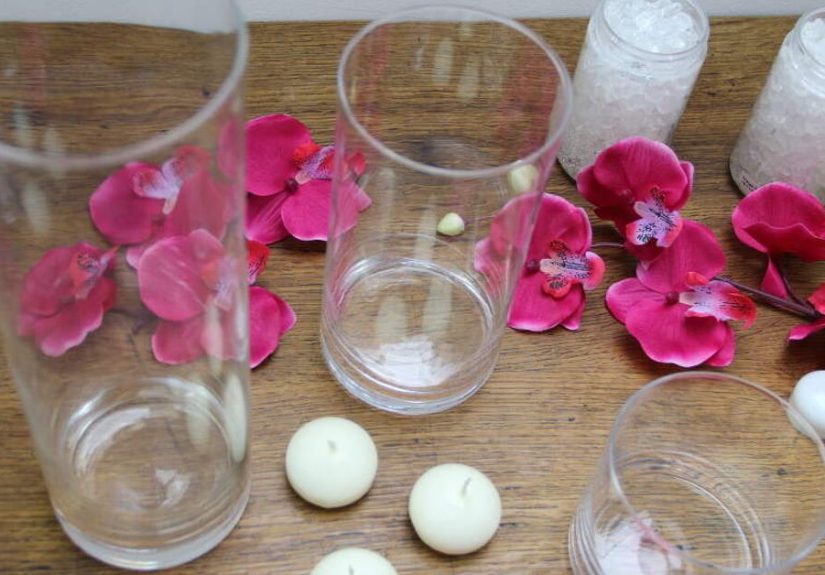
This is the “looks expensive, takes 15 minutes” portion of the program.
Step 1: Pick the right container size
Aim for a container that’s wide enough to give each candle personal space. Crowded floaters can drift together,
and then you’ve got “one big flame blob,” which is not the vibe. For a standard dining table, one medium bowl
centerpiece or two smaller bowls often looks balanced.
Step 2: Add a base layer (optional but pretty)
If you want extra sparkle, add a thin layer of glass gems, clean stones, or faux pearls. This helps the piece look
finished even in daylight, when candlelight isn’t doing all the work.
Step 3: Fill with water (leave breathing room)
Add water slowly to avoid splashing. Leave at least an inch or two at the top of a vase so nothing spills when the
table gets bumped (which it willbecause elbows have a mind of their own).
Step 4: Add florals thoughtfully
Use flower heads that can float or small stems tucked along the inside edge. Keep anything delicate away from the
flame zone. For petals, less is more: a few scattered petals look elegant; a full petal soup can look messy fast.
Step 5: Place floating candles and test spacing
Gently set candles on the surface. Make sure they’re stable and not tilting. Space them so the flames won’t be close
to petals, leaves, or décor.
Step 6: Light right before guests sit
Light candles shortly before you start dinner for peak glow and less worry. If you’re hosting, delegate the lighting
task like it’s an honorary title: “Keeper of the Flame.” (Very official. Very noble.)
Time + cost estimate
- Time: 10–20 minutes (depending on how deep you go into “just one more petal” mode)
- Cost: often $15–$45 if you’re buying candles and a few flowers; less if you shop your home first
Build the Full Valentine’s Day Tablescape Around the Glow
The centerpiece sets the mood. The tablescape makes it feel intentional. Think in layers: base, dinnerware,
textiles, accents, and lighting.
Layer 1: Your base (tablecloth or runner)
Want classic romance? Go white or blush linen. Want modern drama? Try a charcoal runner with gold accents.
If your table is beautiful wood, a simple runner down the middle can frame the centerpiece without covering everything.
Layer 2: Place settings (simple, not stressful)
A basic setting is all you need for most home dinners: plate centered, fork on the left, knife and spoon on the right,
and a glass above the knife. If you’re adding multiple courses, place utensils in the order you’ll use them
(outside moving inward). Keep napkins either left of the fork, on the plate, or under the forkwhichever looks clean
with your styling.
Layer 3: Valentine accents that don’t scream “party aisle”
- Place cards: simple handwritten names on cream cardstock with a tiny heart stamp
- Napkin detail: a ribbon tie, a sprig of eucalyptus, or a mini rosebud (kept away from flames)
- Glassware sparkle: clear glasses with a subtle ribbed texture look special without being fussy
- Metal mix: gold flatware warms up pinks and reds; matte black flatware makes everything moodier
Styling Recipes: Pick Your Valentine’s Tablescape Personality
1) Classic Blush + Red Romance
- Clear bowl + floating candles
- Blush roses (a few heads floating, the rest in bud vases)
- White plates, gold flatware, pink napkins
- Optional: a scattered line of rose petals down the runner (sparse, not carpeted)
2) Moody Modern (Yes, Valentine’s Can Wear Black)
- Dark runner (charcoal or black) + clear glass bowls
- Deep florals: burgundy, plum, or purple blooms
- Black or smoky taper holders off to the sides (keep center low)
- Gold accents for warmth so the table still feels inviting
3) Minimal + Chic (For the “I Like Romance, Not Clutter” Crowd)
- One wide shallow bowl with 3–5 floating candles
- No petalsjust a single flower head or a small greenery ring at the edge
- White plates, crisp napkins, clear glassware
- A single bold color moment (like red napkins or a berry-toned menu card)
4) Garden-Party Valentine (Soft, Fresh, and Not Too Formal)
- Mix-and-match bud vases + one floating candle bowl
- Pastel florals and light greenery
- Woven chargers or natural textures
- Handwritten notes at each place setting (tiny, sweet, low-pressure)
Pro Tips for Nailing the Look (Without Overthinking It)
Keep the centerpiece “conversation height”
If someone has to lean sideways to see the person across from them, the centerpiece is doing too much. Floating candles
are naturally lowlean into that advantage.
Use odd numbers for candles
Three or five candles often looks more organic than an even number. It’s a small trick that makes styling feel effortless.
Match your lighting temperature
Candlelight is warm. If your overhead lights are bright white, dim them if you can. Soft background lighting makes the
candle glow feel intentional instead of… confused.
Troubleshooting: Common Floating Candle Problems (And Fixes)
“My candles drift together.”
Use a wider bowl, reduce how many candles you’re floating, or create gentle “boundaries” with a sparse ring of greenery
around the outer edge (kept away from flames).
“The flame is smoky.”
Trim the wick to about 1/4 inch, avoid drafts, and make sure the candle is level. Smoke usually means wick issues or airflow.
“The water looks cloudy.”
Start with a clean container and fresh water. If you added petals too early, they can discolor the water. Add florals closer
to when guests arrive, or use sturdier blooms that hold up longer.
“Wax film is floating on the water.”
That can happen as candles burn. If it bothers you, swap in fresh water between courses (easy if you use a removable bowl)
or embrace it as “organic ambiance.” Candlelight doesn’t judge.
Cleanup and Reuse (Because Future You Deserves Nice Things)
- Let wax fully cool before removing candles.
- Scoop out petals and greenery first, then pour water out slowly.
- If wax sticks to the bowl, chill it briefly; wax often pops off more easily when cold.
- Wash with warm soapy water and dry thoroughly to prevent water spots on glass.
Experience-Based Notes: What Hosts Learn After the First Try (Extra Insights)
Let’s talk about the part no one glamorizes on social media: the real-life “hosting physics” that happens when you put
water, fire, flowers, and humans in the same zone. These notes are the difference between a centerpiece that looks perfect
for five minutes and one that stays gorgeous through appetizers, dinner, and the “wait, is it already 10 p.m.?” phase.
1) The vent draft is the silent villain. In photos, floating candles look serene. In real life, your HVAC system
might be throwing a tiny wind tantrum directly at your bowl. The result: flames that flicker aggressively, smoke, or candles
drifting like they’re trying to leave the party early. Before guests arrive, do a quick “draft check.” Stand where the
centerpiece will go, light one candle, and watch the flame. If it’s doing dramatic interpretive dance, move the bowl a foot
or two away from the airflow path. (Yes, one foot can be the difference between romance and chaos.)
2) Water level matters more than you’d think. Too much water and the bowl feels like a mini swimming pool;
too little and the candles look cramped and the reflections get weak. A sweet spot for shallow bowls is often enough water
to create shine and depth (around 1–2 inches), while still keeping the composition grounded. In taller containers, a higher
water line can look elegantjust leave headspace to prevent spills when someone reaches for the bread basket like it’s a
competitive sport.
3) Less flower material reads more expensive. It’s tempting to add a lotpetals, stems, greenery, the entire
concept of springtime. But floating candle centerpieces shine when they’re restrained. One or two flower varieties (plus a
touch of greenery) look curated and luxe. Too many petals can clump, discolor water, or drift into flame range. If you want
a lush floral moment, split it: do floating candles in bowls plus bud vases along the table. You get abundance
without crowding the fire zone.
4) Unscented candles on the table = happier eaters. Even if a scent is “romantic,” it can bulldoze the aroma of
food. A safer move: use unscented floaters for the tablescape, and if you love fragrance, place a scented candle in another
room earlier in the daythen extinguish it before dinner. That way, the home feels welcoming without turning dessert into a
guessing game of “is this vanilla, or is it the candle?”
5) Lighting timing is everything. The most common hosting mistake is lighting candles too early because you’re
excited (relatable). The better play: set everything up unlit, then light 5–10 minutes before guests sit down. This gives you
maximum burn time during the meal and keeps you from babysitting flames while you’re juggling drinks, music, and the sudden
mystery of where the serving spoon went.
6) Plan for the “someone bumped the table” moment. It will happen. Choose heavy, stable containers and keep the
centerpiece slightly away from the edge. If you’re using a runner, place the bowl on a tray or a flat, heat-safe base so it
doesn’t wobble on textured fabric. Bonus: a tray looks intentional and makes it easier to lift the whole centerpiece for
cleanup without carrying it like a glass-of-water obstacle course.
7) A backup option can still be beautiful. If you have kids, pets, or a tiny table where flames feel risky, you can
keep the floating-candle look with flameless options or by placing lit candles on a nearby sideboard while using the bowl as a
floral water feature. You still get sparkle, reflection, and romancejust with less fire-management stress.
Bottom line: a floating candle Valentine’s Day tablescape is one of the highest-impact, lowest-effort ways to transform a dinner
into an occasion. The key is simple: keep it low, keep it safe, and let the glow do the flirting for you.
Conclusion
If you want a table that feels romantic, warm, and intentionally styledwithout building a 12-foot floral sculpturefloating candles
are your best friend. Start with a sturdy bowl, add water, float a few candles, and keep accents tasteful and flame-safe.
Then layer in linens, simple place settings, and one or two Valentine details that feel like you. The result is cozy, elegant,
and memorable in the best way.