Table of Contents >> Show >> Hide
- 1. Overgrown, Overly Formal Landscaping Hugging the House
- 2. Plastic Edging and Loud, Dyed Mulch
- 3. Ornate or Mismatched Fencing and Railings
- 4. A Tired, Leaning Mailbox and Hard-to-Read House Numbers
- 5. Cluttered Yard Décor and “Novelty” Accessories
- Real-World Lessons From Updating Dated Front Yards
- Final Thoughts: Small Tweaks, Big Curb Appeal Payoff
You know that feeling when you pull into your driveway, look at your house, and think,
“Huh… something feels a little off”? It might not be your siding color or roof at all.
Designers say it’s often the small front yard details quietly sending out “I peaked in 1997”
vibes long before anyone steps through the front door.
The good news: updating a few dated front yard features can make your home look fresher,
more modern, and even boost your property value with far less effort (and money) than a full
exterior remodel. Today’s curb appeal trends lean into naturalistic plantings, simple lines,
sustainable materials, and a “less but better” mindsetso if your yard is still rocking plastic
edging and a leaning mailbox, this one’s for you.
Let’s walk through five specific front yard details that designers say are aging your home
and what to do instead for a front yard that feels current, welcoming, and intentional.
1. Overgrown, Overly Formal Landscaping Hugging the House
Once upon a time, the dream was a row of matching shrubs soldier-straight across the front
of the house. Boxwoods trimmed into perfect balls, foundation plantings lined up like they’re
waiting for roll callvery respectable, very “suburban status symbol.”
Today, those tight rows of oversized shrubs and perfectly symmetrical beds are one of the
fastest ways to make a home look dated. Overgrown foundation plants can literally hide your
architecturewindows, porch columns, and even front doors end up lost behind a wall of green.
And high-maintenance, ultra-manicured shrubs clash with the more relaxed, naturalistic
landscape trends designers love now, like layered “modern meadow” planting and pollinator-friendly mixes.
How to Modernize Your Front Yard Planting
-
Thin and lower the shrubs. Keep anything that’s healthy and in scale with your
home’s facade, but don’t be sentimental about plants that have outgrown their spot. If
they’re brushing windows or swallowing railings, it’s time to remove or seriously reduce. -
Break the “straight line” habit. Swap rigid, ruler-straight beds for soft,
curved edges or staggered plant groupings. The goal is relaxed layers, not a hedge that
looks like it needs a buzz cut every two weeks. -
Add height variation and texture. Mix small ornamental trees, mid-height shrubs,
and low perennials or groundcovers. Aim for a simple palettethree to five plant varieties
repeatedrather than a busy “one of everything” look. -
Go more natural and regional. Native and climate-appropriate plants look more
modern, need less water, and keep you on the right side of current sustainability-minded
curb appeal trends.
The visual shift is dramatic: instead of a heavy green wall pressed against your house,
you get a layered frame that shows off your architecture and feels fresh, not fussy.
2. Plastic Edging and Loud, Dyed Mulch
If your front beds are surrounded by black plastic edging and filled with bright red or
neon-black dyed mulch, designers can pretty much guess the decade your yard was installed.
These materials are classic “quick-fix” choices from the early 2000s: easy to grab at the
big-box store, but visually harsh and not exactly upscale.
The problem isn’t just looks. Dyed mulch can fade unevenly, leaving patchy, tired-looking
beds by midsummer. Some types can even be made from lower-quality wood sources. Plastic
edging, meanwhile, tends to buckle, crack, or heave over time, creating a wavy border that
screams “cheap” rather than “clean-lined.”
Smarter, Timeless Edging and Mulch Options
-
Use natural edging materials. Try steel, aluminum, stone, or brick in simple
profiles. They keep a crisp edge without visually shouting at you from the street. -
Switch to natural mulch colors. Shredded hardwood, pine straw (in the right region),
or natural bark in brown tones reads more high-end and blends with your plantings instead
of dominating them. -
Keep mulch depth consistent. About 2–3 inches is usually enough to suppress weeds
and conserve moisture without suffocating plant roots. -
Refresh, don’t pile on. Instead of dumping on a fresh, thick layer every year,
rake and top up as needed. That keeps your beds looking neat without turning them into
mulch volcanoes.
Instantly, the yard feels more intentional and less like it was finished in one frantic
weekend with whatever was on sale in aisle 17.
3. Ornate or Mismatched Fencing and Railings
Another big giveaway that a front yard is stuck in the past: fussy fencing and railings that
don’t match the architecture of the house. Think spiraled iron pickets, heavily scrolled
railings, or Victorian-style posts slapped onto a simple ranch or mid-century home.
Designers say these overly ornamental details can visually weigh down the entry and clash
with today’s preference for cleaner lines. Even if the materials are in good condition,
a dated fence or railing can send “old-fashioned” signals before a visitor even notices
your beautiful front door.
What Designers Recommend Instead
-
Match the style of your home. A modern farmhouse looks great with simple black
metal or painted wood railings. A traditional home may suit squared, classic posts without
extra scrollwork or curly iron. -
Simplify the profiles. Straight pickets, horizontal rails, and minimal detailing
feel current and let the architecture shine instead of competing with it. -
Consider living “fences.” Low hedges or layered planting along a simple metal
or wood fence nod to current garden trends and soften hard lines. -
Update aging finishes. Flaking paint or rust will age your home more than the
design itself. Sand, repaint, or refinish railings in a cohesive color that ties in with
windows, trim, or the front door.
The goal isn’t to erase characterjust to make sure your front yard details feel intentional
and aligned with how people are designing exteriors now.
4. A Tired, Leaning Mailbox and Hard-to-Read House Numbers
It’s amazing how many otherwise lovely homes are betrayed by one small, sad detail: the
mailbox. A rusting metal box on a crooked post, or a faded plastic unit left over from
three owners ago, can drag down the entire front view. Same for house numbers that are
too small, stuck on crooked, or in a dated script font.
Designers constantly call out mailboxes and address numbers as “micro-details” with
macro impact on curb appeal. They’re among the first things people look for, and when
they’re neglected, everything else can feel a bit neglected, too.
How to Give This Small Area a Big Upgrade
-
Choose a mailbox that matches your home’s finishes. If you have black windows
and lights, choose a black metal mailbox with simple lines. If your exterior leans warm and
natural, consider bronze or a wood-and-metal combo. -
Set it straight and style it. Replace rotting posts, concrete the base if needed,
and add a small planting bed with low perennials or ornamental grasses around it so it
feels intentional, not plunked down. -
Upgrade your house numbers. Larger, modern numbers in a clean font are easier to
read and instantly look more up-to-date. Mount them where they’re visible from the street
and lit after dark. -
Coordinate with lighting and hardware. If your front door hardware is black and
your porch lights are brass, pick one metal to repeat for mailbox and numbers so everything
feels cohesive.
This is one of those under-$500 projects that can make your home look like it just had a
much more expensive makeover.
5. Cluttered Yard Décor and “Novelty” Accessories
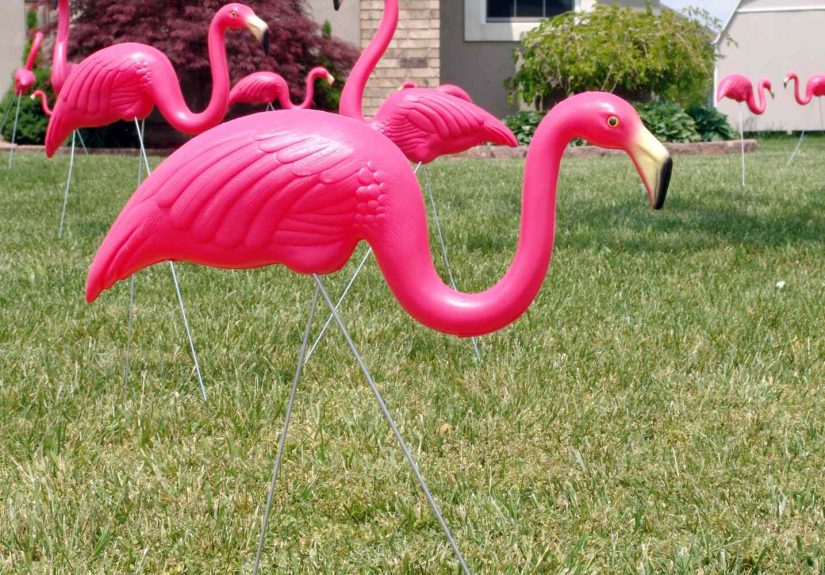
We’re not here to outlaw personalitybut designers do agree that too many ornaments, statues,
flags, and novelty items can instantly date your front yard. Think plastic flamingos,
cracked concrete figurines, tiny windmills, or a dozen mismatched solar stakes marching
down the pathway.
The issue isn’t having fun; it’s visual noise. A cluttered yard reads as busy and chaotic,
which can make even a well-maintained home feel smaller, older, and less polished from the street.
Editing Yard Décor Like a Designer
-
Keep only what you truly love. If a piece has sentimental value, give it a place
of honor rather than burying it in a crowd of other items. -
Limit the number of “statement” pieces. One great planter, one beautiful bench,
or one sculptural feature will always look more sophisticated than ten small trinkets. -
Upgrade to better materials. Swap faded plastic for ceramic, stone, wood, or
powder-coated metal. Fewer but higher-quality pieces look modern and intentional. -
Let plants be the star. Designers often use décor as a supporting actor and let
foliage, flowers, and form do the heavy lifting in terms of style.
Edit with the same mindset you would use indoors: if you removed half the stuff and took
a photo, would the space feel calmer, cleaner, and more expensive? If yes, you’re
heading in the right direction.
Real-World Lessons From Updating Dated Front Yards
It’s one thing to talk about “dated front yard details” in theory and another to see what
happens when real homeowners roll up their sleeves and start changing things. Here are a few
experience-based takeaways that come up again and again when people finally tackle those
five problem areas.
First, almost everyone underestimates how much impact editing plants can have. Homeowners
will swear their house looks small and dark, then discover that half the problem was a wall
of shrubs pressed against the windows. After trimming or removing them and replanting with
a layered but lower mix of shrubs and perennials, the same house suddenly appears taller,
brighter, and more welcoming. Neighbors notice, toopeople often report getting “Did you
repaint?” comments when all they did was clean up overgrown greenery.
Another common lesson: swapping plastic edging and bright mulch for more natural materials
feels like upgrading from costume jewelry to real metal. At first, it doesn’t sound exciting
edging and mulch aren’t exactly glamorous purchases. But when the plastic goes away and
the beds are lined with simple steel or stone and topped with warm, natural-toned mulch,
the entire front yard looks more high-end. Homeowners who make the switch often say they
didn’t realize how “busy” or artificial their old beds looked until they saw the before
and after photos side-by-side.
The fencing and railing updates can be surprisingly emotional. People get attached to
ornate iron or woodwork because it’s been there for decadesit feels like part of the
home’s personality. But when designers help them choose simpler, streamlined replacements
that match the architecture, the reaction is usually something like, “Why didn’t we do this
ten years ago?” Entrances feel cleaner, steps seem wider, and the eye finally goes to the
front door instead of the ornamentation. Safety improves, too, especially if old railings
were rusted or loose.
The mailbox and house-number makeover might be the fastest “everyday joy” upgrade of all.
Once it’s done, people notice how often they interact with this tiny corner of the front
yardchecking mail, greeting delivery drivers, giving friends directions. Instead of
apologizing for a crooked post or squinting at tiny numbers, they get a little hit of pride
every time they walk past the fresh, coordinated setup. Many homeowners say it’s their new
favorite curb appeal project simply because of how frequently they see and use it.
Then there’s the décor editthe “yard detox.” At first, it can feel like you’re stripping
away personality when you remove extra figurines, flags, and solar lights. But once
everything is cleared and only the best pieces come back, the front yard suddenly feels
calmer and more grown-up. One or two really great planters or a single bench on the porch
tells a far better style story than a dozen competing items. People often discover that
their plants, paint colors, and architectural details finally get the attention they
deserve once the clutter is gone.
Most importantly, homeowners who modernize these five details report feeling more confident
about their home from the street. They’re more excited to host, more comfortable with
surprise guests, and less tempted to apologize for how things look “out front.”
Even small, strategic upgradeslike repainting railings, replacing house numbers, or
refreshing mulchcan help a home feel aligned with current design trends without erasing
its character or charm.
If you’re not sure where to start, take a few photos of your front yard and look at them
as if they were real estate listing pictures. What jumps out first: the shrubs, the
mailbox, the clutter, the color of the mulch? Choose the single most distracting element
and tackle that first. Once you see how powerful that change is, you’ll have more motivation
(and a clearer vision) to move on to the others.
Final Thoughts: Small Tweaks, Big Curb Appeal Payoff
You don’t need a brand-new facade, roof, or driveway to pull your home firmly into the
present. Updating a handful of front yard detailsovergrown foundation plantings, dated
edging and mulch, fussy railings, a tired mailbox, and cluttered décorcan completely
change how your home feels from the street.
Focus on cleaner lines, natural materials, and a bit less “stuff.” Show off your
architecture instead of hiding it. Invest in the little things you use and see every day.
Those are the kinds of changes designers are making right now, and they’re the same
changes that can help your front yard stop whispering “stuck in the past” and start
confidently saying, “I look goodcome on in.”