Table of Contents >> Show >> Hide
- The Cookie That Became an American Icon
- What Makes a Great Chocolate Chip Cookie?
- How to Control Cookie Texture Like a Smart, Slightly Floury Genius
- Common Mistakes That Turn Great Cookies Into Mediocre Ones
- Favorite Chocolate Chip Cookie Variations Worth Trying
- Why Chocolate Chip Cookies Still Matter
- Experiences With Chocolate Chip Cookies
- Conclusion
Chocolate chip cookies are the overachievers of the dessert world. They are casual enough for a lunchbox, impressive enough for a bake sale, and powerful enough to make a kitchen smell like everyone in the house suddenly became nicer. A great chocolate chip cookie can be soft and gooey, crisp and snappy, thick and bakery-style, or thin and caramelized at the edges. That flexibility is exactly why these cookies have never gone out of style.
But here is the funny thing: for a dessert that seems so simple, chocolate chip cookies are gloriously picky. A little more brown sugar changes the chew. A warmer baking sheet changes the spread. A rested dough becomes deeper in flavor, while a rushed dough can behave like it is late for an appointment and flatten itself all over the pan. In other words, the best chocolate chip cookies do not happen by accident. They happen because small baking choices add up.
This guide breaks down what makes chocolate chip cookies work, how to tailor texture to your taste, what mistakes to avoid, and why this classic cookie still feels like edible comfort. Whether you want a reliable homemade favorite or a better understanding of cookie science, this is your crumb-filled field guide.
The Cookie That Became an American Icon
Chocolate chip cookies are more than a dessert recipe. They are a cultural shorthand for comfort. Mention them and most people immediately picture a warm tray, a cold glass of milk, and exactly one cookie eaten “just to test it,” followed by several more quality-control checks. That kind of emotional power does not happen with every sweet.
The classic chocolate chip cookie rose to fame in the United States as a homemade treat with broad appeal. It felt familiar, affordable, and easy to share. Unlike fancier desserts that require layers, torches, or a spiritual commitment to tempering chocolate, chocolate chip cookies ask for pantry basics and reward you generously. Flour, butter, sugar, eggs, vanilla, chocolate, and a bit of patience are enough to produce something that feels both nostalgic and luxurious.
That mix of simplicity and satisfaction is why the cookie has survived every food trend thrown at it. Low-fat trends? Still here. Gourmet bakery trends? Thriving. Viral browned-butter cookie trends with flaky salt and dramatic close-up photography? Very much thriving. Chocolate chip cookies can be classic, modern, rustic, polished, oversized, mini, stuffed, browned, sprinkled, chunked, or pan-baked. They are endlessly adaptable without losing their identity.
What Makes a Great Chocolate Chip Cookie?
If you strip away the sentimentality and the aggressive desire to eat cookie dough straight from the bowl, a great chocolate chip cookie comes down to balance. You want sweetness without blandness, richness without greasiness, structure without toughness, and chocolate that shows up in every bite instead of hiding like a shy extra in a school play.
Butter builds flavor and texture
Butter is not just there because cookies enjoy being delicious. It plays a major role in texture, spread, and flavor. Softened butter that is creamed with sugar introduces air, which can create a lighter and softer cookie. Melted butter often leads to a denser, chewier result because it changes how the dough forms. Browned butter adds nutty, toasty depth that makes a cookie taste more complex and a little more grown-up, like it finally got a blazer and a strong opinion about coffee.
If you want the flavor boost of brown butter without making the cookie too loose, many bakers love partial browning. That keeps some of the buttery depth while preserving enough structure for a balanced dough. It is a smart move if you want flavor fireworks without losing control of the cookie’s shape.
Sugar decides whether your cookie leans chewy or crisp
Brown sugar and granulated sugar do not do the same job. Brown sugar brings moisture, chewiness, and a deeper molasses note. Granulated sugar encourages spread and crispness. If your dream cookie has soft centers and a bendy bite, lean more heavily on brown sugar. If you want thinner cookies with crisp edges and more snap, a higher share of granulated sugar can help.
This is why two recipes that look nearly identical on paper can bake up completely differently. Sugar is not just sweetness. It is structure, moisture management, and texture design dressed up as something innocent.
Flour is where many cookies quietly go wrong
Ask experienced bakers what wrecks cookies most often, and one of the first suspects is too much flour. A heavy hand with the measuring cup can turn promising dough into dry, puffy little hockey pucks. Measuring flour accurately matters because even a small overage can make cookies cakey, crumbly, or reluctant to spread.
That is why weighing flour is such a strong habit. It removes guesswork and gives your dough a better chance of behaving like you planned. If you do use measuring cups, fluff the flour first, spoon it in, and level it off. Do not plunge the cup straight into the bag unless your goal is “rustic disappointment.”
Eggs, mixing, and dough temperature matter more than people think
Eggs help bind the dough and influence tenderness. An extra yolk can create a richer, chewier cookie, while the balance of yolk and white also affects how a cookie spreads and sets. Mixing style matters too. Creaming butter and sugar properly can create lighter texture, while under-mixing may leave your dough uneven and over-mixing once flour is added can make cookies tougher than they need to be.
Then there is dough temperature, the silent chaos agent. Warm dough spreads faster in the oven. Chilled dough tends to hold its shape better, bake more evenly, and often develop deeper flavor. If your cookies repeatedly spread into one giant pan-cookie friendship circle, temperature is one of the first things to check.
Chocolate choice changes the final experience
Not all chocolate behaves the same way. Classic chips are designed to hold their shape, which gives you distinct pockets of chocolate. Chopped chocolate bars create puddles, streaks, and dramatic melty layers that feel more bakery-style. A mix of both is often the sweet spot: chips for structure, chunks for molten excitement.
Milk chocolate makes a sweeter, softer cookie profile. Semisweet gives balance. Dark chocolate adds bite and contrast. White chocolate is the wild card who crashes the party in a linen suit. There is no single correct answer here, only preference. The best chocolate chip cookie is the one whose chocolate you actually want to eat on its own.
How to Control Cookie Texture Like a Smart, Slightly Floury Genius
The magic of chocolate chip cookies is that one basic formula can be adjusted in several directions. Once you understand the levers, you can chase the exact cookie texture you love.
For soft and chewy cookies
Use more brown sugar than white sugar. Consider melted butter or an extra yolk. Chill the dough before baking. Pull the cookies when the edges are set but the centers still look slightly underdone. Let them finish on the baking sheet. That last part matters because cookies continue to cook from residual heat after they leave the oven.
Soft and chewy cookies are often at their best when they look a tiny bit unfinished at first glance. If you wait for the centers to look fully done in the oven, you may end up with a firmer cookie than you intended.
For thick bakery-style cookies
Start with a dough that is relatively firm. Chill it well. Scoop taller mounds instead of round flat portions. Load the dough with enough chocolate so the cookie has internal support and plenty of texture. Some bakers prefer a slightly lower sugar ratio for thickness, while others rely on cold dough and generous portioning. Either way, thickness usually begins before the cookies enter the oven.
For thin and crisp cookies
Increase the proportion of granulated sugar, use a dough that is not overly cold, and bake a little longer for deeper caramelization. Pressing the dough slightly before baking can also encourage a flatter profile. If you adore crispy edges, darker baking color, and that almost-toffee note around the rim, this is your lane.
Common Mistakes That Turn Great Cookies Into Mediocre Ones
Chocolate chip cookies are forgiving, but they are not infinitely forgiving. Here are the mistakes that most often sabotage a batch.
Using too much flour
This is the classic issue. The dough looks stiff, the cookies stay thick in a bad way, and the final texture leans dry or cakey. Accurate measuring solves more cookie problems than most dramatic recipe rewrites ever will.
Skipping the chill when the dough obviously needs it
Not every recipe requires chilling, but many benefit from it. If the dough is glossy, sticky, or very soft, chilling helps the flour hydrate and the fat firm up. That usually means better flavor and less chaotic spreading.
Putting dough on a hot baking sheet
This one is sneaky. If you reuse a warm pan between batches, the butter in the dough begins melting before the cookies even hit the oven. The result is often excessive spread and uneven texture. Cool pans matter.
Baking too many trays at once
When even browning matters, one sheet at a time is often the better move. Chocolate chip cookies are small, but they are also dramatic. Uneven heat can leave one tray pale and puffy while another turns overly dark at the bottom.
Overbaking in pursuit of certainty
The window between “perfectly done” and “why are these crunchy all the way through” can be surprisingly small. Edges should be set. Centers can still look a little soft. Trust the cooling process.
Ignoring salt
Salt does not make cookies salty unless you go wild with it. It sharpens flavor, balances sweetness, and makes the chocolate taste more chocolatey. A small sprinkle of flaky salt on top can make a batch taste instantly more polished.
Favorite Chocolate Chip Cookie Variations Worth Trying
The beauty of the classic cookie is that it welcomes upgrades without becoming unrecognizable.
Brown butter chocolate chip cookies
Nutty, richer, and a little more complex, these taste like the standard version went off to culinary school and came back confident.
Chocolate chunk cookies
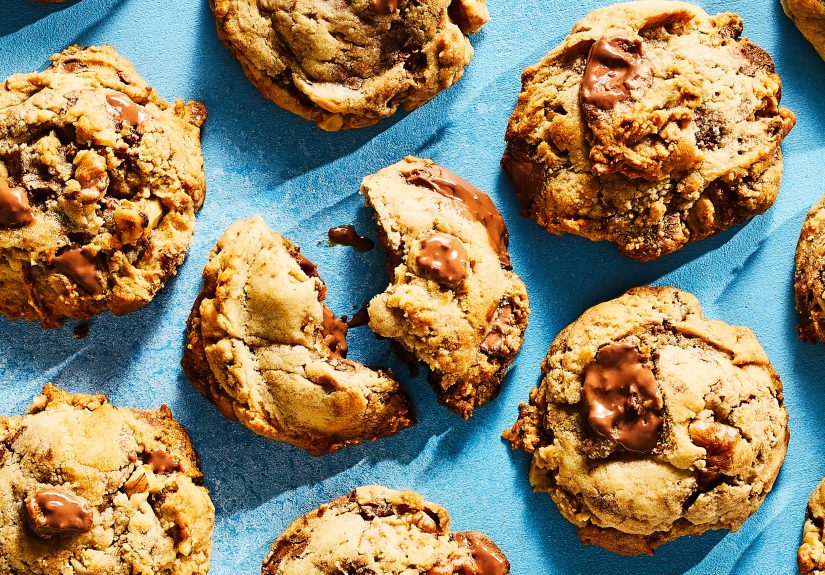
Swapping chips for chopped chocolate creates puddles and ribbons of melted chocolate. Visually, it is hard to beat. Emotionally, also hard to beat.
Sea salt topped cookies
A little flaky salt on warm cookies balances sweetness and makes the whole batch taste more intentional.
Nutty cookies
Pecans or walnuts add crunch and a toasted note that plays especially well with browned butter and dark chocolate.
Bakery-style giant cookies
Larger portions create contrast: crisp edges, thick centers, and dramatic gooey middles. These are the cookies most likely to make someone say, “I’ll just split one with you,” then not split one with you.
Why Chocolate Chip Cookies Still Matter
There are flashier desserts. There are trendier desserts. There are desserts that arrive at the table on smoke, glass, or tiny architectural supports that suggest engineering school was somehow involved. Yet chocolate chip cookies continue to win because they feel personal.
They are tied to ordinary moments: a parent baking on a Sunday, a roommate stress-baking during finals, a neighbor bringing over a plate after a hard week, a holiday tin that somehow contains fewer cookies every time you open it. Chocolate chip cookies do not demand a ceremony. They fit into real life. That may be their greatest trick.
They also offer a kind of culinary optimism. A bowl, a whisk, a bit of dough, and half an hour can change the entire mood of a room. That is not bad for a cookie whose main talent is being both humble and wildly beloved.
Experiences With Chocolate Chip Cookies
Chocolate chip cookies are not just something people bake. They are something people remember. That may be the most interesting part of their story. Ask ten people about chocolate chip cookies and you rarely get a technical answer first. You get a memory. Someone talks about a grandmother who never measured vanilla. Someone mentions the first apartment where the smoke alarm went off because they forgot the second tray. Someone remembers sneaking warm cookies off the rack and pretending the missing one simply evaporated in a mysterious domestic event.
Part of the experience is sensory. The smell of butter, sugar, and vanilla in the oven is almost unfair in how effective it is. It does not politely suggest dessert. It announces itself like a brass band marching through the kitchen. The aroma reaches the hallway, the living room, maybe the front porch, and suddenly everyone develops an urgent need to “check on something” near the oven.
Then there is the timing. Chocolate chip cookies reward anticipation in tiny stages. First you make the dough and tell yourself you will not sample any. That lie lasts about twelve seconds. Then the tray goes into the oven and the house starts to smell like you have your life together. Then comes the hardest part: waiting for the cookies to cool enough so you do not burn your mouth on molten chocolate. Most people fail this test. Honestly, most people should fail this test. Warm cookie impatience is part of the ritual.
Cookies also have social power. A cake can feel formal. A pie can feel seasonal. Chocolate chip cookies feel open-handed. They say, “I made something; please have one,” without making the moment stiff or ceremonial. They belong in lunchboxes, care packages, welcome baskets, office kitchens, road trips, church basements, school events, and paper plates on crowded counters. They are portable comfort.
Even the flaws become part of the experience. Some of the most beloved batches are not technically perfect. Maybe the cookies spread too much, but the edges turned lacy and caramelized. Maybe they came out thicker than expected, but the centers stayed wonderfully soft for days. Maybe the chocolate chunks pooled into odd shapes that looked messy but tasted excellent. Chocolate chip cookies are forgiving in a very human way. They leave room for imperfection, and somehow that often makes them feel more homemade, not less.
There is also a quiet confidence in knowing your own cookie preference. Some people want a crisp, buttery cookie that snaps at the edge. Some want a thick, gooey center with barely-set middles and puddles of dark chocolate. Some want nuts, some do not. Some think sea salt is essential; others believe that is cookie overthinking. These preferences become oddly personal, almost like favorite songs or movie quotes. A chocolate chip cookie can reveal whether someone likes nostalgia neat and tidy or a little messy and dramatic.
In the end, the experience of chocolate chip cookies is about more than eating sugar and butter. It is about warmth, expectation, sharing, and small domestic joy. A batch in the oven can turn an ordinary afternoon into an event. It can make a rainy day feel cozy, a holiday feel official, or a difficult week feel slightly less rude. That is why chocolate chip cookies endure. They taste good, yes. But more importantly, they feel like home.
Conclusion
Chocolate chip cookies remain timeless because they are both simple and endlessly customizable. Once you understand how butter, sugar, flour, eggs, chocolate, and temperature shape the final result, you can steer a batch toward chewy, crisp, thick, thin, classic, or bakery-style without losing the soul of the cookie. That is the magic. Chocolate chip cookies are easy enough for everyday baking, but nuanced enough to reward attention to detail.
And perhaps that is why people keep coming back to them. They are not just a dessert. They are a small act of comfort with a very high success rate, especially when there is still a little melted chocolate on top and you pretend you are only having one.