Table of Contents >> Show >> Hide
- What the Bias Block Large Cutting Board Actually Is
- Why a Large Cutting Board Is More Than a Flex
- Walnut as a Cutting Surface: A Quiet-Luxury Choice
- Edge-Grain vs. End-Grain: The Debate (Without the Drama)
- Food Safety: Wood Cutting Boards Are SafeIf You Treat Them Like Food Tools
- Care and Maintenance: Keep Your Bias Block Board Gorgeous for Years
- How to Use a Huge Board Without Making Your Kitchen Hate You
- Who Should Buy a Bias Block Large Cutting Board?
- Smart Pairings and Alternatives
- Real-World Experiences With a Big Board ( of “Oh, So This Is Why People Love Them”)
- Conclusion: Is the Bias Block Large Cutting Board Worth It?
There are two types of home cooks: the “I can prep dinner on a coaster” crowd and the “give me a runway, I’m landing
a whole chicken” people. If you’re even thinking about the Bias Block Large Cutting Board, you’re probably in
runway territoryand honestly, welcome. A truly big board changes the pace of cooking: fewer trips to the trash, less
ingredient spillage, and way more space to chop like you mean it.
In this guide, we’ll break down what the Bias Block Large Cutting Board is, why its oversized format is genuinely
useful (not just “pretty kitchenware”), how edge-grain walnut performs in real life, and how to keep a premium wood
board lookingand smellinglike it belongs in a nice kitchen instead of a crime scene.
What the Bias Block Large Cutting Board Actually Is
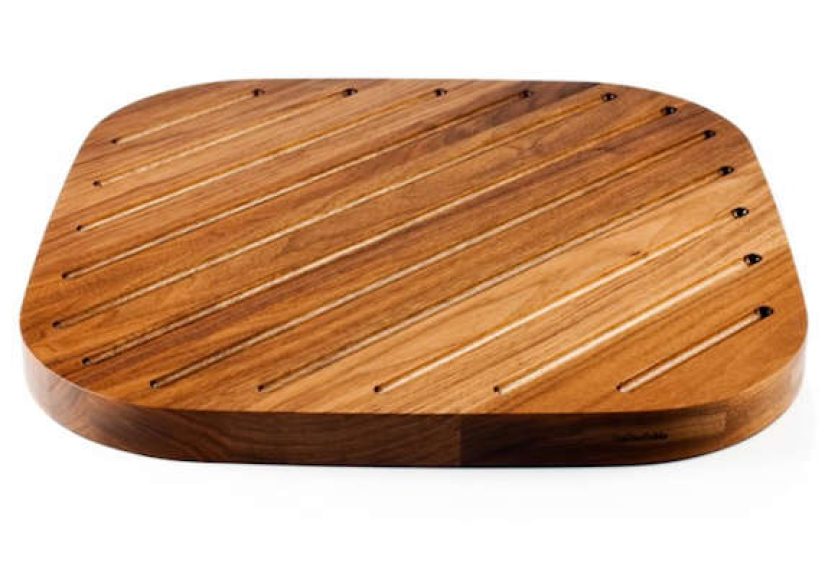
The Bias Block Large Cutting Board is a handmade, edge-grain walnut butcher block designed to be unapologetically
large. It’s the kind of board that says, “Yes, I do prep everything at once,” and then politely refuses to fit in
your average tiny sink. That’s not a flawit’s a lifestyle choice.
Quick specs (the stuff you actually want to know)
- Material: Solid edge-grain walnut butcher block
- Size: About 20″ x 20″ x 1.5″ (a true square work surface)
- Made in: Canada
- Finish: Natural oil/beeswax mixture; needs periodic re-oiling
- Build style: Handmade to order
The headline here is the footprint: a 20-by-20-inch board is rare in the wild. Most “large” boards are rectangles.
This one is a square, which changes how you use it: you can rotate tasks around the board without constantly running
out of elbow room.
Why a Large Cutting Board Is More Than a Flex
A big cutting board isn’t just a bigger place to chopit’s a workflow tool. Think of it like upgrading from a
studio apartment kitchen to one with a real counter. Suddenly you can prep, stage, and clean as you go without
juggling items like you’re auditioning for a cooking show.
1) You get “zones” for free
On a standard board, your onion pile quickly becomes a chaotic onion ecosystem. On a board this size, you
can create zones: chopped veg on the left, aromatics in the center, scraps and peels in a “trash corner” on the right.
It’s mise en place without 12 tiny bowls.
2) It’s easier to keep the counter clean
More surface area means fewer ingredients escaping onto the countertop. A wide board can catch the “shavings” from
mincing garlic, the watery tomato seeds, and the herb confetti that usually ends up clinging to your sleeves.
Your counter stays cleanerand you feel weirdly competent.
3) It makes big tasks feel smaller
Breaking down a watermelon, carving a roast, prepping slaw for a crowd, or slicing brisket becomes dramatically less
annoying when you’re not doing it in 4 batches. With a large board, you can keep the whole operation in one place.
Walnut as a Cutting Surface: A Quiet-Luxury Choice
Walnut is popular for boards because it hits a sweet spot: it’s durable enough to handle daily chopping, but not so
hard that it’s brutal on your knives. It also looks fantasticespecially in a big slabbecause walnut’s rich color
reads “grown-up kitchen” even if your spice drawer is a chaos drawer.
What walnut does well
- Knife-friendly feel: A hardwood surface that still has a bit of “give.”
- Hides stains better: Compared to very light woods, walnut doesn’t broadcast every turmeric incident.
- Elevated look: Walnut’s grain and tone make a board double as a serving surface.
The tradeoff? Dark wood can show light scuffs, and any wood board can pick up odors if it’s not cleaned and dried
properly. The answer isn’t fearit’s a good routine.
Edge-Grain vs. End-Grain: The Debate (Without the Drama)
Wood boards usually come in two construction styles:
end-grain (the “checkerboard” look) and edge-grain (long strips of wood).
The Bias Block Large Cutting Board is edge-grain walnut.
End-grain (the “self-healing” favorite)
End-grain boards orient the wood fibers vertically, which can be gentler on knife edges. Many cooks describe the
sensation as the blade slipping between fibers rather than chopping across them. They’re also known for “hiding”
cuts better over timebecause the marks don’t stay as obvious.
Edge-grain (the practical workhorse)
Edge-grain boards are usually more affordable than end-grain and can have fewer seams and weak points. The flip side
is that edge-grain surfaces can show deeper gashes and grooves over years of hard useespecially if you always chop
in the exact same spot like it’s your board’s “favorite” area.
The real takeaway: edge-grain walnut is still an excellent choice for a daily board, especially if you maintain it.
Most “wood board horror stories” are really just “someone soaked it, forgot it, and then acted surprised.”
Food Safety: Wood Cutting Boards Are SafeIf You Treat Them Like Food Tools
Let’s settle the big worry: you can safely use wooden cutting boards in a home kitchen. The critical factor isn’t
whether it’s wood or plasticit’s how you clean, dry, and avoid cross-contamination.
The basic rule: wash after each food item (especially raw meat)
Food safety guidance emphasizes washing utensils, cutting boards, and countertops with hot, soapy water after
preparing each food itemespecially after raw meat, poultry, seafood, and eggs. Translation: don’t chop chicken and
then slice strawberries on the same board without cleaning it in between. That’s not “efficient,” that’s “bold.”
Sanitizing: a simple bleach solution works
For extra sanitation, especially after raw proteins, authoritative food safety guidance commonly recommends sanitizing
cutting boards with a solution of 1 tablespoon of unscented liquid chlorine bleach per gallon of water.
Apply it to the surface (or flood the board), let it sit briefly, then rinse and dry thoroughly. A clean board that
dries fully is a safer board.
Best practice: separate boards (or at least separate sessions)
Many home cooks use a dedicated plastic board for raw meat (easy to sanitize, sometimes dishwasher-safe) and reserve
a beautiful wood board like the Bias Block for produce, bread, herbs, and cooked foods. You can use wood for raw
meat if you’re willing to wash and sanitize diligentlybut having two boards often makes life simpler.
Care and Maintenance: Keep Your Bias Block Board Gorgeous for Years
A wood cutting board is like cast iron: low effort once you have a rhythm, but it will punish neglect with drama.
Here’s the routine that keeps a big walnut board stable, smooth, and good-looking.
Daily cleaning (the non-negotiables)
- Scrape first: Use a bench scraper or spatula to lift food bits (less mess in the sink).
- Wash quickly: Mild soap + warm water, wipe both sides if possible.
- Never soak: Wood + long water exposure = warping and cracking risk.
- Dry immediately: Towel dry, then air dry standing on an edge so both sides breathe.
- Skip the dishwasher: Heat + water + time = board sadness.
Oiling (the part everyone forgets until the board looks thirsty)
A board finished with an oil/beeswax blend still needs upkeep. Many respected board makers recommend oiling about
once a month (or whenever the surface looks dry). Food-grade mineral oil is a common, accessible option. Apply a thin,
even coat to all sides and edges, let it soak in (often overnight), then wipe off any excess.
Want extra protection? A board cream (typically mineral oil plus beeswax) can add a light barrier against moisture.
Think of it as lip balm for your board. Yes, that sounds ridiculous. Yes, it helps.
Deodorizing and stain control (because garlic is forever)
- Salt + lemon: Sprinkle coarse salt, scrub with lemon, rinse, dry well.
- Baking soda paste: Useful for odors; rinse thoroughly and dry.
- Spot sanding: For stubborn stains or raised grain, sand lightly with fine grit, always with the grain.
How to Use a Huge Board Without Making Your Kitchen Hate You
The best part of a large board is also the trickiest: it’s big. Here’s how to get the benefits without the hassle.
Measure your sink and storage first
Large boards can be heavy and awkward to wash in a small sink. If your sink is tight, plan to clean the board with a
soapy cloth and a rinse cloth rather than trying to dunk it like a dinner plate. Also: pick a storage spot where it
can stand upright to dry properly.
Stop the slip
Put a damp kitchen towel under the board, or use a non-slip mat. A stable board is safer and makes chopping feel
smootherespecially when you’re working fast.
Use it as a “prep station,” not just a chopping surface
The Bias Block’s large, square footprint is ideal for staging. Chop aromatics, keep a pile of prepped vegetables,
park your knife safely, and still have room to portion ingredients for the pan. Once you start cooking this way,
going back to a tiny board feels like trying to write an essay on a sticky note.
Who Should Buy a Bias Block Large Cutting Board?
This board makes the most sense if you check at least a few of these boxes:
- You cook often and prep multiple ingredients per meal.
- You want a board that can double as a serving and carving surface.
- You appreciate craftsmanship and are willing to oil wood occasionally.
- You have enough counter space to comfortably park a 20″ x 20″ board.
- You’re tired of chasing onion bits across your counter like they owe you money.
If you’re short on space, hate maintenance, or are devoted to dishwasher-only kitchen tools, you may be happier with
a smaller wood board or a high-quality rubber/plastic option for everyday use.
Smart Pairings and Alternatives
Many cooks build a “board system” instead of forcing one board to do everything:
- Wood board (like Bias Block): Produce, bread, herbs, cooked proteins, serving.
- Plastic board: Raw meat and fish, when you want easy sanitizing.
- Rubber board: A pro favorite for knife-friendliness and grip, with low maintenance.
Also, a quick wood note: some guides warn that teak can be tougher on knife edges because it’s very dense and may
contain silica. Walnut and maple are more common “knife-happy” choices in many kitchens.
Real-World Experiences With a Big Board ( of “Oh, So This Is Why People Love Them”)
The first thing most people notice when they switch to an extra-large board like the Bias Block is how much calmer
prep feels. Not fastercalmer. You’re no longer balancing a cutting motion on a board that’s also hosting a growing
mountain of chopped vegetables. You can mince garlic in one corner, slice onions in another, and keep a “clean zone”
for herbs that you don’t want smelling like everything else. It’s the kitchen equivalent of having multiple tabs open
without your brain overheating.
The second experience is the glorious disappearance of the “ingredient avalanche.” On smaller boards, one more carrot
slice is the slice that knocks half your prep onto the counter. On a 20-inch square, there’s room to build piles,
separate scraps, and still have space to work the knife safely. You’ll probably start using a bench scraper more, too,
because it becomes ridiculously satisfying to sweep chopped food straight into a bowl with one clean motion. Suddenly
you’re cooking like someone who owns matching containers.
Then comes the “carving moment.” The first time you slice a roast chicken, tri-tip, or holiday brisket on a board
that doesn’t wobble or overflow with juices, it feels like cheating. There’s space to rest the meat, carve neatly,
and move slices into a serving platter without doing the awkward shuffle where you’re holding a knife, holding a fork,
and also trying to stop the cutting board from migrating off the counter. Big boards reduce kitchen gymnastics.
You’ll also notice how a large walnut board changes hosting. Even if you don’t plan to serve on it, it becomes a
staging area: cheese slices on one side, fruit on another, bread in the corner, and you’re not constantly washing
plates just to hold items temporarily. People who enjoy charcuterie or snack spreads often find that a beautiful wood
board makes the whole setup feel intentionaleven if the “theme” is just “we bought too many olives.”
Of course, reality includes the cleanup. A board this size may not fit neatly into a small sink, and that’s when you
discover the wipe-and-rinse-cloth method: one soapy cloth to wash, one clean damp cloth to rinse, then towel dry and
stand it up to air out. Once you do that for a week, it becomes automatic. The only time it feels annoying is when
you forget to dry it immediatelybecause wood remembers. A damp board left flat can warp, smell musty, or feel rough
as the grain raises. The good news is that good habits are easy: wash promptly, dry thoroughly, and oil when it looks
thirsty. If you can keep a phone charged, you can keep a walnut board happy.
Conclusion: Is the Bias Block Large Cutting Board Worth It?
If you want a statement-size board that’s built for real prepnot just Instagram sandwichesthe Bias Block Large
Cutting Board makes a compelling case. The edge-grain walnut construction offers a stable, knife-friendly surface,
the generous square size supports a smarter cooking workflow, and with basic care (wash, dry, oil), it can stay
beautiful for years. It’s not a “buy it and ignore it” tool. It’s a “treat it well and it will treat you well” tool.
And it will absolutely make your kitchen feel more capable.
Sources consulted (no links): Remodelista; Serious Eats; Bon Appétit; CDC; FoodSafety.gov; USDA FSIS; John Boos; The Kitchn; Boardsmith; University extension publications.