Table of Contents >> Show >> Hide
- What You’ll Learn
- Close Coupled WC & Portrait Cistern: The Translation for Regular Humans
- Belmonte at a Glance: Why This Toilet Gets Picked
- Flush Performance: What Actually Predicts a Good Day
- Water Efficiency: Where the Savings Come From (and When They Don’t)
- Planning Your Install: Rough-In, Clearances, and One Sneaky Supply-Line Detail
- Care & Maintenance: Keep It Looking Good and Flushing Right
- Conclusion: A Traditional Look with Modern Expectations
- Bonus: of Real-World Experience with a Belmonte-Style Close-Coupled Toilet
Toilets are the only household fixture that people depend on multiple times a day and almost never
compliment. They’re like the offensive line of your home: essential, underappreciated, and blamed for
everything when things go wrong.
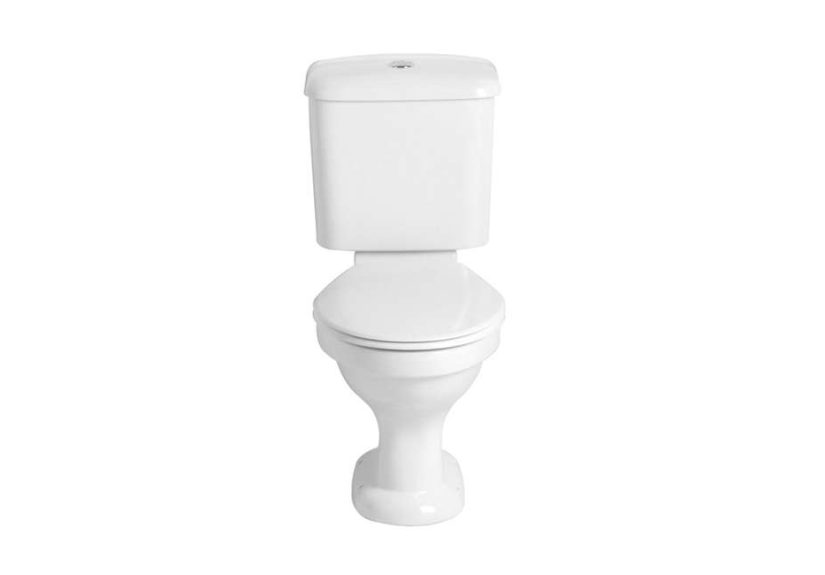
The Belmonte Close Coupled WC & Portrait Cistern (from Heritage Bathrooms, as curated in U.S. design
circles) is interesting because it sits at the crossroads of two worlds: a vintage, traditional silhouette
and the modern expectations we all have for reliability, easy cleaning, and not needing a “backup flush.”
Close Coupled WC & Portrait Cistern: The Translation for Regular Humans
“WC” is just “toilet”
“WC” stands for “water closet,” a traditional term you’ll still see in product names and older plans.
In everyday American English: it’s the toilet.
Close coupled = bowl + tank that hug
A close-coupled toilet is essentially what many U.S. shoppers call a two-piece toilet:
a separate bowl and tank (cistern) that bolt together so they sit tightly as one unit. Compared with a one-piece
toilet, two-piece/close-coupled models are typically easier to transport, easier to replace in parts, and often
more budget-friendly. The trade-off is that the seam between tank and bowl can add a tiny bit more cleaning
detail (nothing dramaticjust one more curve where dust tries to start a career).
Portrait cistern = tall-and-slim tank proportions
“Portrait” here is a design cue, like a phone held upright: the tank is proportioned taller relative to its width,
giving a more classic, architectural profile. In traditional bathrooms, this can visually echo pedestal sinks,
framed mirrors, and vintage-style fittingswithout going full museum exhibit.
Belmonte at a Glance: Why This Toilet Gets Picked
The Belmonte set is often chosen for one big reason: it looks intentional. Not “builder-basic,” not “space-age capsule,”
but a clean traditional shape that works in both classic and transitional bathroomsespecially when paired with
heritage-style faucets, paneling, or a black-and-white tile moment.
Quick Specs (and what they mean for your bathroom)
| Construction | Vitreous china (glazed ceramic/porcelain-like finish) |
|---|---|
| Overall size |
Width ~365 mm (14.4 in), Depth ~695 mm (27.4 in), Height ~830 mm (32.7 in) (Always verify clearances against your exact space and local code.) |
| Flush control | Single-flush, chrome push-button (tank-type) |
| Cistern details | Internal overflow; water inlet located on the bottom right side of the cistern |
| Seat | Often sold separately (plan for compatibility: shape and bolt spacing) |
Why “vitreous china” is a big deal (even if it sounds like a wizard spell)
Vitreous china is popular in toilets because it’s hard, glossy, and relatively stain-resistant. Translation:
it’s built to survive daily use, cleaning, and the occasional household member who believes “aiming is optional.”
The glaze also helps with wipe-downsespecially important if your bathroom style leans traditional and you’d rather
spend time enjoying it than scrubbing it like you’re preparing it for a health inspection.
The “portrait” vibe in real design terms
In many bathrooms, the toilet is the visual afterthought. Belmonte’s portrait cistern flips that: it turns the tank
into part of the room’s architecture. If your bathroom includes wainscoting, framed art, or vintage lighting, a
taller cistern profile can look balanced instead of “tiny tank floating in a sea of wall.”
Flush Performance: What Actually Predicts a Good Day
Toilet shopping is basically the only time adults seriously debate the physics of swirling water. The good news:
performance today is less about “more gallons” and more about engineeringtrapway design, bowl rinse, and flush valve
dynamics.
Gravity vs. pressure-assisted (and why you should care)
In U.S. retail guides, the two most common flushing systems for tank toilets are gravity-flush and
pressure-assisted. Gravity systems use the weight of the water in the tank. Pressure-assisted models store
energy (via a vessel) to deliver a stronger push. Pressure-assisted toilets can be powerful, but they’re often louder
and can feel a bit “industrial.” Gravity toilets are usually quieter and simpler to service. Your best choice depends on
your priorities: stealth vs. strength, apartment bathroom vs. busy household, and whether you want your toilet to sound
like it’s launching a small submarine.
Use MaP scores as a sanity check
If you want a performance metric that’s not just marketing adjectives, look at MaP (Maximum Performance) testing.
MaP is a voluntary program that reports how many grams of test media a toilet can remove in a single flush. The key takeaway
for homeowners: you don’t need a mythical 1,000-gram monster flush to be happy. Many experts treat ~500 grams and up as
excellent real-world performance, and WaterSense-level requirements set a minimum performance bar (often cited around 350 grams).
Real-life example: performance without “extra flush anxiety”
Here’s what a good toilet experience looks like in practice:
- You flush once and walk awayno second flush “just in case.”
- The bowl rinses clean enough that you’re not reaching for the brush daily.
- Clogs become rare events instead of a recurring calendar appointment.
Modern testing and reviews from U.S. outlets consistently show that well-designed water-efficient toilets can perform at a
high levelso “low-flow” doesn’t have to mean “low-confidence.”
Water Efficiency: Where the Savings Come From (and When They Don’t)
Let’s talk about gallons-per-flush (GPF) without putting anyone to sleep.
In the U.S., WaterSense-labeled toilets are designed to use 1.28 gallons per flush (or less), which is about
20% less than the federal standard 1.6 GPFwhile still meeting performance criteria.
A quick, concrete savings math example
Suppose you replace a 1.6 GPF toilet with a 1.28 GPF toilet.
That’s a difference of 0.32 gallons per flush.
- Assume 5 flushes/day per person (conservative for many households).
- In a 4-person home: 0.32 × 5 × 4 = 6.4 gallons/day saved.
- Over a year: 6.4 × 365 ≈ 2,336 gallons/year saved.
And if you’re replacing an older toilet (think pre-1990s), the jump can be much biggerbecause some older models used
around 3.5 GPF or even ~5 GPF.
Belmonte’s takeaway in this category
The Belmonte’s main story is its traditional style and tank configuration. For efficiency, what matters is the actual rated
flush volume and how it performs in your home’s plumbing reality. If water savings are a top priority, cross-check the
spec sheet and consider WaterSense-aligned options in a similar traditional lookespecially if you’re in a region with
rebates or higher water costs.
Planning Your Install: Rough-In, Clearances, and One Sneaky Supply-Line Detail
Step 1: Measure the rough-in (don’t guess; bathrooms remember)
The rough-in is the distance from the finished wall behind the toilet to the center of the closet bolts (or the center
of the drain). In most U.S. homes, 12 inches is standard, but 10-inch and 14-inch rough-ins exist,
especially in older homes or tight bathrooms. Measuring before you buy prevents the classic DIY tragedy:
“It fit in the cart… and nowhere else.”
Step 2: Confirm clearances
Beyond rough-in, you need comfortable space around the toilet: side-to-side elbow room and enough front clearance that your knees
aren’t negotiating with the vanity. Many buying guides recommend planning for practical clearances so the bathroom functions, not
just “technically fits.”
Step 3: Note the cistern inlet location
Belmonte’s cistern is typically described with a bottom-right inlet. That can influence how your supply line routes
and whether your shutoff valve location feels convenient or annoyingly out of reach. This is a small detail that becomes very
important the day you need to service the fill valve quickly.
DIY or hire a pro?
A toilet replacement can be a manageable DIY project for many homeowners, but it’s also one of the few projects where a small mistake
can create a big mess (leaks, rocking toilets, sewer gas smells). If your flange is damaged, the floor is uneven, or you’re dealing with
an older plumbing setup, hiring a licensed plumber may be the calmest route.
Care & Maintenance: Keep It Looking Good and Flushing Right
Cleaning: gentle wins (and your glaze will thank you)
For routine cleaning, start with the basics: remove grime with standard household cleaners (soap/detergent) before thinking about stronger
disinfectants. Regular cleaning goes a long way for hygieneand it’s easier on finishes than harsh, abrasive products used daily.
Common “toilet drama” and the usual culprits
- Running toilet: often a flapper/flush valve seal issue or fill valve adjustment.
- Weak flush: can be a partial clog, improper tank water level, or debris in the system.
- Rocking toilet: sometimes a sign of an uneven floor, loose bolts, or a compromised seal.
The wax ring: small part, huge consequence
The seal between the toilet and the flange is critical. Whether you use a traditional wax ring or a wax-free alternative,
the goal is the same: an odor-tight, leak-free seal. Take your time here. “Good enough” is not a seal rating.
Seat planning (because “sold separately” is a lifestyle)
If the seat isn’t included, pick one that matches the bowl shape (round vs. elongated) and fits the mounting holes. A soft-close seat is
a small luxury that prevents slammingand spares you from the jump-scare noise at 2 a.m.
Conclusion: A Traditional Look with Modern Expectations
The Belmonte Close Coupled WC & Portrait Cistern is for homeowners who want a toilet that looks like it belongs in a thoughtfully designed
bathroomclassic lines, a taller tank profile, and a traditional presencewithout giving up the practical benefits of a close-coupled/two-piece format.
If you’re considering it (or a similar traditional close-coupled model), success comes down to three things:
fit (rough-in and clearances), function (flush system and performance confidence), and future-you
(maintenance access and sensible cleaning). Get those right, and the Belmonte style of toilet can be a daily-use fixture that feels genuinely upgraded
not just replaced.
Bonus: of Real-World Experience with a Belmonte-Style Close-Coupled Toilet
In real remodels, the “toilet experience” starts long before the first flush. It begins with the box arriving and someone realizing, in a moment of pure
human growth, that porcelain is heavier than it looks on the internet. Close-coupled models help here: the bowl and tank are separate pieces, which makes
maneuvering through narrow hallways and tiny bathroom doors noticeably less dramatic. (Still dramatic, just less.)
Next comes the aesthetics moment. A portrait-style cistern changes the room more than people expect. In a traditional or transitional bathroom, the taller
tank can make the toilet look “designed” instead of “installed.” Homeowners often describe it as the toilet finally matching the vibe of the spacelike the
fixture stopped apologizing for existing. If your bathroom has beadboard, framed mirrors, vintage lighting, or a pedestal sink, that vertical cistern profile
tends to visually click. It’s not loud. It’s not trendy. It’s just… confident.
Then there’s the practical side: supply lines and access. A bottom-right inlet detail sounds tiny until you’re under the tank with a flashlight, deciding
whether the shutoff valve placement is “fine” or “why would anyone do this to a person.” In many installs, the solution is simply planning: measure the
route, choose the right connector length, and make sure your shutoff valve is functional (and not fused into history). It’s a small prep step that pays off
later, especially if you ever need to service the fill valve quickly.
On day-to-day use, households typically notice three things. First, the push-button flush feels slightly more “modern hotel” than side-lever, even on a
traditional-looking toilet. Second, the bowl-cleaning perception matters as much as raw power. People don’t just want waste to go away; they want the bowl
to look clean after it goes away. A good flush plus decent rinse reduces how often anyone reaches for the brush out of pure annoyance. Third, noise becomes a
surprisingly emotional topic. If you’ve lived with a pressure-assisted toilet before, gravity flushing can feel calmerless “mechanical event,” more “normal
bathroom sound.”
Maintenance stories are also very consistent across homes: if a toilet ever develops a “running” habit, it’s usually not a crisisit’s a part. Flappers wear
out, fill valves need adjustment, and chains get finicky. The best experience is when your toilet’s parts are standard enough that a quick hardware-store run
solves it, and you’re not waiting on a specialty component like you’re restoring a rare antique car.
Finally, cleaning reality: the traditional look doesn’t mean you need harsh products. In fact, homeowners are usually happiest when they stick with gentle,
regular cleaning that preserves the glossy finish. The toilet stays bright, the glaze stays smooth, and you avoid the heartbreak of discovering that your
favorite “super scrub” is basically sandpaper with a marketing degree.
The punchline? A Belmonte-style close-coupled toilet isn’t exciting in the way a new TV is exciting. It’s exciting in the way a problem-free car is exciting:
it starts every day, doesn’t complain, and quietly makes your life easier. Whichif we’re honestis the highest compliment a toilet can earn.