Table of Contents >> Show >> Hide
- Why This Shade Gets So Much Attention
- The Relaxed Roman Shade Look: Soft, Tailored, and Not Too Try-Hard
- Belgian Linen: The Fabric Story Behind the Appeal
- Why Oyster Is Such a Smart Color Choice
- Customization, Lining, and Practical Details
- Best Rooms for the Barn & Willow Belgian Linen Relaxed Roman Shade – Oyster
- How to Style It Like You Know What You’re Doing
- Is It Worth It?
- Living With It: The Everyday Experience
- Final Thoughts
Some window treatments whisper. Others shout. And then there is the Barn & Willow Belgian Linen Relaxed Roman Shade – Oyster, which does something far more impressive: it looks effortlessly refined while making the entire room seem like it finally got its act together. That is no small feat. A sofa can be gorgeous, a coffee table can be expensive, and a rug can be fluffy enough to deserve its own zip code, but if the windows look unfinished, the room still feels a little underdressed.
That is why this shade style has such staying power. It combines the tailored function of a Roman shade with the casual softness of Belgian linen, then finishes it in Oyster, a warm, creamy neutral that sits somewhere between off-white, light greige, and “I definitely hired a designer” energy. The result is a window treatment that feels airy rather than stiff, polished rather than pretentious, and practical without looking like it came from the world’s saddest office supply aisle.
In this guide, we will break down what makes the Barn & Willow Belgian Linen Relaxed Roman Shade in Oyster so appealing, where it works best, what to know before ordering, and why this style keeps popping up in rooms that feel calm, layered, and quietly luxurious. If you are shopping for custom Roman shades, linen window treatments, or simply trying to make your windows look less forgotten, you are in the right place.
Why This Shade Gets So Much Attention
The magic starts with the formula: Belgian linen + relaxed Roman silhouette + Oyster neutral. Each element is appealing on its own, but together they create a look that is both timeless and very current. Barn & Willow has long leaned into natural fabrics, and linen is the headliner for good reason. It has texture, softness, and movement. It does not look plasticky, shiny, or overworked. It looks lived-in in the best possible way.
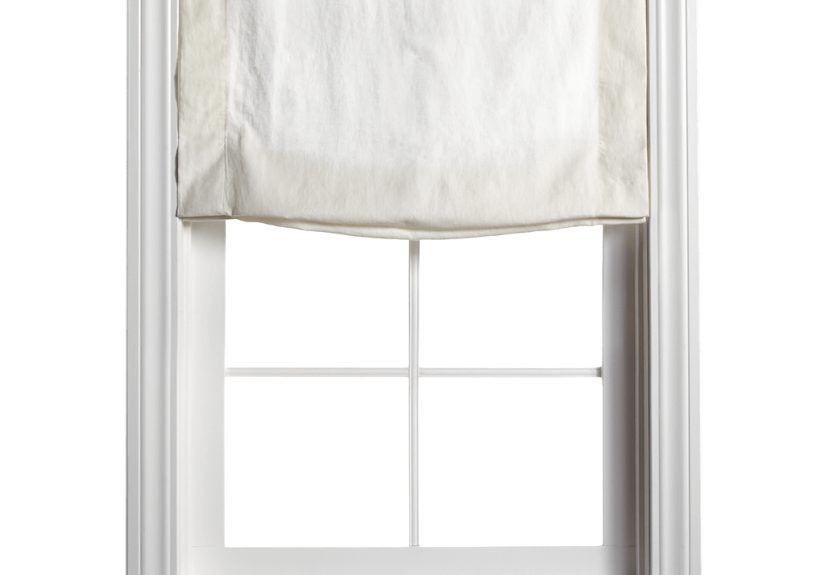
The relaxed Roman shade style is what gives the window its personality. Unlike a flat Roman shade, which reads crisp and structured, a relaxed Roman shade has a subtle curve or swoop at the bottom. It feels softer, more decorative, and slightly more romantic. Not “Victorian fainting couch” romantic. More like “clean kitchen, fresh flowers, and a candle that costs too much but smells amazing” romantic.
Then there is the Oyster color. This is not a stark, hospital-wall white. It is warmer, gentler, and easier to live with. Oyster plays well with woods, stone, plaster, brass, black accents, and just about every version of beige, taupe, ivory, sand, mushroom, and soft gray. In other words, it is a team player. A very chic team player.
The Relaxed Roman Shade Look: Soft, Tailored, and Not Too Try-Hard
Roman shades come in several personalities. Some are structured and architectural. Some are crisp and modern. The relaxed Roman sits in a special lane: it brings shape to a window without making the room feel too formal. That is a big reason designers and design publications keep coming back to this style. It adds softness where windows can otherwise feel hard, boxy, and purely functional.
What Makes a Relaxed Roman Different?
A relaxed Roman shade typically has fewer rigid internal elements than more structured styles. When lowered, it creates a gentle dip at the bottom. When raised, it stacks with a casual, fabric-forward look. That makes it ideal for rooms where you want texture and atmosphere as much as privacy and light control.
The trade-off is simple: relaxed Roman shades are often better for decorative elegance than heavy-duty daily up-and-down abuse. If you are constantly adjusting the shade ten times a day, a more structured style may be easier to manage. But if your goal is to make the room look softer, warmer, and more custom, this silhouette is hard to beat.
Why Linen and Relaxed Roman Are a Perfect Match
Linen already has a naturally easy drape, so it suits the relaxed Roman shape beautifully. A stiff synthetic fabric can fight the silhouette. Belgian linen cooperates. It bends, folds, and hangs with a natural grace that makes the shade feel intentional rather than fussy. This is one of those rare design pairings where the material and the form genuinely help each other look better.
Belgian Linen: The Fabric Story Behind the Appeal
If you are wondering why people get almost poetic about Belgian linen, the answer is texture. Good linen does not just cover a window; it changes how light behaves in the room. It softens daylight. It adds depth to a neutral palette. It gives otherwise simple spaces a tactile quality that makes them feel richer and more layered.
Belgian linen also carries a reputation for quality and craftsmanship. Barn & Willow’s linen messaging has long centered on premium European sourcing and certification-minded production, which helps explain why the brand positions this fabric as a step above generic off-the-shelf options. Visually, that shows up as a richer weave, a more natural hand-feel, and a shade that looks substantial instead of flimsy.
In practical terms, the fabric matters because Roman shades are always on display. Curtains can hide in folds. A Roman shade puts the textile front and center. If the fabric is beautiful, the window becomes a feature. If the fabric is cheap, the window becomes a problem. Belgian linen is very much in the first category.
Why Oyster Is Such a Smart Color Choice
Let us give Oyster its flowers. Neutral window treatments can be wonderful, but not all neutrals are equally useful. Pure bright white can feel cold. Dark gray can feel heavy. Beige can drift into dull territory if it lacks texture. Oyster avoids those traps by living in that sweet spot where warm and cool tones can both claim it.
This makes the shade especially versatile in real homes. Oyster works with:
- white walls that need warmth rather than more starkness,
- wood cabinetry that benefits from a soft contrast,
- stone countertops and tile with creamy undertones,
- black-framed windows that need something gentle to balance them,
- bedrooms and living rooms built around layered neutrals.
If your decorating style falls anywhere near modern organic, coastal transitional, soft minimalist, farmhouse refined, or classic contemporary, Oyster makes a lot of sense. It is one of those rare colors that quietly improves the room without trying to become the room’s main character.
Customization, Lining, and Practical Details
One reason people gravitate toward Barn & Willow is customization. Window treatments are notorious for becoming complicated the moment your windows refuse to be standard. And windows, in a move that feels deeply personal, often refuse. Custom sizing solves that problem and helps the finished product look intentional instead of almost-right.
Lining Options Matter More Than You Think
For linen Roman shades, lining affects both appearance and performance. Privacy lining is a popular middle ground because it softens light and increases privacy without turning the room into a cave. Blackout lining is the better choice for bedrooms, nurseries, media rooms, or anywhere light control matters more than an airy glow.
There is also an aesthetic benefit to lining: it adds body. Fabric tends to hang better when lined, and a lined shade often looks fuller, smoother, and more finished. That is one of those behind-the-scenes details that people may not notice consciously, but they absolutely feel it when the room looks more expensive.
Inside Mount or Outside Mount?
This decision changes the final look more than many shoppers expect. Inside mount gives a built-in, tidy appearance and works beautifully when your window frame has enough depth. Outside mount is often better if you want stronger light blockage, want to visually enlarge the window, or are using a relaxed Roman shade more functionally. Outside mounting can also help the fabric read as a decorative feature rather than just a utility item.
Translation: if you want a tailored, tucked-in look, go inside mount. If you want a softer, more dramatic fabric statement with better coverage, outside mount often wins.
Best Rooms for the Barn & Willow Belgian Linen Relaxed Roman Shade – Oyster
Living Rooms
This might be the shade’s happiest place. In living rooms, the relaxed Roman shape adds softness and visual texture without overwhelming the architecture. It is especially effective in neutral spaces that need a little depth but do not want busy pattern.
Bedrooms
Oyster linen is a natural fit for bedrooms because it feels calm and cocooning. Pair it with blackout lining if you sleep like a bat and prefer darkness. Pair it with privacy lining if you want that gentle morning glow that says, “wake up naturally,” even if your coffee still says otherwise.
Breakfast Nooks and Kitchens
Roman shades are a favorite in kitchens because they bring fabric into a room full of hard surfaces. A Belgian linen relaxed Roman shade can soften stone, metal, tile, and painted cabinetry beautifully. Oyster, especially, adds warmth without competing with backsplashes or hardware.
Bathrooms and Small Windows
The shade can also work well on smaller windows where a full drapery setup would feel bulky. Just be mindful of moisture-heavy spaces. Linen is lovely, but like most natural materials, it appreciates sensible ventilation and a little respect.
How to Style It Like You Know What You’re Doing
The easiest way to make this shade look amazing is to let the texture do the heavy lifting. Do not overcomplicate the room. Oyster linen already brings softness, depth, and an elevated neutral tone. Build around that.
- With white walls: add warm woods, aged brass, and soft cream textiles to avoid a flat look.
- With darker trim: let Oyster create contrast and keep the room from feeling too sharp.
- With layered drapery: use simple panels hung high and wide for a fuller, designer-style window composition.
- With stone and plaster: lean into natural textures like wool, oak, rattan, and ceramic for a quiet luxury feel.
Also, resist the urge to match everything exactly. The best rooms are not assembled like a spreadsheet. They are layered. Let the shade complement the palette, not clone it.
Is It Worth It?
If you are looking for the cheapest possible way to cover a window, this is not your hero. But if you care about texture, softness, custom fit, and a style that can bridge casual and elevated design, the Barn & Willow Belgian Linen Relaxed Roman Shade – Oyster makes a strong case for itself.
Its value is not just in blocking light or adding privacy. It is in the way it changes the room. It makes a window look intentional. It makes neutral spaces feel layered. It makes everyday light look better. And honestly, that is what good design often does: it solves practical problems while quietly making the whole house feel more put together.
Living With It: The Everyday Experience
The real charm of the Barn & Willow Belgian Linen Relaxed Roman Shade – Oyster shows up after the installation dust settles and real life begins. Not in the glamorous “styled for a photoshoot” sense, but in the ordinary Tuesday-morning, coffee-in-hand, trying-to-answer-an-email-while-the-dog-is -barking sense. This is where the shade earns its keep.
In the morning, Oyster linen tends to make sunlight look friendlier. Harsh light becomes filtered and mellow, which gives the room a gentler mood without making it feel gloomy. That matters more than people expect. Natural light can completely change how a room feels, and this shade helps shift it from blinding interrogation lamp to soft cinematic glow. It is the visual equivalent of someone telling daylight to please use its indoor voice.
During the day, the texture keeps the window interesting even when the shade is down. That is a subtle but important point. Some shades disappear. Some shades look like temporary problem-solvers. This one actually adds to the decor. The linen catches light differently across the day, so the surface never feels flat. In a neutral room, that variation can be the difference between “serene” and “why does this feel unfinished?”
The relaxed bottom edge also changes the emotional tone of the room. It does not look stiff or corporate. It softens trim, balances hard materials, and gives the window a more welcoming posture. If a flat shade says, “everything is under control,” a relaxed Roman says, “everything is under control, but we also know how to host brunch.”
In the evening, especially with lamps on and the rest of the room glowing a little warmer, Oyster becomes even more appealing. It takes on a creamy, tailored softness that feels expensive without screaming for attention. This is where the shade works especially well in bedrooms and living rooms. It helps the space transition gracefully from bright and functional in the day to restful and cozy at night.
From a daily-use standpoint, the experience depends on expectations. A relaxed Roman shade is not the no-thought, slam-it-up-and-down workhorse that some structured shades are. It likes a little composure. A little adjustment. A little cooperation. But that is also part of its beauty. It behaves more like a fabric furnishing than a hard utility product, and that is exactly why it feels so custom and elevated.
Over time, what people tend to appreciate most is not one dramatic feature. It is the accumulation of small wins: the room feels calmer, the window looks finished, the color works with everything, the linen adds texture, and the space simply photographs better, even when no one is trying. That last part may sound vain, but it is also true. Good window treatments have a sneaky way of making everything around them look more intentional.
So the lived experience of this shade is less about one flashy design statement and more about ongoing atmosphere. It makes home feel softer. Better dressed. More complete. And in a world full of loud decor trends and disposable upgrades, that kind of quiet performance is pretty refreshing.
Final Thoughts
The Barn & Willow Belgian Linen Relaxed Roman Shade – Oyster succeeds because it understands what many window treatments miss: people want function, yes, but they also want feeling. They want privacy without heaviness, texture without clutter, and elegance without drama.
This shade delivers exactly that. Its Belgian linen texture feels rich, its relaxed Roman silhouette softens the room, and its Oyster color plays well with nearly every thoughtful neutral palette. Whether you are redesigning a bedroom, refreshing a kitchen nook, or finally giving your living room the windows it deserves, this is a style that brings substance as well as beauty.
In other words, it is not just a shade. It is a finishing touch with very good manners.