Table of Contents >> Show >> Hide
- What “Ground Effect” Means (Without Turning This Into Physics Class)
- The Demonstrator: A Small Craft With a Big Point to Prove
- Why Autonomy Changes the Game for Sea-Skimming Freight
- Speeding Up Maritime Shipping: Where These Craft Actually Fit
- Not Just One Design: The New “Sea-Skimmer” Family Tree
- The Hard Parts: Waves, Rules, and the Annoying Reality of Weather
- So… Will This Really Speed Up Maritime Shipping?
- Experience: What It’s Like When Sea-Skimming Stops Being a PowerPoint
- Conclusion
Imagine a boat that got tired of being slow, borrowed a pair of wings, and decided to “fly” a few feet above the oceanclose enough to still smell like saltwater, but fast enough to make traditional coastal shipping look like it’s buffering.
That’s the promise of ground effect vehicles (also called wing-in-ground effect or WIG craft, and sometimes “ekranoplans” if you want to sound like you own a Cold War museum).
A new wave of builders is pairing this old aerodynamic trick with modern autonomy, electric propulsion, and sensors to create a practical middle lane between ships and aircraft.
The headline idea is simple: skim over water using the efficiency boost that happens when a wing flies close to a surface, then let autonomy handle the fussy partsaltitude, stability, and navigationso the vehicle can haul cargo quickly without requiring an airline-style runway or a ship’s weeks-long voyage.
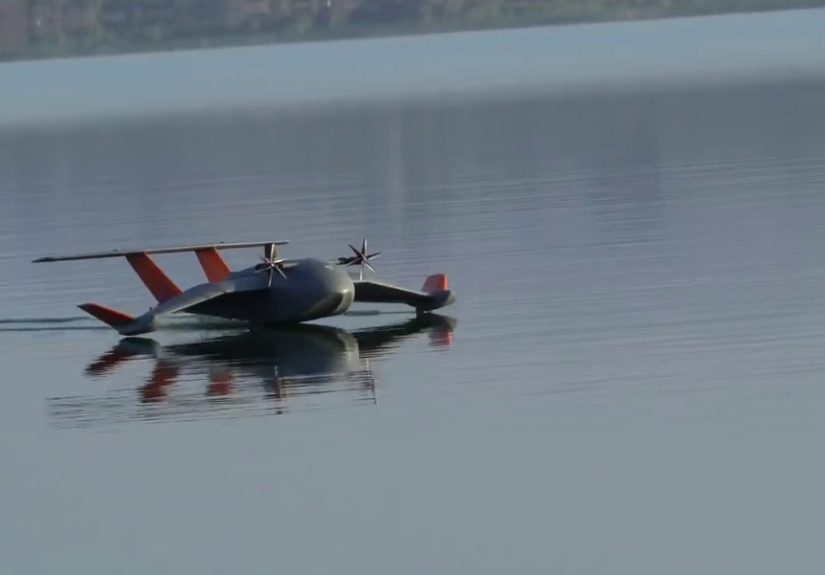
A small-scale autonomous demonstrator highlighted in the maker/engineering world shows how quickly the “cool concept” phase is turning into “this might actually ship freight” reality.
What “Ground Effect” Means (Without Turning This Into Physics Class)
When a wing flies very close to the ground or water, the airflow around it changes.
In plain English: the wing gets a helpful cushion of air that can reduce drag and increase lift efficiency.
Pilots notice this as the aircraft “floating” near the runway; engineers see it as a chance to move heavy loads using less energy than full-altitude flight.
For maritime transport, that efficiency is the whole party trick.
Conventional ships are energy-efficient per ton movedbut they’re slow.
Air freight is fastbut expensive and energy-hungry for bulky cargo.
A WIG craft tries to split the difference: faster than a boat, less infrastructure-hungry than an airplane, and potentially cheaper per trip than air for the right routes.
The Demonstrator: A Small Craft With a Big Point to Prove
One reason ground-effect shipping keeps resurfacing (pun fully intended) is that small prototypes can validate the hardest part: stable, repeatable flight at low altitude over water.
A featured autonomous ground effect vehicle demonstrator was built through collaboration between an airframe builder and an electronics/software developer for the Flying Ship Company conceptan ambition to use unmanned electric ekranoplans as high-speed marine cargo carriers that can load and unload using existing maritime infrastructure.
What makes this demonstrator especially interesting isn’t just that it fliesit’s how it flies.
The build used automatic altitude control with a downward-facing sensor (LIDAR) and integrated autonomy software so the pilot/operator didn’t have to constantly “hand-fly” pitch and throttle to stay in the sweet spot.
That matters because ground effect is not a set-it-and-forget-it zone: the craft’s aerodynamic balance shifts as it transitions in and out of that cushion, and water conditions can introduce noisy sensor readings.
In other words, the ocean is not a flat treadmill. It’s a moving, glittery chaos machine.
Why Autonomy Changes the Game for Sea-Skimming Freight
Ground effect craft have existed for decades, but broad adoption has been limited by complexity, safety concerns, and operational headaches.
Autonomy doesn’t magically remove those hurdlesbut it can shrink the biggest pain points:
1) Precise altitude control (the “don’t bonk the wave” job)
Flying a few feet (or a few dozen feet) above water is an attention sport.
Autonomy can continuously adjust control surfaces and thrust based on sensor input, keeping the vehicle stable in the efficient zone.
The demonstrator’s use of a bottom-mounted altitude sensor is a concrete example of what “autonomy” looks like at the vehicle level: not sci-fi, just relentless control-loop discipline.
2) Lower crew burden and scalable operations
Maritime shipping already leans into automationautopilots, dynamic positioning, route optimization, and increasingly autonomous surface vessels.
DARPA’s work on long-endurance uncrewed surface ships shows how removing the “humans onboard” requirement can reshape design for reliability and endurance.
WIG cargo craft aim at a different niche than drone ships, but the operational philosophy rhymes: fewer people needed per vehicle can make fleet scaling more realistic.
3) Safety features that get better with time
Sensor fusion (radar + cameras + GPS + AIS + altimeters), collision-avoidance logic, and weather-aware routing are the kinds of tools that improve as they are tested and refined.
That’s important because WIG craft must live in the messy interface between maritime and aviation realitiesboats, birds, spray, glare, waves, and the occasional “why is there a floating sofa out here?”
Speeding Up Maritime Shipping: Where These Craft Actually Fit
Let’s be blunt: WIG craft are not here to replace container ships crossing oceans.
Their best use is high-value, time-sensitive, coastal or regional freightthe stuff that’s too urgent for a slow vessel but too bulky or too expensive to justify full air freight.
Think of them as the “express lane” of maritime logistics.
Best-fit cargo and routes
- Coastal express freight: moving goods between major coastal metros without airport bottlenecks.
- Island supply chains: routes where ports exist but runways are limited or congestion is constant.
- Disaster response: rapid delivery of medical supplies, water filtration, generators, and communications gear when infrastructure is damaged.
- Cold chain and perishables: seafood, specialty produce, pharmaceuticalscargo where time is money and spoilage is heartbreak.
The U.S. relies heavily on waterborne trade and marine transportation for imports and exports, but the classic tradeoff remains: ships are cost-effective and capacity-rich, yet they’re rarely fast.
A vehicle class that can use existing waterfront infrastructure while cutting transit time could unlock new logistics patternsespecially along densely traveled coastal corridors.
Not Just One Design: The New “Sea-Skimmer” Family Tree
Today’s ground effect resurgence isn’t a single vehicleit’s an ecosystem of approaches:
Electric “seagliders” for coastal routes
REGENT, a U.S. company, is developing all-electric seagliders designed for fast coastal transportation and working through U.S. Coast Guard-oriented certification steps.
Their public targets include speeds on the order of highway-bypassing “why didn’t we do this sooner?” and ranges suited to regional hops, with the craft operating as a Type A WIG that stays within ground effect.
Whether carrying passengers or cargo, this category shows how ground effect can be packaged as a practical servicenot a science project.
Military-scale heavy lift concepts
DARPA’s Liberty Lifter effort explored how wing-in-ground effect could support heavy logistics at seacombining ship-like payload ambition with aircraft-like speed.
Even though DARPA ultimately completed its work without building the full demonstrator aircraft, the program’s published progress signals that the underlying concept is technically viable enough to keep industry interest hot.
Aurora Flight Sciences described a concept demonstrator scale with a large wingspan and meaningful cargo targets, designed to operate both in ground effect and at higher altitudes when needed.
Uncrewed surface autonomy as a parallel track
It’s also worth noting the “cousin technology” in autonomous shipping:
DARPA’s NOMARS program produced the USX-1 Defiant, designed to operate without humans onboard for long durations.
That’s not a ground effect aircraftit’s a surface vesselbut it reinforces the broader trend: autonomy is no longer an add-on; it’s becoming a defining design assumption for maritime systems.
The Hard Parts: Waves, Rules, and the Annoying Reality of Weather
If ground effect vehicles were easy, we’d already be commuting to beach towns in flying boats while sipping iced coffee like it’s a law of nature.
The sticking points are realand they explain why demonstrators matter.
Sea state is the boss level
Calm water is friendly.
Chop is complicated.
Larger waves turn low-altitude flight into a constant negotiation between safety margins and efficiency.
Liberty Lifter design goals publicly discussed by its developers include operating across meaningful sea states, and smaller demonstrators have shown how wave-driven sensor noise can complicate altitude hold.
Translation: your craft may be aerodynamic, but the ocean does not care.
Regulation lives in a gray zone
A WIG craft can look like an aircraft and behave like a vessel, which means certification and operating rules can get… creative.
Some designs are intended to remain within ground effect and are treated as maritime craft under established guidelines, while others can climb and fly more like conventional aircraft.
Developers pursuing commercial service in U.S. waters have been working with regulatorsespecially the U.S. Coast Guardbecause the legal classification affects everything from training requirements to equipment standards.
Infrastructure is both a benefit and a constraint
The good news: these craft can potentially use docks, ramps, and marine terminals instead of runways.
The tricky news: they may still need specialized charging, maintenance workflows, sheltered launch areas, and routes designed around traffic separation and safety.
“Existing infrastructure” is true in spiritbut the operations team will still want checklists, procedures, and a place to plug in something bigger than a phone charger.
So… Will This Really Speed Up Maritime Shipping?
For the right mission, yes.
Ground effect cargo isn’t about beating ships at what ships do best (massive volume at low cost).
It’s about creating a new tier of service for regional maritime logisticsfast enough to matter, efficient enough to scale, and autonomous enough to operate like a modern fleet rather than a pilot-dependent boutique.
The most credible path looks like this:
demonstrators prove stability and control → limited commercial routes launch in friendly conditions → systems mature to handle rougher seas and denser traffic → larger cargo versions follow.
If that sounds incremental, good. Transportation revolutions that start with “Step 1: don’t crash” tend to age well.
Experience: What It’s Like When Sea-Skimming Stops Being a PowerPoint
The most revealing “experience” stories from WIG testing aren’t about dramatic momentsthey’re about the boring stuff becoming repeatable.
When engineers and operators describe progress, it usually sounds like: “The control system held altitude on calm water,” or “We reduced workload so the operator isn’t constantly chasing pitch,” or “Sea trials finally matched what the simulation promised.”
That’s the heartbeat of this category: turning a twitchy aerodynamic trick into a dependable transport routine.
Pre-flight feels like aviation, launch feels like boating
Operations start with weather and water, not runways.
Teams talk about wind, wave height, visibility, and boat traffic with the seriousness pilots reserve for icing.
Then the craft behaves like a very serious vessel: it taxis, accelerates, and transitions into its lift-producing regime near the surface.
In prototypes that use foils or lift-assist strategies, the “getting out of the water efficiently” phase is where everyone watches the data closelybecause drag and spray can punish performance long before the craft reaches its happy place above the waves.
When the vehicle finally settles into stable ground effect, the mood shifts from “white-knuckle attention” to “system monitoring.”
Autonomy earns its keep in the unglamorous moments
The real win isn’t that the craft can fly itself in perfect conditions.
It’s that autonomy can shave off hundreds of tiny corrections per minuteholding altitude, smoothing oscillations, and keeping the vehicle from porpoising when the water texture changes.
Small demonstrators have shown how a downward altitude sensor can enable automatic height control, but also how waves can inject noisy measurements that must be filtered and interpreted.
Engineers describe this as a game of “trust but verify”: build control laws that are calm and conservative, then teach the system to recognize when the sensor is lying because the ocean is having a personality.
Routing is a logistics puzzle, not a straight line
A fast coastal craft changes what dispatchers optimize.
Instead of picking between “ship it cheap” and “ship it fast,” planners can ask: “Which cargo deserves the middle lane?”
The best early routes tend to be those with predictable weather windows, clear maritime corridors, and obvious time savingslike moving urgent parts between coastal industrial hubs, delivering medical supplies to island communities, or shuttling high-value goods that don’t justify air freight pricing.
Operators also learn quickly that traffic separation matters: even if the craft never plans to overfly vessels, it still shares a busy surface environment where humans do human things.
Maintenance and turnaround become the make-or-break reality
The “shipping” value proposition lives or dies on dispatch reliability.
Teams building electric or hybrid systems focus on turnaround time: battery charging strategy, quick inspections of control surfaces, sensor cleaning (salt spray is a menace), and software health checks.
A key operational lesson from early programs is that sea-skimming is not just aerodynamicsit’s corrosion control, waterproofing discipline, and making sure sensors stay accurate after hours of glare, mist, and vibration.
When a prototype completes repeated trials without drama, that’s not boring. That’s the sound of a new transport category becoming operationally believable.
Conclusion
The phrase “autonomous ground effect vehicle” can sound like a futuristic dare.
In practice, it’s a pragmatic bet: use a proven aerodynamic advantage, add modern sensing and autonomy to tame the tricky edge cases, and carve out a faster layer of maritime logistics that doesn’t require airports to function.
The small demonstrator work shows the control problem is solvable; the larger industry momentumfrom coastal seagliders to heavy-lift defense conceptsshows the demand is real.
If the ocean cooperates (and regulators agree on what to call this thing), sea-skimming freight could become the new express option for coastal shipping: not replacing ships, not replacing planes, but making the space between them finally useful.