Table of Contents >> Show >> Hide
- Meet Drottningholm: Sweden’s Most Storybook Royal Palace
- A Royal Origin Story (With Light Drama, As Tradition Demands)
- Inside the Palace: What You’re Actually Looking At
- The Gardens: From Perfect Geometry to Romantic Wandering
- The Drottningholm Palace Theatre: 18th-Century Special Effects, No Batteries Included
- The Chinese Pavilion: Sweden’s Most Elegant “Vacation Mode” Building
- How to Visit This Enchanted Castle in Sweden (Without Stress-Spiraling)
- Is It Really Enchanted? Let’s Talk Legends (The Friendly Kind)
- Build a “Castles of Sweden” Mini-Itinerary
- Conclusion: Your Fairytale, But Make It Swedish
- Bonus: of “What It Feels Like” at an Enchanted Swedish Castle
Sweden does castles a little differently. Instead of “moat, drawbridge, and a dragon with anger issues,” you often get
“glass-smooth lakes, whispery birch trees, and a palace so elegant it looks like it has its own skincare routine.”
If you’re hunting for an enchanted castle in Sweden that feels straight out of a fairytalebut still has
very real history under its polished floorsmeet the royal showstopper: Drottningholm Palace.
This is the kind of place where the gardens are so symmetrical they could make a spreadsheet blush, and the on-site
theater still runs on 18th-century stage magic. Add a pavilion inspired by Europe’s obsession with “exotic” China,
and you’ve got a Swedish castle experience that’s equal parts romance, drama, and “wait… that’s how they did special effects back then?”
Meet Drottningholm: Sweden’s Most Storybook Royal Palace
Drottningholm Palace sits on the island of Lovön, just outside Stockholm, like it’s calmly posing for a portrait that will
outlive all of us (accurate). It’s famous for being exceptionally well-preserved and for bundling multiple “wow” experiences into one
walkable estate: the palace itself, formal gardens, a landscaped park, a historic working theater, and the whimsical Chinese Pavilion.
If your mental image of Swedish architecture is “minimalist wood cabin with a candle that costs $42,” prepare to recalibrate.
Drottningholm is grand in a European-court waywithout tipping into cartoonish. Think: tastefully dramatic.
Why it feels enchanted (even if you’re not a ‘castle person’)
- It’s a living place, not a museum fossil: part of the palace is still tied to modern royal life, while other sections welcome visitors.
- The grounds change personalities: crisp Baroque geometry near the palace, then a softer, “let’s wander” landscape park beyond.
- The theater is a time machine: original-style stage machinery, hand-operated, still used and demonstrated.
- It has legends: because of course an enchanted Swedish castle comes with a few friendly ghost rumors.
A Royal Origin Story (With Light Drama, As Tradition Demands)
Drottningholm’s story begins in the late 1500s as a royal projectbecause nothing says “I’m thinking of you” like commissioning
a waterfront residence. In the 1660s, after a destructive fire, the estate was rebuilt into the palace complex that shaped what visitors
recognize today, guided by prominent architects of the era. Over the following centuries, royal tastes evolved, interiors were updated,
and the domain grew into a full-blown “royal lifestyle campus.”
The result is a layered place: a Swedish royal palace that carries echoes of French-inspired grandeur while staying grounded in the
Nordic light and landscape. It’s the architectural equivalent of someone who can wear a crown but still looks comfortable in a wool coat.
The UNESCO factor (aka: the world agrees it’s a big deal)
Drottningholm’s broader domainpalace, gardens, theater, Chinese Pavilion, and surrounding featuresearned UNESCO World Heritage status
for being an exceptionally intact example of a northern European royal residence and pleasure grounds. Translation: this isn’t just a pretty facade.
It’s a rare, coherent whole.
Inside the Palace: What You’re Actually Looking At
When people say “palace,” your brain might jump to gold everything and a chandelier big enough to qualify as a public transit system.
Drottningholm is lavish, surebut it’s also curated. The rooms showcase centuries of royal aesthetics, with art, furnishings, and decorative
details that were meant to do two things at once: impress visitors and communicate power.
The smart way to visit is to slow down and notice what’s being claimed in the design. Baroque and later styles weren’t just about beauty.
They were about messaging: order, lineage, legitimacy, and “yes, we’re absolutely supposed to be in charge.” (If you’ve ever spent two hours
choosing a LinkedIn headshot, you understand the vibe.)
Don’t skip the details
- Ceiling art and symbolism: look for mythic references and classical motifsroyalty loved a good “we’re basically gods” subtext.
- Perspective tricks: palace rooms often use proportion and sightlines to make spaces feel even grander.
- Light, everywhere: Swedish daylight changes the mood by season; summer feels airy and celebratory, winter feels cinematic.
The Gardens: From Perfect Geometry to Romantic Wandering
The estate’s outdoor spaces are a masterclass in how Europeans used landscape to express ideals. Near the palace you’ll find formal gardens
with symmetry, long sightlines, and carefully controlled shapes. It’s the garden version of “we have standards.”
Then, as you move out, the feeling shifts: the English-style landscaped areas were designed to look more “natural,” even though they’re also
intentionally composed. It’s like the difference between a tailored suit and a perfectly broken-in leather jacketboth are choices, one just
pretends it isn’t trying.
How to enjoy the grounds like a pro (without becoming a botany influencer)
- Pick a pace: do the palace first, then the gardens, then the parksave your energy for the long stroll.
- Look back at the palace: the estate was designed for views; turning around is part of the experience.
- Bring a snack: nothing ruins enchantment like being hangry in a gravel pathway.
The Drottningholm Palace Theatre: 18th-Century Special Effects, No Batteries Included
If the palace is the headline, the Drottningholm Palace Theatre is the plot twist. Built in the 1700s and preserved in remarkable condition,
it’s famous for stage machinery that still operates by hand. This is not “historic theater theme.” This is “the original tech still works.”
The fun part is realizing how inventive the system is: scene changes, storm effects, and illusions were engineered with ropes, pulleys, rollers,
and counterweights. Imagine a Broadway show run by a crew of extremely determined carpentersand I mean that as a compliment.
What makes the theater so magical
- Hand-operated machinery: stage crews physically run the effects, which makes performances feel alive in a different way.
- Preserved sets and techniques: you can get a glimpse of how “wow” was manufactured before electricity did the heavy lifting.
- A real performance history: it’s not just a museum; it has a tradition of continuing use and revival.
Even if you don’t care about opera, you’ll care about this. It’s like opening a drawer and finding a perfectly preserved gadget from 1766 that still
does its jobquietly flexing on modern appliances.
The Chinese Pavilion: Sweden’s Most Elegant “Vacation Mode” Building
Tucked into the grounds is the Chinese Paviliona royal pleasure pavilion shaped by 18th-century Europe’s fascination with Chinese
aesthetics (often filtered through a very European imagination). The pavilion mixes rococo sensibilities with chinoiserie details and displays imported
objects that signaled global reach and taste.
The backstory is peak royal: a pavilion created as a surprise gift for a queen, then rebuilt and expanded later into the structure visitors admire today.
It’s whimsical, slightly theatrical, and honestly the most “enchanted side quest” part of the entire property.
What to look for
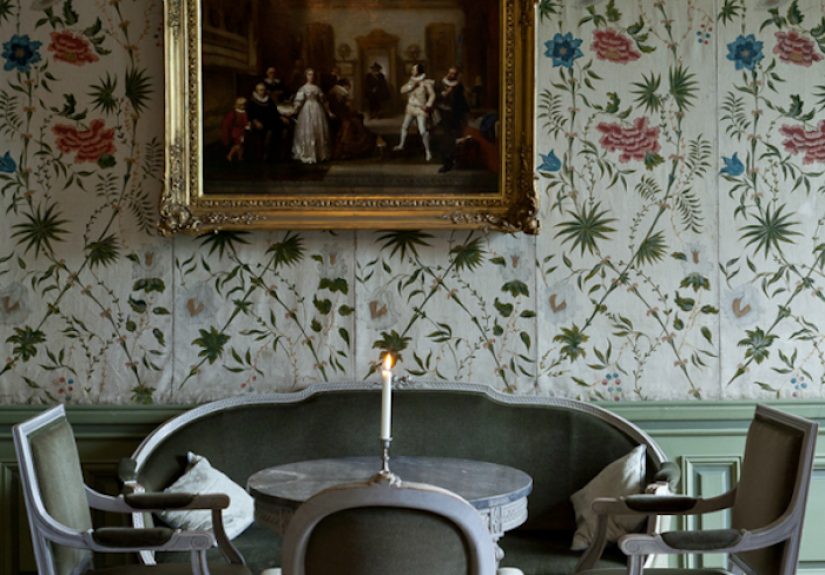
- Decorative craft: silk and paper wall coverings, lacquered pieces, porcelain, and “wow, that’s delicate” details.
- Cultural cross-currents: it’s a snapshot of trade, fashion, and the era’s idea of the wider world.
- The mood shift: after the palace’s formal grandeur, this feels playfullike the royals exhaled here.
How to Visit This Enchanted Castle in Sweden (Without Stress-Spiraling)
Drottningholm is one of the best Stockholm day trips because it’s close, scenic, and packed with variety. You can arrive by public transit or, in warmer
months, by boatan approach that makes the whole outing feel like a royal mini-cruise (minus the political obligations).
Practical tips for a smooth day
- Plan 3–4 hours minimum: palace + gardens + theater and/or pavilion adds up quickly.
- Check seasonal schedules: boat service and opening hours can vary by time of year.
- Choose your “musts”: if you love performance history, prioritize the theater; if you love design, prioritize the pavilion and gardens.
- Wear walk-friendly shoes: the grounds are part of the point, and gravel does not negotiate.
When to go
Late spring through early fall is peak “storybook” seasongreenery, long daylight, and that dreamy Swedish summer energy.
Winter can be gorgeous too, but the experience is more compact and atmospheric: fewer crowds, colder air, and a mood that whispers,
“something dramatic happened here in 1683, and the walls remember.”
Is It Really Enchanted? Let’s Talk Legends (The Friendly Kind)
Castles collect stories the way sweaters collect lint: inevitably, and often with surprising persistence. Drottningholm has its share of ghost talk,
including the kind that’s described less as “horror movie” and more as “polite Nordic presence.” Some tales mention recurring figuresclassic castle archetypes
like a gray-cloaked wanderer or a white ladybecause human imagination loves a theme.
Whether you believe in ghosts or not, the folklore adds flavor. And honestly, in a place that has hosted centuries of royalty, staff, performances, parties,
politics, and personal lives, it would be weird if the atmosphere didn’t feel charged in some way. At the very least, you’ll experience the most
universally real haunting: the sudden urge to move into the palace gardens and “just write.”
Build a “Castles of Sweden” Mini-Itinerary
If Drottningholm lights a spark, Sweden has more castle experiences that can extend your fairytale streak. Some are grand royal sites; others are fortress-like,
moody, or tucked into small towns where the fika is strong and the history is stronger.
Other Swedish castles worth chasing
- Gripsholm Castle (Mariefred): an easy day trip vibe with lakeside scenery and a classic “castle town” feel.
- Kalmar Castle: a heavy-hitter on Sweden’s southeast, with medieval foundations and serious Baltic drama energy.
- Malmöhus Castle: history-rich and urban-adjacent, good if you’re pairing castles with city life in the south.
The trick is balance: do one major “royal residence” like Drottningholm, then pair it with a fortress-style site or a smaller castle where the experience
is less polished and more “let’s imagine the plot.”
Conclusion: Your Fairytale, But Make It Swedish
Drottningholm Palace earns its reputation as an enchanted castle in Sweden because it delivers more than pretty architecture.
It’s a complete world: royal rooms that communicate power and taste, gardens that shift from disciplined geometry to romantic wandering, a theater that still
runs on human muscle and 18th-century ingenuity, and a pavilion that feels like a whimsical royal escape hatch.
If you’re planning a Sweden itineraryespecially a Stockholm tripthis is the day excursion that feels like you stepped into a story without losing
modern convenience. You can have your fairytale, take the boat, and still be back in the city in time for dinner. That’s the kind of magic we love.
Bonus: of “What It Feels Like” at an Enchanted Swedish Castle
Let’s make this practical in the most delightful way: by describing the experience the way your senses will remember it. If you arrive by boat in summer,
the first “enchanted” moment hits before you even see the palace clearly. Stockholm’s waterways are calm in a way that makes you lower your voice without meaning to,
as if the lake has posted a gentle “please don’t shout, we’re vibing” sign. The shoreline drifts bygreen, tidy, and quietly confidentuntil the palace comes into view,
pale against the sky like it’s been professionally lit.
Stepping onto the grounds feels like entering a world where time is organized differently. The air is cleaner, the pace is slower, and the pathways seem designed to encourage
the ancient art of “strolling with intention.” You’ll notice how the formal gardens make your brain feel oddly satisfied: straight lines, clipped hedges, fountains that look
like they’re practicing for a photo shoot. It’s not just beautifulit’s calming, like symmetry is doing your nervous system a favor.
Inside the palace, the experience shifts from open-air serenity to layered quiet. Rooms feel like they’re holding their breath, waiting for the next century to arrive.
You’ll catch yourself looking upceilings are part of the storyand you’ll start to understand why palaces were designed to overwhelm. It’s not only about wealth; it’s about
convincing you, physically, that you are in the presence of something larger than yourself. (It works. You will stand there thinking, “Maybe I, too, deserve a ceremonial staircase.”)
Then the theater changes the tone completely. This is where enchantment turns playful. Seeing how stage storms were madewithout digital anythingfeels like watching a magic trick
revealed and loving it even more. You don’t walk out thinking “that’s old.” You walk out thinking “that’s clever,” and you’ll probably develop a brief, passionate respect for ropes,
pulleys, and people who can coordinate a scene change faster than you can find your phone in your bag.
Finally, the Chinese Pavilion lands like a charming epilogue. It’s lighter, more whimsical, and slightly surreallike the royals built themselves a decorative daydream.
You leave the grounds with tired legs, a head full of history, and the very modern problem of having 47 photos of hedges because somehow they looked important at the time.
That’s the real spell: the place makes ordinary details feel worth noticing. And that’s what a great castle doesturns your attention back on, one beautiful step at a time.