Table of Contents >> Show >> Hide
- What Is the Amigo Stacking Bed, Exactly?
- Why the Amigo Stacking Bed Makes Sense in Modern Homes
- Design and Build: Simple, Smart, and Refreshingly Unfussy
- Best Rooms for an Amigo Stacking Bed
- How to Style an Amigo Stacking Bed So It Looks Intentional
- Mattress and Comfort Tips for the Amigo Stacking Bed
- Things to Consider Before Buying
- Who Should Buy an Amigo Stacking Bed?
- Final Thoughts on the Amigo Stacking Bed
- Real-Life Experiences with an Amigo Stacking Bed
Some furniture solves a problem. Other furniture solves a problem, saves floor space, looks tidy, and quietly makes you feel like the smartest person in the room. The Amigo Stacking Bed belongs in that second category. It is the kind of bed that makes small rooms behave better, surprise guests in a good way, and turn “Where will everyone sleep?” into “Oh, we’ve got this.”
At first glance, the Amigo Stacking Bed is all about practicality. But that undersells it. This is a flexible sleep setup designed for real life: kids’ rooms that need to become play zones by day, guest rooms that moonlight as home offices, vacation homes that have to work hard without looking crowded, and compact homes where every square foot deserves a standing ovation. If your room needs to be both comfortable and clever, this bed has entered the chat.
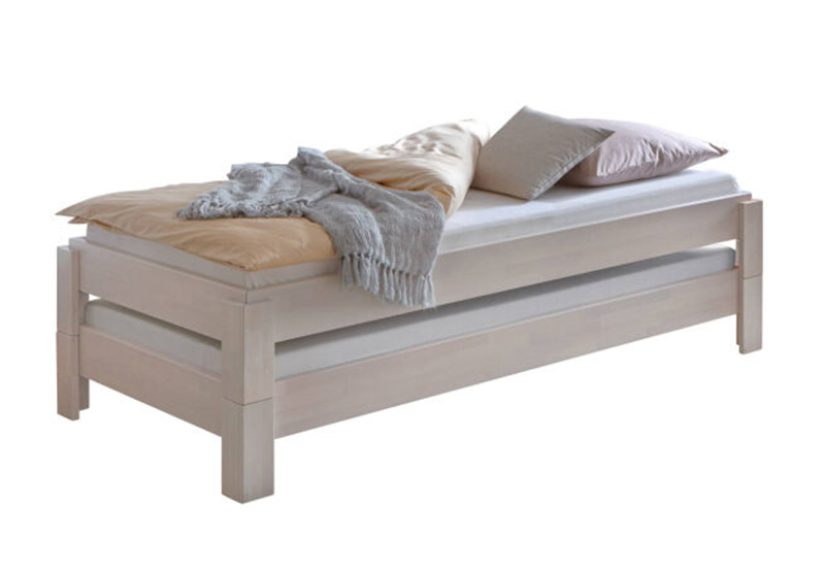
In the official product description, the Amigo is part of a “Kids & Guests” line focused on stable, convertible, space-saving bed solutions. The model is listed at 90 cm wide, 200 cm long, and 60 cm high, with a 14 cm foot height and a 16 cm frame height/insertion depth. It is also designed to work with the matching Amigo single bed to create a guest bed with a total width of 180 cm. Translation: compact footprint, flexible sleeping options, and no need to turn your spare room into a permanent mattress museum.
What Is the Amigo Stacking Bed, Exactly?
The Amigo Stacking Bed is a stackable single-bed concept that lets you keep sleeping capacity ready without constantly giving up valuable floor space. During the day, the units can be stacked to keep a room open and useful. At night, they can be separated to sleep guests, siblings, or anyone who suddenly decided your house is more charming than a hotel.
That simple concept is why stackable beds have remained attractive in space-conscious interiors. Design publications often point out that stackable twin beds work well because they can function as individual beds, sit side by side when needed, and disappear into a much smaller footprint when not in use. That kind of versatility is not just convenient; it is excellent interior design with a practical streak.
Why the Amigo Stacking Bed Makes Sense in Modern Homes
1. It respects your square footage
Small bedrooms and guest rooms have one universal problem: the bed loves to dominate the room like it pays all the bills. Space-saving furniture helps restore balance. Experts on small-room design consistently recommend choosing flexible pieces, maximizing vertical space, and avoiding oversized layouts that make rooms feel cramped. The Amigo Stacking Bed works with that philosophy beautifully.
Instead of dedicating a room to two separate beds all the time, you can reclaim floor space when the second bed is not in use. That matters in a child’s room where open play space is precious, in a vacation home where one room has to serve multiple purposes, or in a guest room that also functions as an office, reading room, craft room, or “I swear I’m going to organize this closet someday” room.
2. It is ideal for guest-ready living
Hosting overnight visitors sounds glamorous until you realize your current guest setup is one sad air mattress and a blanket that has seen things. Better guest-room guidance usually points to layered bedding, adjustable lighting, practical bedside surfaces, and flexible bed choices that fit the room without overwhelming it. The Amigo Stacking Bed fits neatly into that playbook.
Because it stores compactly, it lets you keep a room useful every day while still being ready for company. And since twin-style sleeping arrangements can feel more open in a compact room than a large queen or king, the setup can actually improve the flow of the space instead of choking it with one oversized bed frame.
3. It works for kids without looking childish
One of the hardest things about kids’ furniture is that it often screams “temporary.” The Amigo Stacking Bed avoids that problem. It is practical enough for sleepovers, siblings, and changing needs, but clean-lined enough to age gracefully. That matters if you do not want to replace furniture every time a room shifts from dinosaurs to gaming to “please knock before entering.”
In homes where children share rooms occasionally or host frequent sleepovers, stackable beds create a neat middle ground between a permanent two-bed layout and a less comfortable temporary solution. You get flexibility without sacrificing style or everyday function.
Design and Build: Simple, Smart, and Refreshingly Unfussy
The Amigo Stacking Bed is listed in a beech/MDF white-covered, lacquered version, and official materials also reference finishes such as white-stained lacquered beech and natural oiled heart beech. That material direction matters. Wood-based bed frames tend to feel warmer and friendlier than bulky upholstered solutions, especially in small spaces where visual heaviness can make a room feel crowded.
The design is not trying to win a costume contest. It is straightforward, useful, and pleasantly restrained. That is a compliment. A stacking bed should not require a TED Talk to explain how it works. It should look good, store neatly, separate easily, and support a comfortable mattress without drama. The Amigo’s simplicity is part of the appeal.
The height also deserves attention. With an overall listed height of 60 cm and a relatively low, clean profile, it visually sits lighter in a room than many chunky guest-bed alternatives. That can help the room feel less packed in, especially if the rest of the furnishings stay equally streamlined.
Best Rooms for an Amigo Stacking Bed
Guest room
This is the obvious one, and for good reason. The Amigo Stacking Bed allows you to prepare for guests without giving a whole room over to sleeping arrangements 24/7. Add quality sheets, an extra blanket, a small lamp, and a side table, and suddenly your guest room stops feeling like a backup plan.
Kids’ room
For siblings, cousins, or frequent sleepovers, the Amigo offers flexibility without the visual weight of two permanent bed frames. Stack by day, separate by night, and let the room stay usable in between. That is a win for both children and anyone who has ever stepped on a toy at 2 a.m.
Vacation home or cabin
Holiday homes often need furniture that works harder than furniture in a primary residence. The Amigo Stacking Bed suits that environment well because it supports occasional extra guests while keeping rooms uncluttered when occupancy is low.
Hybrid office-guest room
Multi-purpose guest rooms are now normal, not niche. Design experts regularly recommend flexible sleep furniture in rooms that also serve as offices. A stacking bed solution keeps the room functional for daily work while preserving the ability to host overnight visitors without panic-cleaning a blow-up mattress pump out of a drawer.
How to Style an Amigo Stacking Bed So It Looks Intentional
A stackable bed can look polished, not temporary, with the right setup. The trick is to design the room as if the flexibility is part of the style plan.
Use layered bedding
Comfort-focused guest-room advice frequently emphasizes layered bedding because different sleepers run warm, cool, or somewhere in the mysterious middle. Use breathable sheets, a duvet or quilt, and an extra throw. That way guests can adjust without having to perform HVAC negotiations at midnight.
Keep lighting adjustable
A bedside lamp or dimmable light instantly makes a room more usable. Good guest rooms are not just pretty; they let people read, charge a phone, and find the bathroom without feeling like they are starring in a survival documentary.
Add one shared surface
If the beds are used separately, place a nightstand or table between them whenever possible. Designers often recommend this approach in twin-bed layouts because it improves both function and symmetry. It also creates that “thoughtful host” feeling, which is much nicer than “you may place your glasses on the floor.”
Choose a calm palette
Light woods, whites, soft grays, warm neutrals, muted greens, and washed blues all work beautifully with a straightforward bed design like the Amigo. In smaller rooms, lighter colors and visually simple furniture help keep the space open and airy.
Mattress and Comfort Tips for the Amigo Stacking Bed
No bed frame, no matter how clever, can save a bad mattress. Comfort still matters. Standard twin mattresses are generally 38 by 75 inches, and twin beds remain a practical choice for compact rooms and guest spaces. If the Amigo is being used primarily for occasional guests, aim for a mattress that balances support, comfort, and manageable profile height.
Thinner mattresses can be especially practical in stackable systems because they are easier to move and often better suited to compact or flexible sleep furniture. Standard mattress height is often around 10 to 12 inches, while slimmer mattresses can be easier to transport and budget-friendlier for guest use.
Also remember that the room around the bed matters almost as much as the bed itself. Sleep guidance recommends keeping the bedroom cool, dark, and quiet, with many experts pointing to about 65 degrees Fahrenheit as a helpful sleep temperature target for many adults. Clean sheets matter too; regular washing helps maintain a fresher, more sleep-friendly environment. In other words, a smart bed plus stale sheets is still a weird combo. Let’s not do that.
Things to Consider Before Buying
Measure your room carefully
Always check how the beds will function both stacked and separated. Mattress-sizing guidance recommends leaving about 24 inches of space around each side of a bed to avoid a cramped feel. In real homes, you may cheat that a little, but you still want enough room to move comfortably.
Think about your real use case
Are you buying for kids? Frequent guests? A vacation property? A flexible office-guest room? The right answer depends on how often the bed will be used and by whom. For occasional visitors, convenience and compact storage may matter most. For regular use, mattress quality and ease of daily setup become more important.
Match it with the right accessories
A stacking bed is only part of the system. Good pillows, washable layers, a simple bedside light, and accessible storage for linens help the room feel complete. This is where the Amigo can really shine: it gives you the flexible base, and the rest is easy to customize.
Who Should Buy an Amigo Stacking Bed?
The Amigo Stacking Bed is a smart fit for people who want flexibility without visual clutter. It makes sense for:
- Homeowners furnishing a compact guest room
- Parents planning for sleepovers or changing room needs
- Vacation-home owners who need adaptable sleeping arrangements
- Apartment dwellers trying to maximize every inch
- Anyone tired of pretending an air mattress is “totally comfortable”
If you need a bed solution that can shift between everyday simplicity and extra sleeping capacity, the Amigo earns serious consideration. It is not flashy, but it is the kind of product that quietly solves problems year after year. That is often better than flashy.
Final Thoughts on the Amigo Stacking Bed
The Amigo Stacking Bed is appealing because it understands modern living. Homes today ask furniture to multitask. A guest room may also be an office. A child’s room may also be a playroom. A vacation home may need to host two people one weekend and six the next. The Amigo meets those shifting demands with a design that is simple, compact, and genuinely useful.
Its official dimensions and pairing capability make it more than a vague “space-saving bed” idea. It is a clear, practical solution: a 90-by-200 cm single bed that can help create a 180 cm-wide guest sleeping arrangement when combined appropriately, all while staying visually light and easy to live with. Add in the broader design logic behind stackable beds, twin layouts, and small-space furniture, and the appeal becomes obvious.
In short, the Amigo Stacking Bed is for people who want their room to breathe, their guests to sleep comfortably, and their furniture to pull its weight. Preferably without taking over the whole room like an overconfident sectional. Fair enough.
Real-Life Experiences with an Amigo Stacking Bed
Living with an Amigo Stacking Bed feels less like owning one piece of furniture and more like owning a really polite room strategy. That sounds dramatic, but anyone who has wrestled with a small bedroom knows that the right bed can either make the room feel calm and functional or make it feel like a storage closet with a pillow problem. The Amigo tends to land firmly in the first camp.
One of the best experiences people often describe with stackable beds is the freedom of having extra sleeping space without staring at it all week. That is the secret charm here. When the beds are stacked, the room feels open, tidy, and more flexible. You can vacuum without doing strange yoga around extra bed legs. Kids have more room to play. A guest room can go back to being a reading room, office, or hobby space. Then, when visitors arrive, the second bed appears like you had a plan all along. Which, thanks to the Amigo, you did.
In a child’s room, the experience is especially practical. Parents know that kids’ spaces have to do everything at once: sleep, play, read, build blanket forts, and somehow contain an unbelievable number of stuffed animals. A stacking bed helps keep the room from feeling overfurnished. On sleepover nights, the second bed is useful. On school mornings, it is out of the way. That kind of flexibility reduces clutter and, frankly, arguments.
In a guest room, the Amigo creates a more intentional hosting experience. Guests appreciate a real bed. Not a sofa with an identity crisis. Not an air mattress that slowly whispers itself flat by 3 a.m. A proper bed setup, even a compact one, feels thoughtful. Add crisp sheets, a soft lamp, and a little bedside surface for a phone and water glass, and the room starts to feel welcoming rather than improvised.
There is also a visual benefit that becomes obvious over time. Because the design is simple and not bulky, the room feels less weighed down. That matters in smaller homes where every piece of furniture shows up loudly. The Amigo does not shout. It blends in, works hard, and lets the rest of the room breathe. Many owners would likely call that the biggest long-term win: the bed supports the room instead of dominating it.
Another experience worth mentioning is how useful the bed can be in changing seasons of life. A room that starts as a kid’s bedroom might become a teen space, then a guest room, then a hybrid room for visiting family. Furniture that adapts along the way is always a better investment than furniture that only works for one exact phase. The Amigo Stacking Bed feels designed for that kind of evolution.
Of course, the experience is best when the rest of the setup is thoughtful too. Good mattresses matter. Clean linens matter. Easy lighting matters. But once those basics are in place, the Amigo makes everyday life easier in a way that feels immediate. It gives you options. And in a home, options are gold. Especially when they come in the form of a bed that can host guests, save space, and still look put-together on a random Tuesday afternoon.