Table of Contents >> Show >> Hide
- The Cabin Before: A 1960s Farm Building With Good Bones (and a Few Bad Habits)
- The Design North Star: Raw + Refined, With a Danish-Japanese Accent
- The Makeover Moves That Changed Everything
- 1) The IKEA Kitchen Upgrade That Doesn’t Look Like IKEA
- 2) A Japanese-Inspired Bath Built From a “Why Is This Even Attached?” Shed
- 3) Bigger Views, Better Light: Doors and Windows as “Furniture”
- 4) Built-Ins That Make a One-Bedroom Cabin Feel Like a Suite
- 5) Handmade Details That Give the Cabin a Soul
- How to Steal This Victoria Cabin Look Without Owning a Farm (or a Metalworker)
- Budget, Sustainability, and the Quiet Power of Not Overdoing It
- What This Cabin Renovation Teaches Anyone Planning a Small-Space Remodel
- Conclusion
- Extra: of Real-World “Cabin Makeover” Experiences (So You Don’t Learn the Hard Way)
Some cabins whisper, “unplug and unwind.” This one also whispers, “and while you’re at it, admire my
extremely photogenic plywood.” In Victoria’s South Gippslandabout two hours southeast of Melbournea
modest 1960s farm cabin was transformed into a high-style retreat that feels equal parts
design studio experiment and nap you’ll brag about later.
The headline-worthy twist? The kitchen started as an IKEA setupthen got a glow-up so convincing you’d
never guess it began life in flat-pack territory. Add a Japanese-inspired bath built into what used to be
a dilapidated shed, plus handmade details throughout, and you’ve got a Victoria cabin makeover that
proves “tiny” can still be “terribly clever.”
The Cabin Before: A 1960s Farm Building With Good Bones (and a Few Bad Habits)
The project began with a small one-bedroom cabin on a former dairy farm near the township of Meeniyan.
Like many older rural structures, it had charmbut also the kind of layout that assumes you enjoy bumping
your hip on corners and living with windows that treat natural light as an optional upgrade.
Rather than bulldoze and start over, the makeover embraced what was there and made it better:
improve the views, refine the materials, and keep the footprint humble. That choice matters. Small cabins
don’t have room for “extra.” Every surface has to earn its keepfunctionally and visually.
The Design North Star: Raw + Refined, With a Danish-Japanese Accent
The resulting interior lands in a sweet spot: warm and minimal, rustic but not kitschy. Think pale wood,
soft green tones, and a restrained palette that lets the surrounding landscape do the loud talking.
It’s the kind of cabin interior design that feels calm the minute you walk inlike your nervous system
just found its favorite chair.
Why this style works so well in a cabin
- Nature-forward: light woods and organic textures echo what’s outside the window.
- Function-first: fewer pieces, smarter storage, and durable finishes reduce clutter.
- Cozy without chaos: a “hygge-adjacent” vibe that doesn’t require 47 throw pillows.
The Makeover Moves That Changed Everything
1) The IKEA Kitchen Upgrade That Doesn’t Look Like IKEA
Let’s talk about the star: the IKEA kitchen hack. Instead of ripping out the existing cabinets,
the team re-skinned and reimagined the space with stronger materials and bolder finishesproving you can
get a custom look without a custom-millwork budget.
The upgrades read like a designer’s wish list:
a concrete sink for a grounded, sculptural feel; a hefty wood chopping block that doubles as a workhorse
countertop; and a shiny brass counter and backsplash that bounces light around the room like it’s paid
commission. The cabinet fronts were updated with blackened steel, paired with folded steel handles
fabricated by a metalworkerso the whole kitchen looks intentional, tough, and tailored.
Translation: it’s an IKEA upgrade that says “bespoke,” not “I built this at 11 p.m. with one Allen key
and rising existential dread.”
2) A Japanese-Inspired Bath Built From a “Why Is This Even Attached?” Shed
Cabin bathrooms are often an afterthoughtan awkward little room where shampoo bottles go to multiply.
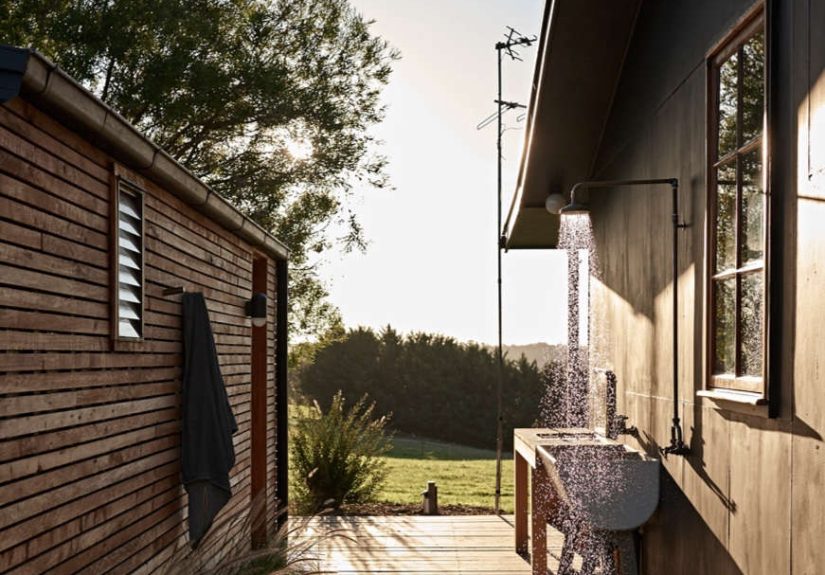
Here, the bath became a destination. A rundown shed attached to the cabin was repurposed into a Japanese-style
bathing space lined in cypress sourced from nearby hills.
The sensory effect is the point: warm wood, a spa-like hush, and a feeling that time slows down
(or at least your phone stops feeling like a mandatory limb). It’s also a reminder that “extra space” in
a small renovation often comes from reclaiming what’s already on-siteporches, sheds, lean-tos, and weird
add-ons that previous owners stapled onto the building for reasons lost to history.
3) Bigger Views, Better Light: Doors and Windows as “Furniture”
The cabin makeover leaned hard into the landscape. French doors with cedar framing were introduced to pull
the outdoors in, creating a stronger connection to the property and making the interior feel larger than
its footprint. In small cabin design, this is a cheat code: widen sightlines and you widen the experience.
New windows also bring greenery right into the bedroom zone, turning every morning into a “wake up in a
lifestyle photoshoot” momentminus the crew and the extremely suspicious breakfast styling.
4) Built-Ins That Make a One-Bedroom Cabin Feel Like a Suite
Instead of squeezing in standalone furniture that fights the walls, the makeover used built-ins and niches:
an inset bed tucked into a knotty plywood alcove and an integrated closet beside it. There’s also a window
bench that works as a seat and a tableexactly the kind of multi-purpose move that keeps a cabin from
feeling crowded.
This is the real magic of small-space planning: fewer objects, more intention. If a piece can’t
multitask, it probably doesn’t get the job.
5) Handmade Details That Give the Cabin a Soul
A lot of renovations look “done.” This one looks made. Custom lights, door hardware, and small
built elements create an identity you can’t buy off the shelf. That doesn’t mean everything has to be
handcraftedjust that a few signature touches can steer the whole story.
When you combine handmade accents with budget-friendly foundations (hello, IKEA), you get the best of both:
affordability without sameness.
How to Steal This Victoria Cabin Look Without Owning a Farm (or a Metalworker)
You don’t need a rural propertyor a dad with a workshopto borrow the strategies behind this cabin renovation.
Here’s how to translate the ideas into your own space, whether it’s a weekend cabin, a rental, or a “cabin-ish”
corner of your primary home.
Make an IKEA Kitchen Look Custom
-
Upgrade the “touch points” first: cabinet fronts, handles, and faucets change the whole vibe
faster than a full demo. - Swap the countertop: even a small remnant slab or butcher block can make a big-box base feel premium.
- Add one bold material: brass, blackened steel, or a textured tile backsplash can carry the room.
- Tailor the fit: trim panels, fillers, and end caps create that built-in, “meant to be here” look.
Small Cabin Kitchen Ideas That Actually Work
- Use vertical space: open shelves (done thoughtfully) keep essentials close and the room airy.
- Consider fold-away solutions: a drop-leaf prep surface or fold-away shelf can add workspace without stealing floor area.
- Reflect light: a reflective backsplash (or even strategic glossy finishes) can visually expand a tight kitchen.
- Keep the palette tight: fewer colors and finishes make small rooms feel calmer and bigger.
Cabin Decorating Ideas That Don’t Scream “Theme Party”
Cabins can be cozy without turning into a lumberjack costume rental. The trick is mixing rustic elements
with clean lines:
- Bring in softness: wool throws, linen bedding, and textured rugs add comfort without clutter.
- Go easy on the clichés: you’re allowed to own plaid, but it shouldn’t be your entire personality.
- Use one confident paint color: sage green, deep forest, or muted blue can ground the space.
- Curate “useful charm”: hooks, benches, basketspretty things that also do jobs.
Budget, Sustainability, and the Quiet Power of Not Overdoing It
One reason this cabin makeover resonates is its restraint. It didn’t chase trends; it chased longevity.
Reworking existing cabinetry instead of replacing it is often cheaper and less wasteful. Using durable
materials in high-use zones (kitchen and bath) means fewer repairs and replacements down the road.
And there’s an emotional sustainability here, too: the makeover was rooted in family, memory, and craft.
Those intangibles don’t show up on an invoice, but they’re the difference between a space that looks good
and a space that feels good.
What This Cabin Renovation Teaches Anyone Planning a Small-Space Remodel
- Start with the view: if nature is your best artwork, frame it.
- Spend where you touch: handles, faucets, counters, and lighting are where “quality” is felt daily.
- Use built-ins to reduce furniture: fewer pieces = less visual noise.
- Pick one “wow” per room: brass backsplash, cypress bath, or a sculptural sinkdon’t compete with yourself.
- Let materials do the talking: wood grain, metal patina, and stone texture are timeless.
Conclusion
This inventive Victoria cabin makeover is a masterclass in making small spaces feel richwithout making them
fussy. By combining a smart IKEA upgrade with handcrafted details, natural materials, and a calm
Scandinavian-Japanese sensibility, the cabin becomes more than a renovation story. It becomes a blueprint
for anyone who wants their home (or weekend escape) to feel thoughtfully designed, deeply livable, and a
little bit magical.
Extra: of Real-World “Cabin Makeover” Experiences (So You Don’t Learn the Hard Way)
If you’ve ever tackled a cabin renovationor even just stayed in a fewyou start to notice the same
patterns. Cabins are romantic in theory, and mildly chaotic in practice. The key is designing for how
people actually live when they’re “getting away from it all” (which usually includes cooking more than
they do at home, tracking in mud, and pretending they don’t need storage until the second day).
One common experience homeowners report is that moisture and temperature swings run the show.
A cabin can go from crisp to clammy quickly, especially in wooded or coastal areas. That’s why materials
matter. Sealed wood, properly vented bathrooms, and kitchen surfaces that can handle wet mugs and hot pans
are not luxury itemsthey’re sanity items. The Victoria cabin’s use of durable finishes in the kitchen and a
spa-like bath zone is the kind of decision that pays you back every weekend you’re there.
Another frequent reality: small kitchens feel smaller when they’re cluttered. People tend to
bring more food to cabins (“just in case”), and suddenly your counters disappear under cereal boxes,
olive oil, and that one bag of chips you swore you wouldn’t buy. The most successful cabin kitchens plan
for this by building in landing zones: a dedicated shelf for pantry items, hooks for utensils, and a clear
stretch of counter that stays sacred. Even a single chopping block that’s intentionally oversized can act
as both prep space and visual anchorexactly the vibe of that hefty wood surface in this makeover.
There’s also the “cabin sleep paradox”: you want the bedroom to feel cozy, but you also want it to feel
openbecause nobody enjoys sleeping in a room that doubles as a storage unit. Built-in niches, integrated
closets, and window benches solve this elegantly by reducing the need for extra furniture. People who’ve
remodeled small cabins often say the biggest improvement wasn’t a fancy finishit was the moment the floor
became visible again.
Finally, cabins have a unique emotional job. They’re where you read books you’ve been “meaning to get to”
for three years. They’re where you cook with friends, take slow showers, and stare out windows like you’re
auditioning for an indie film. The best cabin decorating ideas support that mood: warm lighting, tactile
textiles, and a palette that doesn’t fight the landscape. When you combine that feeling with practical
upgradeslike a custom-feeling IKEA kitchen hackyou end up with a space that’s not just pretty, but
genuinely restorative. And that’s the whole point of a cabin, isn’t it?